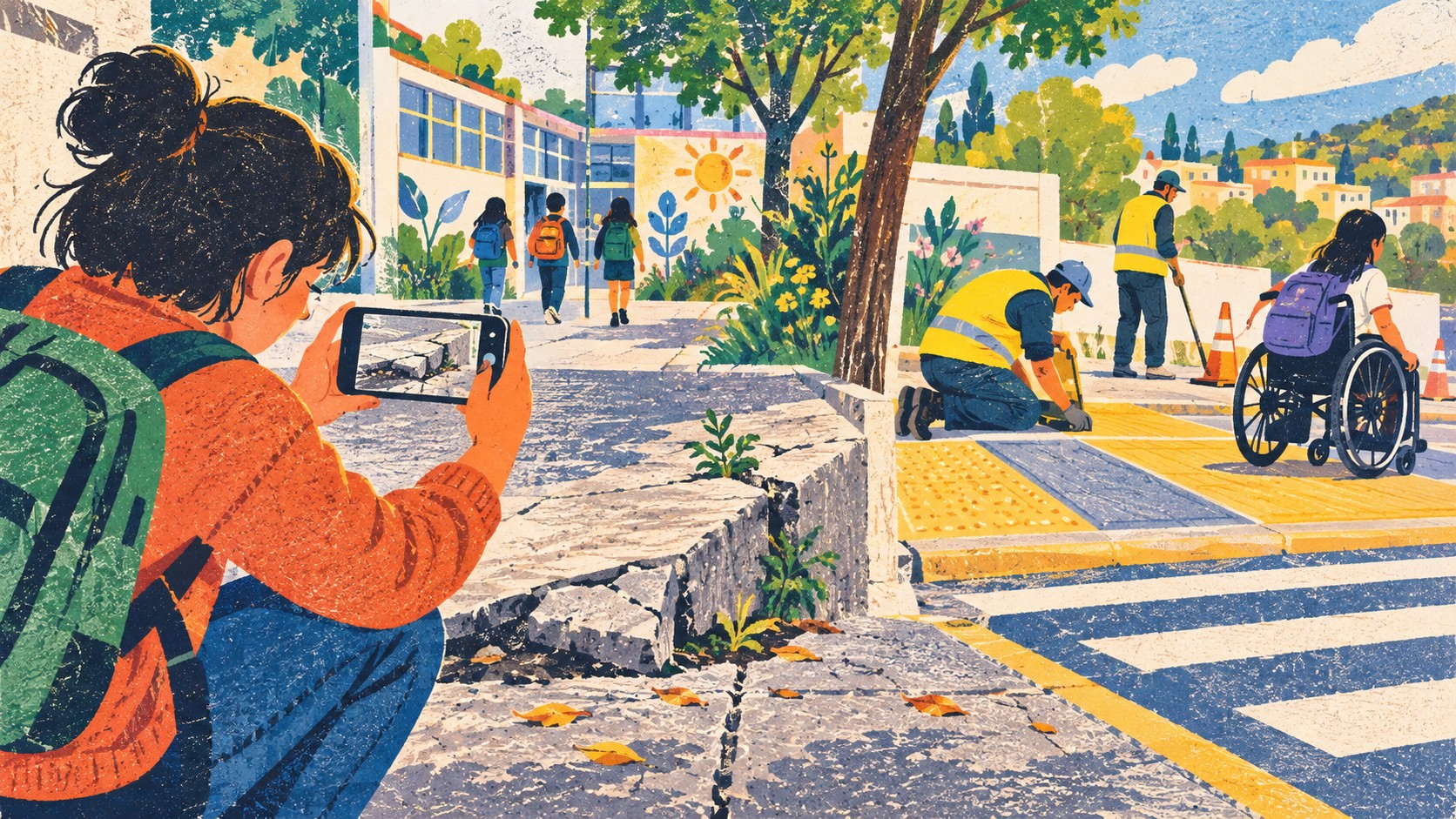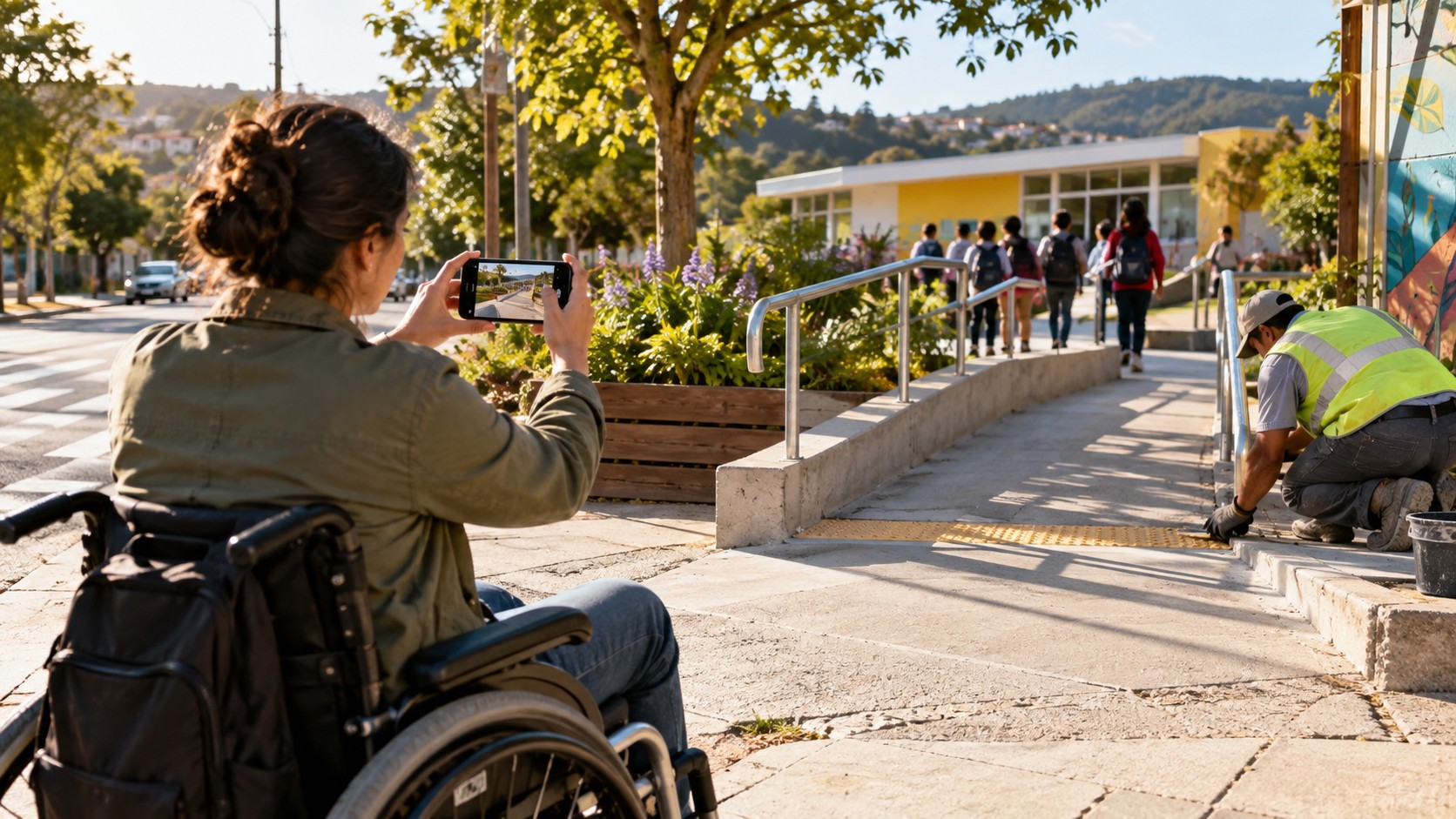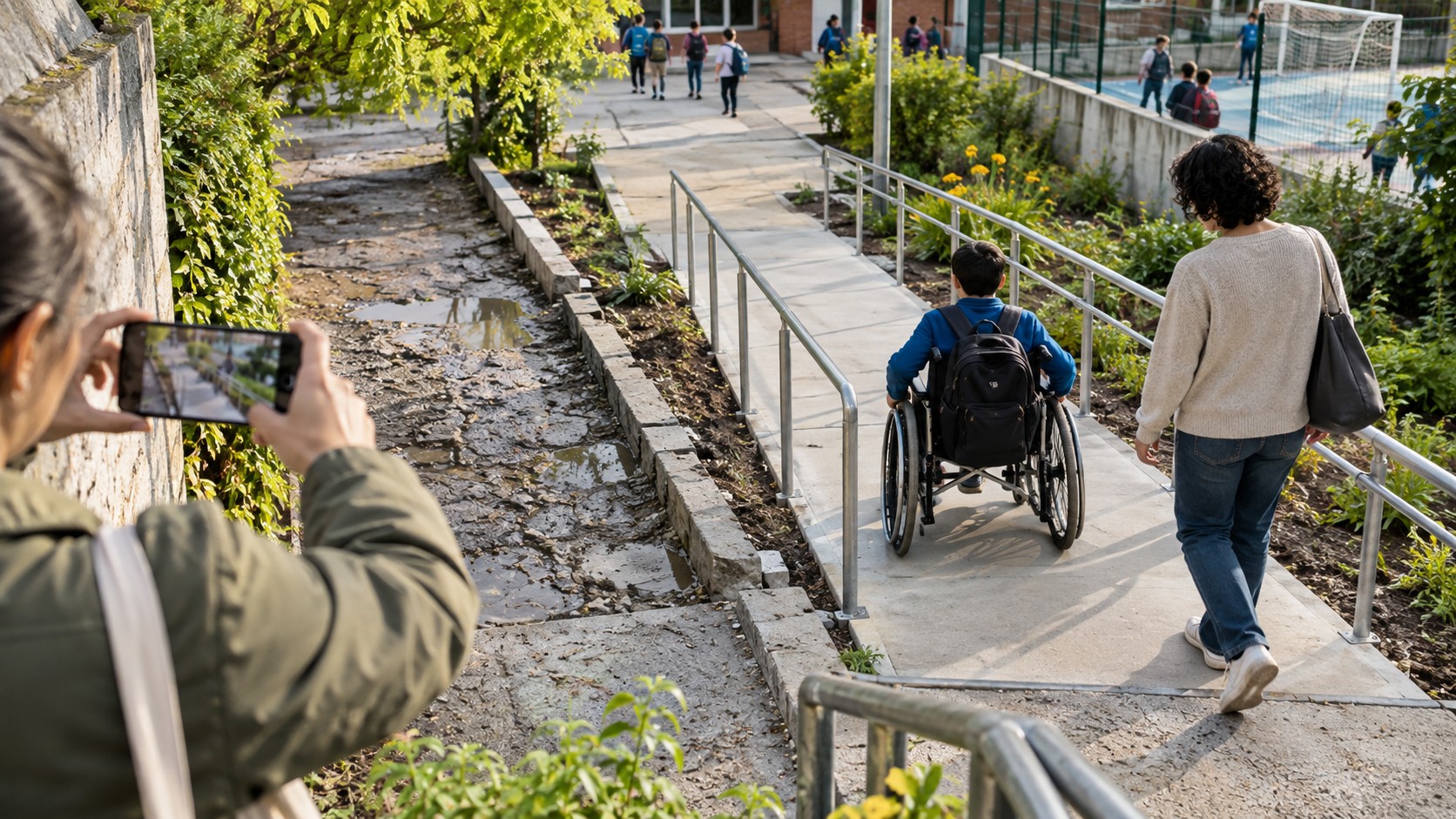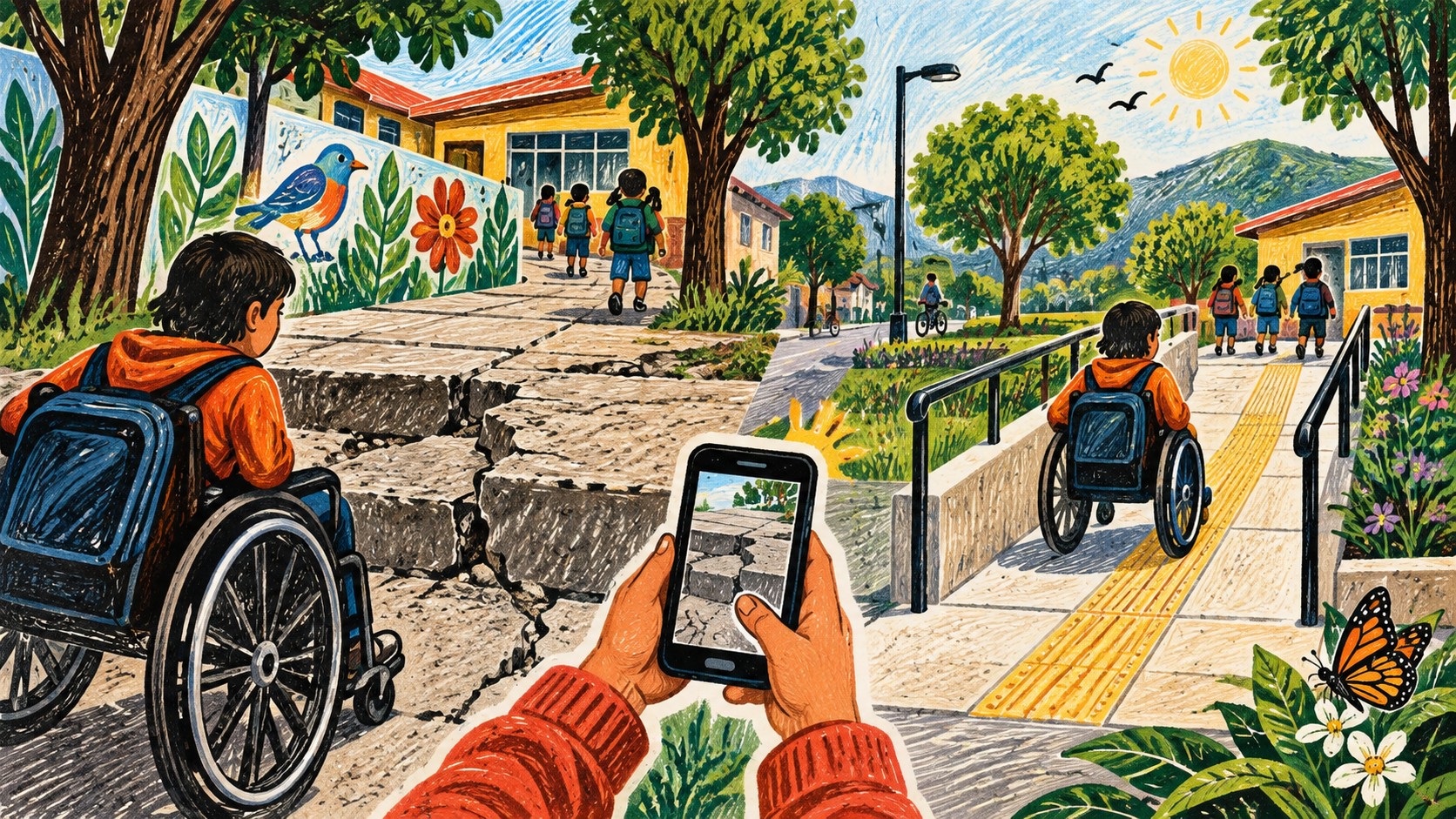
The bench appears to be in the wrong place. In a hypothetical scene, someone pulling a shopping trolley finds the passage beside a small square too narrow, and another person proposes removing the seat that very week. The solution fits into a sentence; its consequences take considerably more room. That bench also offers a rest before the uphill stretch. Holding the decision for a brief discussion might reveal that the problem concerns more than where somebody sits. It involves the meeting of movement, rest and several other uses of the same place.
The first explanation does not cover the whole journey#
In this example, the narrowing appears beside a temporary display of plant pots. A hurried inspection identifies the largest object, the bench, although the newly added pieces also change the route. The distinction matters: removing a permanent feature to resolve an occasional occupation could leave the square without a resting place after the exhibition ends. A pause makes it possible to establish what was there before, what has changed and which difficulty remains. There is no need to invent a cause when the relationship between the objects still requires closer consideration.
In this example, the narrowing appears beside a temporary display of plant pots. A hurried inspection identifies the largest object, the bench, although the newly added pieces also change the route.
A person crossing the square towards the hill sees a line of movement. Someone arriving tired from the opposite direction may first notice a place to stop. Neither reading contains the entire space. A team considering an improvement could sketch both journeys and mark where passage becomes interrupted. The drawing need not represent people or their abilities; turns, surfaces, furniture and destinations are enough. The discussion then begins to address conditions at the site. It becomes less dependent on whose experience is described most forcefully or which person happens to attend the meeting.
It also helps to distinguish the observation from its interpretation. A trolley stopping beside the bench is a fact within the example; the bench being the sole cause remains a hypothesis. The person might have stopped to wait for somebody, locate an address or assess the available passage. If they choose to explain what happened, their account supplies information that the image alone cannot provide. If they prefer to continue, the uncertainty remains recorded. The absence of a personal explanation does not give other people permission to complete the scene with an invented account of somebody else's experience.
A pause with a question, a scope and a date#
Postponing a decision without explaining the purpose can feel like another kind of disregard. A useful pause has a bounded task: checking whether the temporary plant arrangement changes passage and understanding the seat's function along that stretch. It also has an intended endpoint, such as a visit agreed by the responsible team before a decision is made. It does not demand weeks of neighbourhood observation or turn the person reporting the problem into a permanent monitor. Its purpose is to obtain information that could change the proposal, rather than collect details nobody will subsequently use.
While the case is reviewed, the everyday difficulty continues to exist. The responsible organisation can consider a temporary measure within its remit and explain its limits. Rearranging its own display might be possible; alternatively, other conditions at the site may need attention first. A defensible pause does not justify leaving somebody unable to pass. It separates immediate relief, where available, from the lasting decision about the square. If an immediate danger emerges, communication through the appropriate channel takes priority over completing an observation record or waiting until a scheduled discussion can take place.
A precise public explanation can help: permanent removal of the seat is being held while the effect of the temporary display is checked. This statement neither promises a particular solution nor disputes the existence of a difficulty. It identifies the decision being deferred. It also makes clear what is continuing: receiving the report, locating the point and passing the concern to somebody able to assess it. When everything is described simply as being under consideration, people cannot distinguish an active review from a file that nobody has looked at since the original message arrived.
Considering what a solution might take away#
Suppose removing the bench did create more space. A second question would remain: what happens to the people who use that rest to complete their journey? This is not a competition between two imagined groups or a vote on whose need attracts more supporters. The team can explore arrangements that retain both functions, identify alternatives requiring technical assessment and notice proposals that shift the difficulty elsewhere. Improvement becomes a more demanding idea when it is measured through the continuity of an entire route, rather than merely through the disappearance of the object first identified as troublesome.
A photograph of an empty passage cannot establish how long the benefit lasts either. The display may change the following day, or an activity may occupy another edge. Describing the visit conditions therefore matters: exhibition installed, access open, location viewed from both directions. These details give a later comparison meaning. There is no need to photograph the people passing through or record their individual routines. Attention belongs on the spatial arrangement. A picture of the furniture and a note about the circumstances can often explain a question that deserves professional examination without exposing anybody's everyday movements.
Disagreement may persist even after people have considered the site. One person especially values a wider passage; another fears losing a support they use. A pause cannot guarantee agreement, and presenting it as a technique that always reconciles interests would be misleading. Its contribution is smaller and more concrete: the eventual decision can identify what it protects, what it changes and what still needs checking. Final responsibility remains with the organisation managing the location. Listening to experience informs its work without transferring the obligation to solve the entire square to the people providing that experience.
Turning a conversation into a workable note#
The documentation could fit on one page. Here it would include the precise stretch, the reported difficulty, the display coinciding with it and the initially proposed response. It would then separate two questions: whether reviewing the temporary objects improves passage, and how a resting opportunity near the hill can be preserved. This format keeps an impression from becoming a construction instruction. The recipient receives something they can investigate, instead of a closed conclusion that obliges them to accept or reject the whole neighbourhood account as though it were a single indivisible claim.
The note becomes more reliable when it states its limits as well. If the site was observed on only one afternoon, that remains explicit. If dimensions, surfaces and installation conditions have not yet been assessed, the sketch is not presented as a technical report. Acknowledging those gaps does not invalidate the concern. It helps assign the next task appropriately and prevents a provisional suggestion acquiring the appearance of a certified solution as it circulates between groups. A modest, candid document can be more useful than a substantial dossier whose confident conclusions have no traceable basis.
Follow-up need not become a daily campaign. The sender can retain a submission reference and the date on which a response about the review was requested. If a general explanation arrives, the outstanding question stays specific: what has been observed about the display, and what is envisaged for resting? The original reporter can choose how much further involvement suits them. A public improvement should not depend on somebody maintaining the same account indefinitely, repeating their difficulty to every new contact or remaining available for every visit that other people decide to arrange.
A better decision leaves room for correction#
Once a measure is chosen, the team can record which information influenced it and which effect it expects to observe. This small decision record allows the result to be reviewed without returning to the beginning of the argument. If the display changes, the later check compares the same stretch under the new arrangement. If relocating the seat is proposed, the evaluation includes its replacement location. The purpose is not to prove that the first idea was clever, but to learn whether the intervention supports both passing and resting under conditions worth retaining.
The scene does not need to end with a removed bench in order to show progress. It might end with a better framed proposal, a check accepted by the responsible organisation and a temporary measure explained without overstating its effect. A useful contribution would be to share the location note and its two questions, keeping personal information to what is necessary. The pause will have served a purpose when it becomes more than empty waiting: when the decision understands what could be lost by dealing too quickly with the most conspicuous part of the problem.