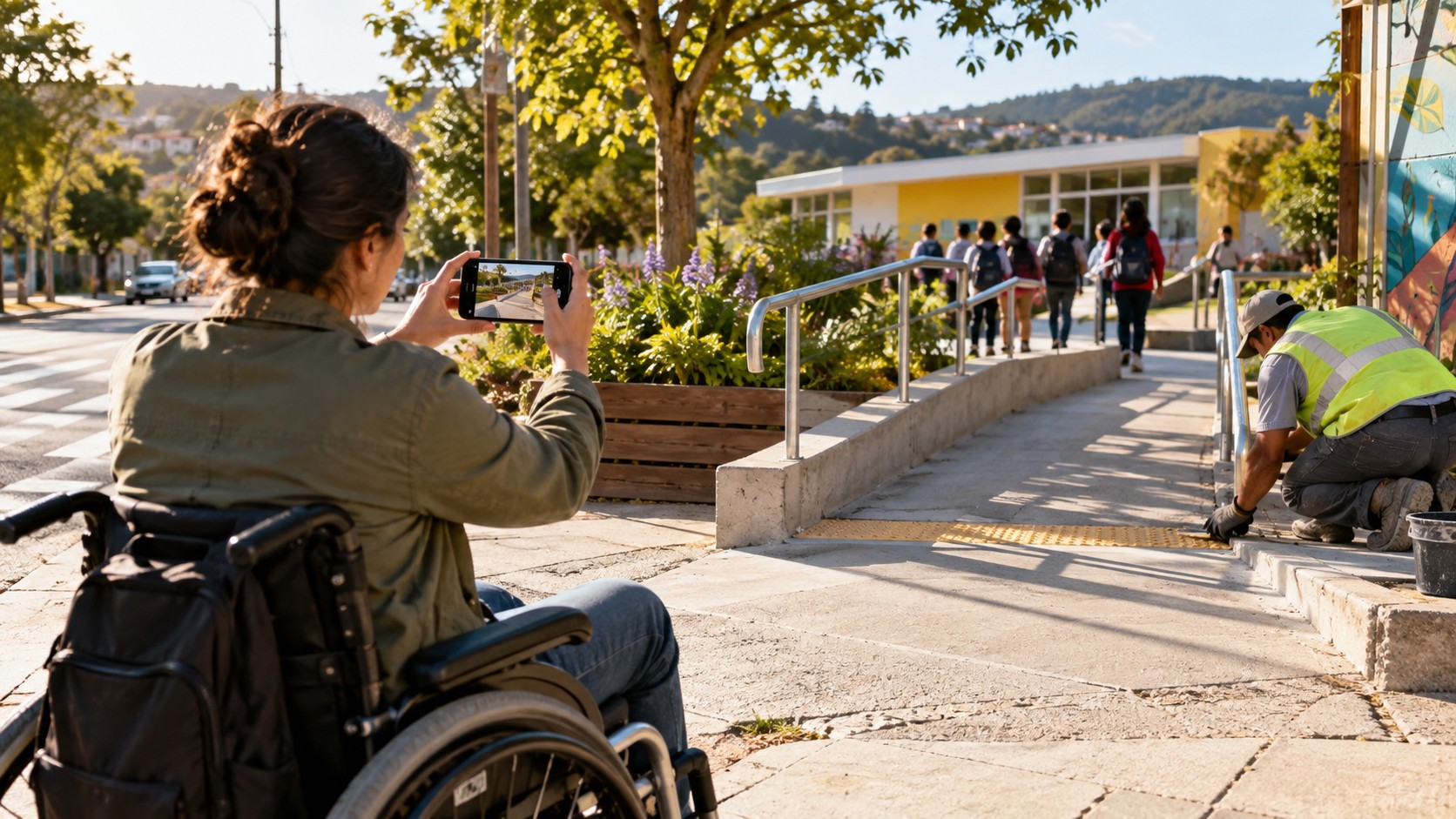
Water remains beside the garden entrance after the rest of the path has dried. In a fictional situation, several people suggest that adding some soil, moving an edging piece or opening a small channel would be enough. Somebody even offers tools for Saturday. That willingness to help matters, but none of these suggestions yet explains why water collects there or what would happen after the change. A shared problem can call for cooperation without becoming a repair that the neighbourhood is expected to undertake itself.
What is visible and what remains unknown#
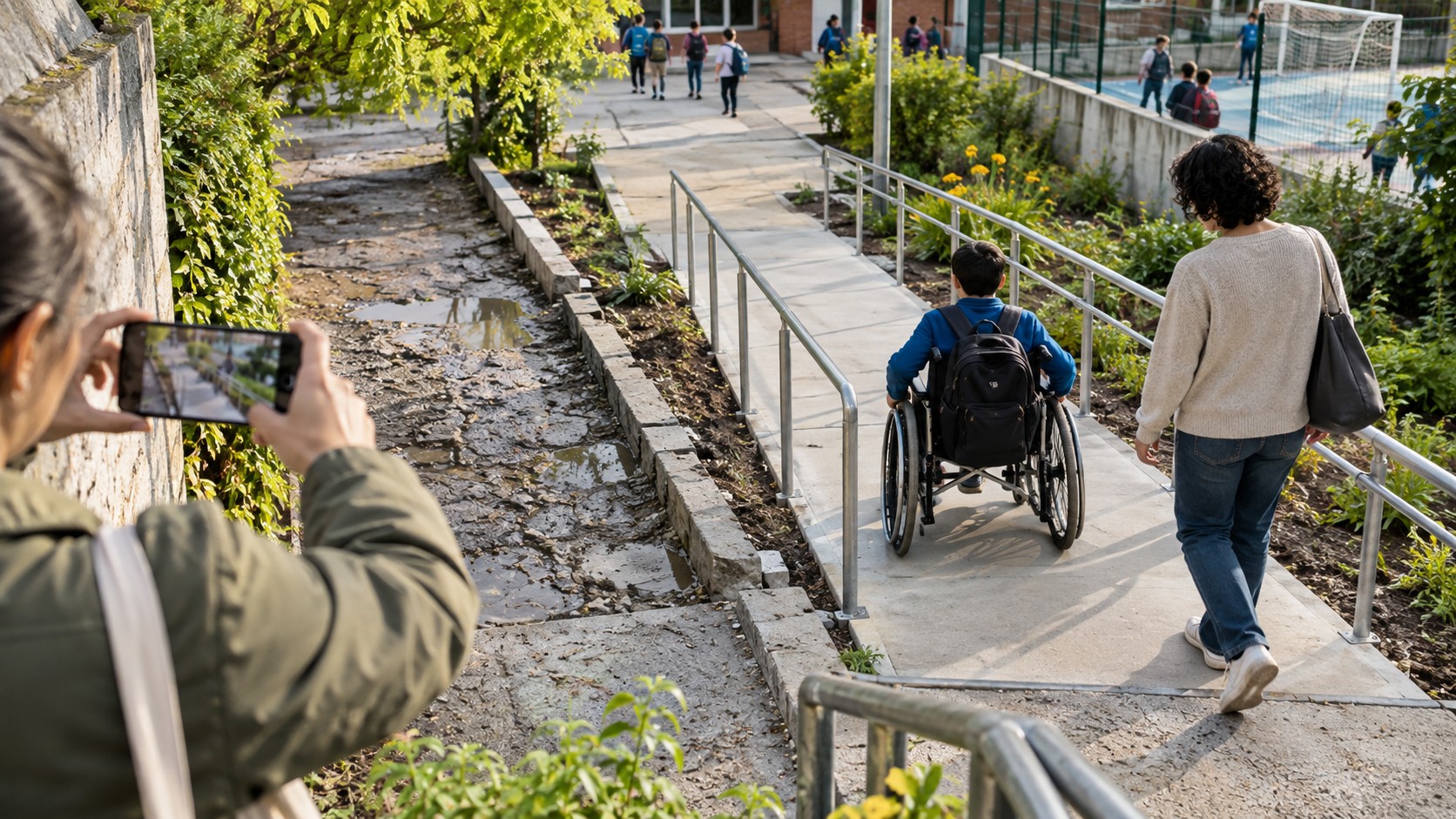
In this example, the visible fact is an area of standing water making an entrance difficult to reach. Its cause has not been established. Different conditions could be involved, and choosing an explanation merely because it sounds familiar would be premature. Separating observation from cause prevents the first suggested remedy closing the discussion too soon. The person noticing the puddle can provide useful knowledge about its presence without having to establish how the ground works or which intervention would be appropriate.
In this example, the visible fact is an area of standing water making an entrance difficult to reach.
Haste can also confuse size with simplicity. A small area does not, by itself, establish that changing it would be a minor matter. The space has uses, maintenance arrangements and responsibilities that may not be apparent during a conversation beside the path. Acknowledging this uncertainty requires no drama. It means that decisions about physical intervention need to reach those managing the place and able to arrange a suitable assessment, using information the visitors are not expected to possess.
Meanwhile, people retain their own boundaries when travelling. Nobody should have to cross an area they consider unsuitable to demonstrate that a problem exists, or undertake a trial informally arranged by others. If the passage seems concerning at that moment, the issue can be reported through the relevant attention channel for the location. Documentation helps communicate what has been observed; it should not become an assignment that keeps somebody exposed to a difficulty longer than necessary for their own journey.
Offering help without taking on construction#
The person offering tools may simply be expressing a wish for the difficulty to end. That intention can find another form of cooperation. They might help identify the garden's management, accompany somebody wishing to explain the issue or bring together observations already available. None of these tasks requires an improvised repair. The group can retain its initiative while recognising that modifying a common space involves a different responsibility from noticing that something there is no longer working as it should.
It is also possible to offer time and later discover that it is unavailable. A voluntary commitment need not become an indefinite debt to the neighbourhood. Explaining that someone can send the initial report but cannot manage every subsequent enquiry helps establish realistic expectations. When that boundary remains unspoken, others may assume somebody is handling a process that has actually stopped. Clarity about the help available avoids this gap without blaming the person who made a contribution in the first place.
Professional experience does not automatically turn a nearby resident into the appointed specialist either. They may suggest an assessment, but are not thereby obliged to undertake it, sign it or assume responsibility for the work. Their participation would need an appropriate arrangement with the relevant organisation. Familiarity between neighbours cannot replace the conditions required for an intervention. Preserving this distinction makes it possible to seek guidance respectfully, without transforming a casual exchange into a responsibility nobody has expressly accepted.
A report that leaves the remedy open#
The initial communication can describe the entrance, when the water was observed and which access is difficult. A clear reference to the location helps identify the point without including addresses, names or details of users' personal journeys. A photograph focused on the ground can accompany the description if one is available. The message can request a review and identify the service handling it, leaving open the technical decision that will need to follow once the circumstances have been examined.
Attaching a drawing of an imagined repair as though it were already the answer may be tempting. However, that moves the exchange towards accepting or rejecting one particular solution. The main interest is recovering a usable entrance and understanding what maintenance it requires. A neighbour's suggestion can remain a suggestion, without being presented as technically valid. That distinction allows the reply to address the original difficulty even if the eventual action differs from what the group initially had in mind.
If nobody knows who manages the ground, the first enquiry can concentrate on establishing precisely that. A private individual does not need to determine boundaries between services or properties by intuition. A reply identifying the responsible organisation helps direct the report. If a referral is unclear, the following enquiry can use the previous reference and request a specific route forward. This keeps the thread intact without requiring the person to rewrite the full account whenever a different contact becomes involved.
Waiting needs a recognisable status#
An acknowledgement establishes that the message arrived. A scheduled visit indicates another stage. Completed work is a different fact again. Naming these distinctions prevents the word resolved being used when only the initial exchange has taken place. Residents do not need to understand every internal operation to know the status of their report. An explanation of what is being examined and which communication is expected afterwards may provide enough continuity to understand where the matter currently stands.
A lack of reply may lead to a further enquiry through an available follow up channel, preserving the information already submitted. It may also call for asking which route handles outstanding issues. This does not mean that the person must spend every afternoon searching for new contacts. The process belongs with those able to manage the review; residents contribute their report and observations. Persistence can be a legitimate choice without becoming a condition someone must satisfy before deserving a response.
Within a group, distributing follow up involves more than announcing that everyone will keep an eye on things. Somebody can take on a specific enquiry for an agreed period and leave a note when that task ends. If nobody can continue, acknowledging this honestly helps. A case does not magically receive attention because a chat exists. Recognising that limit allows an available collective route to be considered, or the report to remain identifiable, without pretending the group can provide support it cannot sustain.
Finishing a repair does not erase maintenance#
Suppose the organisation examines the site and carries out work. The result deserves to be described in terms of what actually changed, without claiming that every future difficulty has disappeared. If standing water was associated with particular rainy conditions, a photograph taken in dry weather cannot establish that behaviour. The relevant verification belongs with those managing the intervention. People using the entrance can report what they later encounter, without becoming responsible for certifying the work or validating its technical design.
Subsequent upkeep matters as well. An improvement may require periodic attention, and that task should not automatically fall to whoever made the initial report. Knowing where to communicate a new issue provides continuity without appointing an informal permanent monitor. Appreciation for noticing the problem can coexist with that boundary. The neighbourhood benefits when a difficulty enters a recognisable management process, rather than leaving the place's operation dependent forever on one unusually persistent person who happens to live nearby.
In a similar situation, a possible next step would be a description of the affected entrance and a request for the responsible organisation to identify the review needed. A contributor can also explain which help they offer and where it ends. Saturday's scene then changes: the tools may remain stored while the report moves towards an appropriate assessment. Contributing does not require becoming the author of a construction project. Sometimes useful care consists of helping responsibility reach the place where it can actually be sustained.