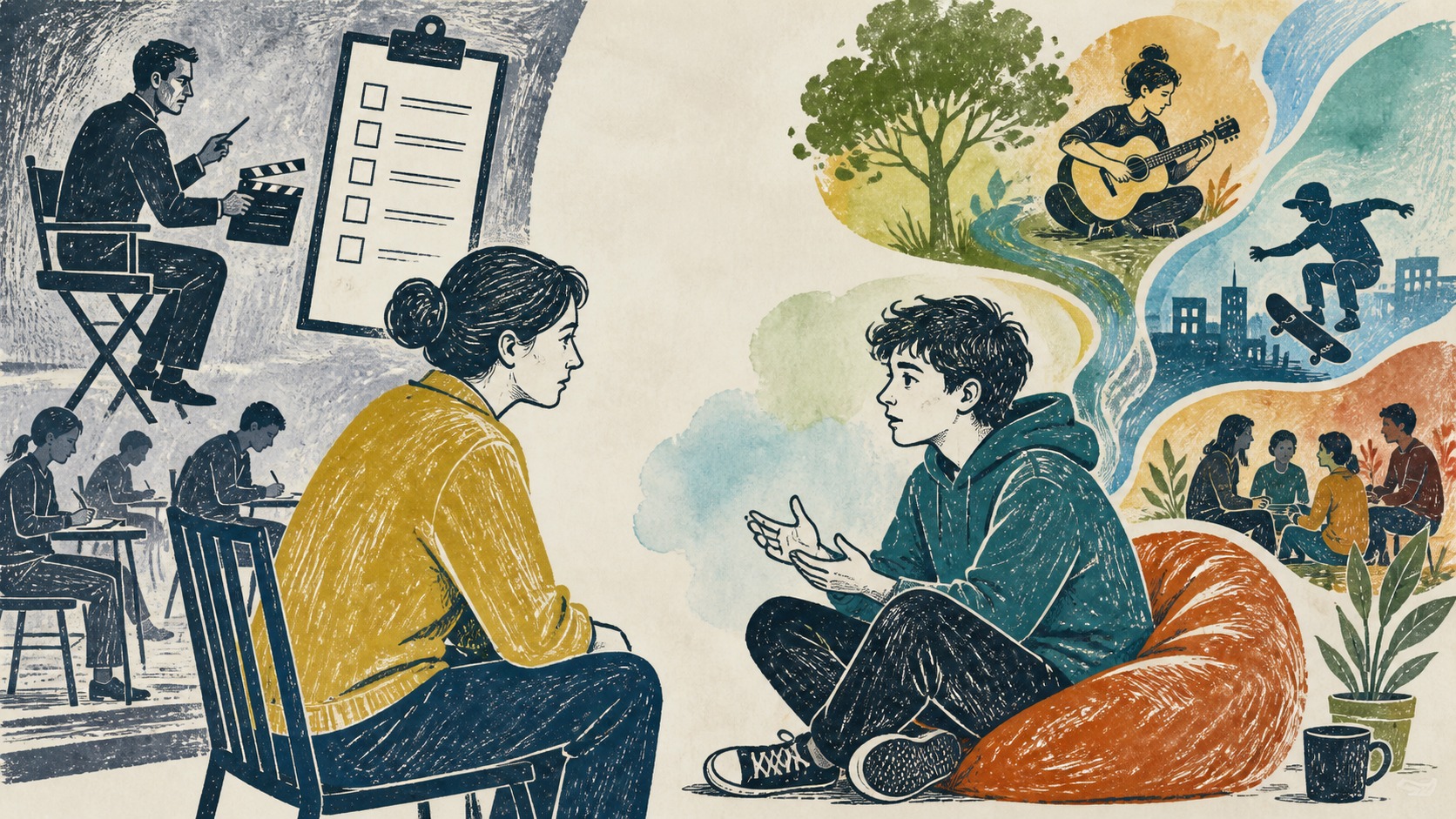
Coordinating support for an autistic person does not mean inviting everyone to speak about them. It means agreeing practical changes, respecting their voice, and sharing responsibility so everyday life becomes more accessible, predictable, and safe.
Start with a goal chosen by the person#
Start with a goal chosen by the person. A respectful agreement starts by asking what the person wants to change and what they do not want decided without them. They may want to arrive at school with less tension, take part in one chosen activity, have access to breaks, or understand a health appointment more clearly. The answer may be spoken, written, visual, through augmentative communication, or supported by a trusted person. Adults do not need to agree on every detail in order to recognise that the person’s experience is primary information. Before closing this point, the group agrees one small action that can start this week and a respectful way to check it.
Start with a goal chosen by the person. A respectful agreement starts by asking what the person wants to change and what they do not want decided without them.
Start with a goal chosen by the person. Next, replace broad phrases such as “needs more support” with checkable decisions: who prepares an advance notice, where the quiet space is, how a break is requested, what information is shared, and when the plan will be reviewed. WHO explains that environmental barriers shape participation; the NHS provides accessible health guidance; NICE publishes evidence-based guidance; Autism Europe advocates for rights and inclusion. These sources can inform questions, while every plan still needs to fit the individual and their context. Coordination works best with a short note that names one strength, one barrier, one adjustment, one responsible person, and one review date. Sharing only what is needed protects privacy. When an agreement does not work, review the barrier or adjustment before blaming the person. It is equally useful to record what reduced effort: an anticipated transition, a literal instruction, less noise, or more time to answer.
Bring together only the people who are needed#
Bring together only the people who are needed. A respectful agreement starts by asking what the person wants to change and what they do not want decided without them. They may want to arrive at school with less tension, take part in one chosen activity, have access to breaks, or understand a health appointment more clearly. The answer may be spoken, written, visual, through augmentative communication, or supported by a trusted person. Adults do not need to agree on every detail in order to recognise that the person’s experience is primary information. Before closing this point, the group agrees one small action that can start this week and a respectful way to check it.
Bring together only the people who are needed. Next, replace broad phrases such as “needs more support” with checkable decisions: who prepares an advance notice, where the quiet space is, how a break is requested, what information is shared, and when the plan will be reviewed. WHO explains that environmental barriers shape participation; the NHS provides accessible health guidance; NICE publishes evidence-based guidance; Autism Europe advocates for rights and inclusion. These sources can inform questions, while every plan still needs to fit the individual and their context. Coordination works best with a short note that names one strength, one barrier, one adjustment, one responsible person, and one review date. Sharing only what is needed protects privacy. When an agreement does not work, review the barrier or adjustment before blaming the person. It is equally useful to record what reduced effort: an anticipated transition, a literal instruction, less noise, or more time to answer.
Describe barriers and strengths precisely#
Describe barriers and strengths precisely. A respectful agreement starts by asking what the person wants to change and what they do not want decided without them. They may want to arrive at school with less tension, take part in one chosen activity, have access to breaks, or understand a health appointment more clearly. The answer may be spoken, written, visual, through augmentative communication, or supported by a trusted person. Adults do not need to agree on every detail in order to recognise that the person’s experience is primary information. Before closing this point, the group agrees one small action that can start this week and a respectful way to check it.
Describe barriers and strengths precisely. Next, replace broad phrases such as “needs more support” with checkable decisions: who prepares an advance notice, where the quiet space is, how a break is requested, what information is shared, and when the plan will be reviewed. WHO explains that environmental barriers shape participation; the NHS provides accessible health guidance; NICE publishes evidence-based guidance; Autism Europe advocates for rights and inclusion. These sources can inform questions, while every plan still needs to fit the individual and their context. Coordination works best with a short note that names one strength, one barrier, one adjustment, one responsible person, and one review date. Sharing only what is needed protects privacy. When an agreement does not work, review the barrier or adjustment before blaming the person. It is equally useful to record what reduced effort: an anticipated transition, a literal instruction, less noise, or more time to answer.
Turn an intention into observable agreements#
Turn an intention into observable agreements. A respectful agreement starts by asking what the person wants to change and what they do not want decided without them. They may want to arrive at school with less tension, take part in one chosen activity, have access to breaks, or understand a health appointment more clearly. The answer may be spoken, written, visual, through augmentative communication, or supported by a trusted person. Adults do not need to agree on every detail in order to recognise that the person’s experience is primary information. Before closing this point, the group agrees one small action that can start this week and a respectful way to check it.
Turn an intention into observable agreements. Next, replace broad phrases such as “needs more support” with checkable decisions: who prepares an advance notice, where the quiet space is, how a break is requested, what information is shared, and when the plan will be reviewed. WHO explains that environmental barriers shape participation; the NHS provides accessible health guidance; NICE publishes evidence-based guidance; Autism Europe advocates for rights and inclusion. These sources can inform questions, while every plan still needs to fit the individual and their context. Coordination works best with a short note that names one strength, one barrier, one adjustment, one responsible person, and one review date. Sharing only what is needed protects privacy. When an agreement does not work, review the barrier or adjustment before blaming the person. It is equally useful to record what reduced effort: an anticipated transition, a literal instruction, less noise, or more time to answer.
Share responsibility without overloading family#
Share responsibility without overloading family. A respectful agreement starts by asking what the person wants to change and what they do not want decided without them. They may want to arrive at school with less tension, take part in one chosen activity, have access to breaks, or understand a health appointment more clearly. The answer may be spoken, written, visual, through augmentative communication, or supported by a trusted person. Adults do not need to agree on every detail in order to recognise that the person’s experience is primary information. Before closing this point, the group agrees one small action that can start this week and a respectful way to check it.
Share responsibility without overloading family. Next, replace broad phrases such as “needs more support” with checkable decisions: who prepares an advance notice, where the quiet space is, how a break is requested, what information is shared, and when the plan will be reviewed. WHO explains that environmental barriers shape participation; the NHS provides accessible health guidance; NICE publishes evidence-based guidance; Autism Europe advocates for rights and inclusion. These sources can inform questions, while every plan still needs to fit the individual and their context. Coordination works best with a short note that names one strength, one barrier, one adjustment, one responsible person, and one review date. Sharing only what is needed protects privacy. When an agreement does not work, review the barrier or adjustment before blaming the person. It is equally useful to record what reduced effort: an anticipated transition, a literal instruction, less noise, or more time to answer.
Communicate without invading privacy#
Communicate without invading privacy. A respectful agreement starts by asking what the person wants to change and what they do not want decided without them. They may want to arrive at school with less tension, take part in one chosen activity, have access to breaks, or understand a health appointment more clearly. The answer may be spoken, written, visual, through augmentative communication, or supported by a trusted person. Adults do not need to agree on every detail in order to recognise that the person’s experience is primary information. Before closing this point, the group agrees one small action that can start this week and a respectful way to check it.
Communicate without invading privacy. Next, replace broad phrases such as “needs more support” with checkable decisions: who prepares an advance notice, where the quiet space is, how a break is requested, what information is shared, and when the plan will be reviewed. WHO explains that environmental barriers shape participation; the NHS provides accessible health guidance; NICE publishes evidence-based guidance; Autism Europe advocates for rights and inclusion. These sources can inform questions, while every plan still needs to fit the individual and their context. Coordination works best with a short note that names one strength, one barrier, one adjustment, one responsible person, and one review date. Sharing only what is needed protects privacy. When an agreement does not work, review the barrier or adjustment before blaming the person. It is equally useful to record what reduced effort: an anticipated transition, a literal instruction, less noise, or more time to answer.
Review the agreement on a specific date#
Review the agreement on a specific date. A respectful agreement starts by asking what the person wants to change and what they do not want decided without them. They may want to arrive at school with less tension, take part in one chosen activity, have access to breaks, or understand a health appointment more clearly. The answer may be spoken, written, visual, through augmentative communication, or supported by a trusted person. Adults do not need to agree on every detail in order to recognise that the person’s experience is primary information. Before closing this point, the group agrees one small action that can start this week and a respectful way to check it.
Review the agreement on a specific date. Next, replace broad phrases such as “needs more support” with checkable decisions: who prepares an advance notice, where the quiet space is, how a break is requested, what information is shared, and when the plan will be reviewed. WHO explains that environmental barriers shape participation; the NHS provides accessible health guidance; NICE publishes evidence-based guidance; Autism Europe advocates for rights and inclusion. These sources can inform questions, while every plan still needs to fit the individual and their context. Coordination works best with a short note that names one strength, one barrier, one adjustment, one responsible person, and one review date. Sharing only what is needed protects privacy. When an agreement does not work, review the barrier or adjustment before blaming the person. It is equally useful to record what reduced effort: an anticipated transition, a literal instruction, less noise, or more time to answer.
Case 1: travelling to school#
Case 1: travelling to school. Coordination works best with a short note that names one strength, one barrier, one adjustment, one responsible person, and one review date. Sharing only what is needed protects privacy. When an agreement does not work, review the barrier or adjustment before blaming the person. It is equally useful to record what reduced effort: an anticipated transition, a literal instruction, less noise, or more time to answer. Before closing this point, the group agrees one small action that can start this week and a respectful way to check it.
Case 1: travelling to school. Next, replace broad phrases such as “needs more support” with checkable decisions: who prepares an advance notice, where the quiet space is, how a break is requested, what information is shared, and when the plan will be reviewed. WHO explains that environmental barriers shape participation; the NHS provides accessible health guidance; NICE publishes evidence-based guidance; Autism Europe advocates for rights and inclusion. These sources can inform questions, while every plan still needs to fit the individual and their context. Coordination works best with a short note that names one strength, one barrier, one adjustment, one responsible person, and one review date. Sharing only what is needed protects privacy. When an agreement does not work, review the barrier or adjustment before blaming the person. It is equally useful to record what reduced effort: an anticipated transition, a literal instruction, less noise, or more time to answer.
Case 2: the dining hall and a sensory break#
Case 2: the dining hall and a sensory break. Coordination works best with a short note that names one strength, one barrier, one adjustment, one responsible person, and one review date. Sharing only what is needed protects privacy. When an agreement does not work, review the barrier or adjustment before blaming the person. It is equally useful to record what reduced effort: an anticipated transition, a literal instruction, less noise, or more time to answer. Before closing this point, the group agrees one small action that can start this week and a respectful way to check it.
Case 2: the dining hall and a sensory break. Next, replace broad phrases such as “needs more support” with checkable decisions: who prepares an advance notice, where the quiet space is, how a break is requested, what information is shared, and when the plan will be reviewed. WHO explains that environmental barriers shape participation; the NHS provides accessible health guidance; NICE publishes evidence-based guidance; Autism Europe advocates for rights and inclusion. These sources can inform questions, while every plan still needs to fit the individual and their context. Coordination works best with a short note that names one strength, one barrier, one adjustment, one responsible person, and one review date. Sharing only what is needed protects privacy. When an agreement does not work, review the barrier or adjustment before blaming the person. It is equally useful to record what reduced effort: an anticipated transition, a literal instruction, less noise, or more time to answer.
Case 3: a predictable health appointment#
Case 3: a predictable health appointment. Coordination works best with a short note that names one strength, one barrier, one adjustment, one responsible person, and one review date. Sharing only what is needed protects privacy. When an agreement does not work, review the barrier or adjustment before blaming the person. It is equally useful to record what reduced effort: an anticipated transition, a literal instruction, less noise, or more time to answer. Before closing this point, the group agrees one small action that can start this week and a respectful way to check it.
Case 3: a predictable health appointment. Next, replace broad phrases such as “needs more support” with checkable decisions: who prepares an advance notice, where the quiet space is, how a break is requested, what information is shared, and when the plan will be reviewed. WHO explains that environmental barriers shape participation; the NHS provides accessible health guidance; NICE publishes evidence-based guidance; Autism Europe advocates for rights and inclusion. These sources can inform questions, while every plan still needs to fit the individual and their context. Coordination works best with a short note that names one strength, one barrier, one adjustment, one responsible person, and one review date. Sharing only what is needed protects privacy. When an agreement does not work, review the barrier or adjustment before blaming the person. It is equally useful to record what reduced effort: an anticipated transition, a literal instruction, less noise, or more time to answer.
When to seek additional support and close the review#
When to seek additional support and close the review. A respectful agreement starts by asking what the person wants to change and what they do not want decided without them. They may want to arrive at school with less tension, take part in one chosen activity, have access to breaks, or understand a health appointment more clearly. The answer may be spoken, written, visual, through augmentative communication, or supported by a trusted person. Adults do not need to agree on every detail in order to recognise that the person’s experience is primary information. Before closing this point, the group agrees one small action that can start this week and a respectful way to check it.
When to seek additional support and close the review. Next, replace broad phrases such as “needs more support” with checkable decisions: who prepares an advance notice, where the quiet space is, how a break is requested, what information is shared, and when the plan will be reviewed. WHO explains that environmental barriers shape participation; the NHS provides accessible health guidance; NICE publishes evidence-based guidance; Autism Europe advocates for rights and inclusion. These sources can inform questions, while every plan still needs to fit the individual and their context. Coordination works best with a short note that names one strength, one barrier, one adjustment, one responsible person, and one review date. Sharing only what is needed protects privacy. When an agreement does not work, review the barrier or adjustment before blaming the person. It is equally useful to record what reduced effort: an anticipated transition, a literal instruction, less noise, or more time to answer.
WHO · NHS · NICE · Autism Europe.