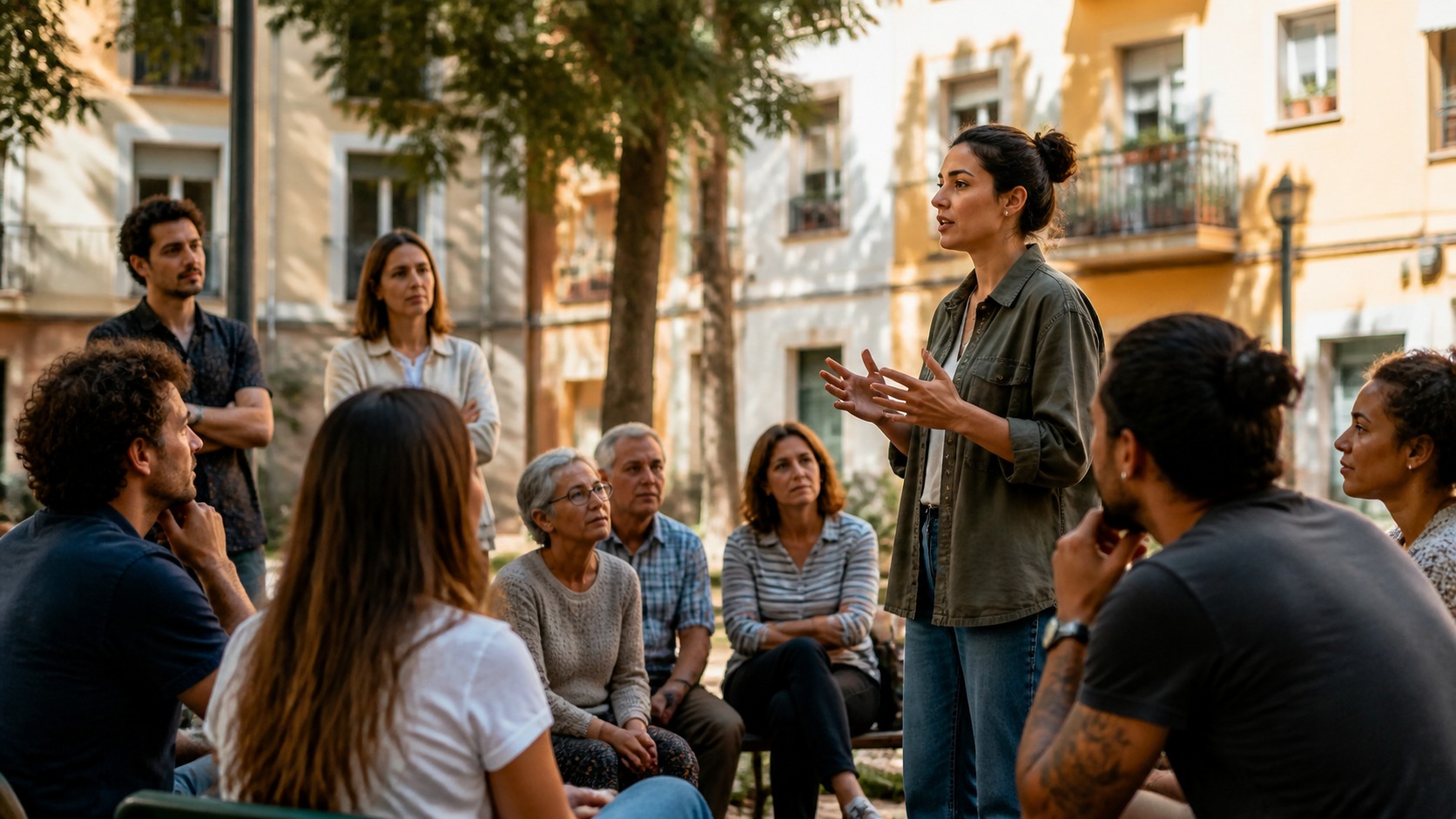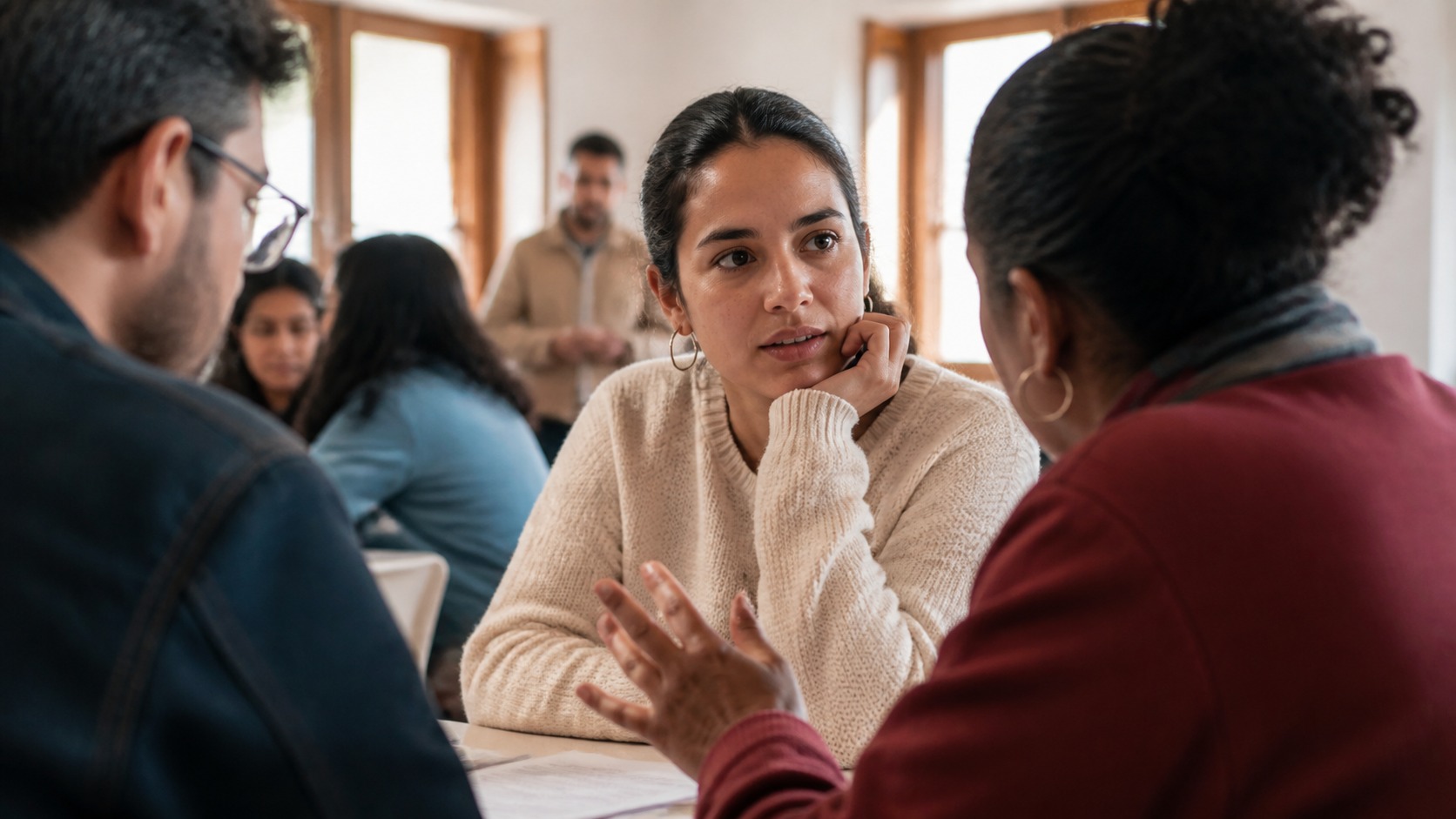
Shade looks simple after someone has planted, watered, pruned, cleaned, repaired, and defended the space for years. Climate preparedness rests on work rarely visible in photographs: opening refuges, checking fountains, calling someone who lives alone, clearing drains, and translating warnings. If those tasks have no owner, time, or budget, the promise relies on invisible effort. Recognising it is a matter of dignity, safety, and repair.
Infrastructure is also made of work#
A tree, fountain, canopy, or drain is described as an object. Its protective capacity, however, depends on continuous tasks. The tree needs soil, water, and care; the fountain needs testing and repair; the canopy needs installation and inspection; drainage needs cleaning and coordination. When an account counts installation and erases maintenance, it presents a human-produced outcome as natural.
A tree, fountain, canopy, or drain is described as an object. Its protective capacity, however, depends on continuous tasks.
Invisibility enables cuts. Construction has a date and recognition, while everyday care is distributed among overloaded teams, contractors, and volunteers. Infrastructure looks inexpensive because part of its cost is unrecorded. A later failure is called unexpected despite earlier signals. Someone needing shade, water, or a safe route pays the deficit through exposure, time, and risk.
Preparing a neighbourhood means inventorying both assets and tasks. Every resource has a person who opens, checks, cleans, communicates, repairs, and replaces, with backup and schedules. Nights, weekends, and prolonged events are included. A name without authority is insufficient. Responsibility needs resources, training, and escalation.
Invisible care is distributed unequally#
Community tasks frequently fall on women, migrants, cleaners, caretakers, maintenance teams, and social-service workers. Their roles and relationships are essential but receive less visibility and decision power. A climate strategy may appear innovative while increasing their workload. Justice requires measuring hours, conditions, exposure, and pay, not final results alone.
Families sustain public plans too. During a heatwave, someone calls an older person, organises transport, buys water, or changes schedules. That cooperation can be chosen and valuable without replacing services or being presumed available. Carers need rest, information, and support. Affection is not free infrastructure.
Volunteers contribute knowledge and trust but have limits. When a neighbourhood network must cover continuous shifts, handle sensitive data, or undertake rescues, the authority has transferred responsibility. Safe functions, insurance, materials, training, and referral are defined. Organisations receive funding for sustained public services. Participation cannot depend on unlimited sacrifice.
Dignity for people receiving and providing support#
Dignity prevents climate help becoming conditional charity. Access to water, shade, or shelter should not require public gratitude or unnecessary disclosure of health or administrative status. Procedures offer privacy, options, and adult treatment. People can enter, leave, and request support without becoming campaign subjects.
Workers deserve protection too. Opening a refuge during extreme heat exposes staff during travel and may extend shifts. Clearing drainage under rain or pruning after a storm involves risk. Plans include equipment, breaks, hydration, transport, staffing, and stopping authority. Heroism should not compensate for inadequate planning.
Recognition extends beyond thanks. It becomes decent contracts, schedules, training, participation, and attribution. When a caretaker's or carer's knowledge changes design, it is recorded and the result returned. Lived experience is not decorative. Dignity connects voice with decision-making capability.
Safety based on the complete journey#
A measure may be safe at its endpoint and dangerous on the journey. A refuge is cooled but its route lacks shade; a fountain works but the floor slips; a warning arrives but cannot be understood. Journey analysis exposes intermediate tasks: signposting, accompanying, maintaining, cleaning, informing, and responding. Every one needs an owner.
Plans need simultaneous-failure scenarios. Power may fail during heat, transport stop during rain, or a building close during smoke. Alternatives cannot be improvised. Generators, communication, routes, and relief teams are tested. Resilience depends on human capacity as well as equipment. A protocol without available people creates false safety.
Near misses supply signals: a slow door, low-pressure fountain, nearly blocked drain, or unanswered call. They are recorded without punishment and followed up. More reports may show confidence. Their absence does not prove that everything works. Channels must be accessible and known.
Case 1: school shade sustained by one person#
A school installs shade sails in a playground and presents successful adaptation. Each morning, the caretaker checks anchors, adjusts tension, and moves benches. During holidays no backup exists, and a damaged fitting remains undetected. A gust forces the playground to close when pupils return. The budget covered purchase rather than inspection, spares, or training.
The school documents tasks, assigns backup, commissions inspection, and creates a maintenance fund. Staff can close the area without pressure to preserve activities. Pupils and families contribute to timing and position without taking technical responsibility. Repair includes alternative shade and failure communication. The measure is assessed through safe hours, temperature, and continuity rather than installed area.
Case 2: clean drains before the storm#
A neighbourhood experiences repeated flooding. A municipal plan highlights a new drainage network, while cleaning workers report leaves and waste blocking critical points. Their notices reach different departments without creating an order. Before heavy rain, workers and residents clear areas urgently without suitable equipment. Construction appears to fail, although an invisible maintenance chain is part of the problem.
Review combines engineering maps with street knowledge. Points are prioritised, schedules coordinated, teams equipped, and one reporting channel created. Volunteers communicate incidents without entering dangerous areas. Indicators include obstruction, response time, and worker exposure. Damage is repaired and households informed. Infrastructure recovers effectiveness when work stops depending on improvisation.
Case 3: calls during a heatwave#
A community network telephones people living alone during alerts. The municipality announces broad coverage, but most calls come from older female volunteers using personal phones, without schedules, compensation, or privacy procedures. Some do not know where to refer symptoms. Contact totals conceal emotional workload, personal data, and a risk of offering safety the system cannot sustain.
The municipality agrees consent, secure tools, shifts, professional support, and referral criteria. It funds coordination and guarantees relief. People contacted choose channel and frequency. Response, resolved need, and volunteer wellbeing are measured, not calls alone. Cooperation continues without resting on infinite availability. Shared care becomes safer for both parties.
Making work visible through useful data#
Budgets should connect every asset to its life cycle. Installation, water, energy, cleaning, inspection, parts, staffing, communication, and withdrawal are estimated. Heavy-use and emergency scenarios are included. Comparing total costs avoids choosing an attractive solution that cannot be sustained. Repairability and local availability matter.
Indicators record hours, shifts, incidents, completed maintenance, response time, and physical or emotional workload. Results are separated by role to detect inequality. A high opening rate may depend on overtime. A full refuge may indicate need as well as insufficient distributed resources. Context prevents productivity becoming pressure.
Accounts explain which task enabled an outcome and at what cost. They are volunteered with privacy. Sustained research participation is paid. Reports return findings and changes. Knowledge is not extracted from workers and residents to be archived; it connects to budget and decision.
Cooperation with limits and authority#
Preparedness brings together planning, health, social services, maintenance, transport, education, civil protection, businesses, and organisations. Every party knows function and backup. Committees do not replace operational command during emergencies. A coordinator can activate resources and communicate. Responsibilities are reviewed when personnel or contracts change.
Meetings include people doing everyday work, not management alone. Documents arrive early in accessible formats. Lower-status participants speak without retaliation. Proposals receive reasoned responses. Rejected worker or community risks retain evidence and review.
Exercises test work rather than equipment alone. They examine opening time, material movement, cover for breaks, absence, and referral. Failures then receive owners and dates. An exercise that finds problems is more valuable than a perfect performance.
Maintenance as a policy of repair#
Many neighbourhoods begin with accumulated inequality: fewer trees, poorly insulated homes, exposed employment, and distant services. Equal resource distribution can preserve that gap. Repair prioritises places where exposure is higher and response capacity lower. Decisions are explained and reviewed with communities without stigmatising the area.
When failure causes harm, health, expense, time, and opportunity are addressed. Records are corrected and support offered. An apology identifies responsibility. The person chooses their involvement in investigation. System repair changes design, staffing, maintenance, and budget. Every action has timing and verification.
Continuity is checked later. Closing an order or planting a tree does not demonstrate protection. Shade over time, operation during events, and user experience are measured. A failed solution is reopened. Humility accepts correction. Previous investment cannot justify ineffective infrastructure.
Institutional sources for guiding the work#
The World Health Organization provides information about heat, climate, and health. The Intergovernmental Panel on Climate Change brings together evidence concerning impacts, adaptation, and vulnerability. These references help connect exposure, capacity, and inequality.
The International Labour Organization offers resources on the care economy and decent work. UN-Habitat addresses climate change and urban environments. These frameworks need applicable rules, local data, and community knowledge. None replaces observing who maintains each resource.
Sustained shade is worth more#
Shared shade protects because someone positioned, cared for, and maintained it. Making that network visible does not reduce infrastructure value; it allows funding and improvement. Dignity recognises those receiving and providing support. Safety avoids dependence on heroism. Repair directs resources towards real inequalities.
A prepared neighbourhood is recognised not only by plans or installations but by everyday capacity to sustain them. Work stops being an invisible layer and becomes part of design. When each task has time, authority, and money, what looks simple can truly be simple for its user. Shade then ceases to be a promise and becomes available public care. That continuity also preserves trust: residents know who will respond, workers know their limits, and public institutions can correct small failures before they become emergencies. The neighbourhood gains not only equipment, but durable collective capacity.