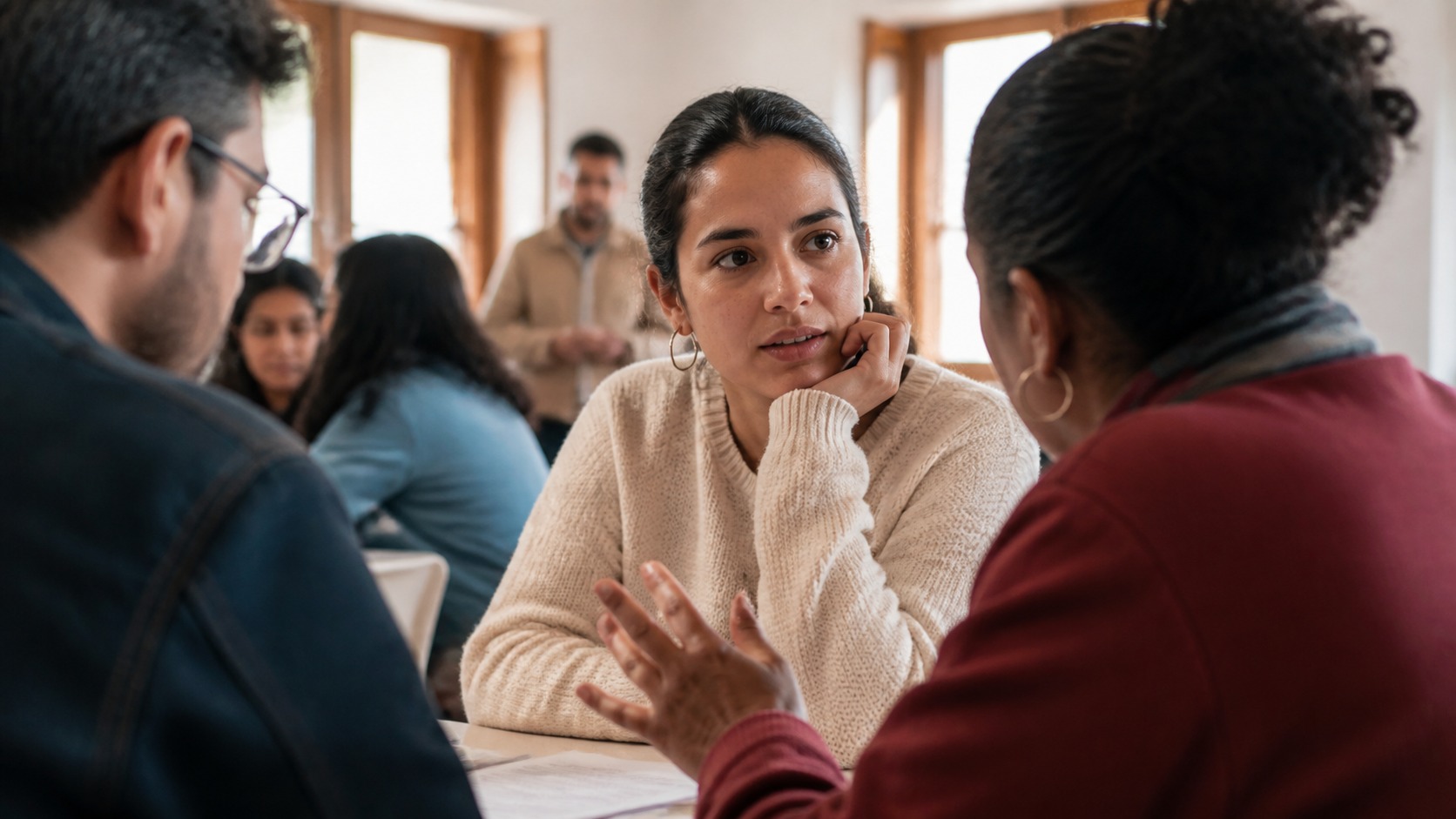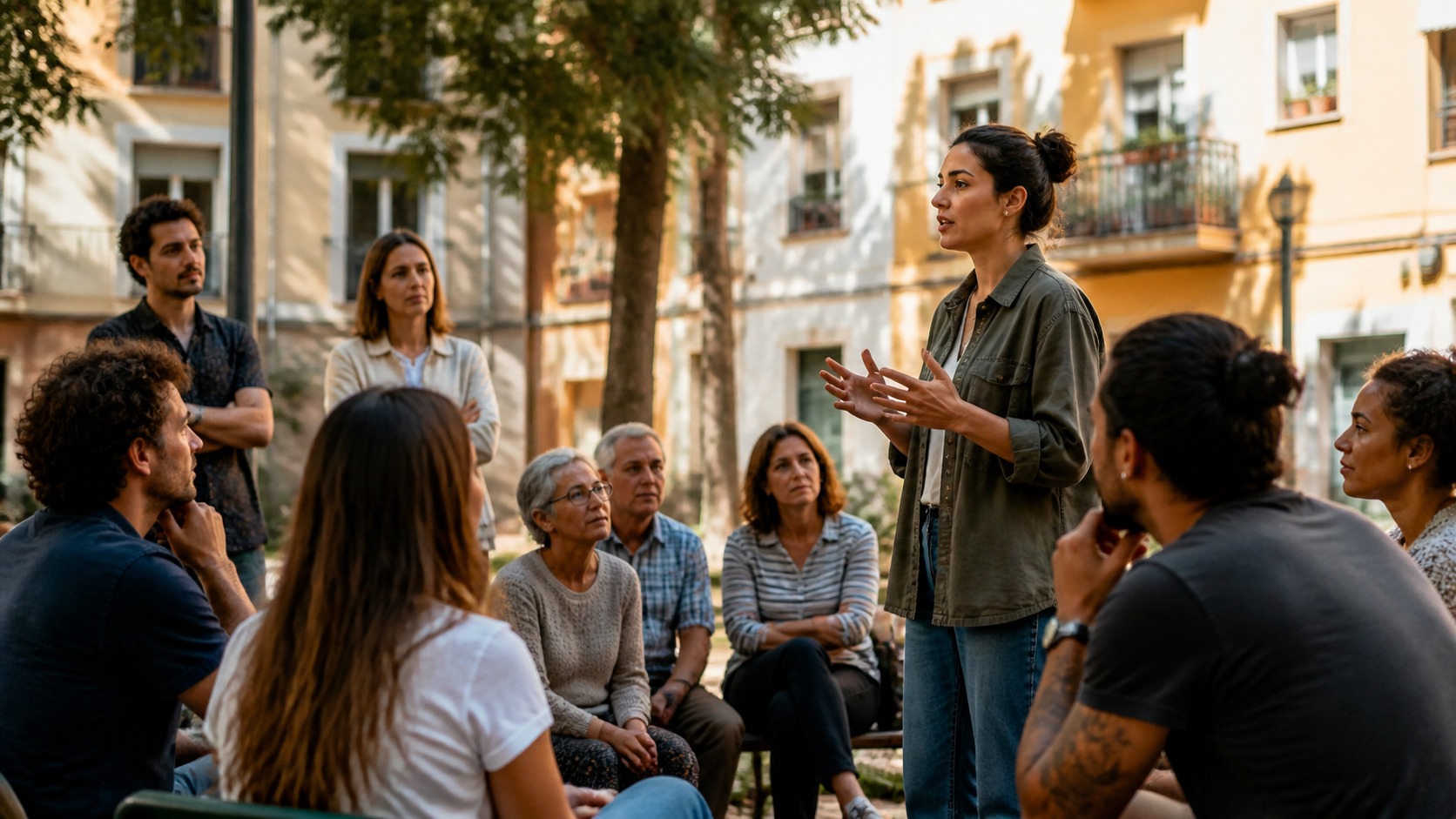
The first fifteen minutes of a heatwave, a flood warning, or the opening of a climate refuge tell the truth about a neighbourhood. They reveal whether information is understood, shade stands where it is needed, someone can arrive without assistance, and community networks know their role. Preparedness is demonstrated not in a presentation but in that real arrival. Knowledge, humility, and cooperation turn a climate promise into shared everyday care.
Real arrival tests the design#
A map may show a nearby refuge and a protocol may declare the response active. Experience starts elsewhere: a person leaves a hot home, crosses unshaded streets, waits for transport, and searches for a poorly marked door. The first minutes bring temperature, mobility, information, trust, and time together. If one element fails, the advertised infrastructure may be inaccessible.
A map may show a nearby refuge and a protocol may declare the response active. Experience starts elsewhere: a person leaves a hot home, crosses unshaded streets, waits for transport, and searches for a poorly marked door.
Launches usually occur under favourable conditions. Staffing is sufficient, materials are new, and participants have notice. A real emergency brings noise, fear, varied languages, power cuts, and people unfamiliar with the plan. Preparation means rehearsing that complexity. The journey from home to support is observed, including nights, weekends, and lower staffing periods.
Questions are part of arrival too. Is entry free? Are animals allowed? Will there be water, medication, or privacy? What happens with children and dependent people? Requiring several departmental enquiries consumes time and trust. Essential information should arrive early, clearly, through several accessible channels. A neighbourhood cannot depend on each person interpreting administrative language under stress.
Shade is health infrastructure#
Shade reduces heat exposure in streets, squares, stops, and playgrounds. It is not decoration or a seasonal luxury. Its value depends on position, timing, continuity, quality, and an opportunity to rest. A young tree may be a future investment without protecting anyone today. Solutions combine trees, structures, water, suitable surfaces, and maintenance without moving heat elsewhere or blocking routes.
Shared means available without compulsory purchase, hostile monitoring, or barriers. A commercial terrace cannot replace public space where anyone may sit. Distribution should prioritise everyday routes, health centres, schools, markets, transport, and areas with greater exposure. Thermal data helps, but local experience shows schedules, uses, and obstacles.
Shade needs care. Trees require soil, water, and pruning; canopies need inspection; fountains need quality and access; benches need position and support. An installation budget without maintenance creates a brief promise. Municipal teams and communities receive clear responsibilities without placing technical duties on volunteers. Reporting channels make failures visible and answerable.
Knowledge that combines data and experience#
A city's average temperature cannot describe every street or home. Heat islands, materials, density, orientation, vegetation, and ventilation create differences. Age, health, income, occupation, isolation, and access to cooling matter as well. Analysis combines sensors, images, services, and accounts. Data is interpreted with context and privacy protection.
Local knowledge identifies details a model can miss: a stop without a bench, a broken fountain, the first basement to flood, or a street avoided for safety. People should not be consulted only to validate completed decisions. They participate while priorities can change and receive feedback. Where contribution becomes sustained work, support and payment are planned.
Uncertainty should be communicated. Forecasts offer no absolute certainty but enable thresholds and scenarios. People are told what is known, what may change, and which signal triggers each measure. Humility prevents promises of total protection while refusing to use uncertainty as a reason for inaction. Reversible measures can begin as learning continues.
Cooperation before the alert#
An emergency is not the moment to discover who holds keys, transport, or contact lists. The plan identifies owners, backups, and schedules. Health, social services, maintenance, schools, businesses, civil protection, and associations know their function. Cooperation does not mean diffuse responsibility; each critical action belongs to a person or unit with authority and resources.
Neighbourhood networks can identify isolation and share information without replacing professional services. Consent and privacy are protected; a list of vulnerable people cannot circulate without limits. Someone accepting contact can choose channel and frequency. Informal support receives material, training, and an escalation route. Community care should not become endless unpaid work.
Exercises follow the first fifteen minutes. They test message, receipt, route, opening, indoor temperature, water, registration, privacy, and health referral. People with varied mobility and communication requirements participate. Failures and repair dates are documented. A useful exercise may be uncomfortable because it shows the plan does not work; that is precisely how it prevents a real problem.
Case 1: a climate refuge behind a closed door#
A neighbourhood advertises a library as a refuge during a heatwave. An older woman walks there and finds the side entrance locked; a sign points to a ramp in full sun, and the main door is too heavy. Inside, staff do not know whether they can offer water. Municipal reporting counts an open refuge because the building operates. The first minutes reveal that administrative availability is not safe access.
Review examines the complete journey. An accessible shaded entrance, readable signage, seating, water, and a welcome protocol are introduced. Hours extend during alerts and transport is coordinated. Staff and volunteers understand limits and referral. The user contributes to evaluation without becoming responsible for design. Temperature, use, incidents, and withdrawals are recorded with privacy. The opened door turns a nominal refuge into a real resource.
Case 2: fifteen minutes after a flood warning#
Heavy rain triggers mobile messages in a low-lying area. The warning says to avoid travel, but a family lives on a floor exposed to water and does not know whether to leave. The message uses one language and the siren is inaudible indoors. Neighbours improvise calls while an evacuation street begins to flood. The protocol rehearsed transmission rather than comprehension or decision.
The municipality redesigns alerts with direct wording, several languages, text and sound, accessible maps, and actions by area. High points, mobility support, and people responsible for opening spaces are established. The neighbourhood network confirms receipt without attempting dangerous rescue. Exercises measure time to understanding and arrival, not message totals. The case shows that early minutes depend on accumulated trust and decisions explained before the storm.
Case 3: an unprotected bus stop#
A health centre provides cooling and care during heat events. Its nearest bus stop, however, has neither shade nor a bench. A person with respiratory illness waits twenty minutes and arrives exhausted. The service counts correct care from the entrance. Planning separated mobility from health and left risk in the space between.
Transport, health, and planning teams observe the route. They install safe temporary shade, accessible seating, travel-time information, and maintenance priority; long-term redesign adds vegetation and suitable materials. Alert periods receive adjusted frequency and alternative transport. The indicator incorporates journey exposure. A small shared shade provides greater protection than a campaign that leaves waiting unchanged.
Designing for freedom and dignity#
Climate measures should not require diagnosis disclosure to obtain water, shade, or rest. Spaces allow entry, exit, seating choice, and privacy. Rules are explained without infantilisation. Supporters, carers, and animals are admitted under clear conditions. Safety is not used to exclude automatically a person arriving differently.
Homes need attention too. Asking everyone to remain indoors can be dangerous in poorly insulated housing. Messages offer concrete alternatives and acknowledge limits. Building renovation, energy, and social-protection programmes should connect with immediate response. Preparedness cannot rely only on individual behaviour where material conditions are unequal.
Participation decides where resources stand and how they operate. Accessible meetings, varied schedules, and asynchronous contributions are provided. Participatory maps combine with technical data. Proposals receive a response. A process collecting stories without changing priorities extracts time and erodes trust.
Maintenance and continuity#
Climate infrastructure is inspected before the season and during events. Trees, canopies, fountains, alarms, drainage, generators, signs, and digital systems have inventories, owners, and alternatives. Failures are communicated. Parts and contracts are prepared. A resource failing on the critical day cannot be valued because it worked last month.
Teams need rest and handovers. Heatwaves and rain events may last several days. A plan based on continuous volunteering becomes exhausted. Shifts, worker care, transport, and communication are calculated. Community organisations receive resources when performing public functions. Cooperation is sustained through conditions, not goodwill alone.
After each event, timing, harm, near misses, access, complaints, and inequality are reviewed. People who did not use resources are heard to identify barriers. Actions receive owners and dates. Repair may correct a record, repay a cost, address harm, or change infrastructure. Learning closes the cycle.
Indicators that tell the complete experience#
Counting trees, messages, or refuge places is insufficient. Effective shade by hour, safe distance, temperature, waiting time, water, accessibility, understanding, and continuity are measured. Data can be separated by area without stigmatisation. Averages may hide critical streets. Accounts help explain why a resource remains unused.
Low attendance does not prove low need. It may indicate lack of awareness, distrust, impossible transport, or unclear rules. Withdrawals and alternative channels are examined. Collection is limited to necessary data. Nobody should avoid a refuge through fear of surveillance or immigration control. Purpose and safeguards are communicated.
Success includes created capacity: trained staff, connected networks, funded maintenance, and reviewable decisions. It includes people's autonomy to understand and act. A campaign can reach many telephones and leave little capacity. A small, well-positioned resource can change a whole route. Indicators must show that difference.
Institutional sources for rigorous action#
The World Health Organization provides information concerning heat, climate, and health. The Intergovernmental Panel on Climate Change supplies evidence on impacts, adaptation, and vulnerability. These sources support connections between physical exposure and social conditions.
UN-Habitat offers institutional resources on climate change and urban environments. The European Environment Agency provides information about adaptation. Frameworks require translation into local climate, regulation, and community. No document replaces walking the street at its most difficult hour.
Fifteen minutes that build trust#
The first fifteen minutes tell the truth because they condense decisions made over years: trees, housing, transport, communication, maintenance, and relationships. Knowledge identifies exposure, humility acknowledges failures, and cooperation connects capabilities. Preparedness becomes visible when someone knows what to do and finds support without unnecessary obstacles.
A shared shade is worth more than a hundred promises when it stands in the right place, is maintained, and can be used freely. It cannot solve the climate crisis alone, but it embodies just adaptation. A prepared neighbourhood turns each experience into learning and every resource into part of a network. Real arrival stops being a test that individuals must pass and becomes a common responsibility.