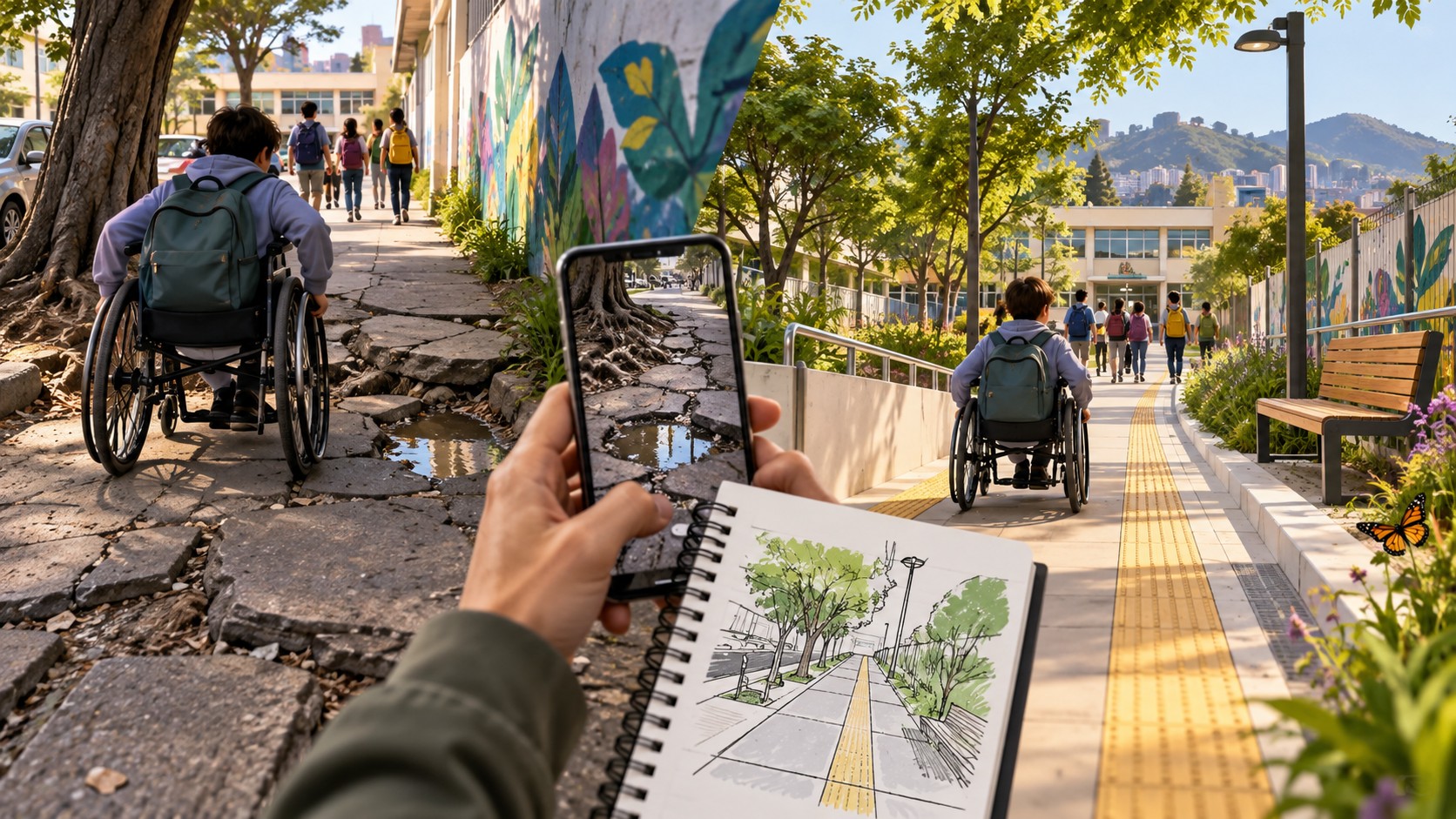
During a fictional discussion about a damaged pavement, somebody suggests filming a neighbour as she tries to negotiate the most difficult section. The intention is to make the problem clear and attract attention. She wants the access route reviewed, but she does not want to appear in a video or repeat an uncomfortable manoeuvre. Her refusal raises a question for the group: how can collaboration continue when the proposed way of requesting an improvement requires something that one participant does not wish to give?
The request can survive a change of method#
In this scene, agreement about improving the route does not include agreement about filming. Confusing those matters can make somebody feel obliged to accept exposure in order to demonstrate that the outcome matters to them. The boundary neither invalidates the difficulty nor makes the observation less legitimate. It concerns a particular action proposed at a particular moment. Discussion can progress when the people organising the request separate their shared purpose from the method they originally imagined would help them achieve it.
In this scene, agreement about improving the route does not include agreement about filming.
A photograph of the empty pavement, a sketch of the turning point or a description of the journey could provide information without making a person perform a demonstration. Their usefulness depends on the enquiry and on what its recipient needs, but they deserve consideration before anyone claims that only an emotionally compelling video will work. A message's effectiveness is not known in advance. Promising that a personal story will secure a faster response is therefore no basis for persuading someone to share it after they have expressed reservations.
The person proposing the video may feel disappointed after spending time preparing the idea. That effort has value, but it does not turn somebody else's participation into a debt. They can explain why filming seemed useful, listen to the refusal and explore a different resource. Defending every detail is not necessary to retain a place in the group. A proposal open to revision makes participation easier; one requiring complete agreement may exclude precisely those people who understand the everyday difficulty most closely.
A specific refusal leaves the wider relationship intact#
The neighbour might agree to the location being named, supply a written observation and decline to have her journey filmed. Those choices can coexist. She does not have to choose between withdrawing altogether and taking part in every group activity. A coordinator can record the scope of her contribution straightforwardly, without questioning her about private reasons. Sometimes knowing what someone has not authorised and what they would like to contribute is enough to keep working respectfully. Further personal explanation need not become a condition of participation.
Precision also helps when a boundary concerns time. Somebody might review a draft one afternoon without being available for telephone calls throughout the week. Another person could attend a site visit but be unable to represent the participants afterwards. These limits describe tasks and availability; they do not measure interest, commitment or generosity. Once they become judgements about character, every adjustment begins to sound like a personal rejection. The discussion then loses sight of the practical matter that brought the people together.
Some refusals come after an initial agreement. Perhaps the draft video reveals more information than expected, or the person discovers that circulation will be wider than originally understood. That development deserves attention before the material is used. The discussion need not focus on proving who remembers the first conversation most accurately. It can focus instead on the content that now exists, its proposed use and whether the people appearing in it remain comfortable with that specific use under the circumstances currently being considered.
Disappointment need not withdraw care#
Someone in the imagined group might hear the refusal as a lack of trust. There can be room to acknowledge that feeling without making it a bill the neighbour must pay. Disagreement about a photograph does not summarise an entire working relationship. People can appreciate assistance and make a different decision about public exposure. Thanking someone for an idea does not require accepting it. Nor does accepting help give the helper continuing authority to decide the subsequent steps without having another conversation.
The response to a boundary matters because it signals what will happen when future differences arise. If the person keeps receiving information and retains the forms of participation already agreed, the group shows that collaboration can accommodate nuance. Excluding them as punishment communicates something else, even if no threat is spoken. Caring for the relationship here means preserving the useful parts of the agreement, explaining what has changed and preventing one disagreement from spreading into tasks that were never part of the dispute.
Hiding the refusal to present nonexistent unanimity would not help either. A document sent to the responsible organisation can describe the damage and the observations received without claiming support from every local resident. Those signing or authorising a contribution keep ownership of their voice. Those preferring not to appear do not become opponents of improvement. This distinction lets the request be accurate about its scope. It also allows a small group to raise a worthwhile issue without speaking as though an entire community has endorsed its approach.
Practical help can have conditions too#
A boundary may emerge far from a campaign, on the route itself. Somebody offers to help another person negotiate an uneven section, while that person would rather stop or take a different route. The wish to help does not establish which intervention is wanted or how it should be provided. Asking before acting creates a real possibility of agreement. If the offer is declined, remaining quietly available may be more helpful than insisting, touching personal belongings or taking action involving another person's body on an uninvited basis.
This scene is not intended to teach an assistance technique. It identifies an everyday distinction: knowing about a barrier is not the same as knowing the preferences of the person encountering it. Someone may welcome a door being held and decline a different intervention. They may also change their mind during the journey. Help becomes clearer when it follows expressed preferences and recognises its own limits. If nobody knows how to perform an action appropriately, improvising simply to avoid an awkward moment does not demonstrate greater care.
The person accompanying someone can also decline a task beyond their capacity. They might offer to report the issue while being unable to attend every morning or undertake a repair. Naming that scope before it becomes an expectation prevents absences that others struggle to interpret. A supportive relationship does not demand unlimited abilities from either side. It works on firmer ground when the available offers are clear and the search for other options does not become a reproach directed at whoever has acknowledged a limitation.
Collaboration without a performance of suffering#
When preparing the pavement report, the group could check whether its information describes the obstacle or relies on displaying an experience somebody wished to keep private. The location, the interruption and a question addressed to the organisation examining it can support a comprehensible message. A personal account freely shared adds another perspective, but it should not become a compulsory entry ticket to discussion. The seriousness of a difficulty cannot be measured by the amount of private experience a person is prepared to disclose.
A boundary may also leave something undone. Perhaps no suitable photograph is found, or too few people can attend the proposed meeting. Changing the format, reducing the scope or postponing an action can then be an honest consequence of the agreement available. Continuity does not require preserving the original plan at any cost. It requires understanding which collaboration actually exists and building the next step around it. Tiredness, silence and a lack of alternatives should not be presented as though they express willing consent.
For someone involved in a similar initiative, a practical possibility is to review one request made of another person and distinguish its purpose from the contribution being sought. In the opening scene, the group could retain its request for a review, replace the video with a description of the section and check what the neighbour wishes to share. The route would remain a shared concern. Her body and her personal story would not need to become the price of getting somebody to examine the pavement.