
Reflections & stories
Ideas, experiences and learnings about education, technology and coexistence.
Showing 265–276 of 1,735 articles

Fluidity deceives: seeing the path to the source
Textual fluency generates confidence that evidence does not always support. To protect truth, we must make the origin of every claim visible and clearly distinguish between facts, inferences, and decisions.
Read article
The decision already made: Information and truth
Search order predefines reality. Relevance mixes authority, popularity, and business without users seeing the weights. We analyze how this architecture conditions truth.
Read article
Information and truth: beyond the censorship-freedom binary
Publishing, amplifying, monetizing, and recommending are distinct acts. Understanding their differences allows for a rigorous evaluation of digital decisions, preventing the debate from collapsing into simplistic slogans about freedom or control.
Read article
A real photograph can still tell the wrong story
An authentic photograph can support a mistaken conclusion. Separating what it shows from the date, location and intention attached to it helps us examine a claim without treating its surrounding story as an established fact.
Read article
Looking Slower: The Ethics of Informational Verification
Delay is not a failure but a tool. Separating testimony from data and conclusion helps reduce harm and build more reliable information for the public.
Read article
Information and Truth: The Pending Conversation
Public trust is not regained with a generic denial. Asking for trust without offering evidence reinforces the suspicion of those who already feel ignored.
Read article
A familiar voice is no longer enough to confirm a message
An audio message that sounds like someone from the neighbourhood can prompt action before anyone checks it. Synthetic content makes reliable ways of confirming local announcements essential, without turning everyday trust into a permanent state of suspicion.
Read article
The late correction: truth, platforms, and digital memory
Fixing the source does not stop the spread of error. We analyze how platforms amplify misinformation and what concrete practices can help manage truth in the digital age.
Read article
What gets left behind when we press share
A cropped notice can become a certainty that nobody has checked. Keeping its date, scope and source takes little room, yet changes the responsibility of the person sharing it and the choices available to its readers.
Read article
Beyond Verification: The Weight of Evidence
Verification offers certainty where only clues exist. Validating a data point in an instant does not guarantee its future truth or erase the human context surrounding it.
Read article
Automation and Work: Who Distributes the Benefits
Technology does not decide on its own who gains time or income. The next debate must focus on how productivity is distributed and who bears responsibility when the system fails or excludes.
Read article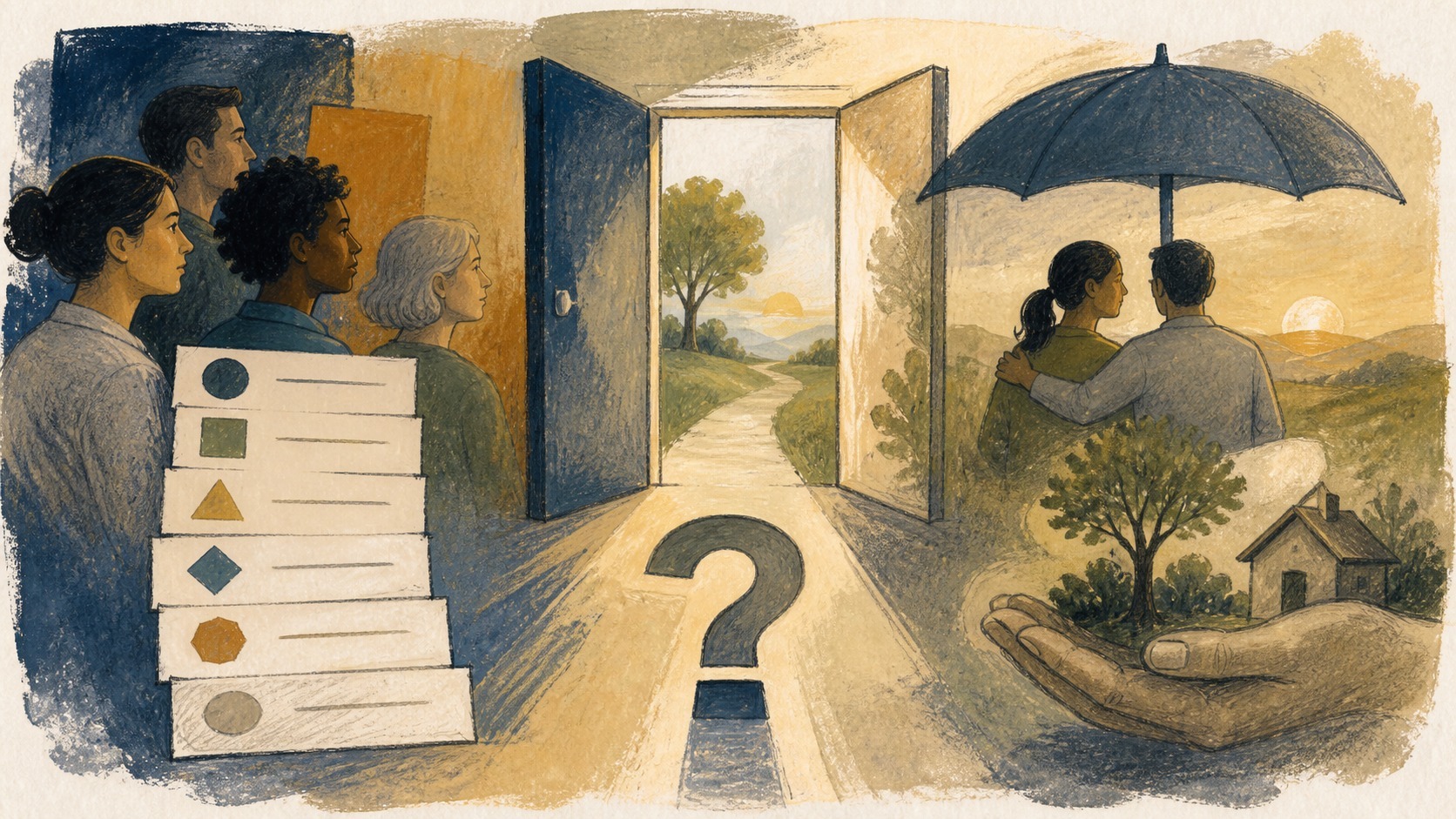
Automation and work: the missing conversation
Including the person doing the task in system design prevents turning experience into resistance and reduces future correction costs.
Read article