Knowing whether a return to school is working does not require minute-by-minute surveillance or waiting for everything to be perfect. It requires noticing small signs, talking respectfully, and deciding in time when an everyday adjustment is enough and when extra help is appropriate. This guide offers practical criteria for students, families, and schools.
Look for trends, not one isolated day#
One difficult morning does not prove that a plan has failed, and one calm week does not prove that difficulty has gone away. For two or three weeks, note simple information: days present, approximate arrival time, tense moments, support used, and how the student felt at the end of the day. The purpose is not to build a case file; it is to recognize a trend. If late arrivals fall from four to one per week and the student says entering feels less worrying, that is useful evidence even when challenges remain. Keep the record short and known to the people involved.
One difficult morning does not prove that a plan has failed, and one calm week does not prove that difficulty has gone away.
Define what progress means#
Before evaluating, the team needs to agree on the change it hopes to see. For one student it may be leaving home five minutes earlier; for another, staying through the whole first lesson; for another, returning after an absence without feeling required to explain themselves to the group. An observable goal prevents arguments based only on impressions. It also protects against unfair targets, such as demanding perfect attendance from someone living with unstable family, health, or transport circumstances. Progress means that a barrier is losing force and that the person is regaining the ability to participate.
Hear the student's experience#
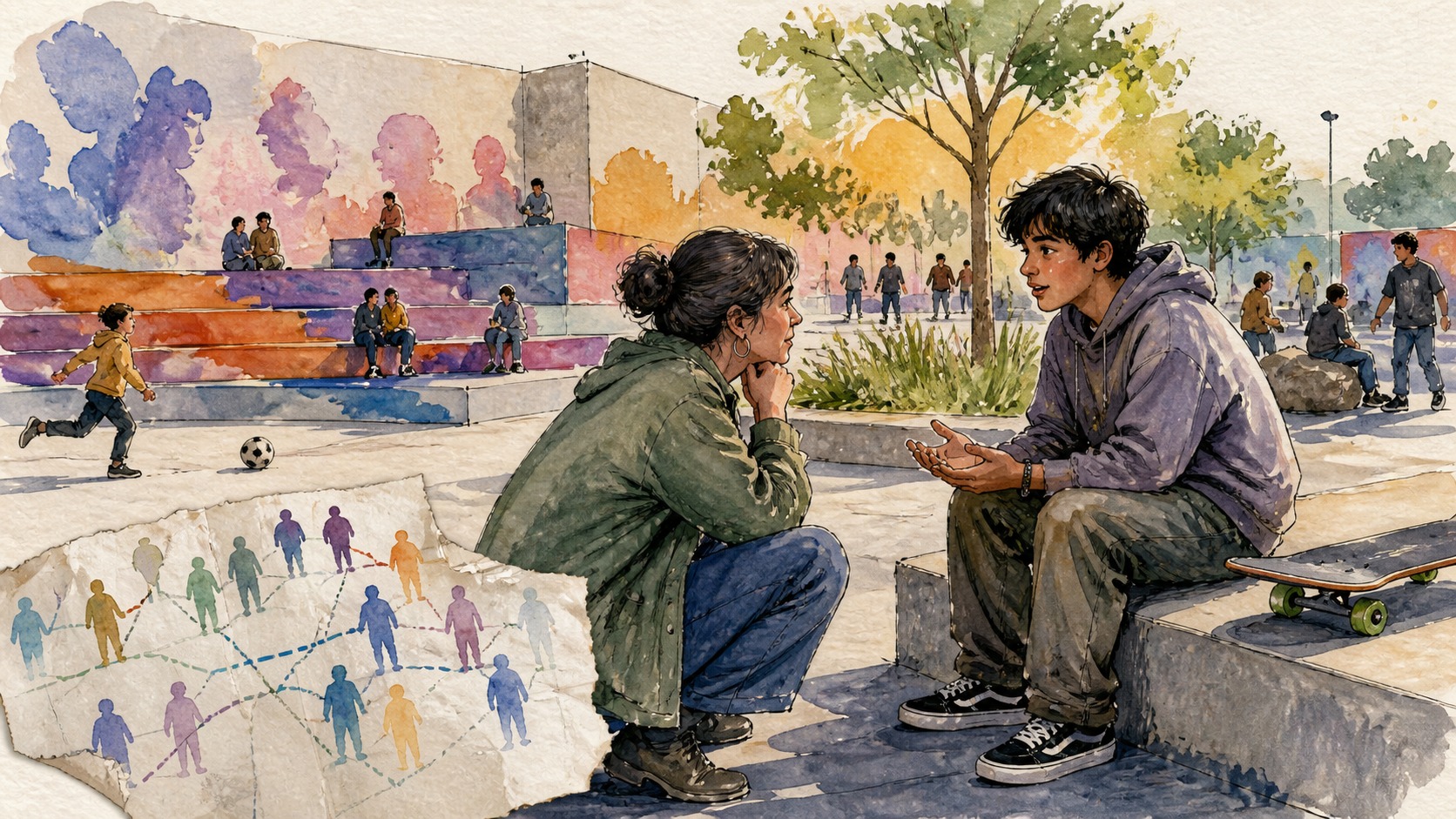
Numbers do not tell the whole story. A weekly question can complete the record: what made attendance more possible this week, which moment was hardest, which support helped, and which was uncomfortable? The answer may be spoken, written, or shown on a scale. If a student arrives every day but has recurring stomach pain, fear of break time, or extreme exhaustion, attendance alone is not enough improvement. Listening reveals whether an apparently effective support is transferring its cost to wellbeing. Student participation makes the information more accurate and stops decisions being made only about them.
Signs that the plan is helping#
Some gains appear before attendance is fully stable. The student prepares part of the routine the night before, can discuss school without ending the conversation, identifies whom to ask for help, reconnects with a subject they enjoy, or enters with less accompaniment. In class, they may begin a task even without finishing it, ask a question, or use an agreed strategy instead of withdrawing. Families may notice fewer morning arguments; school may need less last-minute improvisation. These are not demands to impose. They are clues about what is reducing the barrier and deserves to be kept.
Signs that call for an early review#
Review the agreement if absence increases, every return becomes harder, repeated physical symptoms appear before school, there is isolation, conflict, sharp mood change, or support relies on one person who can no longer sustain it. It also matters when adults stop sharing information and begin assigning blame. An alert is neither a diagnosis nor a culprit. It means that the first explanation may not account for what is happening. Rather than add sanctions, describe the situation again, ask what changed, and check for learning, safety, health, care, or access barriers that have not yet been explored.
Case 1: partial improvement worth continuing#
Marcos missed Mondays because on Sunday night he anticipated an impossible week. His family and tutor agreed to prepare Monday on Friday: bag, journey, and one short task he could begin on arrival. For three weeks he was still late on some days, but he attended every Monday and stopped asking to stay home. At review they did not declare victory or tighten the target. They kept Friday preparation and added a five-minute Thursday conversation to anticipate tests. The important sign was that Marcos could name what worried him before it became an absence.
Case 2: when information changes the hypothesis#
Sara returned after several absences and initially kept the timetable. Yet at every break she went to the nurse and asked to leave before physical education. Attendance data looked positive, but her account revealed teasing in the changing room. The school used its safeguarding and coexistence procedures, agreed on a trusted adult, and stopped Sara having to repeat the problem. Her family no longer read the symptoms as lack of effort. Asking for help was not punishment or drama; it recognized that the barrier was safety and required a school response, not merely another home routine.
Case 3: a clearly explained referral#
Youssef had accumulating absences and froze when facing reading tasks. His tutor had offered shorter work periods and adapted material, but the block continued. At a meeting, the learning-support service explained what it could contribute: observe learning needs, suggest adjustments, and coordinate with the family. They clarified what information would be shared, what consent was needed, and when recommendations would be reviewed. Youssef chose written instructions and work with a partner twice a week. The referral helped because it had a specific goal, a responsible person, and a follow-up date, not because it added a label.
When to seek professional or specialist support#
Widening support is appropriate when ordinary measures have been tried carefully and do not reduce the barrier, when health or safety may be at risk, when distress persists, or when family and school need guidance to act together. Depending on the setting, this may involve school counselling, health professionals, social services, mediation, or community resources. Seeking help does not require waiting for a crisis. Explain the reason, confidentiality limits, decisions belonging to each service, and how the student will be kept informed. Where there is immediate risk, follow local safeguarding and emergency channels.
Coordinate without invading privacy#
Useful coordination shares the minimum needed: the goal being worked on, support available, signs to observe, and who will respond if difficulty appears. It does not require circulating diagnoses, personal messages, or family details. Before a referral, ask what the student knows, what they want explained, and which information is relevant. Privacy increases trust, and trust produces more reliable information. A three-line note after each review—progress, obstacle, next step—is usually more effective than an anxious chain of messages. When information has a purpose and a review date, people can collaborate without losing control of their story.
Sources for sound decisions#
UNESCO places inclusion and participation at the heart of the right to education. UNICEF provides frameworks for wellbeing, protection, and the participation of children and adolescents. The World Health Organization notes that supportive school environments contribute to mental-health promotion. The European Agency for Special Needs and Inclusive Education highlights removing barriers to presence, participation, and achievement. Locally, school guidance teams and public services can explain applicable procedures. These sources help people ask better questions; they never replace listening to the particular situation.
Prepare a ten-minute review#
A short review can use four questions: what improved, what remained hard, which support will continue, and what will change before the next date. Each person should be able to contribute one sentence. If the data and lived experience differ, there is no need to choose one over the other; investigate the difference. Attendance may rise while wellbeing falls, or a one-off absence may come with greater confidence to return the next day. Ending with a small written agreement in plain language prevents follow-up depending on memory or on the most available person. The aim is a return to school with greater stability, dignity, and adjustable support.