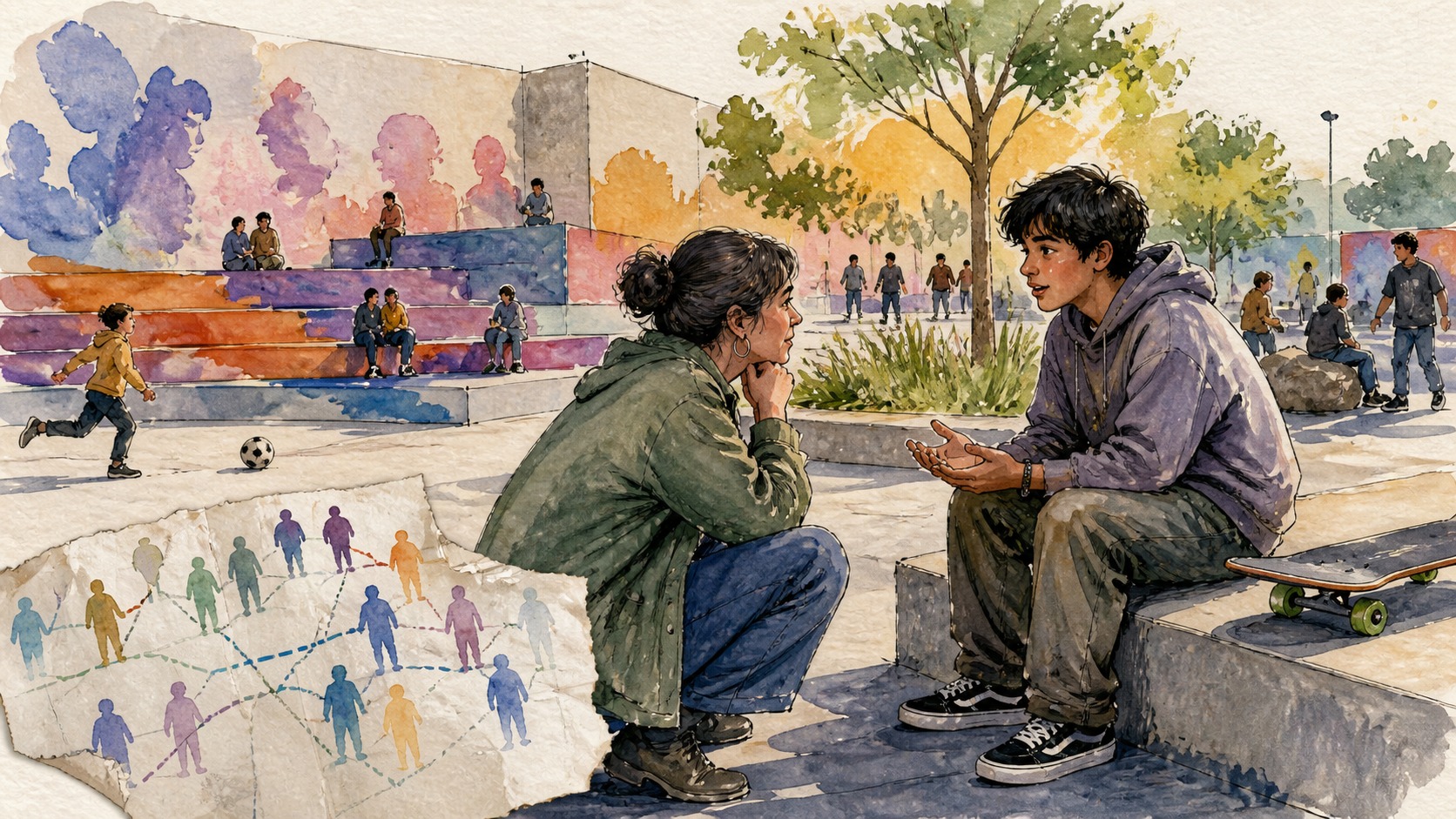
Reviewing a return to school is not about deciding who failed. It is about calmly seeing what made one step possible, which barrier remains, and what practical support should be tried next. That conversation can protect a student's dignity while improving the response of adults and services. The goal is not a perfect explanation. It is a safe, understandable, achievable next step.
Set up a review that does not frighten people#
Choose a predictable time, keep it short, and include only the people needed. Explain how information will be used and the limits of confidentiality if risk of harm emerges. Bring simple evidence: days attended, difficult moments, support offered, and the student's own account. Records are for learning, not interrogation.
Choose a predictable time, keep it short, and include only the people needed. Explain how information will be used and the limits of confidentiality if risk of harm emerges.
Start with what helped#
Ask what made it possible to cross the gate, stay for one lesson, or ask for a break. A familiar greeting, an accompanied journey, or divided work may look small, yet each identifies a condition that can be repeated. Naming it prevents the meeting from defining the whole experience as deficit.
Questions that change the tone#
Instead of “Why did you not come?”, ask “What was hardest that day?”, “What did you notice before deciding not to come?”, “What made trying a little easier?”, and “What support would be reasonable this week?”. Open questions do not remove responsibility; they make it understandable. Reflect back what you heard and check that the person feels understood.
Separate facts from interpretations#
“There were three Monday absences” is a fact. “They do not care about learning” is an interpretation that can close options. Separate observation, hypothesis, and decision. If anxiety, conflict, pain, or financial hardship is suspected, do not turn a suspicion into a diagnosis. Consult appropriate professionals and follow local procedures.
Case 1: a target that was too large#
Leo went from several weeks away to attempting a full day. On day two he could not enter and felt ashamed. At review, Leo, his family, and tutor saw that the target had skipped stages. They agreed that he would reach the library on three mornings, greet his key adult, and leave before break if needed. The adjustment was not framed as failure; it was a more realistic test. The following week he extended his time.
Case 2: repair after conflict#
Nora stayed away after an argument with two peers. The review did not demand that she give details in front of everybody. A trusted adult heard her account, school used its behaviour and safeguarding process, and they planned an accompanied arrival plus a safe place during class changes. The useful question was, “What would need to happen for tomorrow to feel safe enough?”, not, “When will you get over this?”.
Case 3: a family needs clear information#
Samir's mother received automated alerts and separate messages from teachers but did not know what reply was expected. The team recognized overload as a barrier. One weekly contact would summarize attendance, support, and the review date; the family would report a difficulty before ten o'clock. This reduced anxiety and ended conflicting messages.
Turn learning into an agreement#
Close with four written points: one observable target, each adult's support, a signal for asking for help, and a review date. “Attend better” cannot guide action. “Enter with the counsellor at 9:00 on Tuesday and Thursday” makes clear what was tried. Offer a fallback option if the first plan cannot happen.
When the priority must change#
If violence, self-harm, abuse, threats, neglect, or serious health risk appears, an ordinary review must give way to applicable safeguarding and emergency routes. Do not promise absolute secrecy. The child's safety and professional duty guide the response; attendance can be addressed with the proper support afterwards.
Sources that support sound practice#
UNESCO describes inclusion as removing barriers to presence, participation, and learning. UNICEF provides frameworks for child participation and protection. The World Health Organization recommends safe, supportive school environments for mental wellbeing. The European Agency for Special Needs and Inclusive Education publishes resources on collaboration and diversity. Spanish education authorities and local public services set the attendance and safeguarding procedures that apply in each territory.
A review that keeps the door open#
Finish by asking what each person needs to remember before the next meeting. Thank people for shared information, including when the plan did not work. A blame-free review does not lower expectations: it turns evidence into support, repair, and a next step the student does not have to take alone.