Values become credible through ordinary choices: who receives the agenda first, whose question gets patience, which contribution reaches the minutes, and who is expected to clean up when the visible work is over. In youth participation, these small gestures reveal whether knowledge, humility and cooperation shape the actual system or merely decorate its language. Studying them gives organizations a practical way to move from broad promises to changes young people can see in the outcome.
Culture is built from repeated signals#
An organization may publicly celebrate youth voice while circulating important papers too late for young members to read, holding budget discussions before they arrive, or thanking them for ideas without reporting what happened next. A single incident may be accidental. Repetition teaches a lesson. Participants learn which questions are welcome, which disagreement carries a cost and whether preparation is worth their time. Formal permission to speak cannot compensate for a process that consistently reserves useful information and authority elsewhere.
An organization may publicly celebrate youth voice while circulating important papers too late for young members to read, holding budget discussions before they arrive, or thanking them for ideas without reporting what happened next.
UNICEF's guidance for adolescent participation and civic engagement describes participation as transparent, voluntary, respectful, relevant, inclusive, safe and accountable. Each principle has a behavioral expression. Transparency means explaining the decision boundary. Inclusion means offering equivalent routes into the process. Safety means protecting dissent and personal information. Accountability means returning with an answer. The smallest gesture matters because it is where a principle becomes an experience.
Read the process at five points#
A useful review follows five points. Invitation reveals who is imagined as a participant and how much notice they receive. Entry covers physical, digital and social access. Conversation shows whose knowledge is treated as relevant. Decision identifies where authority sits and what evidence counts. Return demonstrates whether participation leaves a trace. Looking at all five prevents a team from judging success only by attendance or the energy in the room.
Intent and impact must be recorded separately. A facilitator may extend a meeting to include late contributions, intending to be generous, while causing participants dependent on the last bus to leave before the decision. Recognizing the unequal impact does not accuse the facilitator of bad faith. It creates options: start on time, accept written follow-up, state a firm ending or schedule a second session. Humility is the willingness to let another person's experience revise a well-meant plan.
Concrete case: equal seats, unequal briefing#
A scholarship charity appointed two young alumni to its selection panel. They had equal voting rights on paper, but staff members received full application packs through an internal portal while the alumni received partial email attachments. During meetings, the young members repeatedly asked for context that everyone else already had. One eventually resigned. The minutes described competing study commitments, leaving the information gap unnamed and the formal claim of equality intact.
The charity compared preparation time and access across panel members. It created equivalent accounts, a plain-language glossary, a paid briefing session and a shared deadline for papers. Minutes began recording which criteria had been challenged and how the panel responded. The decisive gesture was not another statement about diversity; it was delivering the same evidence at the same time. Cooperation became possible when the process stopped treating preventable confusion as lack of readiness.
Attention is a resource that can be distributed#
Meeting dynamics reveal whose contribution carries default weight. A youth proposal may pass unnoticed until an adult repeats it. Young members may be invited to share personal stories but excluded when finance or risk is discussed. Interruptions, follow-up questions and references in the final summary can all be observed. The point is not to police every sentence. It is to notice patterns that consistently turn some participants into evidence providers and others into decision makers.
The Council of Europe's Have Your Say manual connects participation with rights, means, space, opportunity and support. A few design choices can redistribute attention: short opening rounds, quiet writing before discussion, an independent facilitator, anonymous questions and an explicit check for objections. Recording a reasoned minority view is also a form of support. Belonging should not require performing agreement.
Concrete case: the sports club that rewarded unlimited availability#
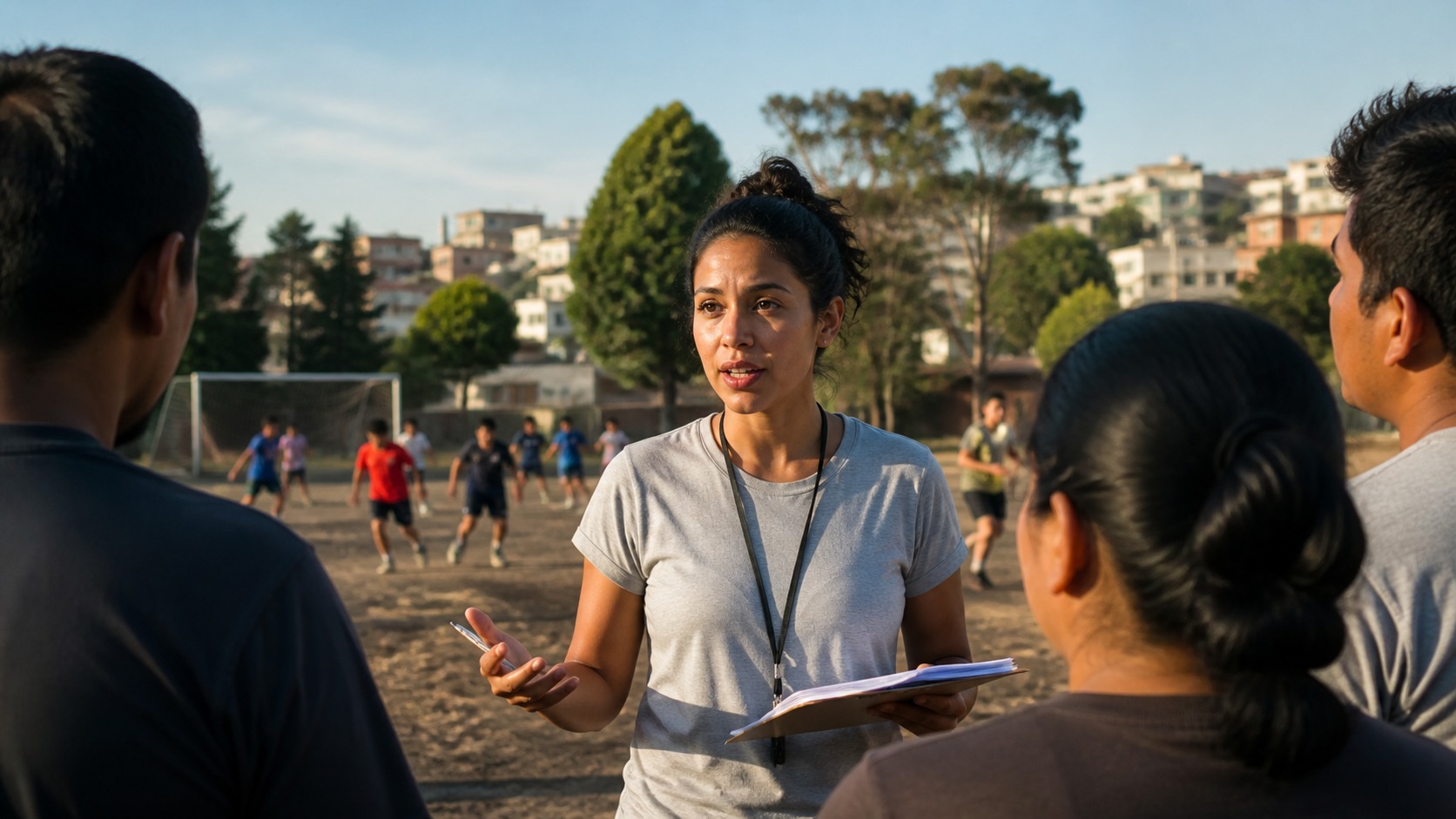
A youth sports club said teamwork was its central value. Yet captains were chosen from players who attended every optional session and stayed late to pack equipment. The rule appeared neutral but favored those with family transport, no paid work and no care responsibilities. A reliable player who left ten minutes early to collect a younger sibling was repeatedly described as less committed, even though teammates sought her help and trusted her judgment.
Coaches and players defined the behaviors leadership was meant to include: keeping agreements, helping others develop, responding calmly and representing the group. They separated those qualities from unlimited availability, rotated support tasks and offered leadership roles at different times. UNESCO's work on sport and anti-doping places education, ethics and inclusion alongside performance. Asking about a constraint before assigning a character trait was a small gesture with a large effect on opportunity.
Early information is practical power#
Sharing information does not mean flooding participants with every internal file. It means providing relevant evidence, constraints and choices in time to use them. Young people should know what is open for decision, what legal or financial limits apply, and who will make the final call. If an idea cannot be funded or approved, that boundary belongs at the beginning. Inviting imagination first and revealing immovable constraints later spends trust carelessly.
The European Union Youth Strategy frames its goals as engaging, connecting and empowering youth. Empowerment requires enough context to compare alternatives. A cost table, a five-minute explanation of authority, or seventy-two hours to read a proposal may matter more than a motivational speech. Knowledge becomes a shared resource when participants do not need personal connections or specialist vocabulary to obtain it.
Invisible work shows who is expected to serve#
Groups depend on note-taking, reminders, translation, room setup, emotional support and cleanup. These tasks are valuable, yet they often fall to the same people and receive less recognition than presenting or deciding. A youth council may repeatedly ask girls to take notes while boys address the audience, or assign newcomers logistics while experienced members control the agenda. The pattern teaches status even when nobody states a rule.
Teams can rotate tasks, ask about preferences, provide training and recognize support work in evaluations. Rotation should create options, not force every person into an identical role. Adults with authority should also take their share of process work. When a director keeps time or summarizes a difficult exchange, humility becomes visible. When accurate minutes are treated as collective memory rather than clerical labor, knowledge work receives its proper value.
Concrete case: an open civic lab behind a difficult door#
A city opened a civic lab where youth could design neighborhood improvements. Attendance was free and publicity promised an open door. At the building, security staff requested identification, the lift required a key, and sessions ended after the final direct bus to several outer districts. Participation soon concentrated among students living near the center. Staff concluded that outreach had failed and spent more money on social media advertising.
A walk-through with young residents showed that the obstacle was arrival, not awareness. The city changed the entry procedure, kept the lift available, moved the ending time and provided travel credit. Some workshops moved to neighborhood venues. The OECD's work on innovative citizen participation emphasizes representativeness and process quality. The door was administratively open, but the gestures around it determined who felt expected and independent.
Audit an ordinary week#
A team can learn a great deal by observing one routine process for five days. Who receives reminders? How long does each reply take? Which question is treated as an interruption? Who needs an informal contact to obtain an exception? Who explains, records, signs and repairs? Observations should then be checked with people in different roles and age groups. The purpose is not surveillance; it is to make a hidden process discussable.
The review should select one small, testable change. Materials might be sent three days earlier, every meeting might begin with a decision map, or each consultation might end with an owner and response date. The team tests the change for two weeks and looks for unequal effects. A limited experiment is often more credible than a long catalogue of intentions because it assigns responsibility and produces evidence quickly.
Measure consistency without rewarding silence#
Useful indicators include response time, range of speakers, proposals adopted, dropout points and participant understanding. Numbers need interpretation by group. A high average rating may hide a poor experience for those needing adjustments. More speaking time may still be concentrated among three people. Increasing reports of small problems may show that trust has improved, not that performance has collapsed. A healthy system makes inconvenient information easier to raise.
Incentives matter. If staff are praised only for positive dashboards, exceptions will disappear from reports. Recognizing early warnings and careful corrections aligns measurement with learning. UNESCO's work with and for youth links meaningful engagement to inclusive and peaceful societies. Inclusion becomes operational when a minority experience can trigger review instead of being averaged away.
Turn repeated gestures into fair rules#
A good practice remains fragile when it depends on one considerate person. If reminders improve access, they belong in the calendar. If a glossary widens participation, it should accompany every technical paper. If an accessible route needs checking, the task requires an owner. If youth proposals always arrive after the budget closes, the sequence must change. A simple rule preserves fairness through staff turnover and removes the need to request favors.
Every team can close with three questions: which small gesture confirms the values it declares, which gesture contradicts them, and what observable change will occur before the next meeting? Youth leave a mark when the answers alter routine experience. Papers arrive early, the lift works without a special request, invisible labor is acknowledged and dissent remains in the record. Values are in command at that point because they have changed how knowledge, dignity and decision-making power are distributed.