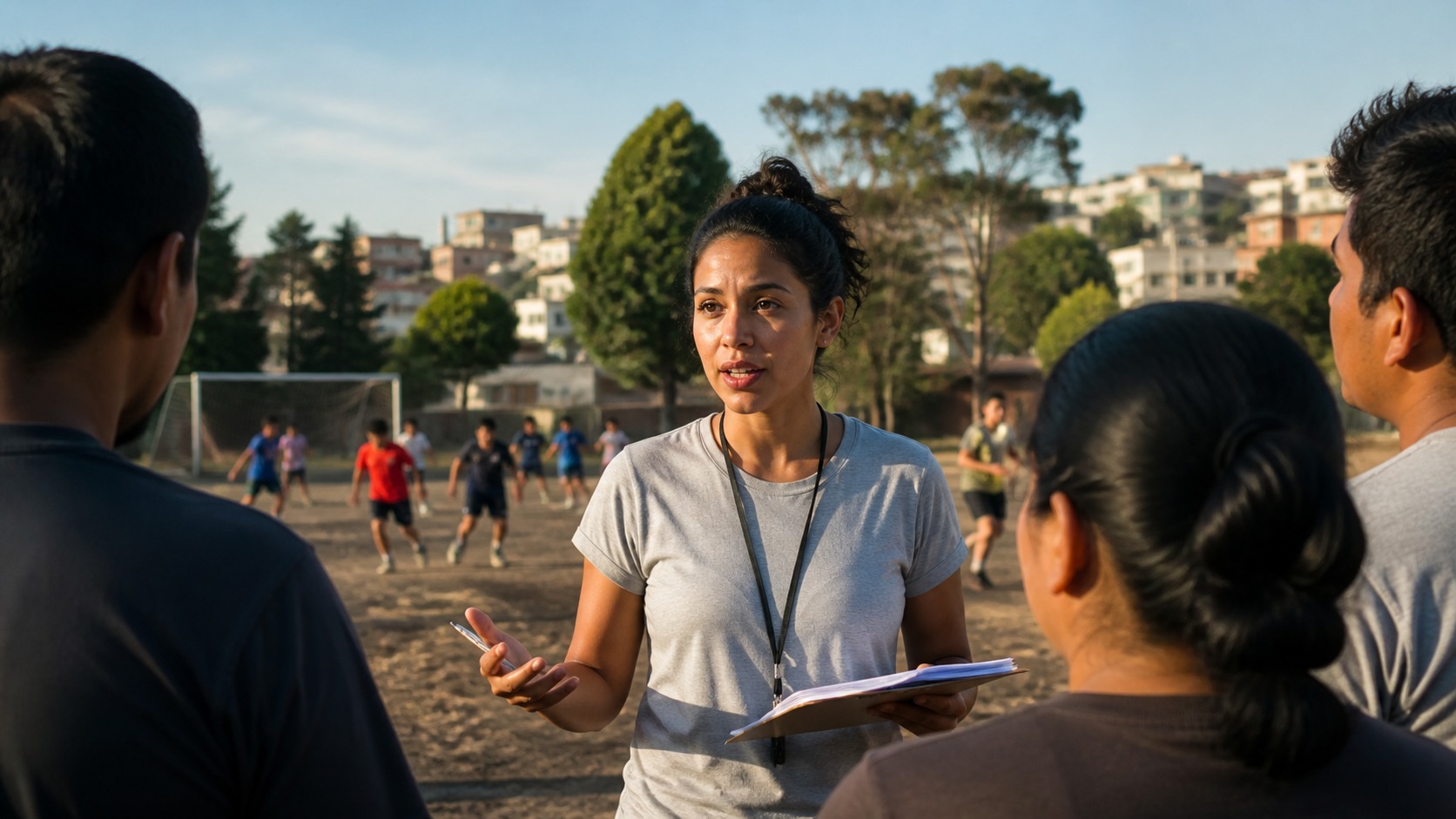
An error becomes knowledge only when people can describe it accurately, protect those affected and change what happens next. Youth participation adds a crucial test: can a young person's account challenge the official version and influence the remedy? If the institution collects testimony while keeping interpretation, resources and follow-up to itself, the story may improve a report but not the system that produced the harm.
Perfect-looking projects are often poor learners#
Youth initiatives are expected to communicate hope, energy and success. Funding and reputation can depend on that picture. The pressure encourages teams to omit withdrawals, soften conflict and describe recurring barriers as isolated surprises. Once promotional language controls evaluation, an organisation can repeat the same design while sincerely believing it has evidence of success.
Youth initiatives are expected to communicate hope, energy and success. Funding and reputation can depend on that picture.
Trust does not require a promise that nothing will go wrong. It requires credible detection, response and repair. Separating accountability from blame is essential. Blame attaches failure to a person, often the least powerful person closest to the event. Accountability asks who held authority, information and a duty to act. Learning then studies the conditions that shaped the decision and the signals that were missed.
Teams should record adverse outcomes, risks, near misses and uncertainty separately. A participant excluded from an event experienced an outcome; an exposed setting that is fixed before use is a near miss; incomplete evidence about a new tool is uncertainty. All deserve attention, but they support different actions. Waiting for visible damage wastes information from people who notice weak defences early.
A useful account follows the whole decision pathway#
The story begins with purpose, assumptions and available information. It identifies what happened in sequence, who knew what and which choices were open. Dates, documents and observable conduct matter more than confident guesses about intention. The review then examines safeguards, reporting routes and pressures such as deadlines or dependency. This turns a dramatic moment into a map that can guide prevention.
Different positions produce different evidence. A manager knows contractual constraints; a participant knows friction; a facilitator sees group behaviour; somebody who left may know what completion surveys miss. Their accounts need not merge into one voice. Contradiction can show unequal access to information or power. A rigorous review preserves that difference and explains how conclusions were reached.
Privacy limits publication, not organisational learning. Identifiers and unnecessary detail should be removed. People need to know how their words will be stored, quoted and shared. Consent to discuss an incident internally is not consent to become a public case study. Learning from harm cannot justify a second extraction of the person's story.
Concrete case 1: the youth survey that missed people without access#
A regional service ran an online survey and celebrated thousands of responses. A youth advisory member noticed that participation was lowest in rural areas and among young people using supported housing. The official explanation was low interest. She asked whether the team had examined connectivity, devices, language and trusted routes for receiving the link.
The review traced distribution rather than blaming non-respondents. Most promotion had travelled through schools and social platforms; the form timed out on older phones; support organisations received it near the deadline. People excluded from the first round were paid to test alternatives. They could contribute without disclosing personal circumstances publicly.
The service added paper, telephone and facilitated options, simplified the form and extended the field period. It also reported coverage gaps alongside headline totals. Response patterns changed, but the deeper lesson concerned evidence: a large sample could still reproduce the reach of existing institutions. The young advisor changed how completeness was assessed.
Concrete case 2: the exhibition that erased young creators#
A museum displayed work developed in workshops with teenagers. Labels credited the commissioned artist and museum but described the participants only as “local youth.” Two contributors recognised their designs and asked why their names were absent. Staff initially explained that collective credit protected privacy, although nobody had asked participants what form of recognition they wanted.
The review examined consent forms, workshop notes and production decisions. It found that adults had assumed both ownership and anonymity. Participants chose individual, group or anonymous credit and were paid for designs used in merchandise. The museum corrected labels and contacted people before issuing a public explanation, allowing them to decline attention.
Future contracts defined authorship, payment and withdrawal at the start. A youth reviewer checked credits before installation. The institution did not present the correction as generosity; it named the process failure. A well-told error transformed recognition from an afterthought into a decision shared with creators.
Concrete case 3: the grant panel that rewarded fluent bureaucracy#
A small youth fund scored ideas for impact, feasibility and quality. Most awards went to established student societies. One panel member argued that “quality” was rewarding professional writing and access to adult mentors. Community groups with strong local knowledge had abandoned drafts or received low scores for presentation.
The fund compared enquiries, incomplete applications and assessor comments. It found that writing style affected several criteria and that the briefing session took place during working hours. The young panel member's concern was treated as a hypothesis to test, not a disloyal accusation. Applicants were invited to comment through supported and confidential routes.
The next round accepted audio and interview applications, offered independent preparation help and separated idea assessment from format. Youth panel members received training, payment and voting authority. The fund published its error and limits without naming applicants. The distribution broadened, showing that fairness required changing the doorway rather than merely encouraging more people to approach it.
Institutional sources turn experience into an improvement discipline#
The World Health Organization guidance on incident reporting and learning systems connects reporting with analysis and action. Its health context has specific duties, but the wider lesson travels: collecting stories is not learning. Systems need usable information, protection for reporting and a route from contributing factors to implemented improvement.
UNESCO's meaningful youth engagement work distinguishes consultation, contribution, partnership and leadership and warns against tokenism. An error review can use those levels to test authority. Young people may provide evidence while adults keep every decision, or they may help determine priorities, remedies and evaluation. The label should match the actual power available.
UNICEF Innocenti's Voices for Impact report emphasises inclusion, enabling environments, support before, during and after engagement, and accountability. The period after disclosure matters. Participants need feedback, safety and a clear account of what changed. Taking a difficult story and then disappearing repeats an extractive relationship.
The United Nations Youth Office approach to meaningful participation places young people throughout design, implementation, monitoring and evaluation. Continued involvement can show whether a remedy works, but it should be resourced and optional. Institutions must build handover so one young person does not become permanently responsible for institutional memory.
The OECD Youth Policy Toolkit links participation to governance, inclusion, work, education and intergenerational justice. That breadth encourages distributional analysis. Who lost time, access, income, safety or recognition while the organisation learned? Positive averages cannot answer whether particular groups subsidised improvement.
A no-blame review still assigns real responsibility#
A practical session asks what was expected, what occurred, what conditions contributed, what limited the damage and what should change. Evidence and uncertainty are both recorded. An independent facilitator may be needed when decision makers have an interest in defending their choices. Affected people can bring support and review attributed material.
Learning review is not a substitute for safeguarding, investigation or due process. Harassment, violence, discrimination or legal breaches may require separate procedures. “No blame” must never become a shield for leaders who held clear duties. The distinction is between avoiding reflexive scapegoating and avoiding accountability; only the first supports learning.
Actions should address system conditions. A reminder email is weak if deadlines, contracts or authority remain unchanged. Measures may include a new budget line, stop power, independent review, revised selection criterion or safer technology setting. Each receives an owner, deadline, resources and evidence of completion. Expensive corrections reveal whether the organisation values learning beyond its communications.
Sharing lessons should not turn harm into content#
A public account can state the objective, relevant facts, impact, correction and remaining uncertainty. It should remove details that enable recognition and avoid heroic storytelling about the person affected. Participants choose whether they are named. Their experience does not become institutional property because it demonstrates a useful lesson.
Near misses can be discussed regularly in short learning sessions. Senior adults should contribute their own decisions, otherwise transparency flows only downward and becomes surveillance of young people. Leaders model learning by acknowledging uncertainty, funding corrective action and explaining why priorities changed. The purpose is early detection, not a catalogue of embarrassment.
Memory becomes useful when linked to induction, checklists, procurement and evaluation. A repository that no one consults is storage. Before related work begins, teams review prior lessons and confirm controls. Afterward they test whether those controls functioned. This routine allows knowledge to survive staff changes without binding a participant forever to the original incident.
The next group should be able to feel the difference#
Metrics can include response time, actions completed, recurrence, access to repair and participant retention. Interpretation matters: more reports may indicate greater trust, while fewer may indicate fear. Teams should separately examine awareness of the channel, confidence in protection and experiences after reporting. Otherwise silence is easily mislabelled as safety.
Equity asks who is allowed to make a mistake and recover. The same error may be treated as development for a well-connected participant and as proof of unfitness for someone facing racism, disability discrimination or poverty. Selection, discipline and references should be reviewed for these patterns. Freedom to experiment is unequal when only some people receive a second chance.
People also need permission to finish. A participant can leave the review without losing recognition or support. The institution carries actions forward and provides the agreed update. A young voice leaves a mark through the changed rule, budget or access route, not through an endless obligation to retell what went wrong.
Knowledge begins when image management ends#
Freedom means naming an error without being reduced to it. Equity means fair distribution of consequences and learning opportunities. Participation means helping interpret evidence and decide the correction. These values require resources, records and authority. Good intentions cannot protect them when a deadline or reputation is threatened.
A trustworthy organisation does not claim perfect delivery. It shows that it can detect weak signals, protect people who speak, repair consequences and document change. That promise supports responsible experimentation because participants know failure will not automatically be hidden or placed on the least powerful person.
The well-told error is neither confession nor publicity. It is a plural, protected account that leads to a different decision. When youth have power within that process, errors can widen access, restore authorship and redistribute resources. The clearest evidence is what the next group encounters: a safer route built because the previous group was able to tell the truth and influence the response.