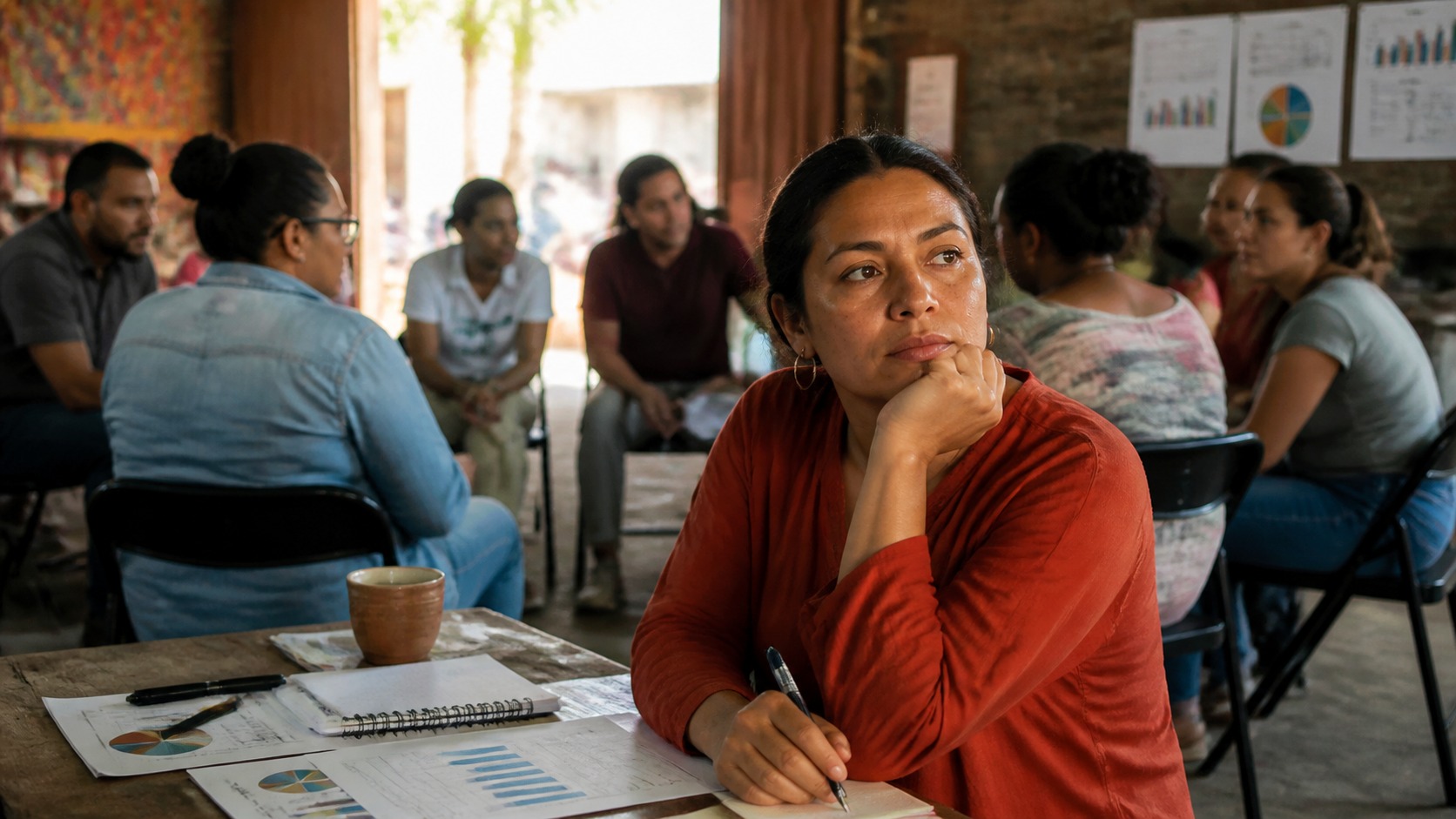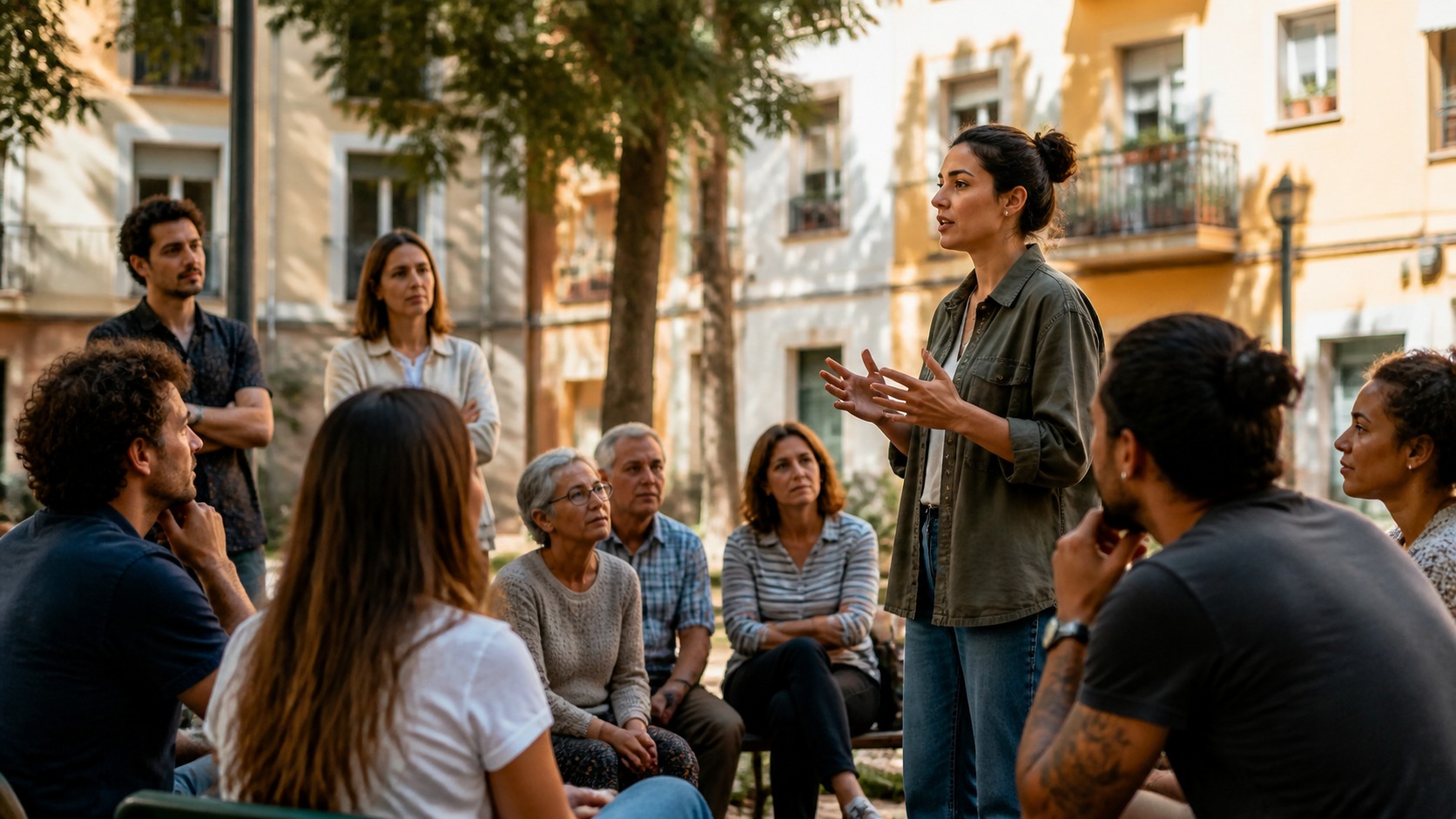
A climate-prepared neighbourhood is not one that never makes mistakes. It is one that detects failure, explains who carried its consequences, and turns experience into safer decisions. Reporting an error well requires officials to stop defending an appearance of perfection. Conditions must be documented, affected people must be heard, and both infrastructure and governance must be corrected. When learning is shared precisely, misplaced shade, a late warning, or a closed cooling centre stops being an isolated episode and begins to guide future investment, protocols, and responsibility.
Learning before harm is repeated#
Climate adaptation is undertaken amid uncertainty. Temperatures shift, extreme rain exceeds historical assumptions, and the same measure affects people differently according to age, housing, mobility, health, and income. In this setting, a promise of infallibility is implausible and dangerous. When an authority hides deviations to protect its reputation, teams cannot compare results and other neighbourhoods are left to repeat them. Public confidence grows when an unavoidable setback in an innovative project is distinguished from negligence that ignored established warnings.
Climate adaptation is undertaken amid uncertainty. Temperatures shift, extreme rain exceeds historical assumptions, and the same measure affects people differently according to age, housing, mobility, health, and income.
A useful account neither hunts for a quick culprit nor dissolves accountability. It reconstructs what was known, which assumption was adopted, who decided, what signal was missed, and what consequence followed. It also identifies what worked. This balance avoids treating every complication as a disaster or celebrating a project for its intentions while suppressing its effects. Knowledge comes from a verifiable description and a proportionate response, not from a theatrical confession.
What it means to report an error well#
A learning report needs an understandable timeline, comparable evidence, and testimony anchored in place. It should state the original purpose, selected indicators, actual conditions, and distance between expected and observed results. Facts, interpretations, and unresolved hypotheses should remain distinct. If a shaded square attracts few visitors, for instance, attendance alone is insufficient. Accessibility, opening times, perceived heat, safety, drinking water, maintenance, and existing activities must be examined before residents are blamed for lacking interest.
The account must recognise how impact was distributed. A twenty-minute delay in a warning may be minor for a household with air conditioning and decisive for an older person living alone. A street closure during construction can be a temporary inconvenience for one business and a complete barrier to a care service. Describing these contrasts makes equity visible and enables remedies that do not treat materially different circumstances as though they were identical.
A just culture rather than an unaccountable one#
A just culture distinguishes human error, a decision made with incomplete information, and reckless conduct. That distinction protects early reporting without turning transparency into automatic immunity. Staff need confidence that disclosing an incident will not destroy their career; the community needs confidence that neglected obligations will have consequences. Clear protocols, independent review, and a right of reply help balance these expectations.
Excessive personalisation should also be avoided. Climate policy depends on chains of procurement, budgeting, maintenance, communication, and health coordination. Placing all blame on one person can conceal a defective incentive or an unclear mandate. System analysis asks why a choice seemed reasonable inside the organisation and which barrier should have stopped the problem. Accountability becomes more demanding because it produces verifiable organisational change instead of merely sacrificing a name.
Recording signals and decisions#
Learning begins before an incident. Every project should maintain a concise record of risks, assumptions, owners, review dates, and thresholds that trigger a change. This need not become endless bureaucracy. A short table can identify who watches surface temperature, who receives accessibility complaints, and when an activity must be suspended. Dated photographs, calibrated sensors, and maintenance logs provide evidence when they are interpreted alongside neighbourhood experience.
Negative decisions also need a record: why a drinking fountain was omitted, why an evacuation route was rejected, or why pruning was postponed. Such absences often disappear from institutional memory. Documentation makes it possible to check whether the original reason still applies and whether risk was simply transferred elsewhere. An open register, with personal information protected, lets residents and professionals challenge assumptions without rebuilding a project's history from nothing.
Case 1: young trees and a square that remained hostile#
A redesign replaced asphalt with young trees and was promoted as an immediate heat refuge. During the first heatwave, the small canopies provided almost no shade and metal benches reached uncomfortable temperatures. The error was communicating a future benefit as a present service. The initial report celebrated the number of trees planted but did not measure hours of effective shade or the contact temperature of seating.
The review added hourly shade maps, interviews with carers, and measurements at pedestrian level. Fabric canopies were installed temporarily, benches were moved, and drinking water was added. The next project had to combine slow-growing trees with removable shade and publish a maturity curve. An accurate account did not discredit urban greening. It taught decision makers to distinguish a planted asset from the climate service currently available.
Case 2: a technically correct warning that nobody heard#
A municipality activated its intense-rain warning at the planned threshold but distributed it almost entirely through a mobile application. Many older residents, workers without mobile data, and newly arrived families did not receive the message. Officials could say the system had operated, although several ground-floor homes were not protected in time. The investigation showed that the failure lay not in forecasting but in confusing transmission with reception.
The remedy created a redundant network of telephone messages, street displays, local radio, community mediators, associations, and visits to identified households. Each drill began measuring comprehension and action rather than just the number of notices sent. Instructions were translated and accessible versions were produced. By acknowledging the gap, the neighbourhood changed a digital tool into a social warning system in which reaching the final person matters as much as issuing the first notification.
Case 3: a cooling centre that closed too early#
A library appeared on the cooling-centre map but closed in mid-afternoon during August because staffing was insufficient. The list formally met its geographic coverage target, yet protection ended just as heat risk intensified. People arriving at a locked door read the contradiction as indifference. The issue had appeared in internal messages, but nobody held the mandate to extend hours or temporarily remove the symbol from the public map.
The review assigned an accountable owner to each facility, linked map publication to confirmed shifts, and provided exceptional staffing during severe events. Shops and community centres joined as supplementary spaces under requirements for accessibility, water, and indoor temperature. A correction was published with an explanation. Credibility recovered because acknowledgement was followed by an observable improvement rather than a generic apology.
Participation without transferring blame#
Communities provide essential knowledge, but they should not carry responsibilities belonging to institutions funded to protect them. A participatory evaluation offers compensated channels or schedules compatible with care, returns findings, and explains which proposals were accepted. Consultation must not be used to claim that residents chose a risk they were never shown. Affected people can identify barriers and priorities; the technical and legal duty remains with the decision maker.
Participation also requires psychological safety. Residents, contractors, and employees need ways to flag weaknesses without retaliation. Sessions facilitated by a neutral party, anonymous forms, and meetings at varied times broaden the evidence. Anonymity, however, cannot replace a continuing relationship. A stable network of trusted contacts helps verify rumours, recognise disagreement, and communicate remedies before one incident hardens into lasting distrust.
Indicators that reveal rather than decorate#
Useful indicators measure service and distribution, not activity alone. For shade, relevant measures include metres of protected route during critical hours, thermal reduction, and access from vulnerable homes. For warnings, receipt, comprehension, and time to act matter. For cooling centres, actual hours, indoor temperature, accessibility, and use by exposed groups should be observed. Each average needs territorial and social differences beside it so that improvement at the centre does not conceal deterioration at the edge.
Quantitative and qualitative evidence are both necessary. A sensor detects heat, while an interview can expose harassment, noise, or access rules that exclude particular users. A public dashboard should state each source, frequency, limitation, and update date. When information is missing, the gap should be declared and a way to fill it scheduled. False precision undermines learning; acknowledged uncertainty enables cautious decisions and timely revision.
From a local remedy to shared memory#
After an error is analysed, an action needs an owner, budget, and deadline. Its effectiveness must then be checked. This final phase is often omitted, turning valuable recommendations into inert files. Quarterly reviews can group incidents by recurring patterns such as communication failure, inadequate maintenance, incompatible hours, or unequal impact. Patterns justify changes to contracts, training, and rules beyond repairing the individual location.
Sharing lessons across neighbourhoods prevents each team from learning through its own harm. A common record can summarise context, early signal, impact, contributing cause, remedy, and later evidence. It should be searchable without exposing sensitive data. Municipal, health, and community networks contribute different perspectives, while regular exchanges turn scattered episodes into operational memory that survives staff turnover.
Institutional sources for sound practice#
The Intergovernmental Panel on Climate Change gathers evidence on risk, vulnerability, and adaptation in its Sixth Assessment Report, Working Group II. The World Health Organization connects heat, health, and prevention in its climate change, heat, and health fact sheet. UN-Habitat provides urban frameworks through its climate change programme. The European Environment Agency presents comparative policy and evidence in its climate adaptation portal. These sources help test local choices, but they do not replace place-based evaluation or the duty to explain results to the community.
A verifiable commitment to improvement#
Mature transparency does not publish errors as curiosities. It connects them to correction and follow-up. A credible commitment states what will change, when it will be verified, and what happens if the remedy proves insufficient. It recognises those who raised the warning and communicates through accessible formats. Institutional memory then ceases to depend on a media crisis or a single dedicated employee.
In neighbourhoods exposed to heat, flooding, and inequality, learning quickly is a form of care. Freedom grows when people have reliable information for their choices; equity improves when the people who carried a failure are named; participation gains meaning when it can alter design. A well-reported error cannot remove harm already done, but it prevents that harm from becoming meaningless. Converted into memory, funding, and revised practice, it becomes public knowledge and lowers the chance that the same failure will return.