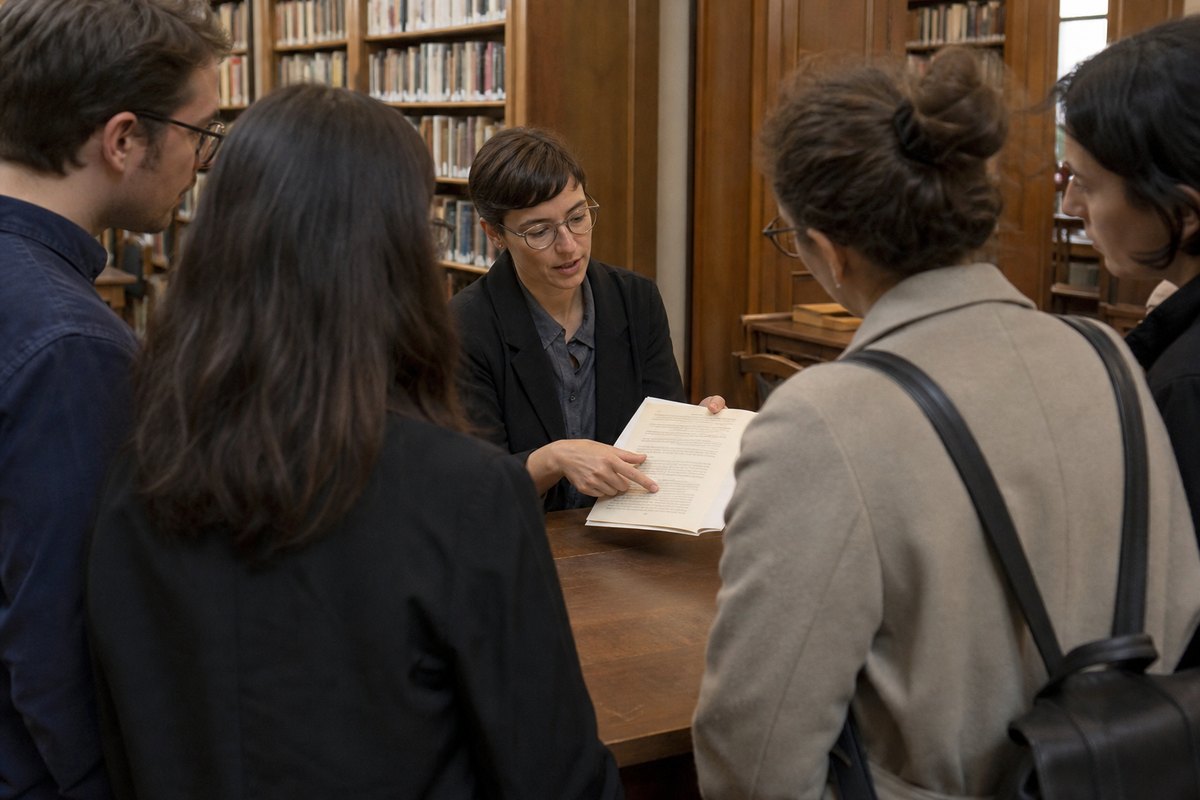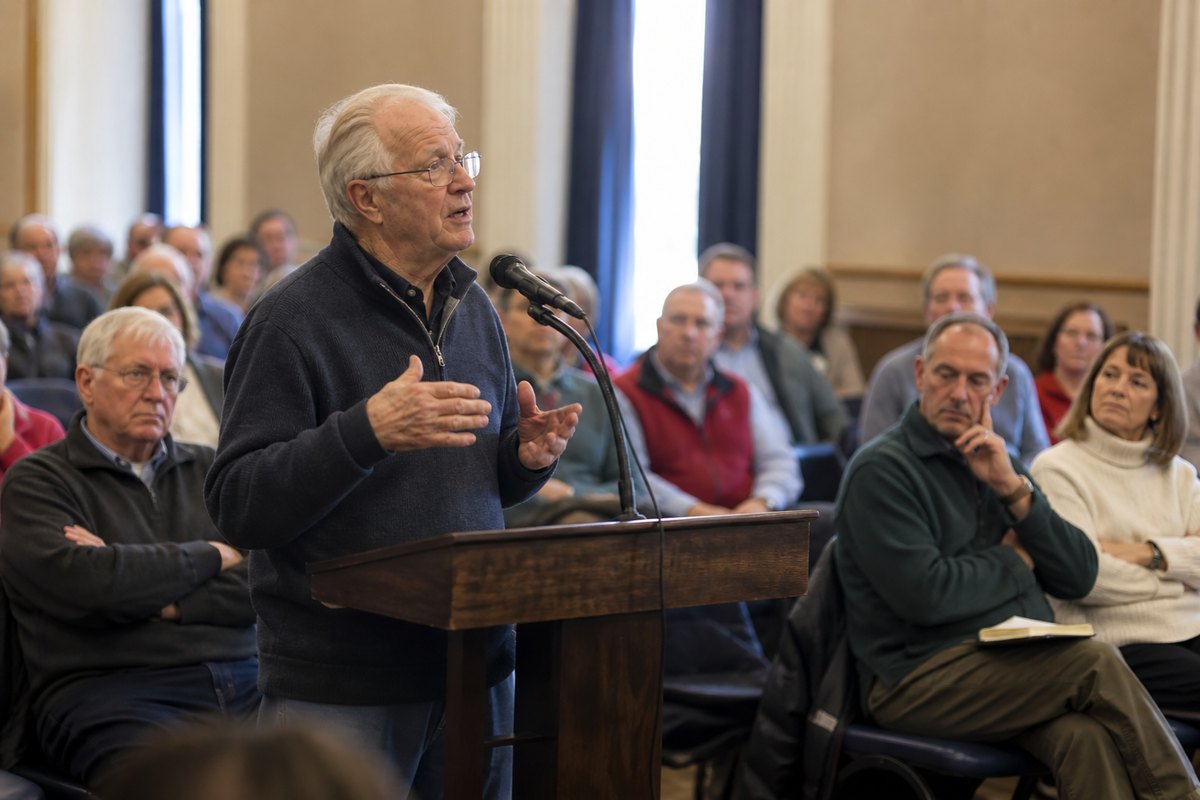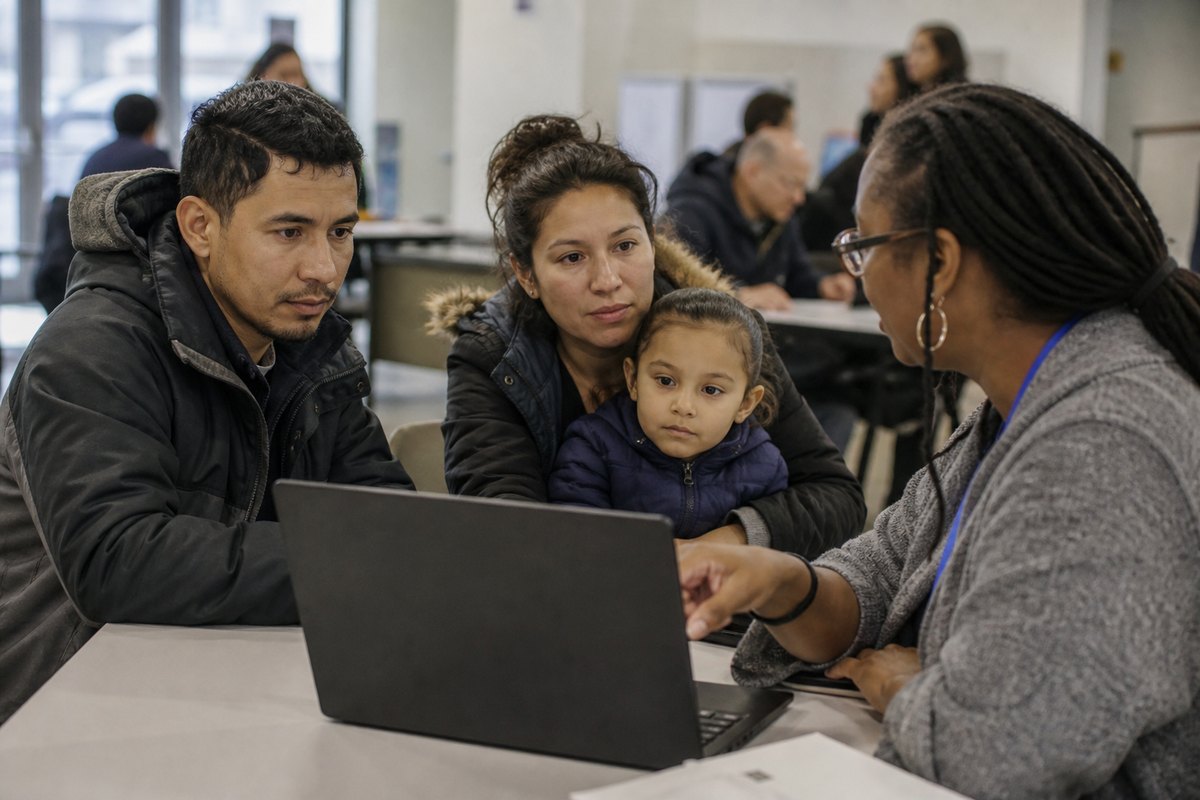
The invisible question that changes everything is simple: who is missing? It often remains outside the agenda while a public authority presents a smart city, a school imagines new ways of learning, or a neighbourhood debates how to adapt to heat. Trends, devices, budgets, and opportunities receive attention, but absent people, knowledge that never entered the room, and those who will bear consequences without defining the problem may not. When this question appears at the beginning, the future ceases to be an image produced by specialists. It becomes a common practice: a way to examine the present, rehearse options, and learn before a decision becomes difficult to reverse.
Rehearsing the future does not mean predicting it. It means creating safe and bounded conditions for exploring what might happen, which values could come into tension, and which capabilities a community would need. The exercise may take the form of a scenario, a service prototype, a neighbourhood walk, a deliberative assembly, or a temporary trial. Its quality does not depend on looking spectacular. It depends on revealing something relevant, including different voices, and translating learning into a concrete decision. A future practised in this way does not arrive from elsewhere; it is built through relationships, limits, responsibilities, and review.
The question “who is missing?” also prevents a common confusion. Gathering many people does not guarantee diversity, and opening a form does not distribute power. The missing person may be working during the meeting, may not speak the institutional language, may distrust the convening authority, may require accessibility support, or may not yet be born but will inherit long-lived infrastructure. Naming these absences does not paralyse the process. It helps define suitable methods of listening, representation, and care, while requiring an explanation of who will ultimately decide, with what evidence, and under which conditions the direction may be corrected.
A common future begins by reviewing who can speak#
A community is not a homogeneous audience. It consists of unequal experiences, situated knowledge, and power relationships. The person who maintains a water network sees failures absent from a strategic dashboard; a care worker knows travel times hidden by an average map; a teenager identifies uses of space missed by an adult consultation; a small business notices effects that a large company can absorb. Knowledge about the future is already distributed. The institutional challenge is to create a process in which those signals can meet, be tested, and change a proposal.
A community is not a homogeneous audience. It consists of unequal experiences, situated knowledge, and power relationships.
Inclusion requires more than invitations. It requires asking who defines the opening question, who has paid time, which materials are provided, which languages are used, how someone without connectivity participates, and what protection exists against retaliation or exposure. It also requires recognising that no table can literally contain an entire population. Representation must therefore be explicit and reviewable: which groups are present, which are absent, why the composition is considered sufficient, and what route allows a later objection to enter the process.
The invisible question has a second part: what knowledge is missing? A discussion may contain diverse profiles yet remain trapped in old data, unsuitable scales, or categories that fail to reflect daily life. Before proposing solutions, a process should combine statistics, accounts, direct observation, local memory, and technical evidence. Disagreement should not be erased to manufacture false unanimity. It can reveal decisive uncertainty. A mature futures practice records what it knows, what it infers, what it does not know, and what a trial would need to teach.
From imagination to a trial with bounded consequences#
Scenarios are useful when they expand options, not when they are presented as inevitable forecasts. A team might explore one future of extreme heat, another of expensive energy, and a third of rapid automation. Each scenario can test which functions must continue, who would be most exposed, and which present decision would strengthen adaptive capacity. The purpose is not to select the most attractive story. It is to uncover shared assumptions and measures that remain valuable under more than one condition.
The trial follows the scenario. A community prototype should be small, temporary, and reversible. It needs a stated purpose, a limited territory or group, allocated resources, identifiable owners, and stopping criteria. It should also state what it cannot prove. Testing a new support channel for four weeks, for example, cannot establish that every service barrier has been solved. It can measure who uses it, who leaves, what support staff require, and which problems emerge in real situations.
The practice becomes common when learning returns to participants. Too many consultations extract time, stories, and ideas without explaining what changed. Responsible feedback distinguishes accepted, rejected, and pending contributions; explains constraints; publishes next steps; and preserves a route for review. Disagreement does not invalidate the process. Pretending that people have influence when the decision was closed from the start does. Rehearsal means accepting that the proposal may change and reserving authority, time, and budget for that change.
Case 1: a heat refuge network that began with the wrong map#
In a composite learning scenario, a municipality prepared a network of heat refuges using temperature, population density, and available public buildings. The first map looked robust: libraries and civic centres covered almost every district. Before approving it, the team asked the invisible question. Missing voices included older people living alone, outdoor workers, families with small children, cleaners in the buildings themselves, and residents who avoided certain spaces because of physical barriers or earlier experiences of hostile treatment.
The review did more than add representatives to a meeting. It included walks at different times, short interviews at markets and health centres, paid sessions with care organisations, and accessibility checks with users. Distances appeared that the map had measured poorly: a short slope could be impassable, one refuge closed during the hottest hours, and another did not permit drinking water or an assistance animal. The desired future—protection during extreme episodes—depended upon present operational details.
The municipality tested two marked routes and temporarily extended opening hours before expanding the network. It measured arrivals, time, incidents, and staff workload, while retaining transport alternatives for priority cases. The trial did not promise to eliminate heat risk. It helped correct the map, budget for staff, and publish activation criteria. Asking about absences transformed available infrastructure into a more usable service and showed that anticipation means bringing a hypothesis into contact with actual lives.
Case 2: the school that stopped confusing innovation with a screen#
In a second composite case, a school wanted to prepare students for a future shaped by artificial intelligence. Its initial proposal was to procure a platform and organise a week of demonstrations. The teaching team asked who was absent from that vision. It did not include students who shared a device at home, families who did not understand data processing, support staff, the neighbourhood library, or people who knew how automation was affecting local work. Nor did it represent the possibility that the platform could fail or change its terms.
The school replaced the showcase with three modest laboratories. In one, groups of students compared a task performed with and without automated assistance, recording errors, doubts, and time. In another, families and staff reviewed explanations of data, authorship, and complaints in everyday language. In the third, people working in trades, care, and technology described real transformations without presenting them as inevitable destinations. The aim was not to decide whether artificial intelligence was good or bad. It was to build judgement about when it added value, when it required oversight, and when it was better left unused.
The trial produced concrete rules: no student would be assessed by a tool that could not be explained; an equivalent alternative would exist; sources and automated intervention would be declared; and the procurement would be reviewed at the end of the school year. It also exposed training needs and support time omitted from the original budget. Innovation ceased to be measured by the surprise of a demonstration and began to be measured by the collective capacity to understand, question, and correct practice.
Case 3: the neighbourhood that rehearsed mobility without turning it into a contest#
A third composite scenario begins in a neighbourhood divided by traffic. The authority proposed sensors, a mobility application, and changes to traffic flow. The online consultation drew quick responses, but “who is missing?” revealed predictable absences: delivery workers, people without smartphones, shopkeepers working long hours, children walking to school, people with limited mobility, and residents of streets that would receive diverted traffic. Each group saw a different part of the system and would bear different costs.
Instead of setting preferences against each other like votes in a contest, the authority created a six-week trial on a small number of streets. It used temporary signs, transparent counts, observation during school hours, a telephone line and in-person reporting points, and a weekly table of participants selected to reflect social and geographic variety. Data did not interpret itself: a fall in traffic could conceal displacement, while an improvement in average journey time could coexist with a route that was impossible for a wheelchair user.
At the end, the authority explained which elements it would retain, remove, or test again. It introduced loading areas at agreed times, corrected a crossing, and rejected an application function that collected more information than necessary. Not every preference was compatible, but conflict produced knowledge instead of publicity. The community did not design a perfect picture of tomorrow. It acquired a procedure for changing the present without treating anyone as invisible collateral damage.
How to share power without pretending unanimity#
Participation can mean informing, consulting, deliberating, co-designing, or deciding. These forms are not interchangeable. A responsible institution states from the outset how much room exists and which legal, budgetary, or technical constraints apply. If the community can only advise, it should know. If it can allocate part of a budget, that authority should be real. Clarity protects against frustration and makes it possible to judge whether the chosen method is proportionate to the decision.
Representative deliberative processes provide one route for complex, long-term questions. Their value comes from combining diversity, time to learn, balanced information, facilitation, and a clear connection to a public decision. They do not replace elections, associations, open consultations, or expert knowledge. They can complement them when a group needs to consider difficult trade-offs without being reduced to instant positions. Their legitimacy depends on transparent selection, support for participation, plural evidence, and a public response to recommendations.
The capacity to dissent also matters. A minority should not disappear inside an average, especially when it bears a specific risk. A final report can preserve reasoned disagreements and conditions for acceptance. Governance defines who monitors the trial, protects data, receives complaints, and can pause the process. Sharing power does not mean dissolving responsibility. The authority adopting the decision retains the duty to justify it, repair harm, and review assumptions when new evidence appears.
Measuring learning, equity, and the capacity to act#
A futures trial needs indicators before it begins. Participation measures cover diversity, absences, retention, accessibility, and quality of intervention, rather than attendance alone. Learning measures record corrected assumptions, discovered risks, new alternatives, and changed decisions. Equity measures compare benefits, burdens, time, and exposure across groups. Operational measures cover resources, incidents, continuity, and the ability to scale or withdraw the trial.
A single metric can mislead. High participation may coexist with little influence; high satisfaction may exclude those who left; an efficient prototype may transfer unpaid work to families or volunteers. Numbers should therefore be interpreted alongside accounts and observation, with limitations and missing data published. The criterion is not to prove the initial idea right. It is to know more at the end and change the decision when learning demands it.
Continuity turns rehearsal into public capacity. The organisation retains materials, protocols, contacts, negative results, and conditions for replication. It trains different people so that knowledge does not depend on an exceptional facilitator. It reserves small budgets and decision windows for later trials. A community that rehearses the future does not live in a permanent workshop; it possesses lightweight infrastructure for anticipation when an uncertain, lasting, or unequally distributed decision requires it.
Four institutional sources for a shared futures practice#
UNESCO presents futures literacy as a capacity to use imagination, understand uncertainty more effectively, and make better-informed present decisions. Its Futures Literacy Laboratories are designed as participatory processes incorporating diverse perspectives. The OECD Observatory of Public Sector Innovation develops anticipatory innovation governance: producing knowledge about what might happen is not enough; institutions need agency, authorisation, and experimentation to act upon that knowledge.
The OECD report on innovative citizen participation and new democratic institutions brings together comparative evidence on representative deliberative processes and proposes good-practice principles for connecting them to public decisions. The UN-Habitat People-Centered Smart Cities playbooks place participation, inclusion, human rights, and multi-stakeholder collaboration at the centre of local digital transformation. These four references converge on one requirement: futures are governed better when imagination, participation, and institutional capacity are connected.
The invisible question does not offer a perfect formula. It offers a discipline. Before closing a diagnosis, it asks who is missing; before scaling a solution, it asks who bears the risk; after the trial, it asks what changed and who can demand review. That sequence turns the future into a verifiable, everyday practice. A community does not need to watch tomorrow as a spectacle designed by others. It can learn to recognise absences, test bounded alternatives, and retain a shared capacity to decide again.