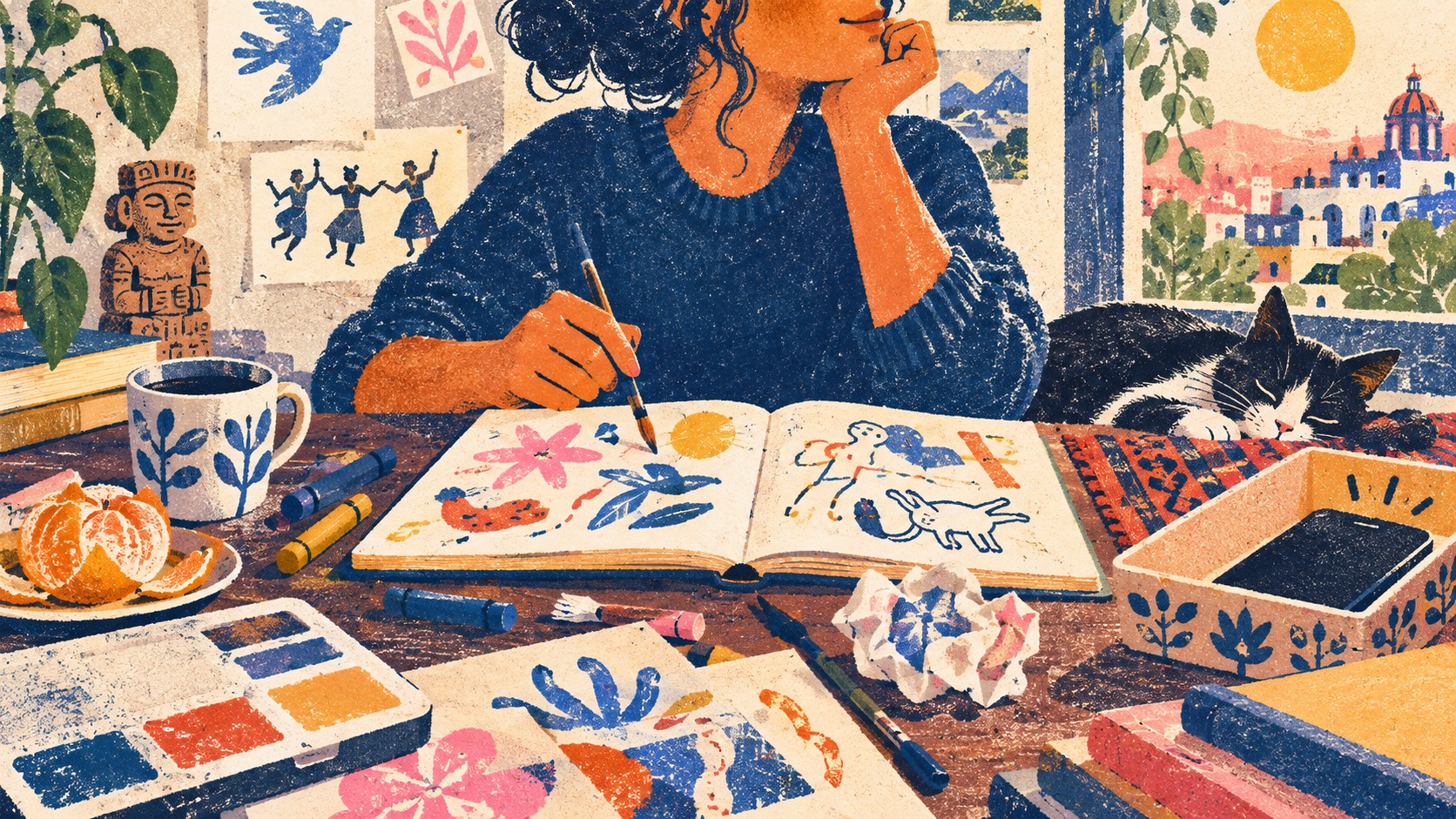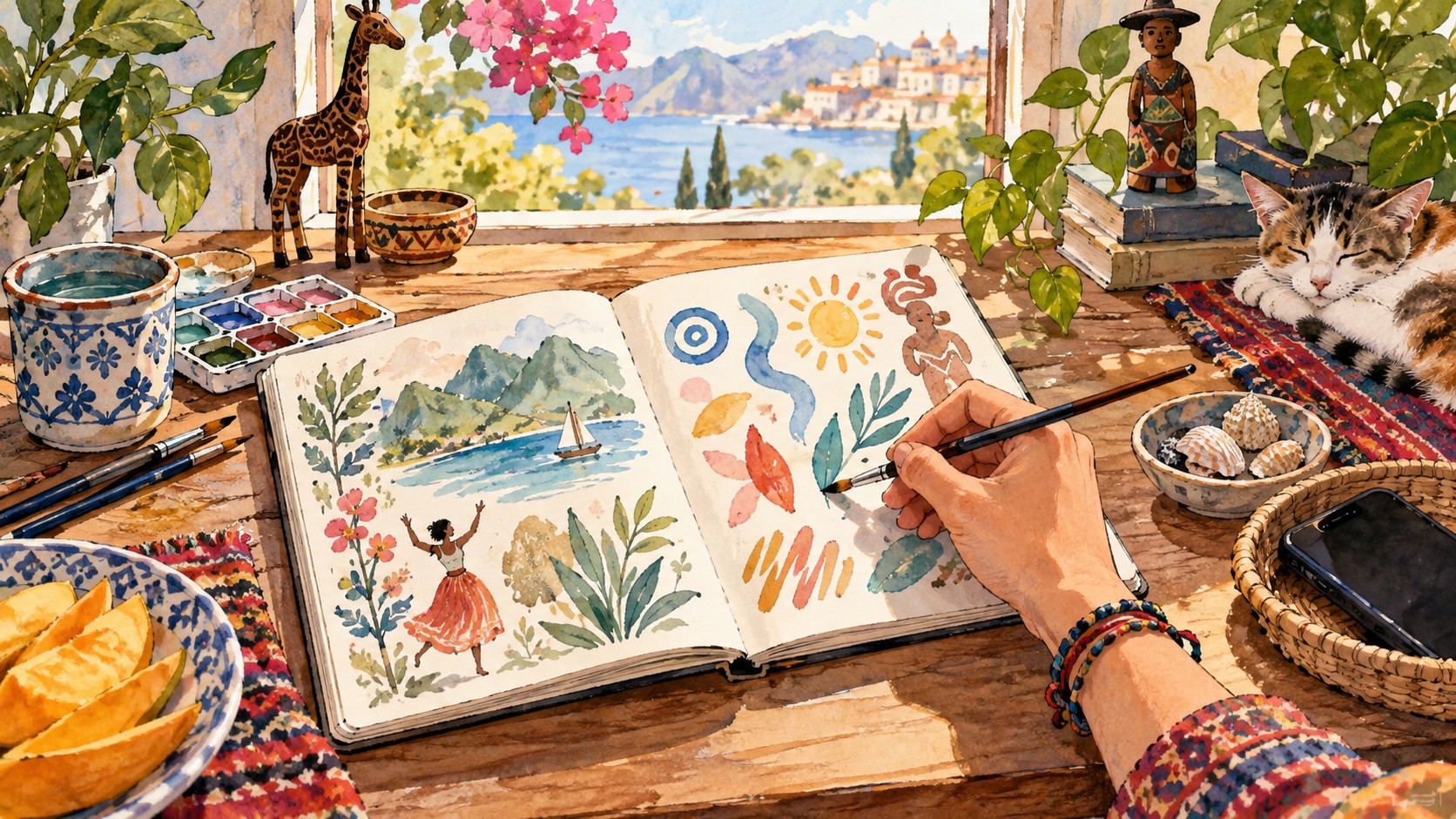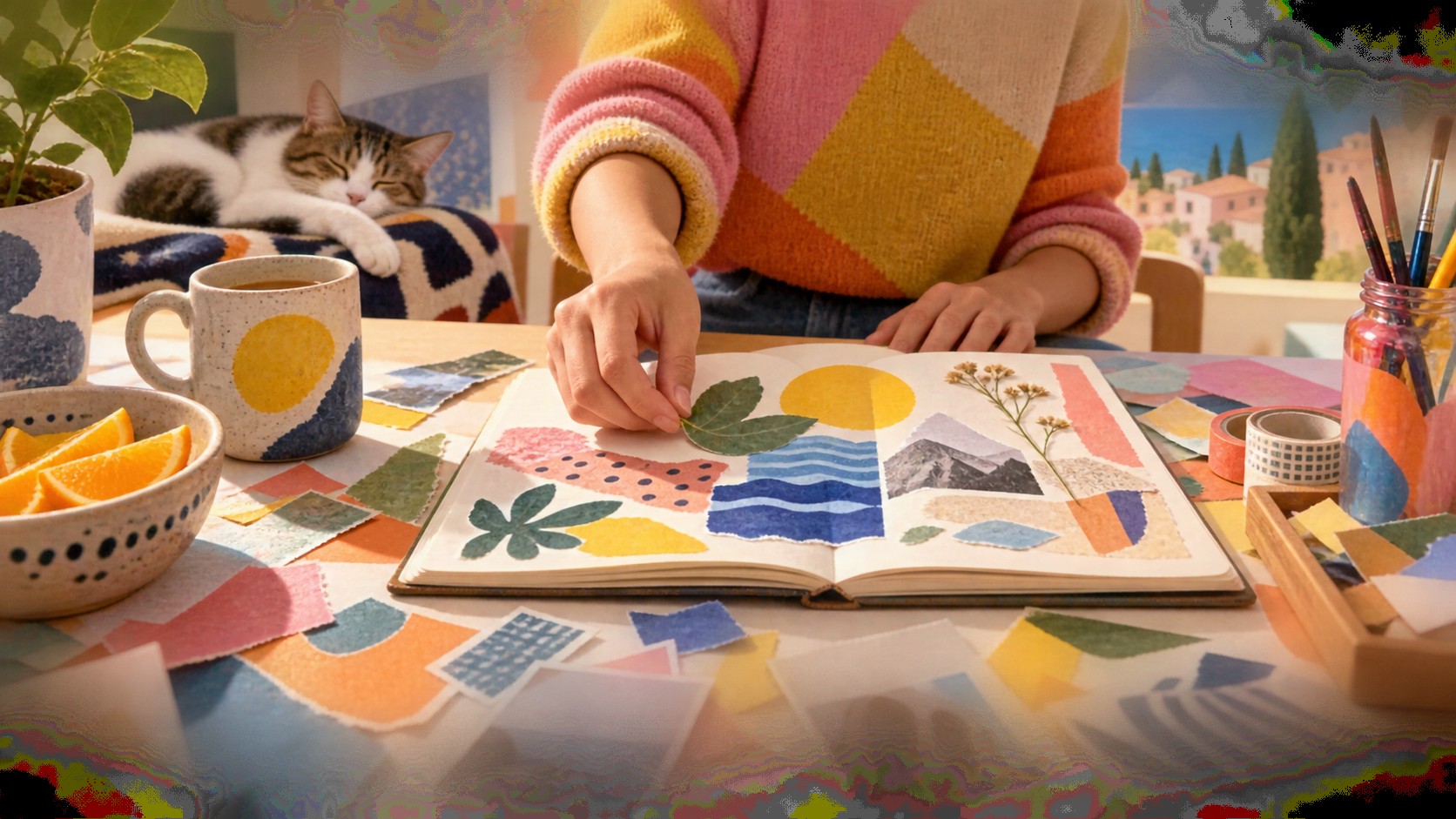
A folded card remains on a table after an afternoon of play. It does not have to justify its usefulness to retain the value of having opened a possibility.
Seeing the scene before judging it#
When someone stops a drawing, a word list, or a small model, another person may quickly conclude that interest is missing. Yet the gesture may also speak of interruption, tiredness, an expectation that grew too large, or a wish to save an idea for later. Asking what was happening makes room to attend to the situation without turning it into a label for the person making something.
When someone stops a drawing, a word list, or a small model, another person may quickly conclude that interest is missing.
A careful question does not demand a private explanation. It can ask which part brought curiosity or whether the activity wants to continue another day. Such language offers company without taking ownership of the process. An answer may be short, change over time, or never come; a conclusion does not need to be forced in order to respect an attempt.
Imagination does not require a product#
An invented restaurant does not need to open its doors to matter. While impossible dishes, unusual names, or wall colours are being decided, relationships among words, memories, and sounds are being tried. Exploration may leave behind a conversation, laughter, or an observation that did not fit the routine. Its value does not depend on becoming finished work later.
Keeping a half-made page also retains information. It shows where a question appeared, which detail gained force, and which limit needed attention. A short note, a crooked shape, or a collage combination can become interesting again months later. Keeping these things does not promise success; it recognises that processes have memory.
A mistake changes the route#
A mark can alter a drawing and an unexpected word can begin a character. Sometimes an accident is irritating, and there is no need to pretend otherwise. What matters is that it does not become a sentence about the maker’s ability. Asking what possibility appears after a change leaves more room than declaring that everything has been ruined.
Someone trying a rhyme hears new sounds; someone mixing colour discovers contrast; someone cutting too far learns about material. An error can be information from a search rather than an identity. Technical help can be useful, provided it does not replace the decision to continue, change, or let a proposal rest.
Protecting the beginning from comparison#
Measuring every draft against polished images or finished work makes any first step seem insufficient. Protecting making may mean delaying comparison, choosing references carefully, or sharing only with somebody willing to listen. The purpose is not to isolate a voice from other work, but to give it time to appear before facing a display window.
Accessible materials help more than perfect organisation. A working pencil, visible paper, and a box for beginnings reduce the ceremony of starting. Then two lines while water boils, one shape before leaving, or a sound noted on arriving home can fit. A brief scale can make returning possible.
An invitation for next time#
The card can remain available with one prompt: invent the name of a drink nobody has ordered. This is neither a quota nor a test of continuity. It is a small door that allows returning, changing direction, or doing nothing without gathering debt. If someone comes back, there is a starting point; if not, the paper still records a real exploration.
Small scenes reveal needs that are easy to miss: room without immediate judgement, permission to make mistakes, nearby materials, and company that does not intrude. They do not by themselves solve exhaustion or persistent distress; a significant concern should be discussed with the appropriate health professional. They can, however, offer a kinder relationship with trying and with the right not to perform in every gesture.
Prepare the place without directing the result#
A welcoming table does not need many materials. Three sheets of paper, a pencil that marks, a box for leftovers, and a recognisable stretch of time can be enough. An adult can arrange the space before starting, remove obstacles, and explain where things are, but should not choose the subject or final appearance. That difference prepares conditions without turning activity into a task with one correct answer. It also lets each participant watch, try gradually, talk while working, or simply stay nearby.
Time deserves the same care as materials. Saying that a few minutes remain helps avoid cutting off an idea abruptly, and leaving room to tidy up keeps the ending from feeling like punishment. If the proposal must stop early, it can be named honestly: this is enough for today; tomorrow we can see whether continuing feels right. Naming that possibility supports both people who tire quickly and people who need more time. Not every session must produce an object; some reveal which pace feels liveable.
Listen for decisions already being made#
When someone places a figure beyond the paper, erases a sentence, or mixes unexpected colours, there is often a decision, even when no explanation is ready. Rather than reading the gesture as disorder, a descriptive question can open conversation: I notice you left a lot of space here; do you like it that way? The question does not impose an emotional interpretation or require personal disclosure. It returns authority to the maker and leaves room for an answer that is practical, imaginary, changing, or silent.
It also helps to distinguish assistance from replacement. Offering scissors, holding paper, or reading an instruction can make access easier. Finishing the drawing, correcting an invented name, or choosing for someone else moves their voice aside. When frustration appears, offer a pause, another material, or the option to leave work unfinished. The most respectful intervention does not always fix the difficulty. Sometimes it protects the chance for the person working to discover their own next step.
Keep traces so return remains free#
A photograph made with permission, a date on the back, or a bag of cuttings can preserve a path without turning it into assessment. When people return, those traces can recall a question, a character, or a texture without demanding continuity. Explain why something is kept and who may see it. If a person prefers to take their work, change it, or not preserve it, that decision deserves respect. A home or community archive works best when it belongs to those who made the scene possible.
Sharing a creation should not be automatic either. It may be shown to one person, remain in a private folder, or disappear when the table is cleared. Asking before photographing, sending, or displaying teaches that creativity has its own boundaries. Pleasure in showing something does not justify deciding for its maker. This ordinary practice carries a clear lesson of care: an idea can matter even when it does not circulate, and an invitation to share remains an invitation rather than an obligation.
Carry the practice into daily life#
What is learned in a short activity can accompany other situations without becoming a formula. Offering genuine options, describing before judging, and allowing breaks can also improve a conversation, a meal, or a meeting. There is no need to turn every gesture into teaching. It is enough to recognise that people participate better when they know they may change direction without being defined by a mistake. Everyday imagination does not promise to solve complex conflict, but it can practise more patient attention toward what is still taking shape.
That is why the folded card is not a lesser result. It is a modest sign that shared time, personal decisions, and room for trying existed. It may stay in a drawer, change later, or be lost without losing its meaning. What matters is not keeping every sheet of paper, but caring for the conditions that made play possible. When the next occasion arrives, the table can open again without debt: with simple materials, respectful questions, and permission for every path to differ.