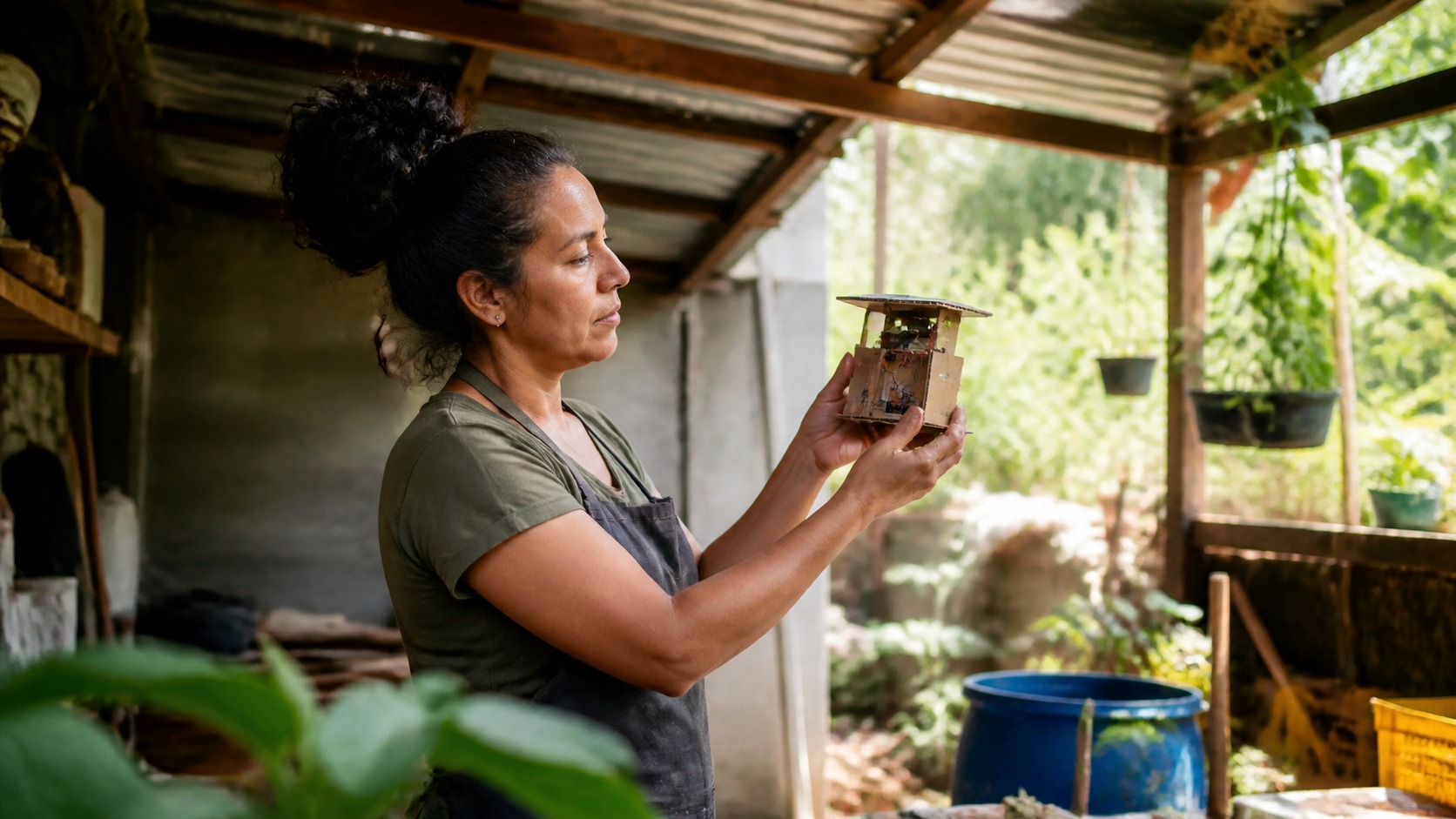
On a Sunday afternoon, Marta put a bag beside the door and asked the three people in her home to imagine a storm and a power cut. She was not seeking drama or a military-style drill. She wanted to know whether their written agreement could be used with busy hands, a low battery, and one anxious person. Within five minutes, the first useful fact appeared. The bag was ready, but nobody knew where the key to the storage room, where the radio lived, had been left. That small piece of friction changed how she measured readiness. It is not about collecting objects or feeling that everything is controlled. It is about finding out, calmly, what decision would be possible today and what support would be needed if the situation went beyond the household.
Change the question that guides preparation#
Many checklists begin with the wrong question: “What do we need to buy?” It often leads to comparing equipment, postponing a review until there is more time or money, and eventually feeling that readiness is always out of reach. A more useful question is: “What could we do in the first ten minutes without improvising?” The answer makes people look at their real home, schedules, health needs, and relationships. The priority may not be a new battery; it may be agreeing who would accompany a neighbour who cannot manage the stairs alone. It may be printing a contact number because the phone containing every detail can also lose power.
Many checklists begin with the wrong question: “What do we need to buy?” It often leads to comparing equipment, postponing a review until there is more time or money, and eventually feeling that readiness is always out of reach.
That question lowers panic because it turns a wide risk into an observable task. People can check whether a door opens, whether someone understands a note, or whether the meeting point can be recognised in the dark. It does not guarantee that an emergency will be easy. It offers something more honest: information that can be corrected before urgency arrives. When a plan shows a limit, the discovery is not failure. It is a signal to simplify, seek advice, or share a responsibility that had been concentrated in one person.
Run a short test without turning home into a drill#
A practical test can fit into fifteen minutes. Choose one concrete, ordinary situation, such as a weather warning while someone is travelling home from work or a supply interruption at dusk. Before starting, agree what you want to observe: finding the torch, receiving an official alert, reaching a reference contact, or knowing which medicine belongs in a bag. Do not try to rehearse everything at once. The more variables are mixed together, the harder it becomes to understand why something worked or failed.
During the test, one person can take notes without correcting everybody else. Record facts rather than judgements: “the password was written only on one phone,” “the child did not know which number to use,” or “the chosen exit had a step.” This friction log is more valuable than a general feeling of reassurance. Afterwards, turn each fact into a small, dated action. Moving the radio to an accessible cupboard, drawing an alternative route, or keeping two contacts on paper are improvements that can be completed and checked again.
Tell preparation apart from hypervigilance#
Preparation creates more room to act; hypervigilance consumes that room. The difference is visible in the body and in the calendar. A reasonable review ends with a short list and a future date. Hypervigilance pushes people to check every day, search endlessly for news, or add supplies without a specific need. If prevention work produces insomnia, repeated arguments, or a persistent sense of threat, it is sensible to reduce it. The plan does not need to be abandoned. It can be narrowed to one objective and resumed with support.
It also helps to separate sources. Choose in advance where you will consult local official alerts, emergency information, and health guidance. When contradictory information arrives, there is no need to solve it through dozens of forwarded messages. Pause, verify the time and origin, and follow the instruction from the competent authority. Sharing rumours for fear of missing something adds noise for people who already need to decide. Calm preparation includes knowing when to close the screen and attend to the people who are present.
Build a decision map rather than an endless list#
A simple map can use three columns: what we do ourselves, what we confirm with an official source, and what requires asking for help. The first column may include charging devices when poor weather is forecast, keeping a copy of contacts, and moving away from a broken window. The second may include checking whether a road is open or whether staying at home is advised. The third includes calling 112 for immediate danger, severe symptoms, smoke, violence, electrical risk, or an evacuation that cannot be completed safely.
This separation prevents two opposite mistakes. One is calling emergency services for every uncertainty that could be resolved by reading a municipal notice or speaking to a non-urgent service. The other is trying to manage without assistance when a situation already exceeds available resources. Adding local examples beside each column makes the judgement clearer. A family may decide that an unanswered message alone is not necessarily an emergency, while an unanswered message combined with an alert, a health condition, or visible danger is a reason to contact the appropriate service.
Listen to the people who find the real barriers#
Plans are often written by the person who moves most easily or understands technology best. That is why people who would rely on the plan need to test it. Ask an older adult whether the printed contact is readable. Ask a teenager whether they could tell an official warning from a screenshot. Ask a person who uses medication where they would need information to be stored. The goal is not to make anyone responsible for everything. It is to recognise that a barrier invisible to one person can stop another person from acting.
In an apartment building, the conversation can include neighbours without demanding private information. It may be enough to agree on one support question: “Do you need me to contact someone?” Some people need translation, others a step-free route, and others extra time to leave. Knowing this beforehand makes it possible to ask a council, social service, or Civil Protection office for a precise resource. Inclusive preparation is not promising help that nobody has accepted. It is creating clear, voluntary agreements that can be reviewed.
Handle health information with care#
In an emergency, health information should assist rather than expose. A short card can include a person’s name, an authorised contact, allergies or needs that matter to responders, and a reference health service if the person agrees to carry it. It does not need a full medical history or details that could be visible in a lobby or vehicle. Ask a clinician or pharmacist how treatment should be stored and what steps are appropriate if a supply is interrupted. Never turn an emergency list into instructions for changing doses.
The sign that this part works is not having a perfect document. It is that the person and anyone who might accompany them know where the information is and whom to contact when clinical doubt arises. If there is difficulty breathing, loss of consciousness, intense pain, sudden confusion, or any symptom that feels severe, do not wait to finish the plan: seek urgent care. The plan helps people communicate the situation more clearly; it does not replace professional assessment.
Learn from a false alarm and a minor incident#
False alarms can feel frustrating, but they offer a low-cost opportunity to practise without danger. If an alert ends without consequences in the neighbourhood, ask what information arrived late, what decision was unnecessary, and what action genuinely made readiness easier. A household may discover that its group shares links with no date, or that nobody has agreed how to communicate if the usual messaging service fails. Recording one concrete lesson avoids the vague conclusion that “we will do better next time.”
Minor incidents offer the same opportunity. A broken lift, a small water leak in a garage, or a loss of signal can reveal the value of portable light, a written phone number, or another exit. The key is not to treat every incident as proof that a catastrophe is imminent. Treat it as a maintenance test: identify the weak part, repair it, and verify it. That pace protects both material safety and the emotional health of the people involved.
Recognise the signs that require escalation#
There are moments when stopping the test is the right decision. If there is fire, smoke, a strong smell of gas, water near electrical installations, violence, an immediate threat, or an official evacuation order, the priority is to move away from danger and follow emergency instructions. Do not return to collect objects or try to confirm the warning through long conversations. Call 112 when there is an immediate risk to people or property, and provide the location, what is happening, and how many people may need help.
Less dramatic signs can also justify seeking advice before a crisis. A person may depend on electrical equipment, be unable to understand official messages, lack an accessible route, or live alone with an important support need. Municipal, health, or social services can explain local resources and procedures. Looking for that information early is prevention. Waiting until the problem is urgent reduces options and increases the burden on people trying to help.
End every review with a possible commitment#
At the end, the group does not need a ceremony or twenty tasks. Choose one correction that can genuinely be made before the following week and write down who will do it. It might be labelling the key box, confirming a contact, or checking that one person keeps a copy of essential details. One completed improvement builds more confidence than many promises. The next review can go on a shared calendar, but it should be possible to postpone it when illness, changed hours, or fatigue make that necessary.
Marta finished her test by putting the radio on a low shelf and leaving a note on the storage-room door. She also decided to call her neighbour and ask what help she would accept rather than assuming it. That became her sign of progress: not more equipment, but less confusion and a more respectful agreement. Preparing without panic means accepting that not everything can be predicted and still building small decisions that make it possible to act, listen, and ask for help in time.