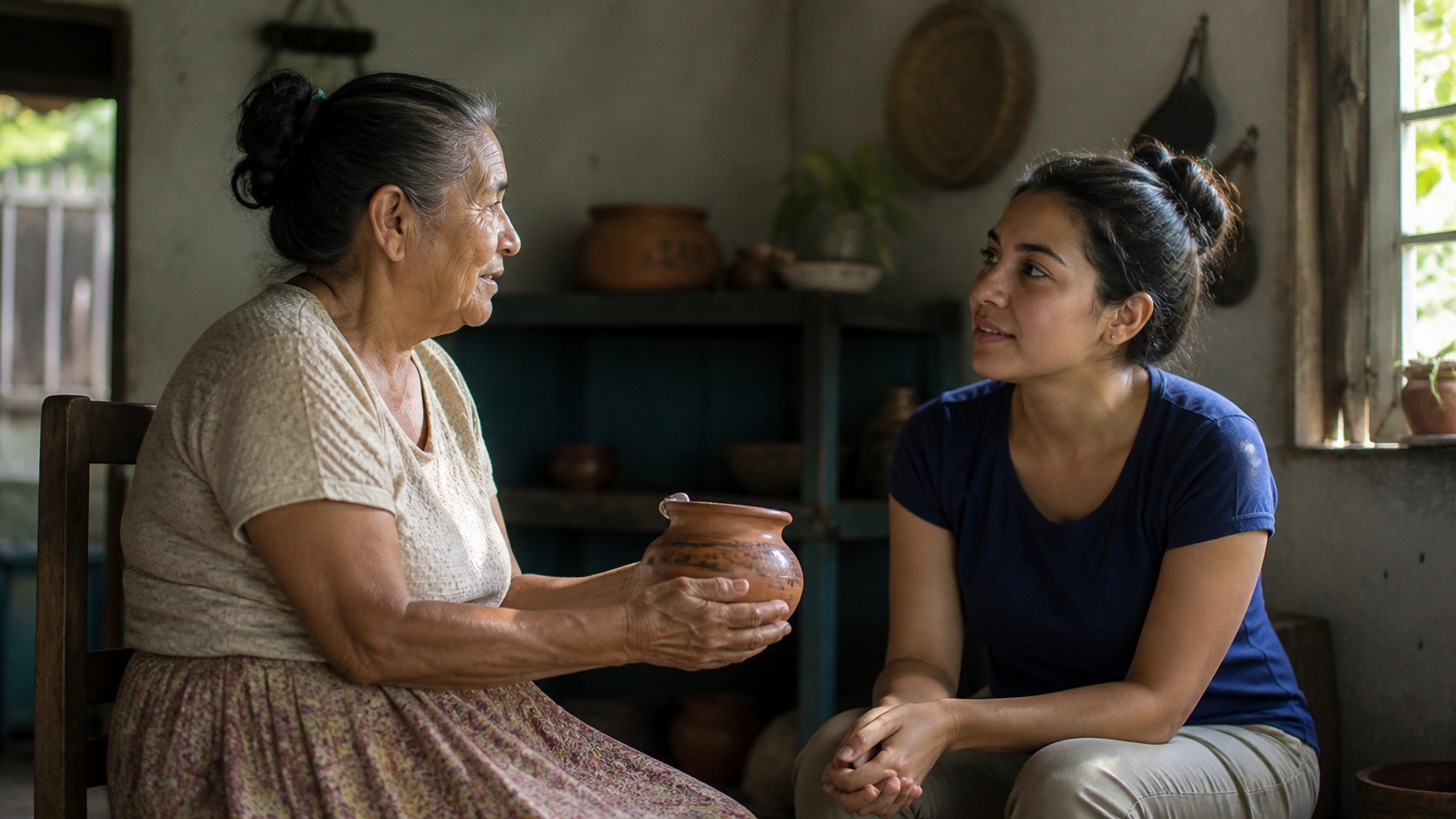
Families, schools and communities coordinate better when care stops being an improvised favour and becomes a clear, respectful and reviewable agreement. This guide offers a practical way to share information, time and responsibilities without removing any person autonomy.
Start with facts rather than labels#
Coordinating care does not mean that one person remembers everything while everyone else reacts to an instruction. It is work involving relationships, time and decisions. Start by mapping the week: arrivals and departures, meals, appointments, travel, household tasks, rest needs and contact people. Then ask who currently knows each item, who can decide, and what information needs to be shared. That map makes hidden loads visible and prevents an agreement from relying on one person’s memory. The ILO explains that care sustains life and that its unequal distribution limits opportunity; making organisation visible is a practical form of equity.
Coordinating care does not mean that one person remembers everything while everyone else reacts to an instruction.
A caring masculinity brings reliability rather than centre stage. It can take full ownership of a responsibility: packing a school bag, speaking to the school, booking an appointment, cooking and cleaning afterwards, or giving early notice of a change. Ownership includes anticipating, doing, communicating and repairing; it is not “helping” when another person has done the planning. UN Women notes that equality requires changing the distribution of power and time. Decisions should therefore be made with affected people, their preferences should be respected, and care should never become a way to control them.
A useful agreement fits into a checkable sentence: who does what, by when, with which resources, and what happens if they cannot do it. It also names a channel: a kitchen notebook, a shared calendar or a ten-minute conversation. Complex apps are unnecessary when they create extra work. WHO links wellbeing with supportive relationships and timely responses; clarity reduces the stress of chasing confirmation. If a conversation escalates, pause, describe the observable event without blame, and return to it when every person can take part safely.
Responsible coordination protects privacy. Share only necessary information, ask before communicating health or family details, and do not use children or teenagers as messengers between adults. UNICEF stresses that safe participation means listening to children and taking them seriously. When fear, threats, monitoring, violence or isolation appear, the priority is not negotiating a calendar: it is reaching specialised services and a safe network. EIGE shows how gender stereotypes sustain inequality; challenging them makes care an ordinary shared practice rather than a celebrated male exception.
Case one: the routine that breaks at the end of the day#
Coordinating care does not mean that one person remembers everything while everyone else reacts to an instruction. It is work involving relationships, time and decisions. Start by mapping the week: arrivals and departures, meals, appointments, travel, household tasks, rest needs and contact people. Then ask who currently knows each item, who can decide, and what information needs to be shared. That map makes hidden loads visible and prevents an agreement from relying on one person’s memory. The ILO explains that care sustains life and that its unequal distribution limits opportunity; making organisation visible is a practical form of equity.
A caring masculinity brings reliability rather than centre stage. It can take full ownership of a responsibility: packing a school bag, speaking to the school, booking an appointment, cooking and cleaning afterwards, or giving early notice of a change. Ownership includes anticipating, doing, communicating and repairing; it is not “helping” when another person has done the planning. UN Women notes that equality requires changing the distribution of power and time. Decisions should therefore be made with affected people, their preferences should be respected, and care should never become a way to control them.
A useful agreement fits into a checkable sentence: who does what, by when, with which resources, and what happens if they cannot do it. It also names a channel: a kitchen notebook, a shared calendar or a ten-minute conversation. Complex apps are unnecessary when they create extra work. WHO links wellbeing with supportive relationships and timely responses; clarity reduces the stress of chasing confirmation. If a conversation escalates, pause, describe the observable event without blame, and return to it when every person can take part safely.
Responsible coordination protects privacy. Share only necessary information, ask before communicating health or family details, and do not use children or teenagers as messengers between adults. UNICEF stresses that safe participation means listening to children and taking them seriously. When fear, threats, monitoring, violence or isolation appear, the priority is not negotiating a calendar: it is reaching specialised services and a safe network. EIGE shows how gender stereotypes sustain inequality; challenging them makes care an ordinary shared practice rather than a celebrated male exception.
Case two: a conversation that needs repair#
Coordinating care does not mean that one person remembers everything while everyone else reacts to an instruction. It is work involving relationships, time and decisions. Start by mapping the week: arrivals and departures, meals, appointments, travel, household tasks, rest needs and contact people. Then ask who currently knows each item, who can decide, and what information needs to be shared. That map makes hidden loads visible and prevents an agreement from relying on one person’s memory. The ILO explains that care sustains life and that its unequal distribution limits opportunity; making organisation visible is a practical form of equity.
A caring masculinity brings reliability rather than centre stage. It can take full ownership of a responsibility: packing a school bag, speaking to the school, booking an appointment, cooking and cleaning afterwards, or giving early notice of a change. Ownership includes anticipating, doing, communicating and repairing; it is not “helping” when another person has done the planning. UN Women notes that equality requires changing the distribution of power and time. Decisions should therefore be made with affected people, their preferences should be respected, and care should never become a way to control them.
A useful agreement fits into a checkable sentence: who does what, by when, with which resources, and what happens if they cannot do it. It also names a channel: a kitchen notebook, a shared calendar or a ten-minute conversation. Complex apps are unnecessary when they create extra work. WHO links wellbeing with supportive relationships and timely responses; clarity reduces the stress of chasing confirmation. If a conversation escalates, pause, describe the observable event without blame, and return to it when every person can take part safely.
Responsible coordination protects privacy. Share only necessary information, ask before communicating health or family details, and do not use children or teenagers as messengers between adults. UNICEF stresses that safe participation means listening to children and taking them seriously. When fear, threats, monitoring, violence or isolation appear, the priority is not negotiating a calendar: it is reaching specialised services and a safe network. EIGE shows how gender stereotypes sustain inequality; challenging them makes care an ordinary shared practice rather than a celebrated male exception.
Case three: reviewing support without taking autonomy away#
Coordinating care does not mean that one person remembers everything while everyone else reacts to an instruction. It is work involving relationships, time and decisions. Start by mapping the week: arrivals and departures, meals, appointments, travel, household tasks, rest needs and contact people. Then ask who currently knows each item, who can decide, and what information needs to be shared. That map makes hidden loads visible and prevents an agreement from relying on one person’s memory. The ILO explains that care sustains life and that its unequal distribution limits opportunity; making organisation visible is a practical form of equity.
A caring masculinity brings reliability rather than centre stage. It can take full ownership of a responsibility: packing a school bag, speaking to the school, booking an appointment, cooking and cleaning afterwards, or giving early notice of a change. Ownership includes anticipating, doing, communicating and repairing; it is not “helping” when another person has done the planning. UN Women notes that equality requires changing the distribution of power and time. Decisions should therefore be made with affected people, their preferences should be respected, and care should never become a way to control them.
A useful agreement fits into a checkable sentence: who does what, by when, with which resources, and what happens if they cannot do it. It also names a channel: a kitchen notebook, a shared calendar or a ten-minute conversation. Complex apps are unnecessary when they create extra work. WHO links wellbeing with supportive relationships and timely responses; clarity reduces the stress of chasing confirmation. If a conversation escalates, pause, describe the observable event without blame, and return to it when every person can take part safely.
Responsible coordination protects privacy. Share only necessary information, ask before communicating health or family details, and do not use children or teenagers as messengers between adults. UNICEF stresses that safe participation means listening to children and taking them seriously. When fear, threats, monitoring, violence or isolation appear, the priority is not negotiating a calendar: it is reaching specialised services and a safe network. EIGE shows how gender stereotypes sustain inequality; challenging them makes care an ordinary shared practice rather than a celebrated male exception.
Questions that turn review into learning#
Coordinating care does not mean that one person remembers everything while everyone else reacts to an instruction. It is work involving relationships, time and decisions. Start by mapping the week: arrivals and departures, meals, appointments, travel, household tasks, rest needs and contact people. Then ask who currently knows each item, who can decide, and what information needs to be shared. That map makes hidden loads visible and prevents an agreement from relying on one person’s memory. The ILO explains that care sustains life and that its unequal distribution limits opportunity; making organisation visible is a practical form of equity.
A caring masculinity brings reliability rather than centre stage. It can take full ownership of a responsibility: packing a school bag, speaking to the school, booking an appointment, cooking and cleaning afterwards, or giving early notice of a change. Ownership includes anticipating, doing, communicating and repairing; it is not “helping” when another person has done the planning. UN Women notes that equality requires changing the distribution of power and time. Decisions should therefore be made with affected people, their preferences should be respected, and care should never become a way to control them.
A useful agreement fits into a checkable sentence: who does what, by when, with which resources, and what happens if they cannot do it. It also names a channel: a kitchen notebook, a shared calendar or a ten-minute conversation. Complex apps are unnecessary when they create extra work. WHO links wellbeing with supportive relationships and timely responses; clarity reduces the stress of chasing confirmation. If a conversation escalates, pause, describe the observable event without blame, and return to it when every person can take part safely.
Responsible coordination protects privacy. Share only necessary information, ask before communicating health or family details, and do not use children or teenagers as messengers between adults. UNICEF stresses that safe participation means listening to children and taking them seriously. When fear, threats, monitoring, violence or isolation appear, the priority is not negotiating a calendar: it is reaching specialised services and a safe network. EIGE shows how gender stereotypes sustain inequality; challenging them makes care an ordinary shared practice rather than a celebrated male exception.
Simple indicators for the following week#
Coordinating care does not mean that one person remembers everything while everyone else reacts to an instruction. It is work involving relationships, time and decisions. Start by mapping the week: arrivals and departures, meals, appointments, travel, household tasks, rest needs and contact people. Then ask who currently knows each item, who can decide, and what information needs to be shared. That map makes hidden loads visible and prevents an agreement from relying on one person’s memory. The ILO explains that care sustains life and that its unequal distribution limits opportunity; making organisation visible is a practical form of equity.
A caring masculinity brings reliability rather than centre stage. It can take full ownership of a responsibility: packing a school bag, speaking to the school, booking an appointment, cooking and cleaning afterwards, or giving early notice of a change. Ownership includes anticipating, doing, communicating and repairing; it is not “helping” when another person has done the planning. UN Women notes that equality requires changing the distribution of power and time. Decisions should therefore be made with affected people, their preferences should be respected, and care should never become a way to control them.
A useful agreement fits into a checkable sentence: who does what, by when, with which resources, and what happens if they cannot do it. It also names a channel: a kitchen notebook, a shared calendar or a ten-minute conversation. Complex apps are unnecessary when they create extra work. WHO links wellbeing with supportive relationships and timely responses; clarity reduces the stress of chasing confirmation. If a conversation escalates, pause, describe the observable event without blame, and return to it when every person can take part safely.
Responsible coordination protects privacy. Share only necessary information, ask before communicating health or family details, and do not use children or teenagers as messengers between adults. UNICEF stresses that safe participation means listening to children and taking them seriously. When fear, threats, monitoring, violence or isolation appear, the priority is not negotiating a calendar: it is reaching specialised services and a safe network. EIGE shows how gender stereotypes sustain inequality; challenging them makes care an ordinary shared practice rather than a celebrated male exception.
Sources and support for a caring practice#
Coordinating care does not mean that one person remembers everything while everyone else reacts to an instruction. It is work involving relationships, time and decisions. Start by mapping the week: arrivals and departures, meals, appointments, travel, household tasks, rest needs and contact people. Then ask who currently knows each item, who can decide, and what information needs to be shared. That map makes hidden loads visible and prevents an agreement from relying on one person’s memory. The ILO explains that care sustains life and that its unequal distribution limits opportunity; making organisation visible is a practical form of equity.
A caring masculinity brings reliability rather than centre stage. It can take full ownership of a responsibility: packing a school bag, speaking to the school, booking an appointment, cooking and cleaning afterwards, or giving early notice of a change. Ownership includes anticipating, doing, communicating and repairing; it is not “helping” when another person has done the planning. UN Women notes that equality requires changing the distribution of power and time. Decisions should therefore be made with affected people, their preferences should be respected, and care should never become a way to control them.
A useful agreement fits into a checkable sentence: who does what, by when, with which resources, and what happens if they cannot do it. It also names a channel: a kitchen notebook, a shared calendar or a ten-minute conversation. Complex apps are unnecessary when they create extra work. WHO links wellbeing with supportive relationships and timely responses; clarity reduces the stress of chasing confirmation. If a conversation escalates, pause, describe the observable event without blame, and return to it when every person can take part safely.
Responsible coordination protects privacy. Share only necessary information, ask before communicating health or family details, and do not use children or teenagers as messengers between adults. UNICEF stresses that safe participation means listening to children and taking them seriously. When fear, threats, monitoring, violence or isolation appear, the priority is not negotiating a calendar: it is reaching specialised services and a safe network. EIGE shows how gender stereotypes sustain inequality; challenging them makes care an ordinary shared practice rather than a celebrated male exception.
Closing: moving forward without blame and with responsibility#
Coordinating care does not mean that one person remembers everything while everyone else reacts to an instruction. It is work involving relationships, time and decisions. Start by mapping the week: arrivals and departures, meals, appointments, travel, household tasks, rest needs and contact people. Then ask who currently knows each item, who can decide, and what information needs to be shared. That map makes hidden loads visible and prevents an agreement from relying on one person’s memory. The ILO explains that care sustains life and that its unequal distribution limits opportunity; making organisation visible is a practical form of equity.
A caring masculinity brings reliability rather than centre stage. It can take full ownership of a responsibility: packing a school bag, speaking to the school, booking an appointment, cooking and cleaning afterwards, or giving early notice of a change. Ownership includes anticipating, doing, communicating and repairing; it is not “helping” when another person has done the planning. UN Women notes that equality requires changing the distribution of power and time. Decisions should therefore be made with affected people, their preferences should be respected, and care should never become a way to control them.
A useful agreement fits into a checkable sentence: who does what, by when, with which resources, and what happens if they cannot do it. It also names a channel: a kitchen notebook, a shared calendar or a ten-minute conversation. Complex apps are unnecessary when they create extra work. WHO links wellbeing with supportive relationships and timely responses; clarity reduces the stress of chasing confirmation. If a conversation escalates, pause, describe the observable event without blame, and return to it when every person can take part safely.
Responsible coordination protects privacy. Share only necessary information, ask before communicating health or family details, and do not use children or teenagers as messengers between adults. UNICEF stresses that safe participation means listening to children and taking them seriously. When fear, threats, monitoring, violence or isolation appear, the priority is not negotiating a calendar: it is reaching specialised services and a safe network. EIGE shows how gender stereotypes sustain inequality; challenging them makes care an ordinary shared practice rather than a celebrated male exception.