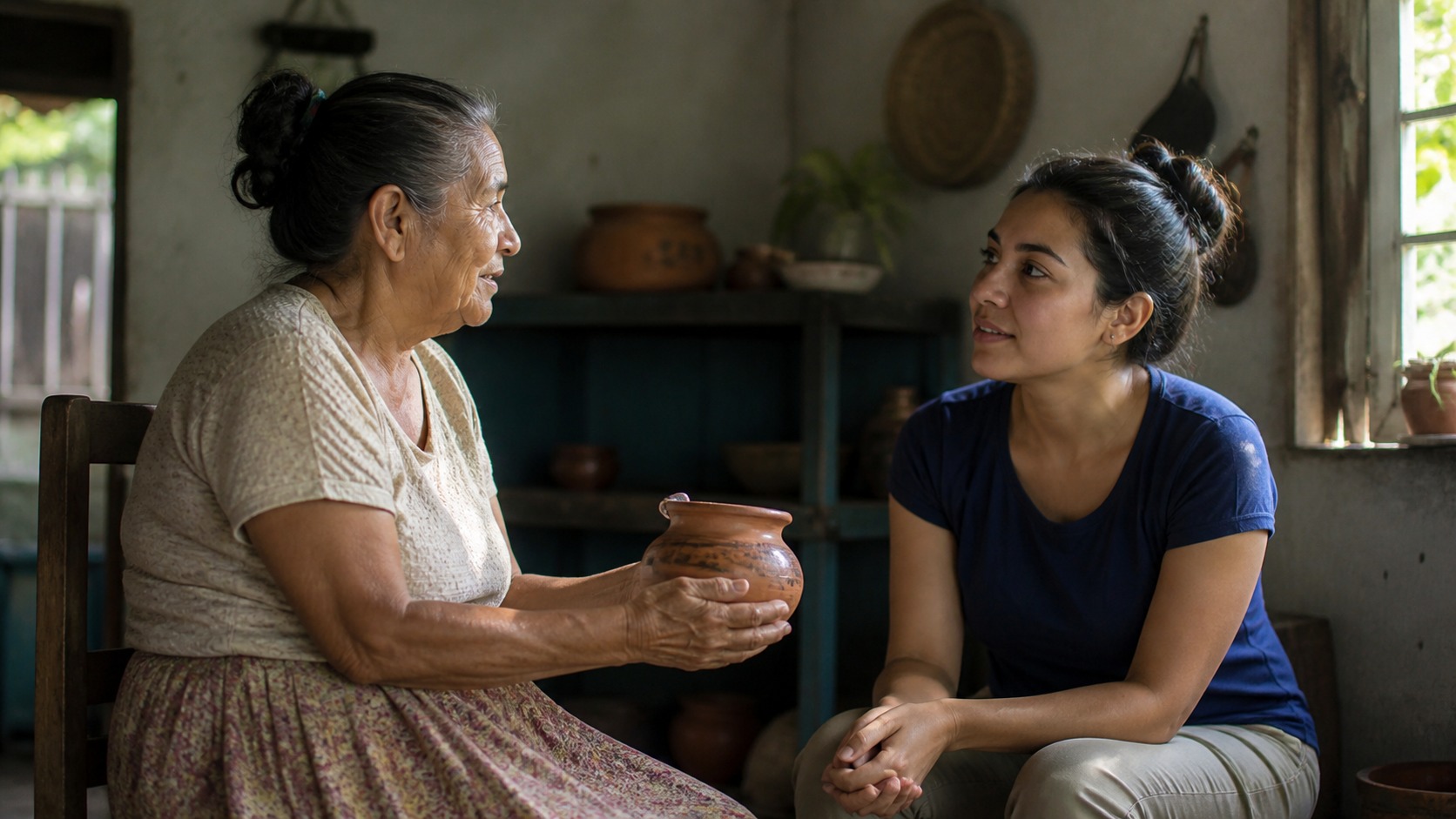
A caring masculinity is not demonstrated by a vague promise to help. It is recognised when a specific difficulty is handled with calm, boundaries, organisation and respect for autonomy. This five-step plan can be used in a home, group, school or community organisation: stop improvising, understand what is happening, agree a safe response, make it workable and review it. Where there is violence, threats, fear or immediate danger, safety and specialist services come first.
Step one: pause and name the difficulty#
A difficulty such as an unexpected care need that leaves someone without rest. Start by describing the observable event, without diagnosing a person or turning an emotion into an accusation. Ask which need was left unmet, which boundary was crossed and what must be protected today. A pause is not passivity: it avoids a response driven by pride, urgency or the need to be right. The WHO links wellbeing with social support and timely care; a calm response opens the way to that support.
A difficulty such as an unexpected care need that leaves someone without rest. Start by describing the observable event, without diagnosing a person or turning an emotion into an accusation.
A useful agreement assigns a complete responsibility, a date, the resources needed and a way to give notice if an obstacle appears. Saying “I will help” is not enough: the person responsible plans, carries out, communicates and repairs. The ILO notes that care work sustains life and that its unequal distribution limits time, income and participation. Making planning visible is a practical form of shared responsibility.
Listening means asking what support is wanted: company, information, a one-off practical task, rest or silence. It does not mean taking control, demanding gratitude or sharing private information. UN Women and EIGE explain that equality requires changing power relations; asking permission, accepting no and respecting decisions are therefore conditions of care. If someone fears retaliation, control or isolation, their safety should not be negotiated alone.
At the end, review the effect rather than only the intention. Did reminders decrease, did rest increase, were boundaries respected and did autonomy remain? If not, name the harm, meet the immediate need and change the system: a calendar, relief cover, training or outside support. UNICEF notes that safe participation requires people to be able to speak and be taken seriously. A short review turns experience into learning rather than blame.
Step two: listen before proposing solutions#
A difficulty such as a recurring argument about tasks, schedules or money. Start by describing the observable event, without diagnosing a person or turning an emotion into an accusation. Ask which need was left unmet, which boundary was crossed and what must be protected today. A pause is not passivity: it avoids a response driven by pride, urgency or the need to be right. The WHO links wellbeing with social support and timely care; a calm response opens the way to that support.
A useful agreement assigns a complete responsibility, a date, the resources needed and a way to give notice if an obstacle appears. Saying “I will help” is not enough: the person responsible plans, carries out, communicates and repairs. The ILO notes that care work sustains life and that its unequal distribution limits time, income and participation. Making planning visible is a practical form of shared responsibility.
Listening means asking what support is wanted: company, information, a one-off practical task, rest or silence. It does not mean taking control, demanding gratitude or sharing private information. UN Women and EIGE explain that equality requires changing power relations; asking permission, accepting no and respecting decisions are therefore conditions of care. If someone fears retaliation, control or isolation, their safety should not be negotiated alone.
At the end, review the effect rather than only the intention. Did reminders decrease, did rest increase, were boundaries respected and did autonomy remain? If not, name the harm, meet the immediate need and change the system: a calendar, relief cover, training or outside support. UNICEF notes that safe participation requires people to be able to speak and be taken seriously. A short review turns experience into learning rather than blame.
Step three: turn support into a specific agreement#
A difficulty such as a request for help that is interpreted as criticism. Start by describing the observable event, without diagnosing a person or turning an emotion into an accusation. Ask which need was left unmet, which boundary was crossed and what must be protected today. A pause is not passivity: it avoids a response driven by pride, urgency or the need to be right. The WHO links wellbeing with social support and timely care; a calm response opens the way to that support.
A useful agreement assigns a complete responsibility, a date, the resources needed and a way to give notice if an obstacle appears. Saying “I will help” is not enough: the person responsible plans, carries out, communicates and repairs. The ILO notes that care work sustains life and that its unequal distribution limits time, income and participation. Making planning visible is a practical form of shared responsibility.
Listening means asking what support is wanted: company, information, a one-off practical task, rest or silence. It does not mean taking control, demanding gratitude or sharing private information. UN Women and EIGE explain that equality requires changing power relations; asking permission, accepting no and respecting decisions are therefore conditions of care. If someone fears retaliation, control or isolation, their safety should not be negotiated alone.
At the end, review the effect rather than only the intention. Did reminders decrease, did rest increase, were boundaries respected and did autonomy remain? If not, name the harm, meet the immediate need and change the system: a calendar, relief cover, training or outside support. UNICEF notes that safe participation requires people to be able to speak and be taken seriously. A short review turns experience into learning rather than blame.
Step four: share resources, time and power#
A difficulty such as the overload of the person who organises, remembers and anticipates. Start by describing the observable event, without diagnosing a person or turning an emotion into an accusation. Ask which need was left unmet, which boundary was crossed and what must be protected today. A pause is not passivity: it avoids a response driven by pride, urgency or the need to be right. The WHO links wellbeing with social support and timely care; a calm response opens the way to that support.
A useful agreement assigns a complete responsibility, a date, the resources needed and a way to give notice if an obstacle appears. Saying “I will help” is not enough: the person responsible plans, carries out, communicates and repairs. The ILO notes that care work sustains life and that its unequal distribution limits time, income and participation. Making planning visible is a practical form of shared responsibility.
Listening means asking what support is wanted: company, information, a one-off practical task, rest or silence. It does not mean taking control, demanding gratitude or sharing private information. UN Women and EIGE explain that equality requires changing power relations; asking permission, accepting no and respecting decisions are therefore conditions of care. If someone fears retaliation, control or isolation, their safety should not be negotiated alone.
At the end, review the effect rather than only the intention. Did reminders decrease, did rest increase, were boundaries respected and did autonomy remain? If not, name the harm, meet the immediate need and change the system: a calendar, relief cover, training or outside support. UNICEF notes that safe participation requires people to be able to speak and be taken seriously. A short review turns experience into learning rather than blame.
Step five: review, repair and seek help#
A difficulty such as a mistake that shifted work onto another person. Start by describing the observable event, without diagnosing a person or turning an emotion into an accusation. Ask which need was left unmet, which boundary was crossed and what must be protected today. A pause is not passivity: it avoids a response driven by pride, urgency or the need to be right. The WHO links wellbeing with social support and timely care; a calm response opens the way to that support.
A useful agreement assigns a complete responsibility, a date, the resources needed and a way to give notice if an obstacle appears. Saying “I will help” is not enough: the person responsible plans, carries out, communicates and repairs. The ILO notes that care work sustains life and that its unequal distribution limits time, income and participation. Making planning visible is a practical form of shared responsibility.
Listening means asking what support is wanted: company, information, a one-off practical task, rest or silence. It does not mean taking control, demanding gratitude or sharing private information. UN Women and EIGE explain that equality requires changing power relations; asking permission, accepting no and respecting decisions are therefore conditions of care. If someone fears retaliation, control or isolation, their safety should not be negotiated alone.
At the end, review the effect rather than only the intention. Did reminders decrease, did rest increase, were boundaries respected and did autonomy remain? If not, name the harm, meet the immediate need and change the system: a calendar, relief cover, training or outside support. UNICEF notes that safe participation requires people to be able to speak and be taken seriously. A short review turns experience into learning rather than blame.
Case one: family care becomes overwhelming#
A difficulty such as a family facing a medical appointment and several work shifts. Start by describing the observable event, without diagnosing a person or turning an emotion into an accusation. Ask which need was left unmet, which boundary was crossed and what must be protected today. A pause is not passivity: it avoids a response driven by pride, urgency or the need to be right. The WHO links wellbeing with social support and timely care; a calm response opens the way to that support.
A useful agreement assigns a complete responsibility, a date, the resources needed and a way to give notice if an obstacle appears. Saying “I will help” is not enough: the person responsible plans, carries out, communicates and repairs. The ILO notes that care work sustains life and that its unequal distribution limits time, income and participation. Making planning visible is a practical form of shared responsibility.
Listening means asking what support is wanted: company, information, a one-off practical task, rest or silence. It does not mean taking control, demanding gratitude or sharing private information. UN Women and EIGE explain that equality requires changing power relations; asking permission, accepting no and respecting decisions are therefore conditions of care. If someone fears retaliation, control or isolation, their safety should not be negotiated alone.
At the end, review the effect rather than only the intention. Did reminders decrease, did rest increase, were boundaries respected and did autonomy remain? If not, name the harm, meet the immediate need and change the system: a calendar, relief cover, training or outside support. UNICEF notes that safe participation requires people to be able to speak and be taken seriously. A short review turns experience into learning rather than blame.
Case two: a partner conflict escalates#
A difficulty such as a couple arguing through messages and phone checks. Start by describing the observable event, without diagnosing a person or turning an emotion into an accusation. Ask which need was left unmet, which boundary was crossed and what must be protected today. A pause is not passivity: it avoids a response driven by pride, urgency or the need to be right. The WHO links wellbeing with social support and timely care; a calm response opens the way to that support.
A useful agreement assigns a complete responsibility, a date, the resources needed and a way to give notice if an obstacle appears. Saying “I will help” is not enough: the person responsible plans, carries out, communicates and repairs. The ILO notes that care work sustains life and that its unequal distribution limits time, income and participation. Making planning visible is a practical form of shared responsibility.
Listening means asking what support is wanted: company, information, a one-off practical task, rest or silence. It does not mean taking control, demanding gratitude or sharing private information. UN Women and EIGE explain that equality requires changing power relations; asking permission, accepting no and respecting decisions are therefore conditions of care. If someone fears retaliation, control or isolation, their safety should not be negotiated alone.
At the end, review the effect rather than only the intention. Did reminders decrease, did rest increase, were boundaries respected and did autonomy remain? If not, name the harm, meet the immediate need and change the system: a calendar, relief cover, training or outside support. UNICEF notes that safe participation requires people to be able to speak and be taken seriously. A short review turns experience into learning rather than blame.
Case three: invisible responsibilities in a team#
A difficulty such as a group that always gives logistics and welcome work to the same people. Start by describing the observable event, without diagnosing a person or turning an emotion into an accusation. Ask which need was left unmet, which boundary was crossed and what must be protected today. A pause is not passivity: it avoids a response driven by pride, urgency or the need to be right. The WHO links wellbeing with social support and timely care; a calm response opens the way to that support.
A useful agreement assigns a complete responsibility, a date, the resources needed and a way to give notice if an obstacle appears. Saying “I will help” is not enough: the person responsible plans, carries out, communicates and repairs. The ILO notes that care work sustains life and that its unequal distribution limits time, income and participation. Making planning visible is a practical form of shared responsibility.
Listening means asking what support is wanted: company, information, a one-off practical task, rest or silence. It does not mean taking control, demanding gratitude or sharing private information. UN Women and EIGE explain that equality requires changing power relations; asking permission, accepting no and respecting decisions are therefore conditions of care. If someone fears retaliation, control or isolation, their safety should not be negotiated alone.
At the end, review the effect rather than only the intention. Did reminders decrease, did rest increase, were boundaries respected and did autonomy remain? If not, name the harm, meet the immediate need and change the system: a calendar, relief cover, training or outside support. UNICEF notes that safe participation requires people to be able to speak and be taken seriously. A short review turns experience into learning rather than blame.
Fuentes y siguiente paso#
Useful sources include the ILO on care work, UN Women on equality, the WHO on health and wellbeing, UNICEF on safe participation and EIGE on co-responsibility. The next step can be small: choose one complete task, ask which support helps and write down a review. For violence, coercion, threats, self-harm risk or an emergency, contact local specialist and emergency services.