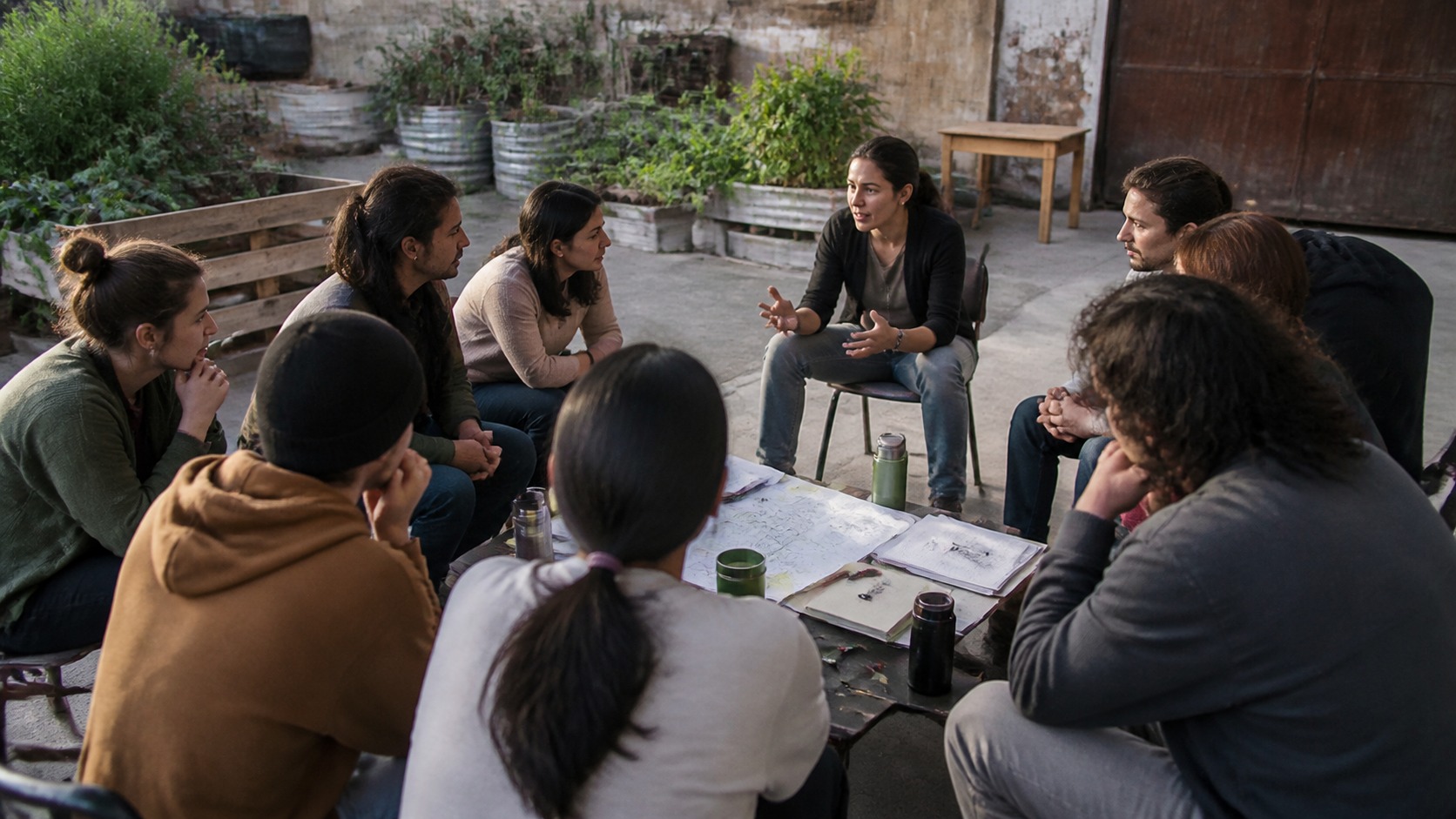
Reviewing progress in sexual and reproductive health is not an examination or a search for blame. It helps an adolescent identify what supported them, what made them feel less safe, and what the next step could be. A brief, specific, respectful conversation turns a confusing experience into useful information. The aim is to protect autonomy, reduce access barriers, and keep routes to help open.
Agree what will be reviewed#
Choose one small situation and a calm time. The adolescent can decide whether to speak alone, with a trusted person, or with a professional. The opening question is not “why did you do that?” but “what happened and what did you need then?” Naming the purpose reduces defensiveness: learn, care, and choose one possible step. Agree which details stay private and which must be shared when there is serious risk. A useful review ends with one concrete action, a responsible person, and a short date to check whether the agreement helped. At point 1, connected with “Agree what will be reviewed”, it helps to use everyday examples rather than labels. The person can choose one question they do want to answer, ask for a pause, or suggest another way to talk. A supporter can check their understanding without completing the story for them. Where information is uncertain, write it down to check later with an authoritative source and do not fill gaps with assumptions. It is also useful to consider access: time, transport, language, cost, privacy, and a support person can completely change whether help is usable. At the end, each participant should know what they can do, what is not their responsibility, and where support will be found if the plan changes. This division prevents review from becoming surveillance and makes it easier to return without shame.
Choose one small situation and a calm time. The adolescent can decide whether to speak alone, with a trusted person, or with a professional.
Separate facts from interpretations#
Separating facts, questions, and conclusions stops a misunderstanding from becoming an accusation. Write down what happened, what was felt, what information was missing, and which alternatives existed. Feelings are important information, but they do not force an immediate decision. If shame appears, slow down and use plain language. Checking a question against a recognised health source helps people move away from rumours. Autonomy grows when real options are offered, confidentiality limits are explained, and the time needed to choose is respected. At point 2, connected with “Separate facts from interpretations”, it helps to use everyday examples rather than labels. The person can choose one question they do want to answer, ask for a pause, or suggest another way to talk. A supporter can check their understanding without completing the story for them. Where information is uncertain, write it down to check later with an authoritative source and do not fill gaps with assumptions. It is also useful to consider access: time, transport, language, cost, privacy, and a support person can completely change whether help is usable. At the end, each participant should know what they can do, what is not their responsibility, and where support will be found if the plan changes. This division prevents review from becoming surveillance and makes it easier to return without shame.
Ask about safety and wellbeing#
The review should include physical, emotional, and digital safety. Asking about pressure, pain, threats, sharing intimate content, or fear of asking for help opens a door without demanding more disclosure than is possible. With an urgent sign, do not wait for the next conversation: contact health care, safeguarding, or emergency services as appropriate. A friend can accompany someone, but should not carry a risk situation alone. A practical agreement may be to keep evidence, block contacts when safe, book an appointment, or find a reliable adult. At point 3, connected with “Ask about safety and wellbeing”, it helps to use everyday examples rather than labels. The person can choose one question they do want to answer, ask for a pause, or suggest another way to talk. A supporter can check their understanding without completing the story for them. Where information is uncertain, write it down to check later with an authoritative source and do not fill gaps with assumptions. It is also useful to consider access: time, transport, language, cost, privacy, and a support person can completely change whether help is usable. At the end, each participant should know what they can do, what is not their responsibility, and where support will be found if the plan changes. This division prevents review from becoming surveillance and makes it easier to return without shame.
Recognise support that worked#
It also helps to recognise what worked. Perhaps someone listened without judgement, a respectful clinic was found, or a boundary was set. Identifying these resources makes them easier to use again. Then choose one barrier to repair: transport, hard-to-understand information, an incompatible timetable, or fear that others will find out. Repair does not erase what happened; it reduces harm and restores room to decide. At point 4, connected with “Recognise support that worked”, it helps to use everyday examples rather than labels. The person can choose one question they do want to answer, ask for a pause, or suggest another way to talk. A supporter can check their understanding without completing the story for them. Where information is uncertain, write it down to check later with an authoritative source and do not fill gaps with assumptions. It is also useful to consider access: time, transport, language, cost, privacy, and a support person can completely change whether help is usable. At the end, each participant should know what they can do, what is not their responsibility, and where support will be found if the plan changes. This division prevents review from becoming surveillance and makes it easier to return without shame.
Repair without punishment#
When a measure cannot be maintained, punishment is not the right response. The plan may need adjustment, a clearer explanation, or a different service. Questions such as “which part was difficult,” “what support would have changed it,” and “what do you want to try now” turn error into learning. Choose one achievable step and review it later. At point 5, connected with “Repair without punishment”, it helps to use everyday examples rather than labels. The person can choose one question they do want to answer, ask for a pause, or suggest another way to talk. A supporter can check their understanding without completing the story for them. Where information is uncertain, write it down to check later with an authoritative source and do not fill gaps with assumptions. It is also useful to consider access: time, transport, language, cost, privacy, and a support person can completely change whether help is usable. At the end, each participant should know what they can do, what is not their responsibility, and where support will be found if the plan changes. This division prevents review from becoming surveillance and makes it easier to return without shame.
Case 1: an appointment that felt incomplete#
In this case, an adolescent attended an appointment but left with questions because they did not dare ask. During review, a trusted person does not read silence as lack of interest: they ask what would have made the appointment easier. They prepare three questions, clarify appointment privacy, and agree who may help with travel. The repair is to request another appointment and later check whether the explanation was understandable. At point 6, connected with “Case 1: an appointment that felt incomplete”, it helps to use everyday examples rather than labels. The person can choose one question they do want to answer, ask for a pause, or suggest another way to talk. A supporter can check their understanding without completing the story for them. Where information is uncertain, write it down to check later with an authoritative source and do not fill gaps with assumptions. It is also useful to consider access: time, transport, language, cost, privacy, and a support person can completely change whether help is usable. At the end, each participant should know what they can do, what is not their responsibility, and where support will be found if the plan changes. This division prevents review from becoming surveillance and makes it easier to return without shame.
Case 2: pressure in a digital conversation#
In this case, repeated messages made an adolescent feel obliged to reply and then afraid that others would find out. Review begins by confirming that pressure is not their fault. Keep what is needed as evidence, block when safe, and locate adult or specialist support. The priority is to restore safety and control, not force repeated retelling. At point 7, connected with “Case 2: pressure in a digital conversation”, it helps to use everyday examples rather than labels. The person can choose one question they do want to answer, ask for a pause, or suggest another way to talk. A supporter can check their understanding without completing the story for them. Where information is uncertain, write it down to check later with an authoritative source and do not fill gaps with assumptions. It is also useful to consider access: time, transport, language, cost, privacy, and a support person can completely change whether help is usable. At the end, each participant should know what they can do, what is not their responsibility, and where support will be found if the plan changes. This division prevents review from becoming surveillance and makes it easier to return without shame.
Case 3: a preventive measure hard to maintain#
In this case, a preventive measure was stopped because timetable, cost, or fear of being seen created barriers. The review does not assume irresponsibility. Explore access options, consult a health service, and choose a feasible alternative. Family can help with travel and school with time organisation, but the decision should be explained without pressure. At point 8, connected with “Case 3: a preventive measure hard to maintain”, it helps to use everyday examples rather than labels. The person can choose one question they do want to answer, ask for a pause, or suggest another way to talk. A supporter can check their understanding without completing the story for them. Where information is uncertain, write it down to check later with an authoritative source and do not fill gaps with assumptions. It is also useful to consider access: time, transport, language, cost, privacy, and a support person can completely change whether help is usable. At the end, each participant should know what they can do, what is not their responsibility, and where support will be found if the plan changes. This division prevents review from becoming surveillance and makes it easier to return without shame.
Prepare the next step#
To close the conversation, summarise what was learned in one sentence and the next step in another. Decide who will do what, what support is needed, and when it will be reviewed. A short plan adapts better than a list of promises. If circumstances change, asking again is not control: it checks that the person still has options. At point 9, connected with “Prepare the next step”, it helps to use everyday examples rather than labels. The person can choose one question they do want to answer, ask for a pause, or suggest another way to talk. A supporter can check their understanding without completing the story for them. Where information is uncertain, write it down to check later with an authoritative source and do not fill gaps with assumptions. It is also useful to consider access: time, transport, language, cost, privacy, and a support person can completely change whether help is usable. At the end, each participant should know what they can do, what is not their responsibility, and where support will be found if the plan changes. This division prevents review from becoming surveillance and makes it easier to return without shame.
When to seek professional help#
Seeking help early is an act of care, especially with pain, coercion, violence, unintended pregnancy, infection exposure, threats, or sharing intimate images. Health and safeguarding services can explain confidential options within applicable legal limits. A person does not need perfect words or complete certainty to ask for guidance. At point 10, connected with “When to seek professional help”, it helps to use everyday examples rather than labels. The person can choose one question they do want to answer, ask for a pause, or suggest another way to talk. A supporter can check their understanding without completing the story for them. Where information is uncertain, write it down to check later with an authoritative source and do not fill gaps with assumptions. It is also useful to consider access: time, transport, language, cost, privacy, and a support person can completely change whether help is usable. At the end, each participant should know what they can do, what is not their responsibility, and where support will be found if the plan changes. This division prevents review from becoming surveillance and makes it easier to return without shame.
General guidance sources#
WHO · UNFPA · CDC · NHS. These sources provide general guidance and do not replace an individual assessment.