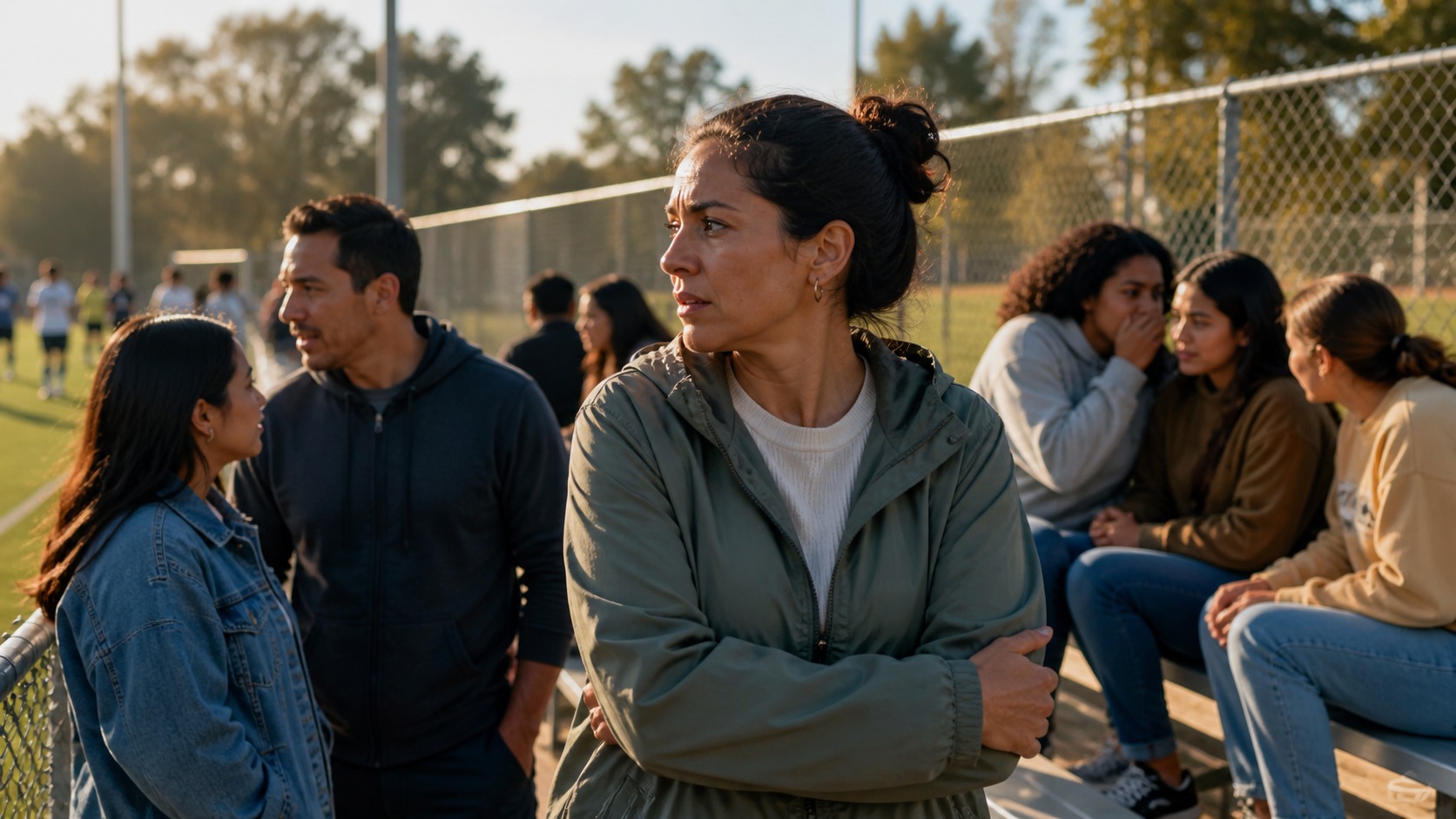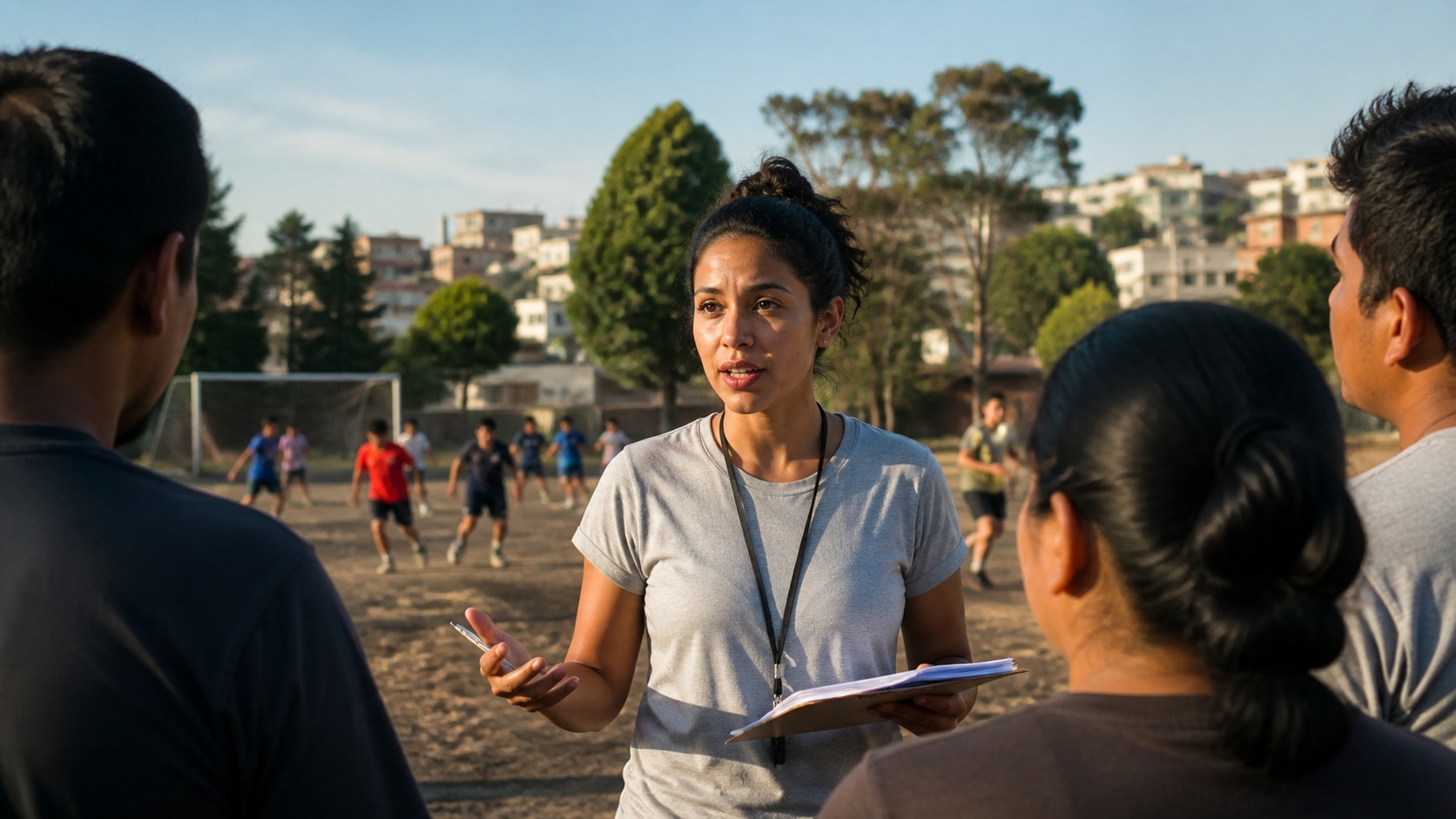
A difficult conversation can prevent a huge problem when young people have genuine power to shape the outcome. The aim is not to turn every disagreement into a confrontation or make one young person carry the full cost of an uncomfortable truth. It is to build settings where warning about risk, naming unfairness, or questioning a decision counts as legitimate work. A mature institution does not measure participation by invitations alone; it asks whether people were heard early enough, whether decisions changed, and whether speaking was safe.
Politeness can conceal an unsafe silence#
Schools, charities, businesses, and public bodies often hold perfectly civil meetings in which the central problem survives untouched. A young participant is thanked, the comment enters the minutes, and the agenda moves on. Nobody raises a voice, but the budget, timetable, and allocation of responsibility remain fixed. Such calm can be mistaken for agreement. It may instead show how carefully the person with less authority is calculating the consequences of dissent.
Schools, charities, businesses, and public bodies often hold perfectly civil meetings in which the central problem survives untouched.
An honest conversation begins by naming that imbalance. A senior employee may criticize a proposal and remain secure in the group. A teenager may fear losing a scholarship, playing time, a reference, access to a programme, or the trust of an important adult. A general invitation to speak is therefore insufficient. People need routes for confidential reporting, protection against retaliation, preparation time, access to a trusted supporter, and a response explaining what happened after their contribution.
Discomfort must also be separated from disrespect. Asking who carries the risk, why consultation came late, or what evidence supports a choice may unsettle the room without harming anyone. Suppressing those questions for the sake of a pleasant atmosphere transfers the cost to the person already exposed. Caring for a relationship means allowing truth to change it. It cannot mean preserving harmony by requiring the less powerful party to surrender.
Early warnings are part of prevention#
Huge failures rarely arrive at full size. They begin as an overlooked exception, an uneasy joke, an unexplained number, unrecognised labour, or a promise repeatedly postponed. If an organisation listens only at the end, the conversation arrives with urgency, damaged trust, and hardened positions. Listening early makes correction less costly and communicates an important priority: prevention deserves management time, budget, and recognition before a crisis forces attention.
The United Nations Youth 2030 strategy treats young people as partners rather than only beneficiaries. That principle changes the timing of dialogue. Youth perspectives belong in the definition of the problem, not merely in the presentation of a finished solution. When all options are closed, consultation becomes theatre. While goals, criteria, and resources can still move, a difficult conversation can expose design errors and create a better shared decision.
Silence itself should be monitored. When a youth panel gradually stops attending, a feedback channel receives the same concern repeatedly, or team members avoid asking questions, the setting is providing information about its safety. A responsible organisation looks for patterns, investigates barriers, and reports changes. It should not rely on one unusually courageous person to reveal a condition that its own governance ought to detect.
Concrete case: a school rule with a hidden consequence#
A secondary school plans to restrict access to a covered courtyard after several incidents. Behaviour data appears to support the rule, and leaders consider the draft complete. During an information session, a student explains that the courtyard is the only manageable place for pupils with sensory sensitivities and for those avoiding harassment in the main yard. The comment is awkward because it challenges a measure already described as necessary and safe.
A symbolic response would thank the student and apply the rule for a term. A transformative response pauses approval, checks the experience with support staff, invites other affected pupils, and tests protected access periods. The student is not asked to design the entire policy. Her knowledge triggers institutional responsibility. The final rule may retain restrictions, but it contains understandable exceptions, named supervision, a reporting route, and a fixed review date.
UNICEF's guidelines for adolescent participation and civic engagement emphasise meaningful, inclusive, and safe participation. Those qualities require a closed feedback loop. Students should know who decides, when a response is due, and which criteria will justify accepting or rejecting an idea. Without that return, youth testimony becomes an emotional illustration rather than knowledge capable of changing the outcome.
Designing a disagreement that people can enter safely#
Preparation determines much of the quality of a difficult conversation. Before convening it, leaders should state the purpose, known facts, open questions, affected groups, and actual room for change. They should agree what will remain confidential and how commitments will be recorded. When everything is improvised, people fluent in institutional language dominate. A less polished account can then sound less valuable even when it contains the most relevant operational knowledge.
A practical format uses three rounds. The first describes observations without debating intentions. The second explores effects and needs. The third develops options, owners, and deadlines. This sequence reduces the urge to defend before understanding. Written submissions, anonymous input, interpretation, breaks, or a trusted companion may be offered where needed. Accessibility does not dilute the conversation; it expands the evidence on which a sound decision can be made.
Facilitators should notice interruption, defensive humour, unexplained jargon, and sudden changes of subject. They must also resist asking one young person to represent an entire generation. Personal experience is valid knowledge, but it is not a statistical sample or a universal mandate. The Council of Europe connects youth participation with rights, opportunities, space, means, and support. Safe dialogue requires those material conditions, not goodwill alone.
Concrete case: a cultural programme at the wrong time#
A cultural association schedules youth activities at four in the afternoon and blames low attendance on weak interest. At its annual meeting, two young members explain that public transport from outer neighbourhoods and family care duties make timely arrival impossible. Board members reply that the schedule reflects adult volunteers' availability. The discussion becomes difficult because both constraints are real and every alternative has a financial or personal cost.
Progress begins when the group stops asking which side is right and examines how costs are distributed. It maps travel times, pilots two evening sessions with shared transport, and pays a young coordinator to manage a hybrid calendar. It also reduces unnecessary in-person meetings and publishes decisions in plain language. Participation rises because access conditions change, not because young people are persuaded to fit a system built without them.
The lesson is partly financial. Listening creates obligations that must appear in budgets and schedules. If transport, interpretation, connectivity, or care remains unfunded, participation depends on invisible labour. An honest conversation can acknowledge limits, establish priorities, and seek partners. The irresponsible alternative is to promise openness while preserving a structure that admits only those able to absorb the cost of being present.
Turning lived experience into shared authority#
A personal account can transform understanding, but policy should not rest only on the emotion of a meeting. Institutions need to combine testimony, disaggregated data, professional expertise, and recognised rights. This avoids treating a young speaker as living proof of an entire phenomenon or dismissing experience because it is not an average. Numbers reveal patterns; lived accounts illuminate mechanisms, exceptions, and consequences that formal records routinely miss.
The OECD's work on youth brings together evidence on policy, trust, and public participation. It can inform practical measures: diversity of participants, stage at which they entered, proposals adopted, reasons for rejection, response time, and perceived safety. An indicator should help people correct a process, not decorate an annual report. Results should be disaggregated carefully so that apparent success does not conceal whose voice remains absent.
Shared decision-making also needs a map of power. Some choices can be delegated to a youth council. Others require co-production with qualified professionals. Some are bounded by rights that cannot be put to a simple vote. Explaining these lines prevents false expectations and makes retained adult authority accountable. A decision-maker should be able to say why a boundary exists, what evidence informed it, and how affected young people can seek review.
Concrete case: stopping a harmful digital message#
A public agency prepares a social-media mental health campaign. Its creative team believes the message is optimistic, but young advisers warn that one slogan may blame people who cannot simply feel better. They also notice that the support form collects unnecessary personal data. Advertising has been purchased and launch is days away. Revision means cost, delay, and an uncomfortable admission to suppliers and senior sponsors.
The agency runs a rapid test with diverse groups, consults its data protection team, and changes both wording and form. It preserves much of the media purchase, delays launch by one week, pays the youth reviewers, and documents the decision. The difficult conversation prevents reputational trouble, but its more important achievement is protecting people who could encounter a harmful message while especially vulnerable.
The World Health Organization's adolescent health resources describe adolescence as a distinct period shaped strongly by social environments. A responsible campaign cannot treat youth as a uniform audience. It tests comprehension, privacy, access to support, and possible adverse effects. Early disagreement then becomes quality assurance rather than an obstacle placed in the path of completed work.
Responding without punishing the speaker#
The first response determines whether a second conversation will happen. Statements such as “that was not our intention,” “we have always done it this way,” or “you should have said something earlier” shift the burden back to the person raising concern. A better response acknowledges impact, requests only necessary information, explains the review process, and offers protection. Serious attention does not require automatic agreement, but it does require investigation without retaliation.
Where harm occurred, repair may mean changing a decision, returning a resource, apologising, crediting authorship, revising a protocol, or restoring a lost opportunity. The affected person should be asked what outcome would matter, without promises that cannot be kept. The organisation must then examine the systemic cause. Settling the visible incident while leaving its conditions unchanged merely prepares the next silence.
UNESCO's Futures of Education initiative calls for education that helps create shared futures. That ambition requires institutions to practise democratic relationships in the present. A school that penalises an uncomfortable question teaches obedience even when its curriculum celebrates citizenship. An organisation that responds transparently teaches responsibility through daily experience, which is often more persuasive than any formal lesson.
A short protocol that connects voice to outcome#
Before a meeting, five points should be explicit: which decision remains open, who can change it, how people with less power can participate, what protection exists, and when a response will come. During the meeting, observations, impacts, needs, and proposals should be separated. At the end, owners, dates, and measures should be assigned. This simple structure keeps the energy of a serious discussion from dissolving into a vague promise to continue talking.
Afterwards, an accessible account should state what was heard, what changed, what did not change, and why. Sensitive identities can be protected without hiding the lesson. A review after thirty or sixty days checks whether the agreement works and whether unintended consequences appeared. Participation earns credibility when anyone involved can trace the route from a contribution, through deliberation, to a visible outcome.
Youth with the power to transform does not require adults to abandon every responsibility or young people to become flawless symbols. It requires institutions that share information, accept legitimate conflict, and correct themselves. A difficult conversation succeeds when it lowers the risk carried by the speaker and raises the responsibility carried by the decision-maker. Curiosity then supports understanding, responsibility turns words into changes, and care prevents superficial harmony from protecting a huge problem.