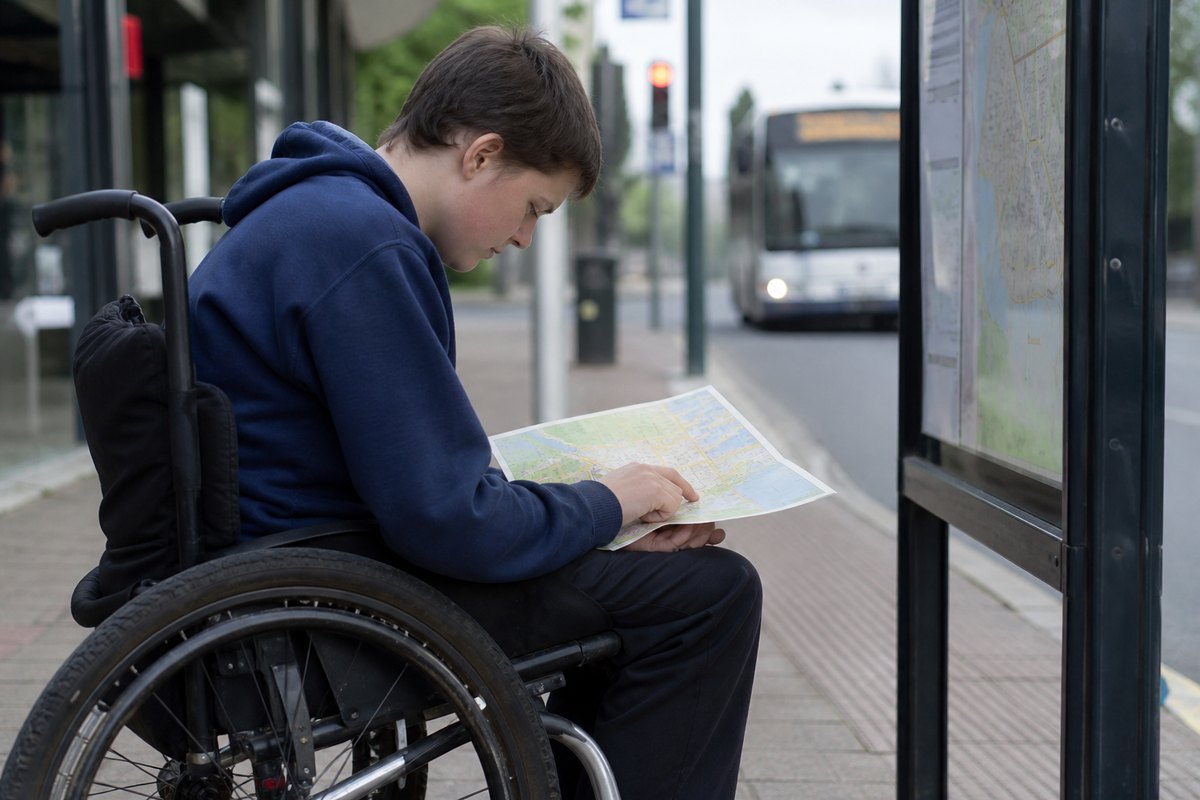
The exception does not break the rule: it explains it. When a school rule works for almost everyone and fails one person, the easiest response is to label that person exceptional and leave the institutional explanation untouched. A response capable of producing learning reverses the gaze: it asks which assumption the rule contained, which reality it did not anticipate, and what harm would follow from applying it without judgement. An exception does not automatically prove that every rule is unjust. It proves that no rule can comprehend in advance every life on which it will act.
Schools need rules because they coordinate expectations, protect rights, and prevent every decision from depending on the mood or power of whoever occupies an office. They also need the capacity to recognise when equal treatment creates a specific inequality. Consistency does not mean repeating the same response on every occasion. It means sustaining the same purpose, explaining why one case requires another route, and then examining whether the adjustment should remain singular or transform the common design. A mature institution does not choose between rule and exception: it learns to govern the relationship between them.
The exception as evidence rather than a favour#
Calling an adjustment a favour conceals the obligation to understand it. If a student needs another way to demonstrate learning, if a family cannot complete a digital procedure, or if a teacher requires temporary reorganisation, the first question should not be who deserves kindness. It should be which barrier has appeared and which purpose the original rule protects. Sometimes an individual and proportionate response will be enough. At other times, the case will reveal that the procedure was designed for an imaginary population whose members share the same language, time, body, connection, and educational journey.
Calling an adjustment a favour conceals the obligation to understand it. If a student needs another way to demonstrate learning, if a family cannot complete a digital procedure, or if a teacher requires temporary reorganisation, the first question should not be who deserves kindness.
The distinction matters because a favour depends on gratitude and discretion, while a justifiable decision depends on criteria. The school can record the rule’s purpose, the relevant fact, the alternative adopted, its duration, risks, and review date. It need not disclose personal information in order to preserve that memory. It does need to explain why it acted differently and how it protected people in comparable circumstances. Traceability prevents two extremes: rigidity that causes harm and arbitrariness that grants solutions according to persistence, proximity, or ability to complain.
An exception can also be an early signal. The first impossible form, incompatible timetable, or absurd sanction usually looks like an anomaly. When nobody records it, every recurrence appears as another private surprise. A learning school creates a channel through which tutors, office staff, support teams, catering staff, and families can raise such friction. It does not collect dossiers about people; it gathers patterns about processes. The useful question changes from “what is wrong with this student?” to “which condition in our organisation turns this student’s situation into an obstacle?”
What must not be lost when flexibility is introduced#
Flexibility does not mean accepting every request. The institution must preserve important goods: safety, the right to learn, protection from discrimination, responsible use of resources, and treatment that can be justified. It is therefore helpful to distinguish the core of a rule from its customary form. The core of an assessment may be demonstrating understanding; writing for forty minutes on a single date is only one form. The core of an authorisation may be informed consent; a particular mobile application is only one channel. When form is confused with purpose, procedure ends up governing the community.
An exceptional decision can be examined through five questions. Which right or purpose is at stake? What evidence shows that the ordinary route creates a barrier? Does the alternative preserve essential learning or protection? Which effects does it create for others? When will it be reviewed? These questions make clear that equity is not an absence of limits. An adjustment that removes the educational objective would not be equivalent; one that shifts a disproportionate burden to someone else needs redesign. A just response seeks access to the purpose without turning the existing procedure into an idol.
The asymmetry of power must also be recognised. A child cannot contest a rule on the same terms as a leadership team; a newly arrived family may not know what it can request; a temporary teacher may remain silent about a difficulty that others express. Waiting for every affected person to formulate a legally precise request rewards those who know the system. The institution can anticipate alternative routes, use plain language, permit support in a conversation, and actively ask who is excluded. The exception then ceases to be a negotiated privilege and becomes an opportunity to reveal a responsibility.
Three cases in which the edge explained the centre#
Case 1: the identical assessment that did not assess the same thing#
A secondary school requires every student to give an eight-minute presentation before the class. The rule aims to assess argument, structure, and responses to questions. A student with selective mutism submits strong work but cannot speak in that setting. The team fears that allowing another format would be unfair to classmates who also experience nerves. When it reviews the purpose, it discovers that it was simultaneously measuring knowledge, public exposure, and ability to speak under a clinical condition. Supposed equality produced different tests because the obstacle was not of the same kind for everyone.
The student presents to two teachers, uses visual support, and answers some questions in writing. The argumentation rubric remains, and the adjustment is documented without revealing her diagnosis to the group. The department then offers every student two equivalent presentation settings and retains public presentation when it is an explicit objective taught through gradual practice. The exception did not lower the standard. It separated entangled competencies, improved assessment validity, and required the school to name when speaking to an audience was part of the learning and when it had merely been customary.
Case 2: punctuality that ignored the only bus#
A rural school sanctions three late arrivals by removing a chosen activity. Two siblings arrive late on several Mondays because the only bus from their area connects with an unreliable intercity route. The record places them beside students who leave home late, and the tutor applies the consequence to avoid appearing partial. Yet the sanction cannot change the cause and removes precisely a place of belonging. The case reveals that the rule confused individual responsibility with genuine control over the journey and used a consequence disconnected from the purpose of improving attendance.
The school suspends the sanction, arranges a welcoming arrival on affected days, and takes the problem to the transport authority. It retains the time record but adds cause, degree of control, and response offered; these data are reviewed without turning them into permanent labels. It then replaces the automatic rule with a sequence: conversation, identification of the barrier, support, and a consequence only when relevant. The exception explains that punctuality remains valuable, but a figure cannot by itself determine blame or solution. The rule gains legitimacy when it distinguishes causes without abandoning support for the habit.
Case 3: the digital form that erased those who did not finish#
A primary school moves meal-grant applications to a portal and celebrates because most are completed in under ten minutes. A grandmother caring for three grandchildren visits the office repeatedly because the system rejects her identity document and automated translation confuses the instructions. Because she never manages to submit the form, her time does not enter the statistic. The exceptional case reveals a central flaw: the indicator sees only people who reach the finish, while the design excludes from success precisely those who need the greatest support.
Office staff offer in-person completion with equal validity, correct the document field, and test the instructions with speakers of the languages most often used. For one term, the school measures attempts, abandonment, help requests, and resolution by channel. Leaders discover other households that had given up silently and retain several access routes. The exception was not resolved by teaching one person to endure a defective system more effectively. It was used to redefine efficiency as the total effort every family needs to exercise a right, not the speed of the easiest journey.
From an individual response to institutional learning#
Not every exception should immediately become a general rule. A school needs to observe recurrence, similarity, and consequences. It can use a learning ladder: resolve urgent harm; record the logic without unnecessary data; look for comparable cases; test a small adjustment; listen to those who use it; and decide whether to add an alternative, amend the rule, or retain a singular response. This rhythm protects against premature generalisation and against forgetting. The institution learns when experience changes its repertoire of decisions, not only when a capable individual improvises a solution.
A small cross-functional group should meet periodically. Leaders bring accountability; specialists examine barriers and support; teachers explain practice; administrators show journeys; students and families describe effects. The group does not inspect identities out of curiosity or turn an exception into a spectacle. It works with anonymised cases, clear functions, and a practical question: what should the organisation be able to recognise earlier next time? Conclusions become visible changes with owners and dates. Without this bridge, listening produces moving stories but not institutional capacity.
Memory should preserve reasons, not surveillance. A useful record contains the rule, purpose, observed tension, decision, effects, review date, and resulting systemic change. It avoids superfluous diagnoses and limits access and retention. A new team can then understand why an alternative route exists without reopening the privacy of the person who made it necessary. Data protection is not the enemy of learning: it requires the institution to separate knowledge about design from personal information that does not need to circulate.
How to decide without manufacturing false precedents#
Fear of precedent often blocks reasonable adjustments: “if it is allowed once, it must always be allowed.” A serious precedent does not say every request is identical. It says cases that are alike in relevant ways will receive similar reasoning. The relevant features must therefore be identified: purpose, barrier, control, impact, alternative, and duration. Two late arrivals may look identical and have different causes; two different adjustments may protect the same right. Consistency belongs to the reasoning, not to the surface of the response.
The school can publish principles and channels without publishing personal stories. It can state that equivalent assessment formats are offered when a barrier prevents a learner from demonstrating the competency, that non-digital alternatives remain available for essential procedures, and that consequences are reviewed when someone does not control the cause. Such transparency reduces rumours of favouritism. It also makes challenge possible: a person who considers a decision inconsistent can request the criteria, provide information, and receive an explanation. The authority retains the final decision but is required to reason and review.
Some exceptions must not be normalised because they expose inadequate resources, abuse, or failure to meet an obligation. If a school repeatedly allows one group to wait weeks for support, a provisional adjustment cannot become a substitute for entitlement. If the solution depends on a teacher’s invisible sacrifice, it is not sustainable. Review must ask who absorbs the cost and for how long. Learning from an exception includes escalating problems the school cannot solve alone and seeking conditions, funding, or coordination from the responsible administration instead of romanticising improvisation.
Four institutional references for guiding judgement#
The OECD framework on schools as learning organisations connects shared vision, professional learning, collaboration, inquiry, and systems for exchanging knowledge. It helps a school assess whether an exception remains sealed inside one classroom or can travel, without exposing anyone, to the level where procedures and resources change.
The Education Endowment Foundation’s implementation guidance distinguishes exploring, preparing, delivering, and sustaining change. Its value here lies in treating an adjustment as a hypothesis requiring conditions, monitoring, and refinement, rather than as an impulse or a definitive solution on its first day. The European Agency for Special Needs and Inclusive Education places participation in relation to access, collaboration, achievement, and recognition, helping schools look beyond physical presence alone.
The UNESCO report Reimagining our futures together presents education as a public endeavour and a common good sustained through cooperation and dialogue. These four references do not dictate an answer for every case. They offer languages for connecting inquiry, implementation, inclusion, and democratic deliberation. The school retains its duty to hear the context, justify proportionality, and examine actual effects.
A short protocol for hearing what does not fit#
When an exception appears, the first action is to contain harm without demanding an endless account from the person. The purpose of the rule is then clarified, and what is essential is separated from what is merely customary. A proportionate alternative is designed, decision authority is agreed, and a review is scheduled. In parallel, the school looks for similar experiences and asks whether a group is carrying the barrier with less visibility. Communication explains criteria, limits, and duration. This protocol fits on one page, but it needs time, authority, and an accessible channel to function.
Review considers both outcome and cost. Did the person gain access to learning or the service? Did the alternative create another barrier? Which additional work fell on teachers, classmates, or family? Did risks involving stigma, safety, or privacy emerge? Could the modification help more people? Answers lead to continuing, adapting, generalising, pausing, or withdrawing the response. The purpose is not to prove that the first decision was perfect. It is to make the next decision better informed and ensure that harm can be repaired before becoming customary.
Finally, leaders communicate what the school learned. They may say that a format will be incorporated, that a rule will retain its core through different routes, or that a request cannot be granted because it compromises a right that is not negotiable. Explaining limits is also part of trust. What matters is that the response does not depend on empty formulas such as “we have always done it this way” or “this case is special.” It must show purpose, evidence, participation, proportionality, and an opportunity for review.
Consistency that learns#
A trustworthy rule is not one that never changes, but one that can explain whom it protects, what it requires, and how it responds when its effects contradict its purpose. The exception makes that distance visible. Sometimes it will confirm that the rule needs an alternative route; sometimes it will expose inadequate resources; on other occasions it will allow the limit to stand with a more precise explanation. In every case, it offers knowledge that is lost when the institution blames a person for failing to fit.
The learning school neither celebrates every exception nor fears that all of them will destroy order. It listens methodically. It protects first, investigates next, compares, records reasons, and turns learning into shared capacity. In doing so, it prevents flexibility from becoming privilege and uniformity from being mistaken for justice. The rule retains stability because it rests on recognisable purposes, and it gains humanity because it accepts interrogation by reality. The exception does not break that consistency: it reveals where consistency must become more intelligent, more equitable, and more accountable.