The first decision should not be which platform to buy, which form to publish, or which application to install. It should be who can reach, understand, respond, and complete the journey in the real conditions of daily life. A person may need a screen reader, extra time, plain language, another person's support, intermittent connection, an older phone, or a route that does not depend on an account. Accessibility is not a final check or a feature belonging only to technology: it is a way of organizing participation so that human differences do not become exclusion.
Accepting a route does not prove there is freedom to choose it. Sometimes acceptance means that no other channel exists, help arrives too late, a deadline may be lost, or requesting an adjustment requires disclosing private circumstances. A real choice requires knowing the options before deciding, being able to use them without disproportionate burden, and reaching an equivalent outcome. Inclusive design does not ask people to prove deservingness: it prepares alternatives and protects autonomy from the start.
Accepting is not the same as being able to choose#
Tools promise speed, order, and comparable data. Yet a commercial promise does not explain what happens when someone cannot see a button, hear an instruction, use a mouse, or understand an administrative sentence. It also does not reveal what happens if a process is available only during working hours, requires a document to be scanned, or assumes a stable address. Before procurement, the responsible team needs to observe the complete journey: invitation, access, identification, completion, help, confirmation, and follow-up. At every moment it is worth asking what effort is required, what knowledge is assumed, and what consequence follows an error.
Tools promise speed, order, and comparable data. Yet a commercial promise does not explain what happens when someone cannot see a button, hear an instruction, use a mouse, or understand an administrative sentence.
This observation must include people with different ways of perceiving, moving, communicating, and concentrating. Functional diversity is not a closed list of diagnoses. It also includes temporary situations, fatigue, pain, recovery, pregnancy, age, anxiety, limited literacy, or a language different from the usual one. A design that permits text resizing, pausing, going back, and asking for help benefits many people without forcing them to disclose anything intimate. The useful question is not whether a person fits the system; it is which changes prevent the system from excluding somebody who arrives differently.
Context changes even a technically correct interface. A captioned video can be useless if it consumes too much data; a code sent by message can fail in an area without coverage; a virtual appointment can exclude someone sharing a device or lacking privacy. Research should therefore not be reduced to a test in a well-connected office. It is necessary to learn where, when, and with what support the service is used. Interviews, consented observation, and incident reviews provide more useful evidence than the assumption of an average user.
Barriers turn acceptance into a false option#
A barrier does not necessarily begin on a screen. It may appear in an announcement using only an image, in small print on a door, in a phone line that never answers, or in a rule requiring several visits. It may continue in a portal without structure for screen readers, an untagged PDF document, or validation that erases answers after a mistake. It can also end in a result notice that does not explain what happens next. Looking at the whole chain prevents celebration of a local improvement while access remains closed at another point.
It helps to distinguish an obstacle from a need and a preference. Insufficient contrast or an unlabeled field are obstacles that design must fix. The ability to receive information in plain language, sign language, or paper answers needs that require planned options. A preference for a reminder by call, message, or email can be addressed through choice. This distinction prevents every situation from being treated as an expensive exception. Alternatives planned from the start commonly cost less, give more autonomy, and reduce the burden of requesting an individual adjustment.
Accessibility also has an administrative dimension. Requiring a certificate before offering a simple alternative can delay needed help and shift the burden to the affected person. Information about adjustments must be visible, understandable, and available before a deadline closes. Staff answering enquiries need to know what they can solve directly, whom to refer to, and within what time. A kind response without power to act does not remove a barrier. Responsibilities, timelines, and resources must belong to the service rather than depend on the persistence of each case.
First case: an appointment that existed only online#
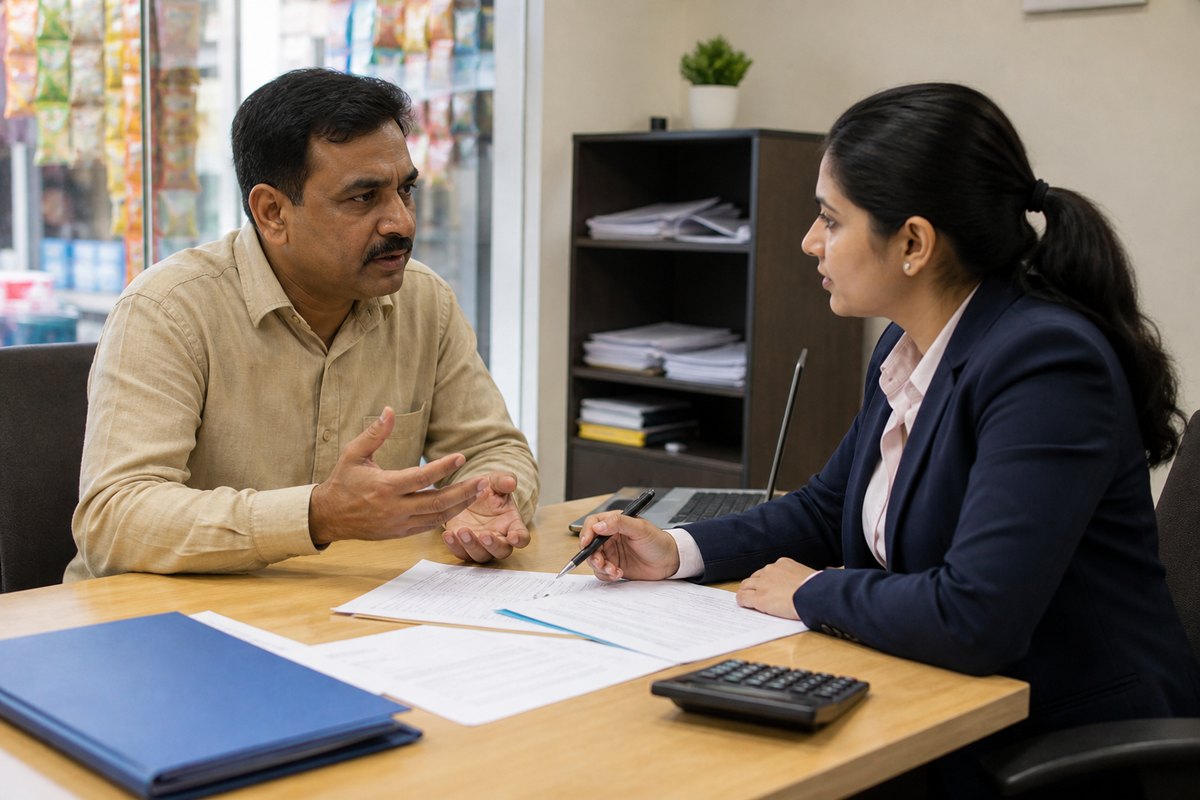
A public centre introduces appointment booking through a mobile application. The system appears efficient because it reduces calls and displays updated calendars. Within weeks, complaints arrive from older people, screen-reader users, and people without a smartphone. Some arrive in person without an appointment and leave without support. The issue is not lack of interest in digital services; it is turning one route into the sole condition for receiving a right. Statistics on completed bookings concealed the people who could not get in.
The review begins by speaking with affected people and reception staff. It identifies that the calendar does not announce month changes, the confirmation button has no name, and the only help is a paid number. A free line, in-person support with reserved slots, and a keyboard-compatible web form are enabled. The application is corrected through testing by actual users. A simple explanation of available routes is also published. Improvement is not the addition of a secret exception; it is recognition that several routes are a normal part of the service.
This case makes better measurement possible. Counting clicks or allocated appointments is not enough. It also matters how many people abandon the process, how long support takes, how many travel unnecessarily, and whether every channel offers the same options. Periodic review keeps an update from recreating the problem. When data are collected, they should be minimal and anonymous whenever possible; the purpose is to discover friction, not classify people by disability or monitor their decisions.
Autonomy and co-design change the journey#
Participation is not asking for an opinion after a decision. It means bringing experiential knowledge in from the beginning, paying people when appropriate, and clearly reporting what has been learned. A testing session with diverse participants may show that project language is ambiguous, a map cannot be understood without colour, or an alternative is announced too late. Disabled people's organizations, families, community mediators, and support workers bring different perspectives. No group alone represents all diversity, so methods should be combined and no single person should be asked to speak for everyone.
For participation to be real, the meeting must be accessible too. Advance materials, alternative formats, interpretation where needed, breaks, expense compensation, and in-person and remote options should be offered. The invitation should explain its purpose, how contributions will be used, and the option not to answer personal questions. Subsequent decisions should record which proposals were adopted, which were not, and why. This traceability protects trust and shows that listening was not a ceremony without consequence.
Some decisions must not be handed to participants. The organization remains responsible for meeting obligations, funding corrections, and maintaining alternatives. Consultation does not replace a technical audit or an impact assessment, but it improves both because it brings situations a protocol cannot imagine. It is also reasonable to pay for expert time rather than turn experience of exclusion into a free resource. Participation under fair conditions is part of inclusion, not decoration for an institutional presentation.
Second case: a benefit impossible to complete#
An organization opens an economic-support call with a twenty-step form. It asks for files in specific formats, closes every section before the previous one can be reviewed, and requires a visual challenge to prevent automated submissions. People with cognitive disabilities and people using assistive technology find contradictory instructions. Others cannot gather documents before the deadline because the portal does not save a draft. The team initially attributes abandonment to missing documentation, until assisted testing shows that the journey creates most of the problem.
The solution combines simplification and alternatives. Nonessential questions are removed, drafts can be saved and recovered, document examples are provided, and human assistance is added by telephone and in person. The visual challenge is replaced by protection compatible with assistive technologies and later risk controls. The deadline is communicated in clear formats, and supplementary documentation is accepted after submission where rules permit it. Every change is tested again before publication because an isolated fix can move difficulty to another step.
The experience shows that equality does not mean requiring exactly the same gesture from everyone. It means preserving the same right and quality of response through equivalent routes. A call must not provide less information than the web; a paper process must not take longer without reason; a person requesting support must not lose privacy. Inclusive design seeks equivalence of outcome, autonomy, and dignity, not superficial uniformity.
Equivalent alternatives that uphold rights#
A useful alternative is not a generic email that nobody answers. It needs an owner, a response time, current information, and the ability to complete the goal. Channels may include in-person support, telephone, supported video calls, messaging, accessible documents, and cooperation with community points. The choice depends on risk and the nature of the service. Where sensitive data are involved, every route needs proportionate privacy and verification measures; security must not be used as an excuse to impose one technology.
Continuity also needs planning. A platform may fail, an update may break compatibility, or a support person may be unavailable. Contingency plans should say how an incident is communicated, how applications are preserved, and which temporary route is enabled. Testing these options calmly can reveal whether an office has a ramp, a phone line supports relay, or an alternative document is genuinely readable. A service's resilience is measured by its ability to continue including people when something fails.
Four institutional references guide this work. The United Nations Convention on the Rights of Persons with Disabilities establishes participation and accessibility as conditions of equality. The W3C Web Content Accessibility Guidelines provide verifiable technical criteria. European accessibility law and European Commission resources help apply requirements to products and services. The World Health Organization explains that disability results from interaction between personal conditions and environmental barriers. These sources do not replace local listening, but they provide a shared framework for turning commitments into testable decisions.
Third case: emergency information that left people out#
During a supply interruption, an organization publishes urgent notices only on a social network and in an image containing text. The notice has distribution times and health recommendations, but it does not reach people without an account, mobile data, or a screen reader. Comments show confusion even though the post seems to have broad reach. Urgency does not erase the duty to communicate inclusively; it makes that duty more important because harm concentrates when people cannot access basic instructions.
The response establishes an emergency template with structured HTML text, brief audio, sign language where appropriate, local radio messages, and high-contrast posters. One person is assigned to check that every notice includes place, time, expected changes, and an accessible contact. Local associations review clarity and identify points requiring in-person distribution. The procedure is rehearsed before the next crisis, not after it. Speed improves when alternatives are prepared already rather than improvised under pressure.
The lesson is straightforward: inclusion cannot be deferred to an improvement phase. It must be part of service definition, procurement, writing, testing, and evaluation. A fair journey allows different ways to begin, proceed, request help, and finish. Before selecting a tool, the question that opens those possibilities should be asked: which barriers could prevent participation, and which alternatives will make access real? The answer needs review with real people and conversion into sustained responsibility.