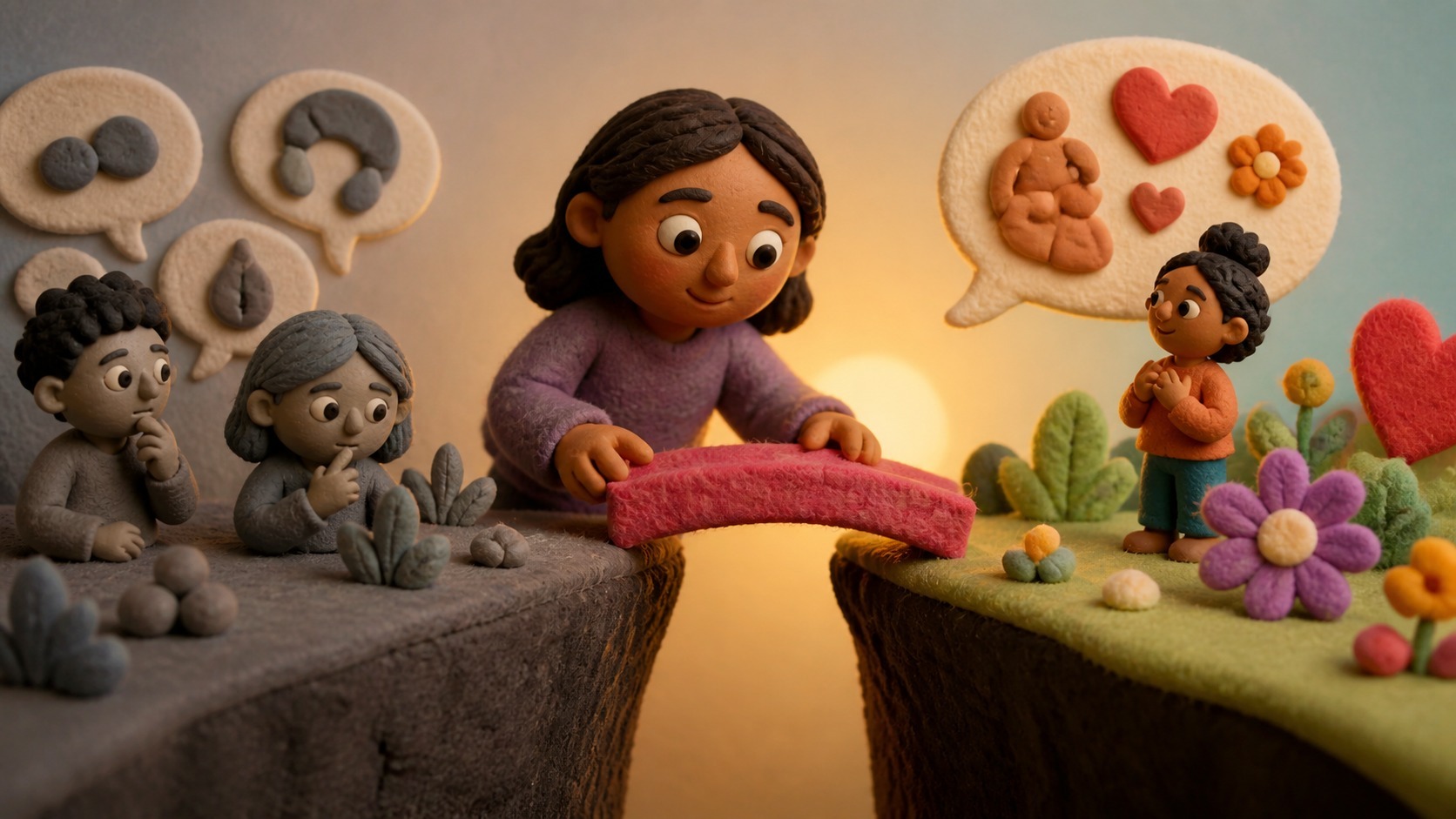
Tools for sharing responsibilities, documenting agreements and coordinating consistent responses among everyone involved.
Start with one small agreement#
Coordinating families, schools and community groups does not require an endless meeting. Start with one place, one time window and one decision that can be checked. The agreement should say what will happen, who can take part, which adult will be available and when it will be reviewed. That keeps neighbourhood play from depending on improvisation or on the person with the most spare time.Coordinating families, schools and community groups does not require an endless meeting. Start with one place, one time window and one decision that can be checked. The agreement should say what will happen, who can take part, which adult will be available and when it will be reviewed. That keeps neighbourhood play from depending on improvisation or on the person with the most spare time.Coordinating families, schools and community groups does not require an endless meeting. Start with one place, one time window and one decision that can be checked. The agreement should say what will happen, who can take part, which adult will be available and when it will be reviewed. That keeps neighbourhood play from depending on improvisation or on the person with the most spare time.Coordinating families, schools and community groups does not require an endless meeting. Start with one place, one time window and one decision that can be checked. The agreement should say what will happen, who can take part, which adult will be available and when it will be reviewed. That keeps neighbourhood play from depending on improvisation or on the person with the most spare time.
Coordinating families, schools and community groups does not require an endless meeting.
Listen before sharing responsibilities#
Before assigning tasks, ask children, teenagers, families, teachers and local groups what they need and what they can offer. Listening prevents inaccessible activities and impossible schedules. The Convention on the Rights of the Child and UNICEF explain that participation means influencing understandable decisions, not merely being present. A short record in plain language turns that listening into a visible commitment.Before assigning tasks, ask children, teenagers, families, teachers and local groups what they need and what they can offer. Listening prevents inaccessible activities and impossible schedules. The Convention on the Rights of the Child and UNICEF explain that participation means influencing understandable decisions, not merely being present. A short record in plain language turns that listening into a visible commitment.Before assigning tasks, ask children, teenagers, families, teachers and local groups what they need and what they can offer. Listening prevents inaccessible activities and impossible schedules. The Convention on the Rights of the Child and UNICEF explain that participation means influencing understandable decisions, not merely being present. A short record in plain language turns that listening into a visible commitment.Before assigning tasks, ask children, teenagers, families, teachers and local groups what they need and what they can offer. Listening prevents inaccessible activities and impossible schedules. The Convention on the Rights of the Child and UNICEF explain that participation means influencing understandable decisions, not merely being present. A short record in plain language turns that listening into a visible commitment.
Concrete case: Ines at the square#
Nine year old Ines wanted to use the square after school, but her family worried about a nearby crossing and the school did not know that concern. A teacher recorded the issue, two families drew the route and the residents association spoke with the district. They agreed to walk together on Tuesdays for one month, identify the safest crossing and review the experience. It worked because every party had a limited, checkable task.Nine year old Ines wanted to use the square after school, but her family worried about a nearby crossing and the school did not know that concern. A teacher recorded the issue, two families drew the route and the residents association spoke with the district. They agreed to walk together on Tuesdays for one month, identify the safest crossing and review the experience. It worked because every party had a limited, checkable task.Nine year old Ines wanted to use the square after school, but her family worried about a nearby crossing and the school did not know that concern. A teacher recorded the issue, two families drew the route and the residents association spoke with the district. They agreed to walk together on Tuesdays for one month, identify the safest crossing and review the experience. It worked because every party had a limited, checkable task.Nine year old Ines wanted to use the square after school, but her family worried about a nearby crossing and the school did not know that concern. A teacher recorded the issue, two families drew the route and the residents association spoke with the district. They agreed to walk together on Tuesdays for one month, identify the safest crossing and review the experience. It worked because every party had a limited, checkable task.
Write care and accessibility rules#
A useful agreement includes safety, rest and accessibility without turning public space into a list of bans. It can set a meeting point, a named contact, a way to ask for a pause and a plan for rain or conflict. The World Health Organization links everyday activity with environments that make safe movement easier. It should also consider pushchairs, reduced mobility, sensory differences and more than one language.A useful agreement includes safety, rest and accessibility without turning public space into a list of bans. It can set a meeting point, a named contact, a way to ask for a pause and a plan for rain or conflict. The World Health Organization links everyday activity with environments that make safe movement easier. It should also consider pushchairs, reduced mobility, sensory differences and more than one language.A useful agreement includes safety, rest and accessibility without turning public space into a list of bans. It can set a meeting point, a named contact, a way to ask for a pause and a plan for rain or conflict. The World Health Organization links everyday activity with environments that make safe movement easier. It should also consider pushchairs, reduced mobility, sensory differences and more than one language.A useful agreement includes safety, rest and accessibility without turning public space into a list of bans. It can set a meeting point, a named contact, a way to ask for a pause and a plan for rain or conflict. The World Health Organization links everyday activity with environments that make safe movement easier. It should also consider pushchairs, reduced mobility, sensory differences and more than one language.
Concrete case: the court at dusk#
A group of teenagers noticed that one corner of their court became dark at dusk. Rather than cancel play, they prepared dated photographs, consulted nearby shops and requested a municipal inspection. While waiting, families and young people agreed to finish before a set time and to check in if anyone was left alone. The request was logged, and the group later checked whether the lighting had improved.A group of teenagers noticed that one corner of their court became dark at dusk. Rather than cancel play, they prepared dated photographs, consulted nearby shops and requested a municipal inspection. While waiting, families and young people agreed to finish before a set time and to check in if anyone was left alone. The request was logged, and the group later checked whether the lighting had improved.A group of teenagers noticed that one corner of their court became dark at dusk. Rather than cancel play, they prepared dated photographs, consulted nearby shops and requested a municipal inspection. While waiting, families and young people agreed to finish before a set time and to check in if anyone was left alone. The request was logged, and the group later checked whether the lighting had improved.A group of teenagers noticed that one corner of their court became dark at dusk. Rather than cancel play, they prepared dated photographs, consulted nearby shops and requested a municipal inspection. While waiting, families and young people agreed to finish before a set time and to check in if anyone was left alone. The request was logged, and the group later checked whether the lighting had improved.
Review, learn and seek support#
Review should happen on an agreed date and answer four questions: who joined, which barrier appeared, which resource was missing and what change will be tested next. Concrete case: a library provided a monthly table so Leo and friends could design play maps when their building had no common room; the group created turns and shared materials. UNESCO and UN-Habitat offer useful frameworks on learning, inclusion and cities. With immediate danger, violence or unmet basic needs, contact the competent public services.Review should happen on an agreed date and answer four questions: who joined, which barrier appeared, which resource was missing and what change will be tested next. Concrete case: a library provided a monthly table so Leo and friends could design play maps when their building had no common room; the group created turns and shared materials. UNESCO and UN-Habitat offer useful frameworks on learning, inclusion and cities. With immediate danger, violence or unmet basic needs, contact the competent public services.Review should happen on an agreed date and answer four questions: who joined, which barrier appeared, which resource was missing and what change will be tested next. Concrete case: a library provided a monthly table so Leo and friends could design play maps when their building had no common room; the group created turns and shared materials. UNESCO and UN-Habitat offer useful frameworks on learning, inclusion and cities. With immediate danger, violence or unmet basic needs, contact the competent public services.Review should happen on an agreed date and answer four questions: who joined, which barrier appeared, which resource was missing and what change will be tested next. Concrete case: a library provided a monthly table so Leo and friends could design play maps when their building had no common room; the group created turns and shared materials. UNESCO and UN-Habitat offer useful frameworks on learning, inclusion and cities. With immediate danger, violence or unmet basic needs, contact the competent public services.