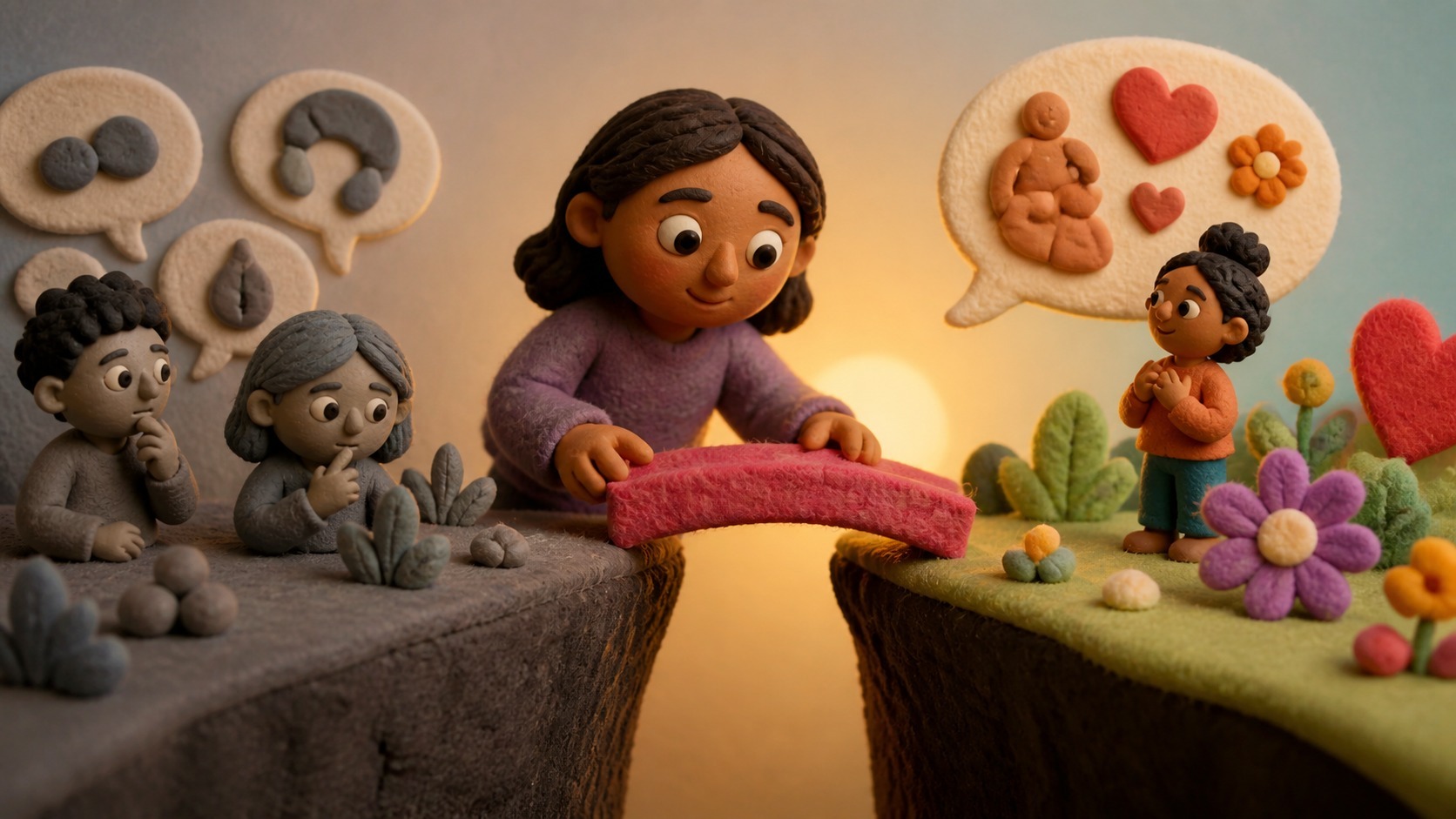
Knowing whether public-space play is working means noticing concrete changes, not demanding a perfect afternoon. A child returning to a square, a teenager proposing a rule, or a family identifying a safe route are more useful evidence than a single impression. The right to play includes participation, safety, rest, accessibility and a child s own voice. This guide separates signs of progress, warnings and moments when support is appropriate.
Observe signs before drawing conclusions#
Knowing whether public-space play is working means noticing concrete changes, not demanding a perfect afternoon. A child returning to a square, a teenager proposing a rule, or a family identifying a safe route are more useful evidence than a single impression. The right to play includes participation, safety, rest, accessibility and a child s own voice. This guide separates signs of progress, warnings and moments when support is appropriate. Knowing whether public-space play is working means noticing concrete changes, not demanding a perfect afternoon. A child returning to a square, a teenager proposing a rule, or a family identifying a safe route are more useful evidence than a single impression. The right to play includes participation, safety, rest, accessibility and a child s own voice. This guide separates signs of progress, warnings and moments when support is appropriate. Knowing whether public-space play is working means noticing concrete changes, not demanding a perfect afternoon. A child returning to a square, a teenager proposing a rule, or a family identifying a safe route are more useful evidence than a single impression. The right to play includes participation, safety, rest, accessibility and a child s own voice. This guide separates signs of progress, warnings and moments when support is appropriate.
Knowing whether public-space play is working means noticing concrete changes, not demanding a perfect afternoon.
A twenty minute walk can reveal pavements, shade, benches, crossings, water and toilets. It should also notice who is present: older residents, shops, carers, teenagers and local groups. A lively public space is not a perfect one; it is somewhere people can ask for help, rest and get home without impossible logistics. Accessibility includes pushchairs, wheelchairs, sensory differences and more than one language. A twenty minute walk can reveal pavements, shade, benches, crossings, water and toilets. It should also notice who is present: older residents, shops, carers, teenagers and local groups. A lively public space is not a perfect one; it is somewhere people can ask for help, rest and get home without impossible logistics. Accessibility includes pushchairs, wheelchairs, sensory differences and more than one language. A twenty minute walk can reveal pavements, shade, benches, crossings, water and toilets. It should also notice who is present: older residents, shops, carers, teenagers and local groups. A lively public space is not a perfect one; it is somewhere people can ask for help, rest and get home without impossible logistics. Accessibility includes pushchairs, wheelchairs, sensory differences and more than one language.
Progress signs that can be checked#
A useful first step is small and measurable. It might be visiting a square twice a week, walking to the library again or trying one screen free play session in a shared yard. A modest goal makes review possible without turning the project into another family burden. UN-Habitat explains that inclusive neighbourhoods are made through everyday use, not only through major construction. A useful first step is small and measurable. It might be visiting a square twice a week, walking to the library again or trying one screen free play session in a shared yard. A modest goal makes review possible without turning the project into another family burden. UN-Habitat explains that inclusive neighbourhoods are made through everyday use, not only through major construction. A useful first step is small and measurable. It might be visiting a square twice a week, walking to the library again or trying one screen free play session in a shared yard. A modest goal makes review possible without turning the project into another family burden. UN-Habitat explains that inclusive neighbourhoods are made through everyday use, not only through major construction.
Case 1: eight year old Nora rarely went downstairs because the park was far away and her father returned late. Her family spoke with a neighbour, chose a visible square beside the bakery and set a forty minute Wednesday outing. Three weeks later Nora knew two other children. The change did not require buying equipment. It required a clear time, a nearby place and a trusted adult who could share the responsibility. Case 1: eight year old Nora rarely went downstairs because the park was far away and her father returned late. Her family spoke with a neighbour, chose a visible square beside the bakery and set a forty minute Wednesday outing. Three weeks later Nora knew two other children. The change did not require buying equipment. It required a clear time, a nearby place and a trusted adult who could share the responsibility. Case 1: eight year old Nora rarely went downstairs because the park was far away and her father returned late. Her family spoke with a neighbour, chose a visible square beside the bakery and set a forty minute Wednesday outing. Three weeks later Nora knew two other children. The change did not require buying equipment. It required a clear time, a nearby place and a trusted adult who could share the responsibility.
Warnings that need a shared response#
Safety grows from information and shared care, not blanket bans. Before using a place, identify crossings, lighting, water, phone coverage and a route home. A maintenance problem can be dated, photographed and reported through the municipal channel. UNICEF advises that children s participation should have visible consequences: telling them what was requested and what answer arrived is practical civic learning. Safety grows from information and shared care, not blanket bans. Before using a place, identify crossings, lighting, water, phone coverage and a route home. A maintenance problem can be dated, photographed and reported through the municipal channel. UNICEF advises that children s participation should have visible consequences: telling them what was requested and what answer arrived is practical civic learning. Safety grows from information and shared care, not blanket bans. Before using a place, identify crossings, lighting, water, phone coverage and a route home. A maintenance problem can be dated, photographed and reported through the municipal channel. UNICEF advises that children s participation should have visible consequences: telling them what was requested and what answer arrived is practical civic learning.
Case 2: teenagers pointed out a dark area on their court after sunset. Supported by an association, they prepared photographs, a simple map and a respectful request. The district checked a light, and meanwhile the group agreed to finish before a set time. The response combined immediate prevention with a public, checkable request; it did not frame young people as the problem. Case 2: teenagers pointed out a dark area on their court after sunset. Supported by an association, they prepared photographs, a simple map and a respectful request. The district checked a light, and meanwhile the group agreed to finish before a set time. The response combined immediate prevention with a public, checkable request; it did not frame young people as the problem. Case 2: teenagers pointed out a dark area on their court after sunset. Supported by an association, they prepared photographs, a simple map and a respectful request. The district checked a light, and meanwhile the group agreed to finish before a set time. The response combined immediate prevention with a public, checkable request; it did not frame young people as the problem.
Adjust the setting without controlling play#
Play does not need complex equipment. Chalk, rope, a soft ball, leaves collected from the ground or an invented story can invite curiosity. Offer choices rather than one compulsory activity: notice insects, draw a hopscotch grid, read aloud or make rules for a cooperative game. UNESCO supports learning environments connected to community life; a street, library or market can become a respectful learning setting. Play does not need complex equipment. Chalk, rope, a soft ball, leaves collected from the ground or an invented story can invite curiosity. Offer choices rather than one compulsory activity: notice insects, draw a hopscotch grid, read aloud or make rules for a cooperative game. UNESCO supports learning environments connected to community life; a street, library or market can become a respectful learning setting. Play does not need complex equipment. Chalk, rope, a soft ball, leaves collected from the ground or an invented story can invite curiosity. Offer choices rather than one compulsory activity: notice insects, draw a hopscotch grid, read aloud or make rules for a cooperative game. UNESCO supports learning environments connected to community life; a street, library or market can become a respectful learning setting.
Simple limits matter too: care for plants and furniture, keep routes clear, pack away what was used and listen when someone asks to stop. Those agreements support autonomy without abandoning care. An adult need not lead every minute. They can stay available, observe conflict and ask questions that help children negotiate. The aim is for the group to gain decision making capacity, not merely follow a script. Simple limits matter too: care for plants and furniture, keep routes clear, pack away what was used and listen when someone asks to stop. Those agreements support autonomy without abandoning care. An adult need not lead every minute. They can stay available, observe conflict and ask questions that help children negotiate. The aim is for the group to gain decision making capacity, not merely follow a script. Simple limits matter too: care for plants and furniture, keep routes clear, pack away what was used and listen when someone asks to stop. Those agreements support autonomy without abandoning care. An adult need not lead every minute. They can stay available, observe conflict and ask questions that help children negotiate. The aim is for the group to gain decision making capacity, not merely follow a script.
Three cases for evidence based decisions#
Case 3: in a community of small flats, Samira wanted to invite friends but there was no common room. The local library offered a table one afternoon each month, and her family proposed a map and clues club. Every participant designed an accessible challenge, including people who preferred not to run. After two months the group had welcome rules, material lending and speaking turns. It worked because it used an existing resource and accepted different rhythms. Case 3: in a community of small flats, Samira wanted to invite friends but there was no common room. The local library offered a table one afternoon each month, and her family proposed a map and clues club. Every participant designed an accessible challenge, including people who preferred not to run. After two months the group had welcome rules, material lending and speaking turns. It worked because it used an existing resource and accepted different rhythms. Case 3: in a community of small flats, Samira wanted to invite friends but there was no common room. The local library offered a table one afternoon each month, and her family proposed a map and clues club. Every participant designed an accessible challenge, including people who preferred not to run. After two months the group had welcome rules, material lending and speaking turns. It worked because it used an existing resource and accepted different rhythms.
Reviewing every two or three weeks prevents persistence from being mistaken for success. Helpful questions are: who could join, what was difficult, what did it cost, what support was missing and what would we repeat? If an activity does not work, adjust its time, length or place. Brief review protects enthusiasm and makes learning visible. Attendance matters, but so do wellbeing, belonging and the ability to choose. Reviewing every two or three weeks prevents persistence from being mistaken for success. Helpful questions are: who could join, what was difficult, what did it cost, what support was missing and what would we repeat? If an activity does not work, adjust its time, length or place. Brief review protects enthusiasm and makes learning visible. Attendance matters, but so do wellbeing, belonging and the ability to choose. Reviewing every two or three weeks prevents persistence from being mistaken for success. Helpful questions are: who could join, what was difficult, what did it cost, what support was missing and what would we repeat? If an activity does not work, adjust its time, length or place. Brief review protects enthusiasm and makes learning visible. Attendance matters, but so do wellbeing, belonging and the ability to choose.
When to seek help and sustain it#
Public sources can guide action, but they do not replace neighbourhood knowledge or the duties of competent services. WHO, UNICEF, UNESCO, UN-Habitat and municipalities publish material on health, participation, accessibility and public space. Using those sources can ground a proposal and signal when specialist support is needed. With immediate danger, violence or an inability to meet basic needs, contact local emergency or social services. Public sources can guide action, but they do not replace neighbourhood knowledge or the duties of competent services. WHO, UNICEF, UNESCO, UN-Habitat and municipalities publish material on health, participation, accessibility and public space. Using those sources can ground a proposal and signal when specialist support is needed. With immediate danger, violence or an inability to meet basic needs, contact local emergency or social services. Public sources can guide action, but they do not replace neighbourhood knowledge or the duties of competent services. WHO, UNICEF, UNESCO, UN-Habitat and municipalities publish material on health, participation, accessibility and public space. Using those sources can ground a proposal and signal when specialist support is needed. With immediate danger, violence or an inability to meet basic needs, contact local emergency or social services.
A good plan for neighbourhood, public space and play fits on one page: place, people, time, purpose, resources, care rules and review date. Starting small is not giving up on a better neighbourhood; it is making tests that others can understand and sustain. When children participate, families do not carry the work alone and institutions respond, play becomes a daily practice of health, connection and citizenship. A good plan for neighbourhood, public space and play fits on one page: place, people, time, purpose, resources, care rules and review date. Starting small is not giving up on a better neighbourhood; it is making tests that others can understand and sustain. When children participate, families do not carry the work alone and institutions respond, play becomes a daily practice of health, connection and citizenship. A good plan for neighbourhood, public space and play fits on one page: place, people, time, purpose, resources, care rules and review date. Starting small is not giving up on a better neighbourhood; it is making tests that others can understand and sustain. When children participate, families do not carry the work alone and institutions respond, play becomes a daily practice of health, connection and citizenship.