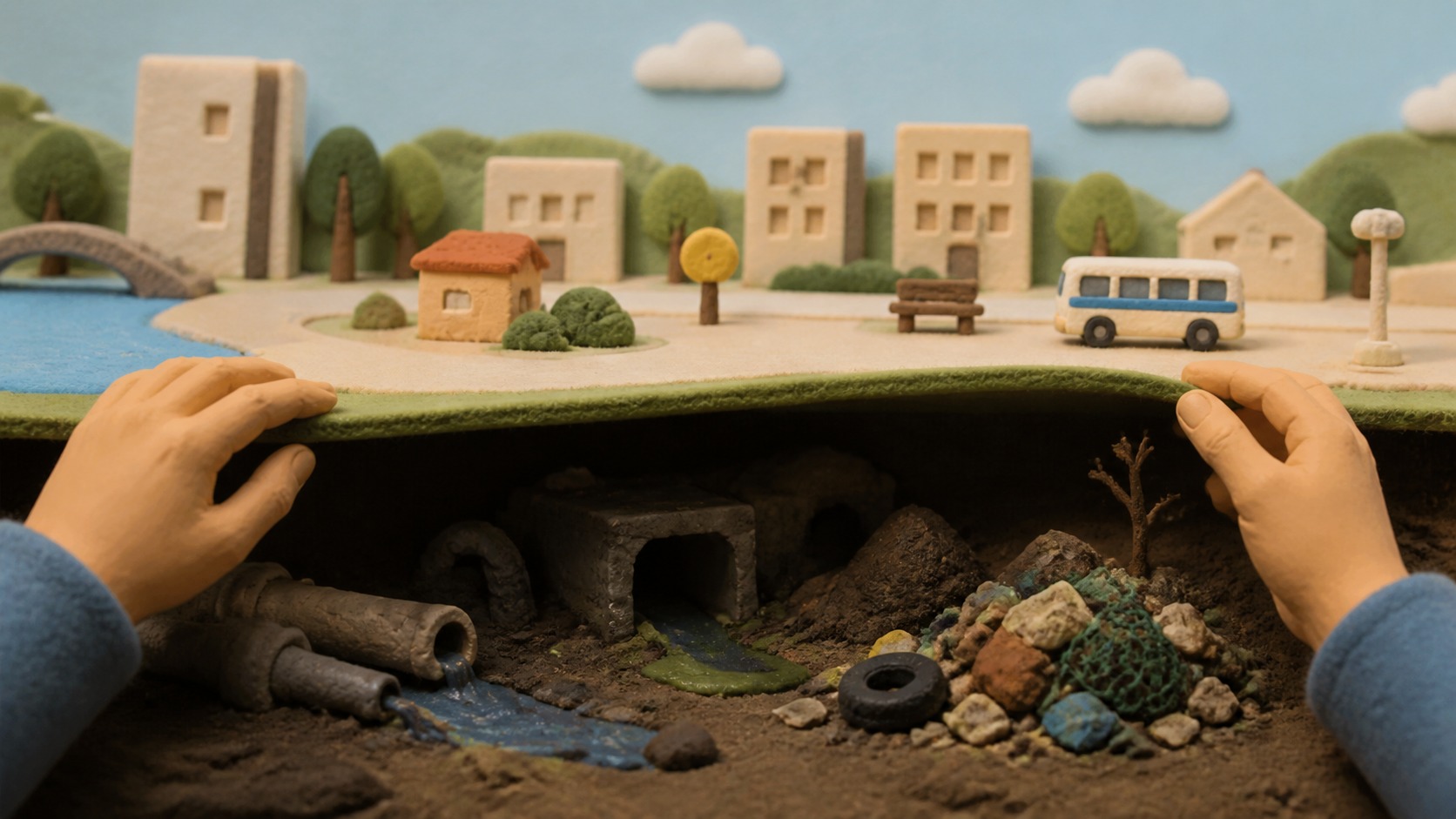
The message arrived on a Tuesday afternoon: Diego had missed two lessons and, when his tutor asked about it, he made a joke and ended the conversation. Nobody at home knew he was absent; his sports team had noticed he was arriving tired; and he said that everything was under control. Every adult held one true piece of information, but no one could see the whole picture. The easiest response was to assign blame. The useful response was to turn those fragments into a small, clear, reviewable agreement.
Adolescence expands the places where a person makes decisions: the classroom, the journey home, friendship groups, sport, online life and home. That expansion is not managed by making every decision for a young person, nor by leaving them alone to prove they can cope with everything. It is managed by coordinating support without taking over their life. A good agreement provides three things at once: a goal the young person understands, responsibilities that can be checked, and a route to help that does not come with shame.
Making the context clear#
**Start with a situation, not a label**
Before calling a meeting or sending a chain of messages, write down what is known in observable terms. “There were three absences this week,” “an assignment was not submitted,” “training ended later than expected,” or “repeated arguments appeared in the group” are facts. “They are irresponsible,” “they do not care,” or “they always overreact” are interpretations. The difference matters because a fact makes it possible to look for conditions and solutions; a label pushes people into defending themselves.
What changes in practice#
Families can ask what happened before an absence, whether there was an academic difficulty, conflict, tiredness, fear of asking for help or a transport problem. Schools can state what information they have, what they do not yet know and which channel they will use. The adolescent should be able to explain their view without promising that every private detail will automatically be shared. Giving them a voice does not mean removing limits; it means building the plan with enough information rather than behind the back of the person who will have to live with it.
A one-page record can lower the temperature. It might have four columns: situation, people involved, support already tried and next conversation. It is not a file of failures or a tool for collecting evidence against anyone. It is a brief memory aid that stops every phone call from starting again at zero. If it includes health, friendship, intimate or digital information, access and retention should be limited. Privacy is also learned when adults show that they will not turn a difficulty into material for general circulation.
Deciding with information#
**Set a possible two-week goal**
Broad agreements often fail because they are admirable and vague. “Improve communication” does not tell anyone what to do at eight o'clock on Wednesday. A useful goal is more like this: for two weeks, Diego will send a short message if he cannot attend a lesson; the tutor will reply with a proposed time to talk; one adult at home will ask once a day about the practical part without conducting an interrogation; and they will review whether the channel worked on Friday. Nobody is asked to transform their personality. They are testing one specific behaviour.
Reviewing and adjusting#
The goal needs a reasonable level of difficulty. If someone cannot open the school platform because they freeze, the first step may not be submitting five overdue assignments. It could be finding the calendar with a staff member, choosing one priority task and writing two questions. If a journey feels unsafe, the first step may be travelling it with company, identifying a safe point and agreeing how to send an update. Learning autonomy requires real tasks, but tasks should be divided so that one obstacle does not become proof of incapacity.
It also helps to say what the agreement cannot solve. A plan for organising assignments does not replace a health assessment when there is severe insomnia, persistent sadness, isolation or hopelessness. A digital communication plan does not by itself solve threats, bullying, extortion or the distribution of intimate content. Saying this early prevents a home or school agreement from carrying problems that need professional resources or protective action.
**Share responsibilities without building a surveillance chain**
Coordination does not mean every adult needs every detail. In many situations, three roles are enough. The young person chooses or accepts the main action and reports a relevant change. A trusted adult offers practical support and checks whether the plan needs adjustment. The school, organisation or community provides the resource it controls: a tutorial, information about an activity, a reasonable adjustment, a contact person or a protocol. Each role should say what it will do, when it will do it and how it will alert others if it cannot follow through.
Consider Sara, who stopped attending a community workshop after an offensive comment in a chat. Her agreement did not require her family to read all her conversations or the coordinator to receive intimate details. Sara saved the relevant screenshots, chose which adult she wanted to tell and agreed to attend with company the next time. The coordinator reviewed the group rules and offered a reporting route. Her family agreed not to forward images or demand unrestricted access to her phone. Every part took a concrete action, while Sara's privacy still had room.
Equity matters here. Not every family has the same work schedule, language confidence, digital access or availability for meetings. Not every young person can manage a complex timetable without support. A fair agreement asks which barriers exist before calling something a lack of interest. It might include a call at a different time, plain written instructions, a video meeting, interpreting, a named school contact or an alternative to an app that does not work. Asking for a practical adjustment is not asking for privilege; it makes responsibility achievable.
**Use channels that do not enlarge the problem**
Message groups can speed up a solution or multiply confusion. For sensitive matters, agree on one main channel, one contact person and a response time. “If an issue occurs during school hours, write to the tutor; if it concerns immediate safety, call emergency services or the appropriate local resource; if it is an assignment question, discuss it in Thursday's tutorial.” This distinction stops an urgent conversation being buried among reminders, and stops an ordinary issue being treated as a crisis.
Messages should separate information from judgement. “They could not attend today; we suggest talking tomorrow at twelve” invites coordination. “They are doing the same thing again” activates defences and adds no information. Before adding more people, ask whether their involvement is necessary for the next step. The rule is not to hide risks; it is to share the minimum needed with someone who can genuinely help. Where there are signs of violence, self-harm, abuse, disappearance, poisoning or immediate danger, protection comes first: emergency services and appropriate safeguarding procedures should be activated without delay.
**A scene: the fifteen-minute meeting**
After the first week, Diego, his mother and the tutor met for fifteen minutes on a video call. They did not revisit his entire school history. They began with one fact: on two days he had managed to give early notice; on another day he had not replied. Diego explained that his battery had died on the second day and that he felt embarrassed to write from reception. The tutor suggested a simple code phrase for requesting five minutes of conversation without explaining the reason publicly. His mother recognised that when she received an alert, she tended to ask too many questions at once. They agreed that she would begin with, “Do you want us to think about the next step, or do you only need me to listen?”
The change looked small, but it altered the system. Diego did not have to choose between silence and disclosing every detail. The school knew how to respond to a message. His mother had a way to show availability without becoming an inspector. The next week there was another absence, but this time he used the channel and asked for a tutorial. Nobody celebrated the absence; they recognised that he had used a repair tool. That distinction teaches more than an automatic punishment.
**Review to learn, not to deliver a verdict**
The review date should be part of the agreement from the beginning. After one or two weeks, every party can answer four questions: what did we do, what helped, what obstacle appeared and what will we change? If the plan did not work, do not conclude that autonomy was a bad idea. Perhaps the goal was excessive, the schedule impossible, the message unclear or the promised support insufficient. Adjusting one component is different from withdrawing all trust.
An agreement that works allows support to be reduced gradually. First an adult attends a conversation; then they wait nearby; later they are available only if asked. First the school reminds the student about a deadline; later the young person checks it independently. This deliberate step-back avoids two extremes: dependence created by doing everything for someone and abandonment disguised as freedom.
Communities can provide resources that no family or school can sustain alone: libraries with study space, youth associations, mediation, free activities, social guidance, safe transport or cultural role models. Asking what exists in the neighbourhood broadens options without turning the adolescent into a project managed by adults. Participation improves when they can choose among real alternatives and say which one seems useful.
**Finish with one concrete invitation**
If you want to begin coordination this week, choose one situation and prepare a fifteen-minute conversation. Bring three sentences: the fact you observed, the question you want to ask and the support you can offer. End with a two-week action, a channel and a review date. People do not need to agree on everything before they begin; they need to know what belongs to each person and how to ask for help without losing dignity.
Gradual autonomy is not about moving family, school or community away. It is about helping those supports stop competing, share only what is needed and step back as the young person gains capacity. When an agreement is clear, respectful and reviewable, a scattered problem can become practice in cooperation, equity and trust.