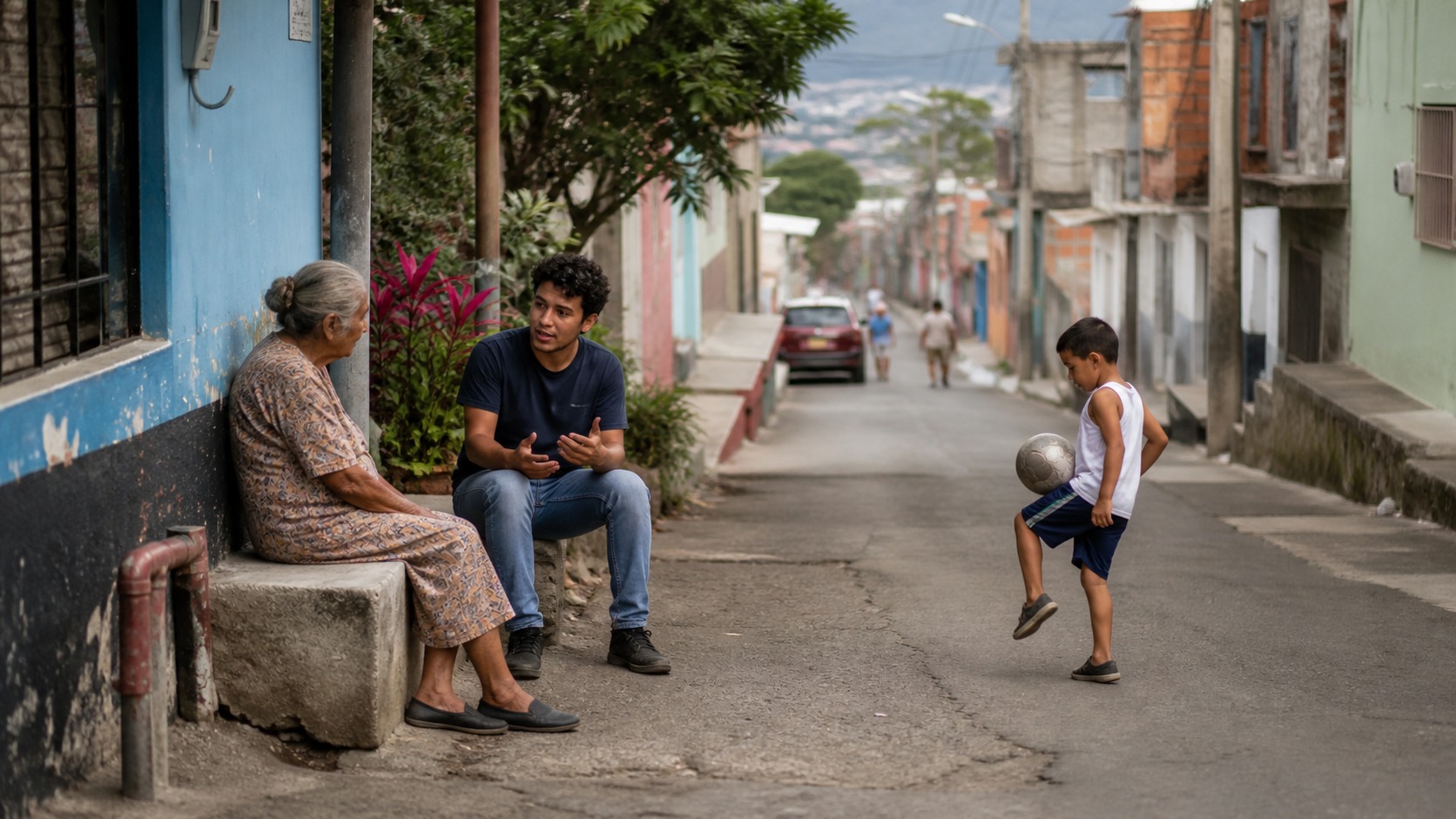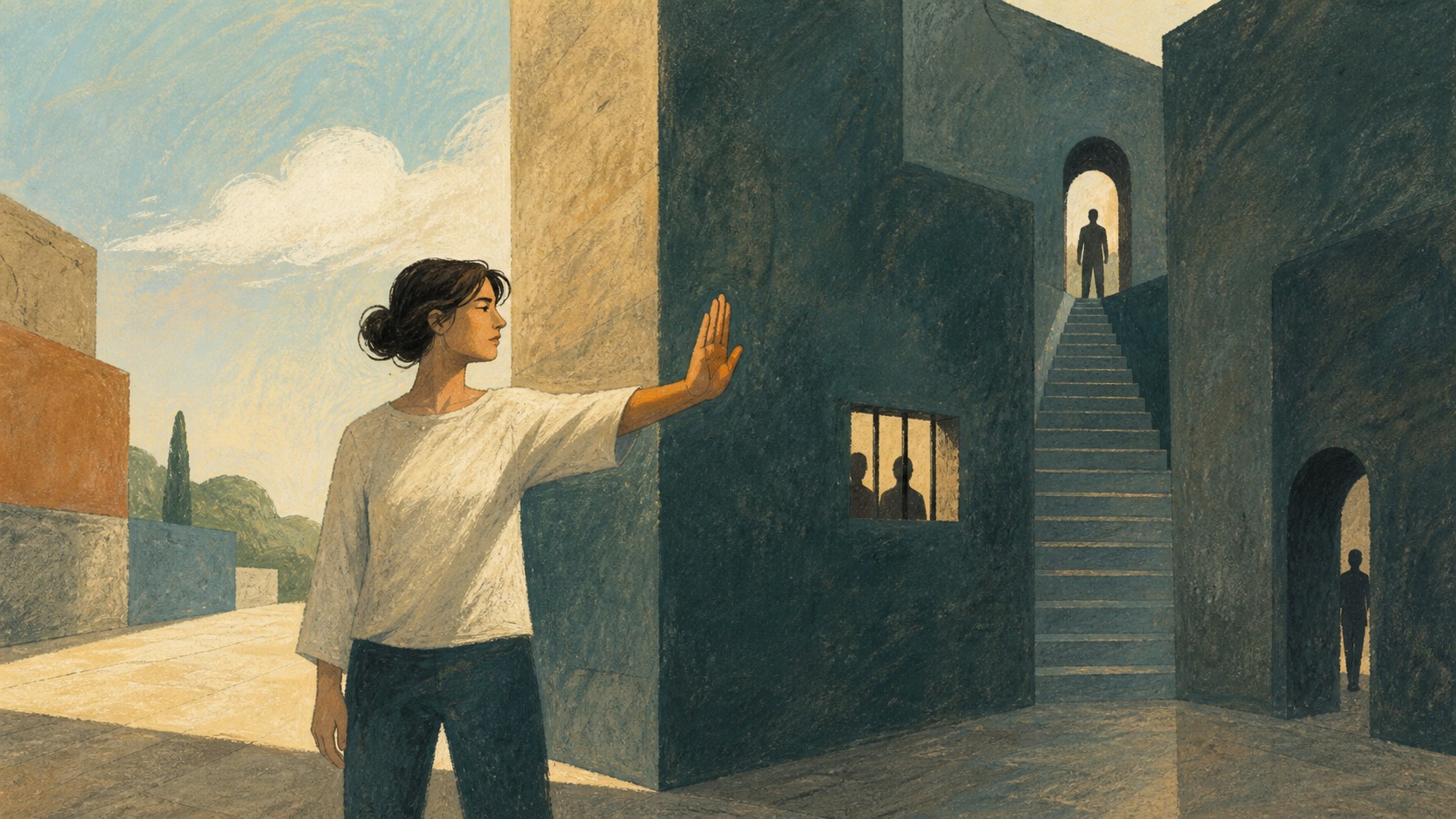
The conversation changes according to the first question. “The first question reveals for whom we are designing — a courageous gesture that does not need to become a spectacle: Civic Courage in everyday scenes” begins with young people, families, colleagues, teachers, workers and witnesses and a concrete need within the capacity to intervene in a daily injustice: to move towards the goal of protecting another person and upholding common standards without fueling violence without converting the risk of confusing courage with exposing oneself without support or expecting the victim to resolve alone in an inevitable condition.
There is something powerful about looking at the ability to intervene in the face of an everyday injustice from the first question: it forces a huge conversation to classrooms, transports, streets, networks, jobs, equipment and shops.
The first question reveals who we are designing for forces a simple idea: in civic courage in everyday scenes, the extraordinary is only valid if its consequences can be understood, discussed and corrected. In civic courage in everyday scenes, looking from the first question protects the possibility of recognizing the signal, valuing security, accompanying and activating provided help. In “The first question reveals for whom we are designing”, a surprising demonstration still does not amount to a reliable service or a fair institution.
The first question reveals who we are designing for.
The scene of the first question in the face of the ability to intervene in the face of a daily injustice could be this: the meeting began by talking about functions and budget before appointing the person whose experience should improve.
The diagnosis of civic courage in everyday scenes is necessary: the project had a recognizable solution, but not yet a shared purpose.
In “The first question reveals for whom we are designing — a courageous gesture that does not need to become a spectacle: Civic Courage in everyday scenes” it is appropriate to separate four layers: what we know, what we infer, what we decide and the consequence we impose.
When studying the first question, the voice of young people, families, colleagues, teachers, workers and witnesses does not come at the same time or contain the same knowledge.The analysis needs to gather those looks.
Working on “The first question reveals who we are designing for” in civic courage in everyday scenes, young people and adults can ask a decisive question: “What would have to happen to change your mind?”
In “The first question reveals who we are designing for”, the exception is not noise: it shows whether civic courage in everyday scenes takes care of the person when the procedure is no longer comfortable. For civic courage in everyday scenes, the analysis of the first question requires that a case outside the average active listening and review, does not suspect automatic. In civic courage in everyday scenes, an alternative that demands special contacts or shame is not really accessible.
Practical test: Civic Courage in everyday scenes
To turn “The first question reveals for whom we are designing” into a verifiable practice within civic courage in everyday scenes, the proposal is to ask the first question from a real need and ask three people to correct it. Before extending it through classrooms, transports, streets, networks, jobs, equipment and shops, it is appropriate to state what result we expect, what harm would force to stop and who can make that decision without waiting for permission from the supplier.
In “The First Question reveals for whom we are designing”, when studying civic courage in everyday scenes, observation begins with an honest photograph of the present: total time, errors, abandonments, claims and differences between groups.
Measuring the first question on the ability to intervene in the face of daily injustice requires combining numbers and stories.
A decisive test for “The first question reveals who we are designing for” in civic courage in everyday scenes is to imagine a difficult Tuesday: someone is missing key, a connection falls, an emergency arrives and an unanticipated case appears. It is a question of checking whether the instructions are still understandable and whether it is still possible to recognize the signal, assess security, accompany and activate provided help when the perfect conditions disappear.
In civic courage in everyday scenes, thinking from the first question and preserving an exit protects those with less resources, limits dependency and offers a real comparison on how much value technology brings and how much work it simply displaces.
The public explanation of the first question applied to the ability to intervene in the face of a daily injustice can be found in six lines if the decision is ripe: purpose, information used, consequence, duration, responsibility and appeal.
Responsibility: Civic Courage in Daily Scenes
In “The First Question reveals for whom we are designing”, answering requires real authority to pause, review and repair. In the ability to intervene in the face of daily injustice, supervision focused on the first question cannot be limited to placing a person at the end of an automatic chain. Whoever responds in civic courage in everyday scenes needs proof, time, resources and permission to correct a decision.
For mothers, parents and teachers, accompanying the ability to intervene in the face of an everyday injustice from the first question is not to know more technology than young people.
For schools, clubs and businesses, the lesson of civic courage in everyday scenes observed since the first question is the same: every tool organizes relationships.
A brave gesture that does not need to become a spectacle: from the first question, the future truly impresses when an ordinary person can understand what changes, preserve a way out and participate in the decision.
So that “the first question reveals for whom we are designing” in civic courage in everyday scenes does not end in a statement, there are five questions: what problem do we solve?, what evidence would justify continuing?, who is left out?, who can stop it? and how will we repair?
In civic courage in everyday scenes, the first question must fit into the experience of a concrete person. When he names need, context and observable change, the ability to intervene in the face of a daily injustice can move towards the goal of protecting another person and upholding common norms without feeding violence with leadership and without asking for blind trust.