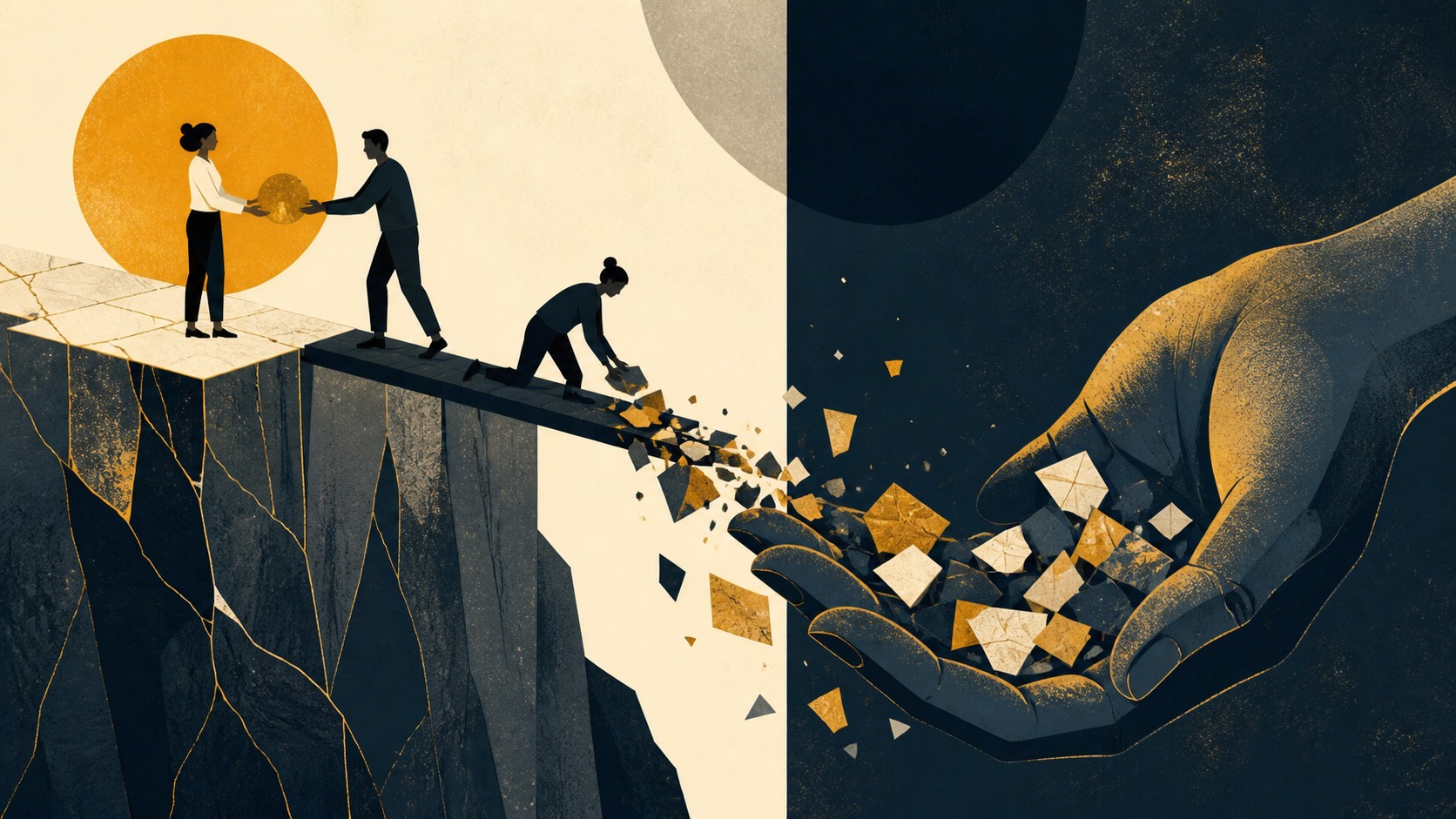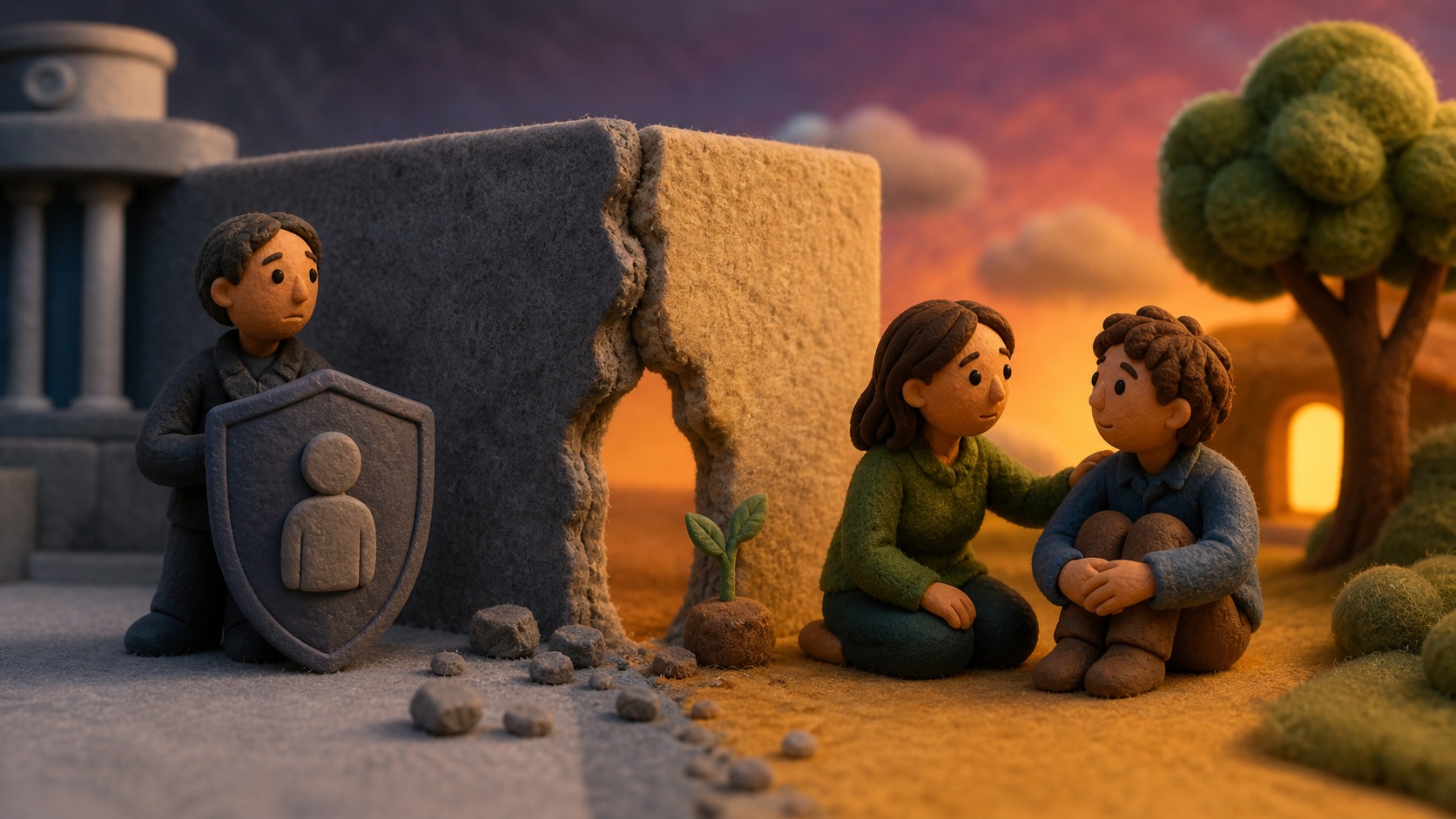
A useful review begins after the first rush of embarrassment, irritation, or pride has settled. A poster made with assistance may contain a misleading visual detail, an automated answer may have introduced an outdated fact into a public notice, or a learner may submit a polished paragraph they cannot explain. The fastest response is often a label: cheating, carelessness, failure, brilliance. Labels can feel decisive, but they say very little about the decisions that produced the result. A more productive question is: what happened in this chain of choices, who could be affected, and what needs to change before the next attempt? Reviewing without blame does not excuse harm or pretend that every mistake is harmless. It separates the person from the problem so that the problem can be examined, repaired, and learned from.
Authorship becomes visible in that examination. It is not simply a matter of typing every word alone or having the first idea. An author should be able to explain the purpose of the work, the material they contributed, the assistance they used, the parts they checked, and the reason the final version was selected. If they cannot tell that story, the next move should not be public humiliation. It should be to recover the missing path. Perhaps the task was too broad, perhaps the person did not understand a tool's limits, or perhaps a fluent sentence was mistaken for reliable knowledge. Reconstructing the process makes it possible to decide whether a source must be added, a section must be rewritten, or the work should be withdrawn. It also prevents another mistake: treating technology as if it had intentions that actually belong to the people who prompt, select, approve, and publish.
Making the context clear#
Consider Maya, who is making a poster for a neighborhood gardening day. She asks an image tool for a cheerful scene with children planting seedlings. One promising output includes a bin with a mark that looks very close to a real company's logo. Maya chooses it quickly, and the poster is shared online. A volunteer later asks whether the event has a sponsorship agreement. The review need not start with, “How could you miss this?” The team can collect the prompt, the chosen image, and the published poster, then look at the process together. They discover two practical gaps: no one was assigned to check recognisable signs, and no one had final approval responsibility. They replace the poster, tell the people who shared it, and agree on a short visual check before future releases. The repair is public enough to be trustworthy; the lesson is specific enough to be useful.
Consider Maya, who is making a poster for a neighborhood gardening day. She asks an image tool for a cheerful scene with children planting seedlings.
In a different setting, Omar uses a conversational tool to organize a grant application. It offers a deadline and a list of required documents in a confident, tidy format. Omar copies both into a message for his group. A colleague checks the official call and finds that the deadline came from the previous year. There are three things to review. First, the fact is wrong and the group must correct it promptly. Second, the process is weak: administrative information with real consequences cannot rest on an unverified answer. Third, Omar does not need to carry private shame for trusting a persuasive response. The group can decide that future notices will be checked against the current primary document by one person and read before sending by another. Autonomy grows through dependable supports, not through the fiction that competent people never make mistakes.
What changes in practice#
Review questions work best when they are few, concrete, and answerable. “Which part of this result can we explain in our own words?” is more revealing than “Was AI used?” “What information went into the tool?” can expose names, photos, messages, or sensitive details that should never have been entered. “Who might be affected by this publication?” moves attention beyond the convenience of the team to people who are depicted, quoted, or left out. “What evidence supports the main claim?” distinguishes a suggestion from a fact. Finally, “What can we do today to improve the situation?” turns review into action. These questions can fit into a short meeting, a classroom discussion, or a working note. Their value comes from steady use, not from making them sound like an interrogation.
Some repairs require listening to people outside the original group. A small cultural magazine publishes a profile of a local artist that includes an inaccurate detail drawn from an automated summary. The artist writes to point it out. The responsible response is not to argue about intent. The editors can thank the artist, remove or correct the error, verify the biography through dependable material, and make the correction visible if the inaccurate version reached readers. They can also record a simple internal lesson: biographical claims, quotations, and contact details require direct checking before publication. That record is not a disciplinary file against the editor who drafted the profile. It is working memory that helps the next editor avoid repeating the same shortcut under time pressure. Repair includes both correcting the public result and changing the condition that made the error likely.
Deciding with information#
Reviewing without blame still requires firm boundaries. It is not a way to minimize the sharing of a private conversation, the exposure of a child's identifiable image, the imitation of a person's voice without consent, or dangerous advice about health, money, or legal rights. In those situations, stopping circulation and seeking appropriate help come first. Lack of blame is not lack of responsibility. It means attention goes toward protection, clear communication, and correction instead of making an incident into a spectacle. An organization can state plainly that certain information never belongs in a generative system, that particular tasks need supervision, and that anyone may request a pause without proving in advance that the risk is catastrophic. A boundary people understand is more protective than a secret rule or an impossible promise to monitor everything.
It is also worth reviewing who had a real chance to notice the problem. A process can appear collaborative when only people with an account, stable internet, spare time, confidence in the working language, and familiarity with digital tools can comment. A creative team can make room for a printed copy, a brief phone conversation, a plain-language summary, or an in-person discussion. These are not decorative accommodations. Someone who knows a local community, an accessibility need, a family language, or a relationship affected by the work may recognize a consequence the tool and the core team cannot see. Collective autonomy does not mean everyone works alone. It means there are genuine routes for requesting a second look before a problem becomes public.
Reviewing and adjusting#
Closing a review does not require an endless dossier. A short note can record the purpose of the work, the technological assistance used, the sources checked, the issue found, the repair completed, and one decision for next time. For Maya, that decision might be a final visual and permissions check for every public poster. For Omar, it might be that dates are copied only from the live official call. The decision should be specific, assignable, and open to review. A few weeks later, the team can ask whether it helped or created a new obstacle. Progress is not measured by a magical absence of errors. It is measured by the ability to explain them, correct them, and respond better when unfamiliar situations arise. Creativity keeps its dignity when its outcomes can be examined and improved without leaving people behind.