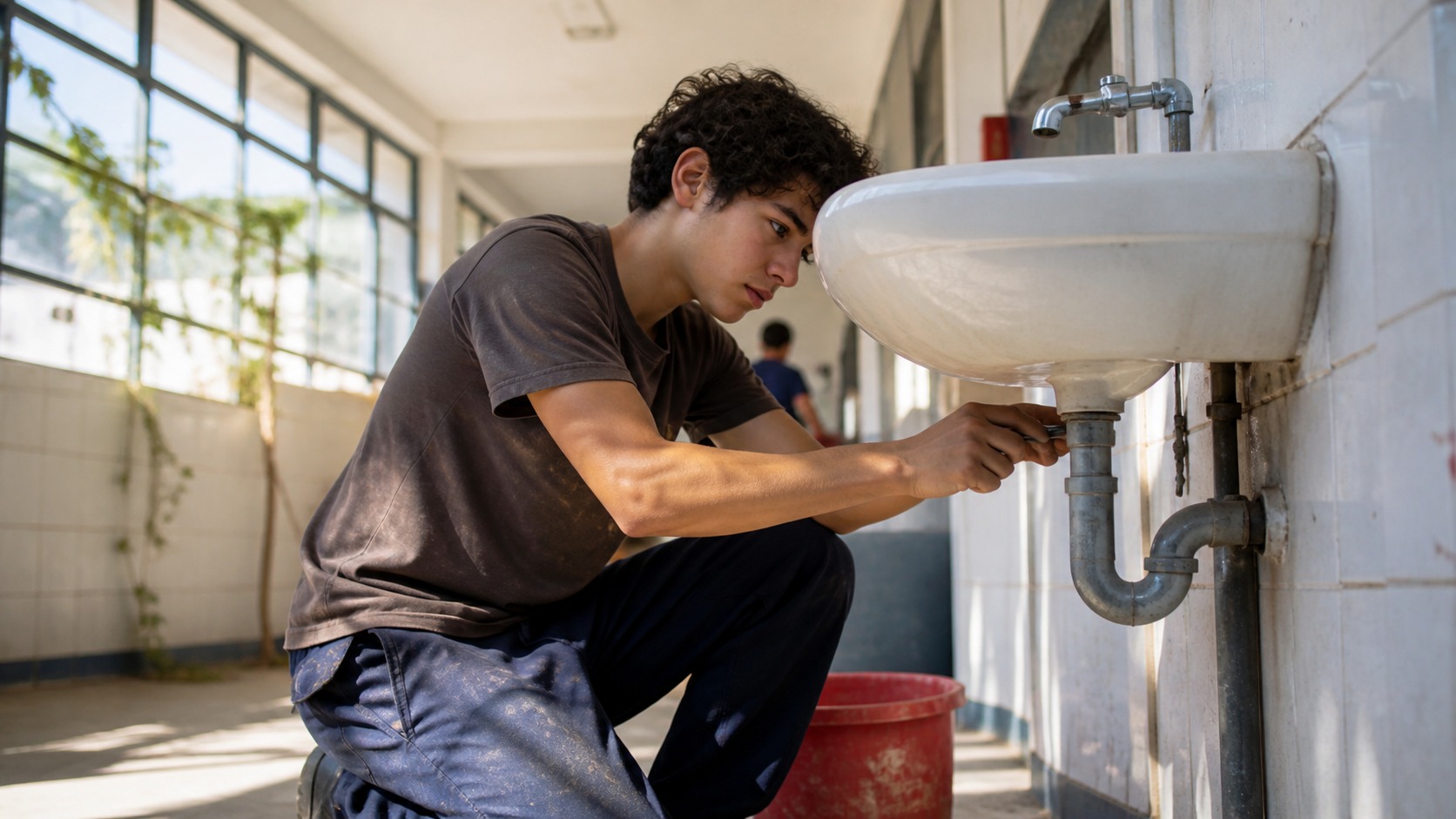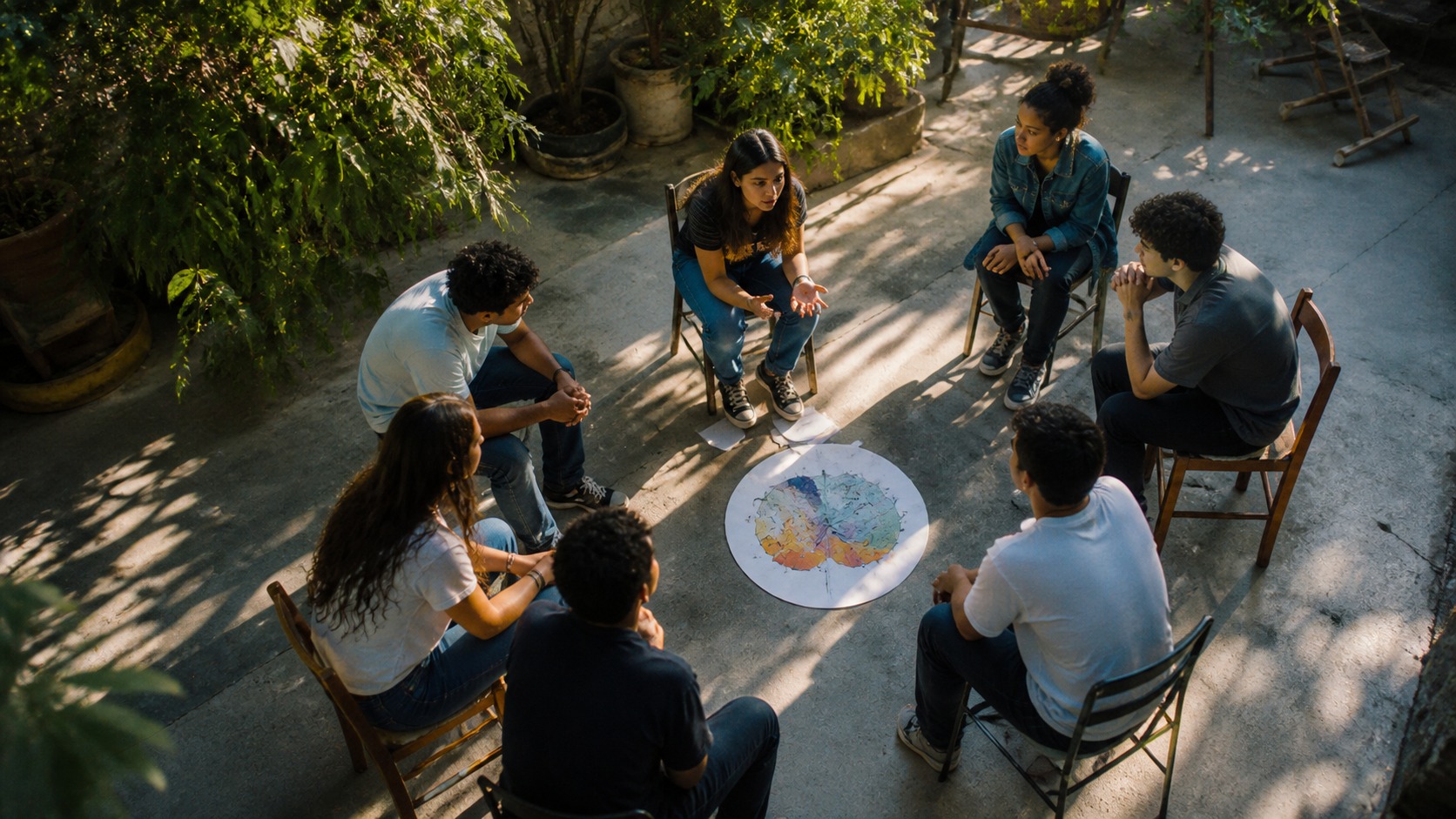
Learning with your hands brings observation, technique, and care together. This guide suggests beginning with small art or craft projects, recording what happens, and turning mistakes into safer, more useful, and more personal decisions.
B#
e
C#
h
K#
e
L#
e
B#
u
S#
h
Projects that teach: Case 1: a stitched notebook for collecting ideas#
Marta wanted to begin bookbinding and considered buying a press, specialist papers, and many needles. She first made a sixteen-page notebook from reclaimed board, strong thread, and a blunt needle. She marked four holes, practised the stitch on scrap paper, and recorded where the spine became too tight. The first cover moved, so she added an inside strip and tested again. Across two afternoons she gained a usable notebook and a clear list: measure, pierce with a guide, tighten without tearing, and allow drying time. Her next project was not another purchase; it was improving one join.
Projects that teach: Case 2: a planter with observed watering#
Ibrahim wanted to reuse a bottle to grow basil. Before cutting it, he checked which plants suited the system, cleaned the container, and selected suitable scissors with adult support. He made two prototypes: one with a wick that was too short and one with a cotton strip reaching the water. For a week he noted moisture, light, and leaf condition. The second one worked better, but he learned that a bottle does not replace drainage or regular care. He shared the experiment at the local library and wrote a label describing limits, materials, and responsible plastic disposal.
Projects that teach: Case 3: repairing a zip without promising a miracle#
Lucía found a backpack with a jammed slider. Rather than force it, she cleaned the track, checked for missing teeth, and looked for manufacturer guidance where it was available. She practised first on an old bag. She discovered that trapped stitching, not the slider, caused the problem. With a fine tool she released the thread, tested several openings, and stopped when she saw a damaged tooth. The right decision was to take it to a repair service, not hide the limit. The project taught diagnosis, patience, and when a home repair is no longer safe.
Projects that teach: Case 4: a sound piece made from ordinary objects#
Noah wanted to compose with kitchen sounds. He listed five objects, recorded short samples with no voices, and labelled each file with date and place. He tested rhythms on a protected surface so utensils were not damaged and others were not disturbed. After listening back, he rejected three takes with too much noise and arranged the remaining clips into a one-minute sequence. The finished work did not depend on expensive software; it depended on listening, ordering, and editing. In the credits he explained that recordings were his own and that he had not used unlicensed music.
Projects that teach: Case 5: a clear sign for a shared space#
A group of young people noticed that seeds and tools were being mixed up in a community garden. They did not begin by designing a spectacular sign. They measured the location, spoke with people who used it, and chose a sign able to resist light rain, with large text and simple symbols. They made a cardboard mock-up, tested it from a distance, and corrected a confusing arrow. The result included short instructions, credit to the garden, and a date for checking whether it remained readable. Art and craft can also make a shared place easier for other people to use.
Guided practice: planning a measurement#
Give one short session to planning a measurement. Choose a visible action, prepare only the material needed, and set a time limit. Before starting, note what you expect to happen and which sign would tell you to stop and ask for help. Work slowly, keep the space orderly, and record one decision that changed. At the end, compare the outcome with the test rather than with a perfect image. UNESCO, UNICEF, the World Health Organization, and the European Agency for Special Needs and Inclusive Education all value safe, participatory, accessible learning environments. These references guide practice; workshop rules and manufacturer instructions govern each tool.
Guided practice: making a sample#
Give one short session to making a sample. Choose a visible action, prepare only the material needed, and set a time limit. Before starting, note what you expect to happen and which sign would tell you to stop and ask for help. Work slowly, keep the space orderly, and record one decision that changed. At the end, compare the outcome with the test rather than with a perfect image. UNESCO, UNICEF, the World Health Organization, and the European Agency for Special Needs and Inclusive Education all value safe, participatory, accessible learning environments. These references guide practice; workshop rules and manufacturer instructions govern each tool.
Guided practice: preparing a join#
Give one short session to preparing a join. Choose a visible action, prepare only the material needed, and set a time limit. Before starting, note what you expect to happen and which sign would tell you to stop and ask for help. Work slowly, keep the space orderly, and record one decision that changed. At the end, compare the outcome with the test rather than with a perfect image. UNESCO, UNICEF, the World Health Organization, and the European Agency for Special Needs and Inclusive Education all value safe, participatory, accessible learning environments. These references guide practice; workshop rules and manufacturer instructions govern each tool.
Guided practice: observing the material#
Give one short session to observing the material. Choose a visible action, prepare only the material needed, and set a time limit. Before starting, note what you expect to happen and which sign would tell you to stop and ask for help. Work slowly, keep the space orderly, and record one decision that changed. At the end, compare the outcome with the test rather than with a perfect image. UNESCO, UNICEF, the World Health Organization, and the European Agency for Special Needs and Inclusive Education all value safe, participatory, accessible learning environments. These references guide practice; workshop rules and manufacturer instructions govern each tool.
Guided practice: organising the workspace#
Give one short session to organising the workspace. Choose a visible action, prepare only the material needed, and set a time limit. Before starting, note what you expect to happen and which sign would tell you to stop and ask for help. Work slowly, keep the space orderly, and record one decision that changed. At the end, compare the outcome with the test rather than with a perfect image. UNESCO, UNICEF, the World Health Organization, and the European Agency for Special Needs and Inclusive Education all value safe, participatory, accessible learning environments. These references guide practice; workshop rules and manufacturer instructions govern each tool.
Guided practice: testing a finish#
Give one short session to testing a finish. Choose a visible action, prepare only the material needed, and set a time limit. Before starting, note what you expect to happen and which sign would tell you to stop and ask for help. Work slowly, keep the space orderly, and record one decision that changed. At the end, compare the outcome with the test rather than with a perfect image. UNESCO, UNICEF, the World Health Organization, and the European Agency for Special Needs and Inclusive Education all value safe, participatory, accessible learning environments. These references guide practice; workshop rules and manufacturer instructions govern each tool.
Guided practice: checking an instruction#
Give one short session to checking an instruction. Choose a visible action, prepare only the material needed, and set a time limit. Before starting, note what you expect to happen and which sign would tell you to stop and ask for help. Work slowly, keep the space orderly, and record one decision that changed. At the end, compare the outcome with the test rather than with a perfect image. UNESCO, UNICEF, the World Health Organization, and the European Agency for Special Needs and Inclusive Education all value safe, participatory, accessible learning environments. These references guide practice; workshop rules and manufacturer instructions govern each tool.
Guided practice: asking for a demonstration#
Give one short session to asking for a demonstration. Choose a visible action, prepare only the material needed, and set a time limit. Before starting, note what you expect to happen and which sign would tell you to stop and ask for help. Work slowly, keep the space orderly, and record one decision that changed. At the end, compare the outcome with the test rather than with a perfect image. UNESCO, UNICEF, the World Health Organization, and the European Agency for Special Needs and Inclusive Education all value safe, participatory, accessible learning environments. These references guide practice; workshop rules and manufacturer instructions govern each tool.
Guided practice: repairing an error#
Give one short session to repairing an error. Choose a visible action, prepare only the material needed, and set a time limit. Before starting, note what you expect to happen and which sign would tell you to stop and ask for help. Work slowly, keep the space orderly, and record one decision that changed. At the end, compare the outcome with the test rather than with a perfect image. UNESCO, UNICEF, the World Health Organization, and the European Agency for Special Needs and Inclusive Education all value safe, participatory, accessible learning environments. These references guide practice; workshop rules and manufacturer instructions govern each tool.
Guided practice: documenting a change#
Give one short session to documenting a change. Choose a visible action, prepare only the material needed, and set a time limit. Before starting, note what you expect to happen and which sign would tell you to stop and ask for help. Work slowly, keep the space orderly, and record one decision that changed. At the end, compare the outcome with the test rather than with a perfect image. UNESCO, UNICEF, the World Health Organization, and the European Agency for Special Needs and Inclusive Education all value safe, participatory, accessible learning environments. These references guide practice; workshop rules and manufacturer instructions govern each tool.
Guided practice: presenting the outcome#
Give one short session to presenting the outcome. Choose a visible action, prepare only the material needed, and set a time limit. Before starting, note what you expect to happen and which sign would tell you to stop and ask for help. Work slowly, keep the space orderly, and record one decision that changed. At the end, compare the outcome with the test rather than with a perfect image. UNESCO, UNICEF, the World Health Organization, and the European Agency for Special Needs and Inclusive Education all value safe, participatory, accessible learning environments. These references guide practice; workshop rules and manufacturer instructions govern each tool.