An art, craft, or making project grows best when family, workshop, and community share clear agreements: what is being tried, which support is safe, how progress is recorded, and when a qualified person should be consulted. This guide turns coordination into small, respectful, verifiable tasks.
Concrete case: a shared repair#
Leire wanted to restore an inherited chair. Her father offered the garage; the workshop mentor explained that the wood needed checking before sanding; the library lent a techniques book. They agreed on a list: family would provide light and ventilation, Leire would document tests, and the mentor would review tool use. When a structural crack appeared, they did not improvise: they photographed the area and consulted a carpenter. The agreement removed pressure, protected safety, and kept Leire as the author of decisions.
Leire wanted to restore an inherited chair. Her father offered the garage; the workshop mentor explained that the wood needed checking before sanding; the library lent a techniques book.
Concrete case: an accessible poster#
Omar designed posters for a local fair. A neighbourhood group reviewed contrast, the centre provided a printer, and his sister tested whether the message worked from a distance. The group recorded one change per session and decided that nobody would publish a version without consent. After two tests, the poster was more legible and Omar could explain which comment had changed each choice.
Concrete case: safe limits#
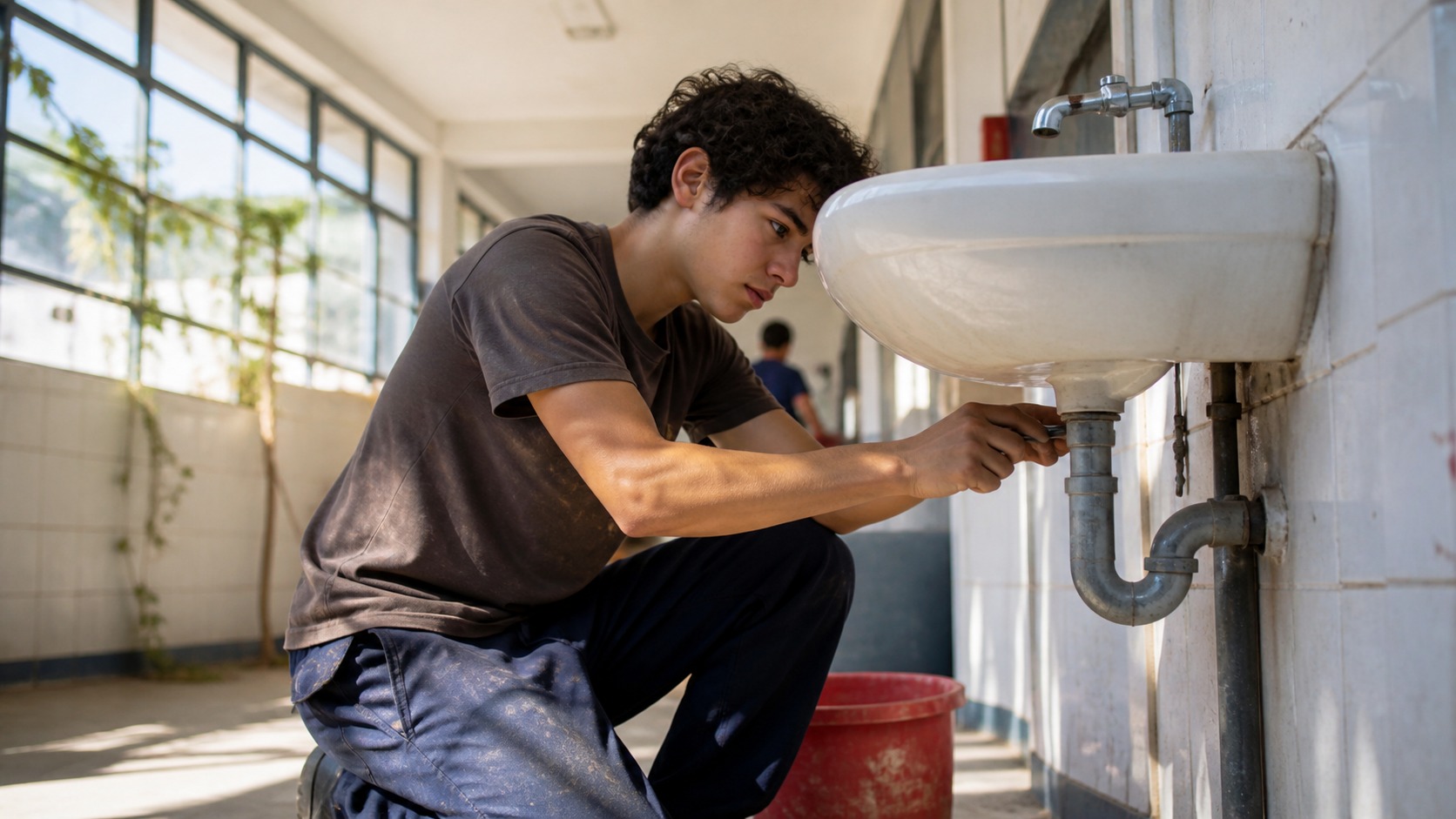
Nora was learning to repair a lamp. Her family agreed not to connect electricity at home; the workshop provided a de-energised demonstration and a licensed electrician reviewed the wiring. Her contribution was cleaning, measuring, and preparing questions. Recognising a limit did not reduce participation: it made the project safe and sustainable.
When a young person stops attending regularly, coordination can turn into anxious calls, conflicting messages, and decisions made without hearing them. A practical agreement changes that pattern: it names one small priority, shares achievable responsibility, and sets a review date. It is not a contract for monitoring a family or a way of placing the whole solution on the student. It is a tool for school, family, and community resources to respond predictably, respectfully, and safely.
Coordination begins with understanding the difficulty#
Attendance is a signal, not an explanation. Behind an absence may be transport trouble, work that causes a block, pain, family circumstances, peer conflict, caring duties, or fear of a place in school. Before assigning tasks, describe facts: when absence happens, which moments are hardest, what has helped even a little, and how the student explains it. A shared hypothesis remains provisional. It is for testing support, not labelling a person or finding someone to blame.
Six questions make an agreement usable#
One page is usually enough when it answers what is being observed, what the safe priority is, which goal will be tried this week, what support will be offered, who will do each action, and when it will be reviewed. Wording should be observable. “Reach the gate on three mornings” is clearer than “improve attitude”. “The tutor will meet the student at 8:50” makes a general promise of support real. Include how a change will be communicated and who can cover if the named adult is away.
Choosing a priority does not erase other concerns#
A family may describe tiredness, a long journey, teasing, and accumulated work at the same time. Trying to fix every issue in one meeting creates impossible promises. The group can acknowledge the whole picture and choose the barrier most limiting return now. Where there are signs of violence, self-harm, abuse, threats, or serious health risk, punctuality is not the priority: applicable safeguarding and emergency procedures are. Where there is no urgent danger, a gradual goal may be appropriate. Responsible coordination knows the difference between an everyday adjustment and a situation requiring protection.
Share responsibility without assigning blame#
Each responsibility should match a person's role and capacity. A family may prepare a routine or communicate a difficulty; school may provide a contact, temporarily adjust entry, or review a learning barrier; the student may choose a signal for requesting a pause; a community service may support transport or mediation within its remit. Nobody should be assigned what they cannot control. Telling a teenager to stop feeling anxious is not an action. Agreeing that they can use a quiet room for ten minutes and return with a trusted adult is.
Case 1: transport information changes the plan#
Daniel missed Mondays and was late on other days. The first discussion centred on his interest in lessons until his mother explained that the early bus had changed and she now started work earlier. Access, not motivation, became the priority. A municipal worker explained an alternative route, school flexed first-period reception for two weeks, and Daniel packed the night before. Attendance improved without sanctions or lectures. The case shows why material conditions should be explored before absence is read as disengagement.
Case 2: one communication channel lowers conflict#
Sofía received messages from three teachers, learning support, and administration whenever she was absent. Her father did not know whom to answer and she feared that everyone knew her story. They agreed on one contact person, one weekly update containing necessary information, and a short Friday meeting. Sofía chose to share the attendance goal but not personal conversation details. With fewer voices, her family could respond and staff stopped duplicating demands. Coordination does not mean everybody knows everything; it means each person has what they need to act well.
Case 3: community support with clear limits#
Amira cared for a younger sibling on some afternoons and could not complete work that made returning to class feel manageable. School could not solve the family arrangement alone, but asked consent to explain the need to a community service. The service identified local support and school offered supervised study twice a week. The agreement stated what information would be shared, who would call, and when results would be reviewed. It helped because it reduced one barrier while respecting the family's dignity, not because it promised to repair Amira's whole life.
Privacy, consent, and safeguarding#
Collaboration requires trust. Share the minimum information needed, explain who will receive it, and do not turn meetings or message groups into archives of intimate detail. A student may prefer a note, a scale, or one trusted adult. There are limits: where there is risk of harm, people working with children must follow local safeguarding duties and cannot promise absolute secrecy. Explaining that boundary beforehand is safer than revealing it later. Information should have a purpose, a responsible holder, and a review date.
Reviewing is learning, not an account to settle#
A ten-minute review can ask what changed, what remained hard, which support should continue, and what adjustment will be tried next. If the target was missed, ask what made the step too difficult. Perhaps the goal was too large, a substitute was unavailable, or a new barrier appeared. Keeping a strategy that increases shame or conflict is not consistency; it is ignoring evidence. Review allows learning without turning attendance into a moral test.
Sources for safe coordination#
UNESCO links inclusion to removing barriers to presence, participation, and learning. UNICEF offers frameworks for children's participation, protection, and wellbeing. The World Health Organization places safe and supportive school environments within mental-health promotion. The European Agency for Special Needs and Inclusive Education publishes resources on collaboration and responding to diversity. In Spain, education authorities and local public services set procedures for coexistence, safeguarding, and attendance. These sources help organize decisions; they do not replace professional assessment or emergency routes where risk exists.
A closing that keeps the door open#
At the end, each participant should be able to repeat what will be tried, who will be available, and when they will speak again. Keep an accessible summary and change what is not helping. The aim is not for every person to agree about everything. It is for the student not to navigate contradictory messages alone. A good agreement makes clear that return is shared, gradual, and open to revision.
Agreements that sustain training#
Coordination between families, institutions, and communities works when each person knows their task and limits. The learner chooses what personal information to share and participates in every decision. Teaching staff explain criteria, tutorials, and procedures; family can support time, travel, rest, or an appointment without monitoring every submission. Write down one observable difficulty, one action per person, and a review date.
Case: a difficult placement timetable#
Lucía saw her placement timetable change. She took the schedule to a tutorial, explained the journey, and agreed to report changes. Her sister covered two journeys and coordination confirmed participation. Two weeks later they reviewed rest, presence, and started tasks.
Case: a confusing rubric#
Bilal received conflicting opinions about a project. He prepared questions, requested a tutorial, and allowed a trusted person to join at the beginning. The lecturer clarified the rubric and set an interim milestone. His family protected study time. Each person acted inside a defined role.
Case: linking community resources#
Inés could not participate regularly because of transport and connection costs. Guidance pointed to the official call and a municipal resource; the library offered study space and family helped collect documents. UNESCO, UNICEF, the World Health Organization, and the European Agency for Special Needs and Inclusive Education show why participation, safety, and barrier removal require collaboration.
Review and correct#
The agreement should state what is happening, which evidence exists, what each person will do, what remains private, when review will happen, and who to contact if things worsen. Where there is bullying, violence, self-harm risk, or immediate danger, safeguarding takes priority over the ordinary agreement.
Shared follow-up#
A short review prevents an agreement from becoming another burden. Compare facts only: a completed tutorial, a confirmed deadline, an attended placement, a submitted request, or a barrier that remains active. If a measure did not work, change one condition and keep the next date. The learner can say that support feels intrusive or insufficient; hearing that response improves the plan. Documentation is not surveillance: it prevents important information from being lost between conflicting versions. The institution should use secure channels and share personal data only when necessary. Families can ask how to help without demanding details they do not need. Community resources can guide, but they do not replace institutional responsibility. Where people disagree, return to evidence, published criteria, and the formal channel.
A network that respects autonomy#
The final aim is for a person to continue, change route, or seek help with enough information. Autonomy is not isolation. A responsible network reduces barriers, respects privacy, and keeps expectations realistic. Close every meeting with one action, one kind of support, and one date. If fear, violence, or risk appears, do not wait for review: activate safeguarding and specialist care.
Decisions with information#
Before an important decision, check the calendar, criteria, and official call. Ask for an ambiguous instruction in writing. A change of pace, mode, or route can be an informed decision rather than failure. Review whether support reduced the barrier and respected the learner voice. Keep a dated copy of agreements and messages. This makes it easier to continue the conversation with another person at the institution without starting from zero.
Keep the review date and record the answer clearly.