Reviewing progress in participation is not about deciding who failed. It is a way to understand which barrier appeared, which support helped, what repair is needed, and what next step the person chooses. These questions and cases turn an uncomfortable experience into a practical improvement, without blame or silence.
Motor diversity is part of everyday life. A blocked ramp, a meeting moved without notice, or an impossible pace can limit participation even when no one intends harm. A respectful review does not replace medical care, legal advice, or an emergency response. It is an organized conversation that protects autonomy, recognizes environmental responsibility, and turns learning into checkable agreements.
Prepare a safe review#
Choose a calm moment and confirm that the person wants to review what happened. Explain the purpose and who will listen. They may prefer to be alone, bring someone they trust, or answer in writing. Health details are not required to show that a door, timetable, or rule excluded someone. Being able to pause, correct an interpretation, and decide what is recorded is part of safety. Where there was pain, a fall, immediate risk, or violence, appropriate care and reporting channels come before process review.
Choose a calm moment and confirm that the person wants to review what happened. Explain the purpose and who will listen.
Start with facts, not labels#
Describe a clear sequence: the activity, the expectation, where the barrier appeared, what was tried, and the effect. Phrases such as “could not manage” hide the condition that must change. It is more useful to say that the lift was broken, notice arrived late, or the corridor was blocked. Separating observation from explanation prevents blame for a situation designed without alternatives and gives the organizer a concrete responsibility.
Questions that return the person’s voice#
Asking is not questioning someone under pressure. Try: what did you want to be able to do, which part was hardest, what support helped, what should not happen again, and which option would you choose next time? Also accept “I do not want to discuss this now.” Autonomy includes choosing pace, language, and shared information. The coordinator should offer real possibilities instead of shifting all design work to the person affected.
Separate repair, support, and excuse#
Repair acknowledges impact and changes a condition. It may mean clearing a route, rescheduling without penalty, providing an equivalent alternative, offering a clear apology, and checking that the change works. Support helps when it is agreed and does not unnecessarily replace the person’s decision. An excuse appears when people invoke bad luck, fixed rules, or individual effort while changing nothing. The key question is simple: after this review, will participation be easier next time?
Case 1: a cultural activity with a blocked route#
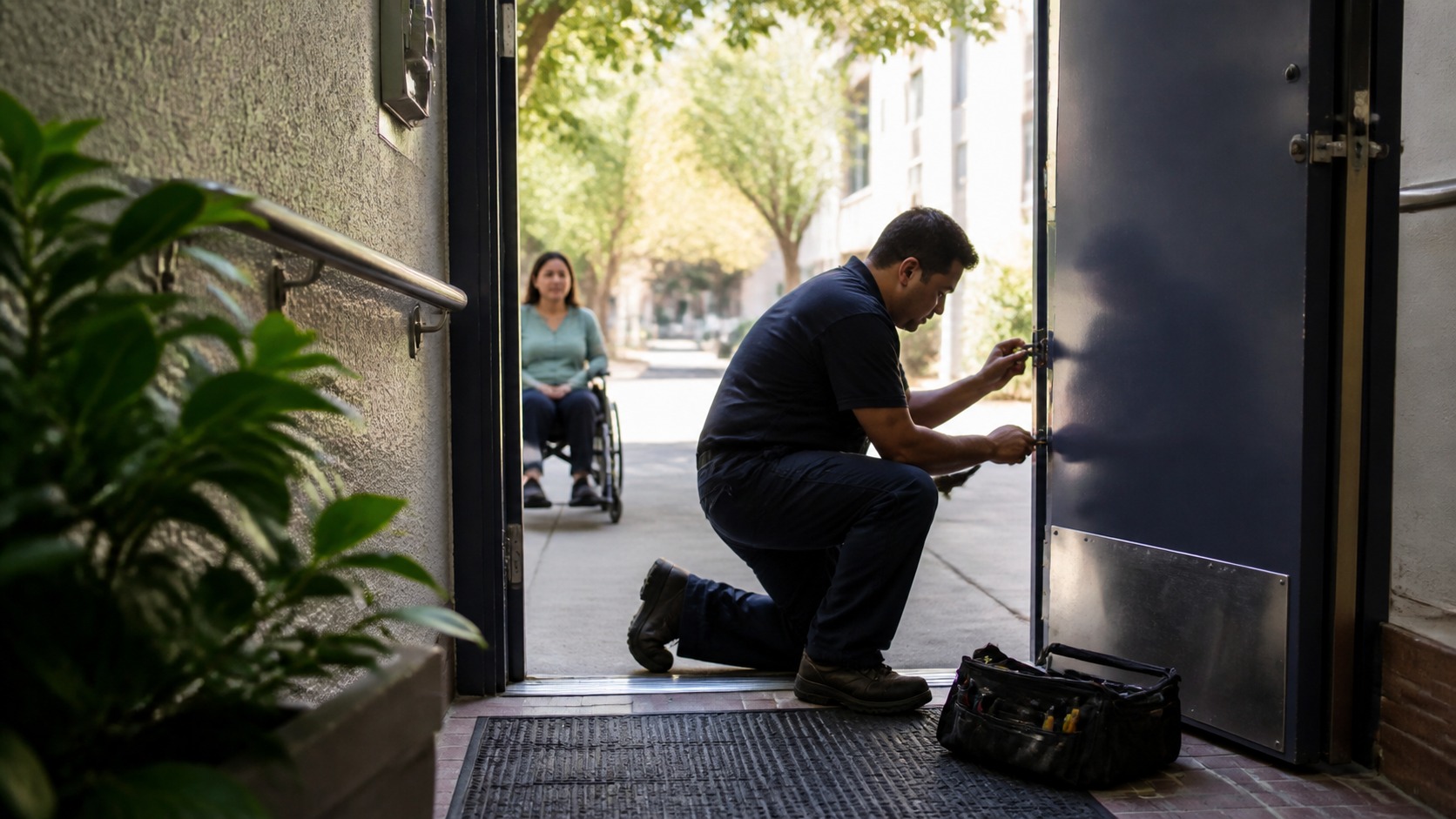
Lara arrives for a guided visit and finds installation equipment in front of the accessible entrance. The group offers to carry her chair up stairs, but she does not want that. The review shows that the team had no protected ramp zone and no one responsible for checking it. Repair means clearing access, starting when Lara can enter, and adding a pre-installation check. The issue is not whether Lara was patient; it is what the venue will do so nobody has to negotiate entry again.
Case 2: a class moved to another room#
Pau receives a message saying training has moved upstairs. On arrival, the lift is out of service and the notice was sent that morning. The tutor offers a video call, but Pau wants to take part with his team. The center reserves an accessible ground-floor room, shares materials in advance, and assigns classroom-change checks to administration. The response does not rely on Pau warning people every week: accessibility becomes a normal part of organizing the session.
Case 3: a health appointment with impossible timing#
Amina books adapted transport for a health appointment. The consultation runs late and the vehicle cannot wait; she finishes tired and without a clear way home. With Amina’s permission, reception and transport review the event. They agree a more predictable appointment window, a direct phone line for notices, and a place to wait without pain. They also set advance communication for changes. Repair means coordinating services, not asking Amina to tolerate an avoidable risk.
Turn learning into an agreement#
A useful agreement is short and testable. Record the chosen goal, observed barrier, agreed adjustment, responsible person or team, test date, and review method. For example: “Room B will be clear by 16:30; reception will check it; Marta will decide whether to use that route; we will review after two sessions.” Avoid vague promises to “pay more attention.” If a measure fails, correct it without turning the test into a judgement of the person’s merit or capacity.
Record without invading privacy#
Record only what is needed: date, activity, barrier, response, outcome, and next step. Diagnoses, images, third-party names, and intimate details are rarely necessary to improve a route or timetable. Store information where only people who need to act can access it, and ask permission before sharing a case. A short record reveals patterns, such as repeatedly failing lifts or notices that always arrive late. It also shows that adjustments are a service responsibility, not occasional favors.
When specialist support should join#
Seek specialist support for persistent pain, a fall, sudden mobility changes, severe fatigue, repeated discrimination, violence, or a technical need the setting cannot solve. Health professionals can assess risks; disability organizations, social services, and accessibility offices can advise on resources and rights. In education or employment, early advice can prevent an improvised adaptation from creating another barrier. The person remains in control of what information they share and which goal they want to pursue.
Sources and rights that guide action#
The UN Convention on the Rights of Persons with Disabilities recognizes accessibility and reasonable accommodation as conditions of equality. The World Health Organization describes disability through the interaction between health conditions and environmental barriers. UNICEF, the European Commission, Spain’s Real Patronato sobre Discapacidad, and CERMI provide resources on inclusion, participation, and rights. These sources help a review rest on checkable standards rather than goodwill that lasts for only one day.
Close with a real next step#
Finish by asking: was the concrete harm repaired, is there a workable alternative, who will follow up and when, and did the person feel heard? Thanking someone for information is not enough if nothing changes. Communicate the agreement in clear language and provide a way to amend it. Reviewing without blame means recognizing that environments can be redesigned and that learning requires action. The best indicator is that the next participation needs less explanation, less effort, and less uncertainty.
Questions that sustain improvement#
Before the review, prepare four written questions and leave room for different answers. Ask what outcome would have been fair, what sign would warn of a new barrier, who can act without requesting further explanations, and which alternative must be ready if the first adjustment fails. This keeps the conversation from becoming a team defense. It also recognizes that a person may assess the same event differently depending on energy, pain, available time, or the choices they were able to make.
During the review, check how responsibility is shared. The participant may explain their experience, but should not have to call maintenance, rebuild a timetable, train staff, or chase a response. Name who opens the issue, who communicates the change, and who checks that it remains in place. Where a task depends on several people, record the handover. Durable solutions emerge when knowledge stops living with one person and becomes an ordinary procedure.
Measure progress with human as well as practical indicators. In addition to counting cleared ramps or sent notices, ask whether waiting, repeated explanations, fatigue, and improvisation have decreased. Ask whether choice, timely arrival, and the ability to stay with the group have increased. A useful indicator does not require intimate disclosure. It gives evidence about the environment and shows when a formal measure exists but still does not secure genuine participation.
When communicating the agreement to a team, use language that describes the action rather than the person. Say “keep the accessible route clear” rather than “handle the mobility case”; say “give advance notice of changes” rather than “make an exception.” This wording makes the adjustment a shared responsibility that can benefit others. Check that information reaches shifts, replacements, and external services. An improvement known only by people in one meeting can disappear very quickly.
If the review shows discrimination or a persistent refusal to provide adjustments, retain communications and seek guidance through the appropriate channels. Keep the account factual: date, activity, barrier, request, response, and effect. Asking for a written response can clarify responsibility and open a path to repair. The aim is not to win an argument but to restore equal conditions. Disability organizations and specialized public services can help assess options without leaving a person alone to face a complex structure.
A useful review can be repeated after the next activity even when everything appears to have gone well. Compare the agreement with the actual experience: was the route ready from the start, did information arrive at the agreed time, was an exception still required, and could the person change their mind? Invite people to notice small details that are easily missed, such as moved furniture, an unclear sign, or a replacement worker who did not know the procedure. Correcting these details early prevents them from accumulating into barriers. Keep a simple way to report an issue and confirm that the team will respond with a date, an action, and follow-up. Make the record accessible in the format and language the person prefers. At the next check-in, ask whether the process itself felt respectful, because a technically correct adjustment can still fail when communication is rushed, patronizing, or difficult to understand.