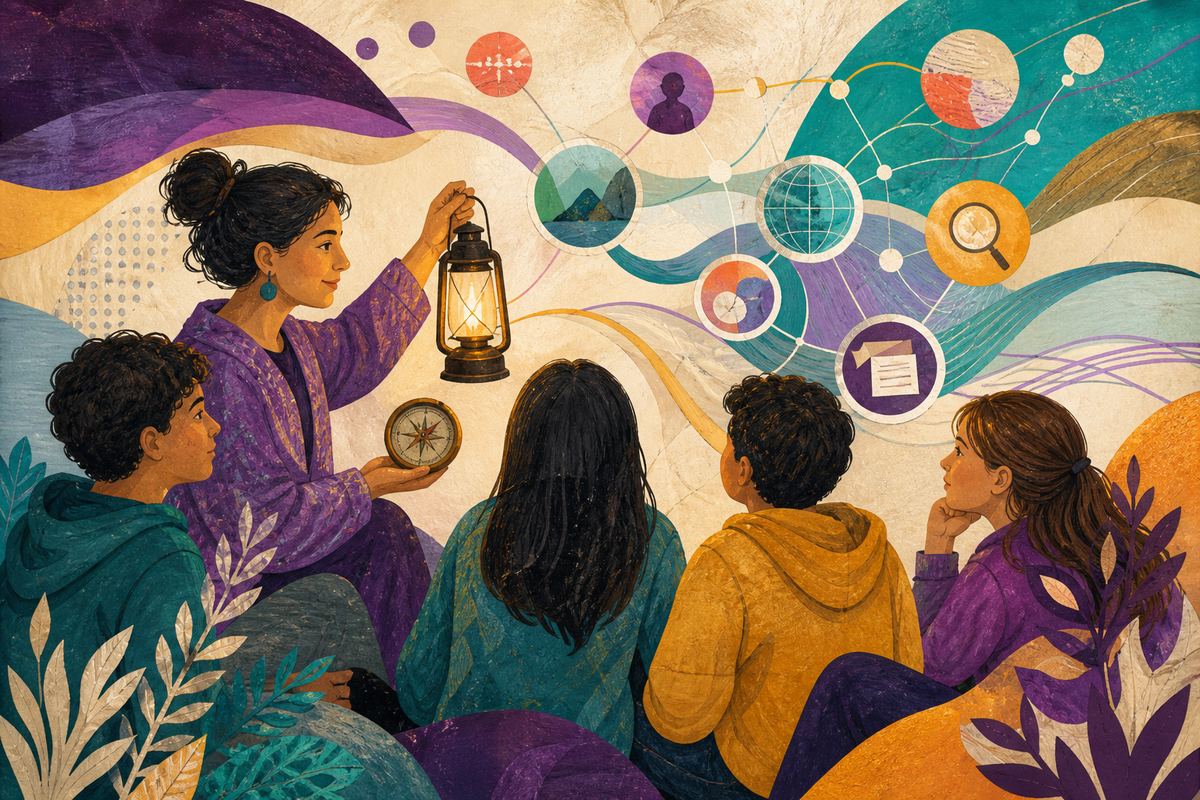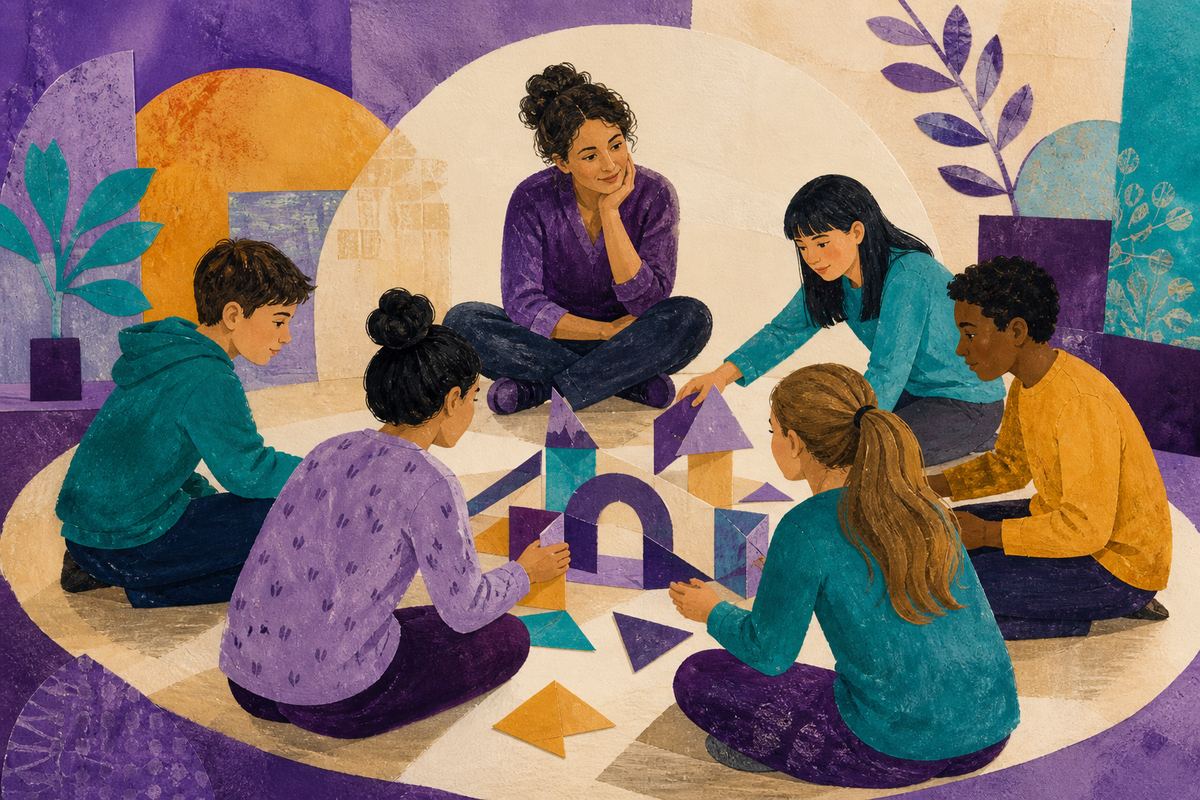
Headlines about creative artificial intelligence tend to promise speed, startling images, or an abstract threat to artists. They rarely address the discussion that matters to families, schools and young people: who sustains cultural work, how contributions are recognised, which opportunities open up, and which rights need protection. The tool does not remove those questions; it makes them more urgent. A responsible conversation must look at the whole process, not only the final screen.
A quick result does not show all the work#
An image generated in seconds can conceal years of learning by illustrators, musicians, designers, translators, editors and technicians. It can also conceal present work: selecting a reference, writing a prompt, checking bias, correcting mistakes, verifying permissions and deciding whether a piece should be published. Treating the result as if it appeared without a history impoverishes culture and misleads learners. Creativity is not only producing a visible version; it is observing, researching, practising, collaborating and taking responsibility for decisions. Schools, libraries and youth projects benefit from naming those layers. Doing so does not make technology an enemy: it makes it possible to use technology without erasing the people who bring knowledge, language and judgement.
An image generated in seconds can conceal years of learning by illustrators, musicians, designers, translators, editors and technicians.
Working conditions belong in the discussion as well. If an organisation buys cheap outputs while ceasing to pay for commissions, training or human review, the cost has not vanished; it has moved onto people who make a living by creating. Young people need to see that culture has professions, time and rights. A clear commission can include payment, credit, a deadline, revisions and a licence. This literacy matters both to those who may work in the arts and to those who commission, share or consume content. Responsible innovation is not measured only by the number of pieces produced, but by whether it improves or weakens the conditions for continuing to create.
Authorship can be collective and still be recognisable#
Authorship does not require pretending that a work comes from one person alone. Many songs, short films, exhibitions and campaigns are collective. That is precisely why a record of contributions is useful: who proposed the idea, who researched, which earlier materials were used, which tool played a role and who made the final decision. A short process note avoids two mistakes: giving human qualities to a system or hiding the technical support that was used. It also helps distinguish inspiration, quotation, adaptation, copying and authorised use.
In activities involving children, that note should be simple and understandable. It can accompany a work with references, licences, changes made and an explanation of why each material was chosen. If a photograph, voice or personal experience appears, permission and possible exposure need review. Recognition is not decoration at the end of a post. It teaches respect for other people’s work and protects every young person’s ability to claim their own. Copyright rules and terms of use do not replace judgement, but they provide a framework for asking questions before sharing.
Cultural access is not access without context#
Tools can assist with captions, drafts, translations, visual ideas and accessible adaptations. This can widen participation for people who have faced barriers of time, language or resources. Yet cultural access loses meaning when recommendations reduce diversity to what is most repeated, or when traditions are used without listening to the communities that give them meaning. A model can identify patterns, but it cannot independently know when a symbol is sensitive, a word has been reclaimed by a community, or a story needs to be told by its protagonists.
For that reason, cultural projects gain quality when they consult libraries, archives, associations and local creators. Selecting diverse references should be deliberate practice, not an accidental effect of a search. It is also worth asking which voices are absent, which language is left out and who may be stereotyped. Human mediation does not block access; it makes access fairer. A platform can suggest options, while the community retains responsibility for judging their meaning, origin and consequences.
Arts education needs more practice, not less#
There is a temptation to think that, once a tool delivers an image or text, learning artistic techniques is no longer necessary. The opposite is true. Drawing, writing, playing, editing and observing teach people to notice decisions, value references and communicate an intention. Without that experience, it is difficult to judge whether an automatic proposal repeats a cliché, uses weak composition or removes an important nuance. Arts education develops attention, patience and judgement; it is not an ornamental activity that can be replaced by a button.
Sensible use can make technology an object of analysis. Students can compare results, identify references, document changes and create their own versions with permitted materials. Assessment should value the process journal, argument, research and revision, rather than only the final image. That prevents rewarding whoever obtains an instant answer and recognises the learning that turns an idea into a conscious work. Teachers need time, training and clear rules to guide that process.
Children’s rights are a concrete boundary#
When a minor uses a creative tool, the question is not limited to whether the output is appealing. It is necessary to review the data entered, the images uploaded, the service’s minimum age, reuse terms and the chance that a creation will be exposed beyond its intended setting. A classroom photo, a family voice or an intimate story may seem harmless and still reveal more than is necessary. Data protection and the child’s best interests should guide every decision.
Families and schools can agree simple rules: do not enter identifying data or third-party images without authorisation; use supervised accounts and settings where appropriate; explain what will be published and to whom; retain a way to remove content; and seek professional help when a rights conflict or risk arises. These measures are not meant to frighten anyone. They allow creative exploration within understandable boundaries. Autonomy grows when information and safety accompany curiosity.
A public discussion that does not stop at alarm#
The debate does not improve by choosing between blind enthusiasm and total rejection. More useful questions are concrete: what human work lies behind this?, who receives credit and payment?, where do materials come from?, who gains access through the tool and who may lose opportunities?, what protection exists for minors?, who reviews harm? Answering them requires listening to creators, students, families, education professionals, libraries and rights organisations. No headline can do that work alone.
Culture has always incorporated technologies, but their value depends on the relationships they help build. A tool is more valuable when it expands expression without concentrating decision-making, when it recognises contributions rather than erasing them, and when it gives young people capacities to create with judgement. The goal is not to obtain more content at any price. It is to sustain a cultural space where imagination, work and dignity can move forward together.
Deciding and explaining the process#
A useful practice is to agree, before starting, what a tool is for and which part of the work will remain a human decision. A reading club, arts workshop or school publication can document the initial question, sources consulted, discarded attempts and final review. That transparency makes it possible to learn from mistakes and prevents automation from being presented as magic. It also gives an affected person enough information to raise an objection.
The explanation should suit the age and context. Every activity need not become a legal treatise, but every publication should show that it has accountable people behind it. If a proposal repeats a stereotype, intrudes on privacy or uses material without permission, it is corrected or not published. If it improves accessibility or helps develop an original idea, that value can be recognised without overstating it. A mature discussion does not ask whether the tool is naturally good or bad. It asks what decision was made, on what evidence, for whom, and with what opportunity to put things right. Review is not a final obstacle: it is the part that turns a technical possibility into a defensible cultural proposal.
It is also valuable to reserve time without automation: reading a complete source, visiting an exhibition, interviewing a creator or practising a manual technique. These experiences offer references that do not depend on a statistical reply and support more independent discussion. Responsible combination does not replace human encounter; it protects and extends it.
In that sense, quality is not only a matter of speed. It depends on being able to justify choices, correct them when needed, and share credit honestly. This habit prepares young people to participate in a more open, safe and plural culture.