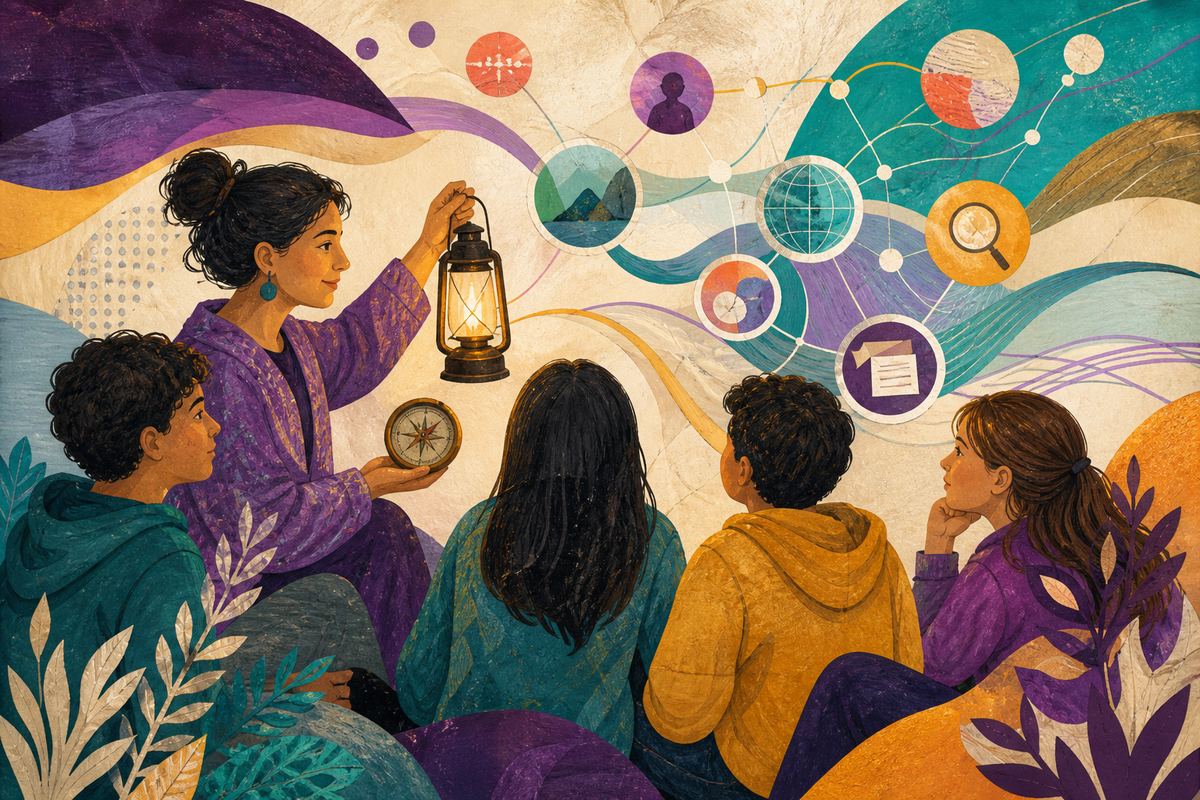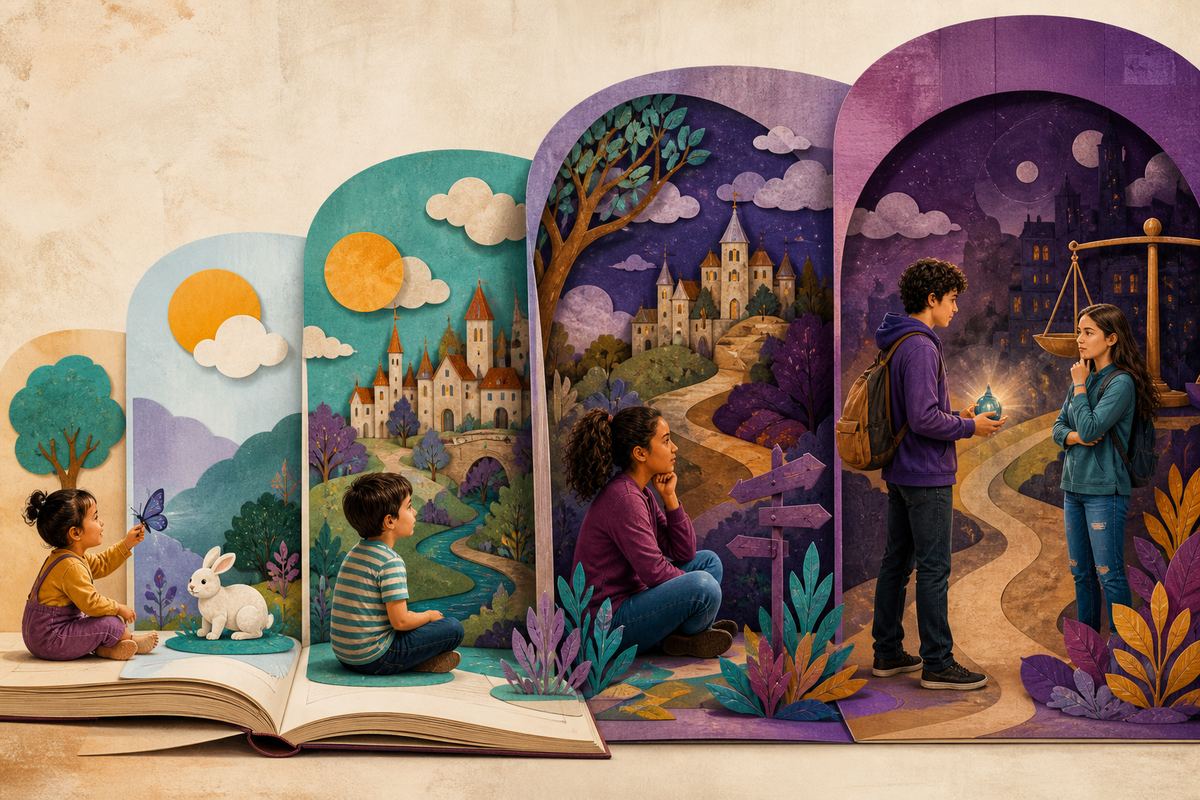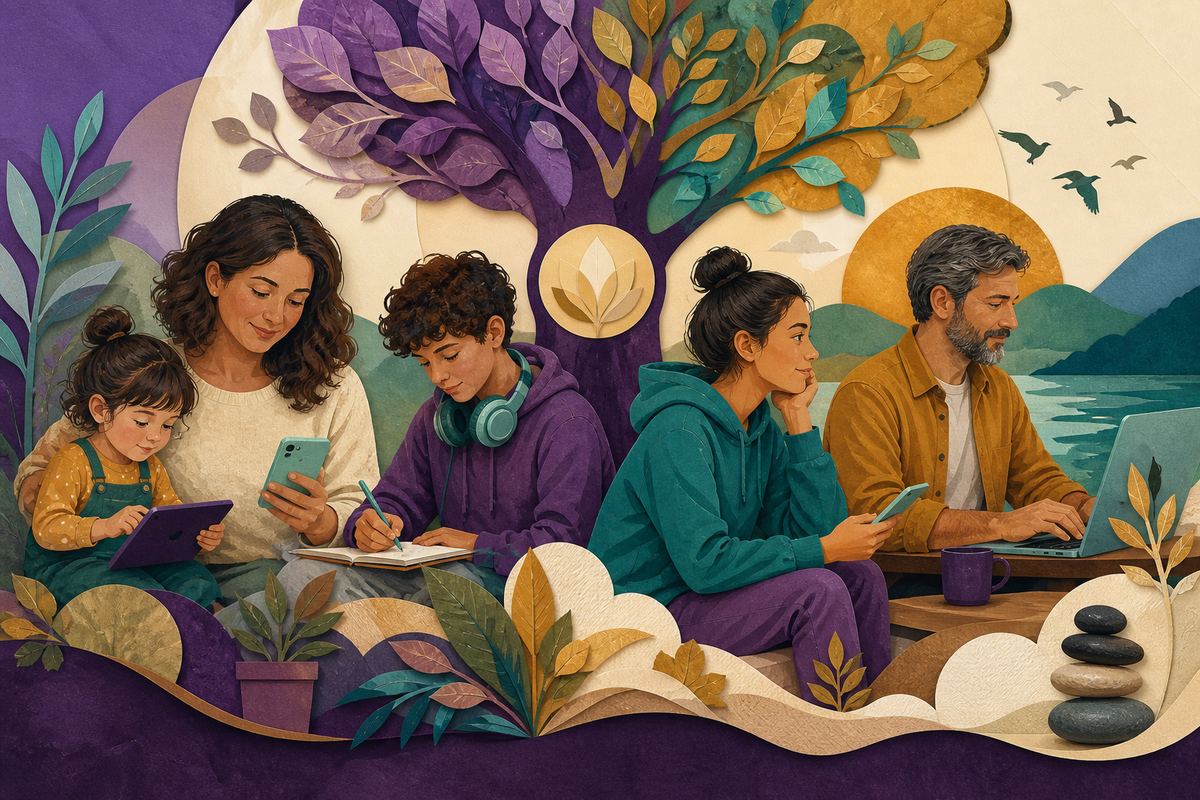
The most important change brought by generative tools does not arrive all at once and is not limited to one application. It advances when a school task begins with an automatic suggestion, when a poster is designed from a generated image, or when a song circulates without it being clear who decided its words, sound or publication. In school, culture and youth creation, some habits are shifting: what counts as a draft, how learning is demonstrated, what is shared and who receives recognition. Watching these shifts helps preserve something essential: every young person’s agency, the value of process and the rights of people who create.
A gradual change worth naming#
Novelty is often framed as a choice between enthusiasm and rejection. The meaningful transformations, however, are quieter. A person may request a list of ideas, compare versions of a text, generate a reference image or receive an adapted explanation. Each gesture seems small; together they can alter how people research, practise and assign credit. There is no need to imagine a distant future in order to review this. It is enough to ask which part of the work retains human decision, what information enters the system, what remains recorded and what can later be explained. Naming these questions does not stop creativity. It prevents a habit from becoming a rule without discussion.
Novelty is often framed as a choice between enthusiasm and rejection. The meaningful transformations, however, are quieter.
School needs to make process visible#
For a long time, a finished assignment allowed part of the learning to be inferred. When results can be produced very quickly, that inference is less reliable. The answer is neither to monitor every screen nor to assume bad faith. It is to value evidence of process: an initial question, consulted sources, notes, sketches, changes between versions and a short explanation of decisions. A teacher can ask students to state which tool they used, for which stage and what they changed afterwards. This transparency helps distinguish support, collaboration and substitution. It also protects those who genuinely worked, because their path can be recognised without demanding perfection in the final product.
Speed is not the same as an original idea#
An attractive image or a fluent paragraph can conceal decisions that nobody has consciously made. Creating is not only obtaining a file: it involves observing, choosing references, testing alternatives, discarding and accepting an intention. Tools may broaden options, but they do not know a community’s personal context or answer for the effect of a publication. Agency remains when a young person can explain why a proposal was chosen, which stereotype was noticed, what fact was checked and what was left out. A useful activity therefore asks more than whether a result is beautiful or correct; it asks what problem it tries to address, whom it represents and what responsibility dissemination involves.
Youth culture deserves recognition and context#
Young people learn culture by remixing references: songs, videos, illustrations, games, memes and stories. That practice can be creative and legitimate when sources are credited, licences are respected and no one is misled about the intervention involved. Risk appears when authors are erased, works are copied without permission, a person’s voice or image is imitated, or something made to attract attention is presented as personal experience. Authorship does not require working alone. It requires acknowledging contributions and explaining conditions of use. A simple record can accompany a work: main references, tools used, human decisions and required permissions. It makes culture more honest and teaches that sharing does not erase rights.
Rights are not an administrative detail#
Before uploading a classroom photograph, a private conversation, another person’s drawing or a recognisable voice, it is worth pausing. Personal data, image rights, intellectual property and relationships of trust are at stake. Children and teenagers need stronger protection, but also opportunities to learn careful decision-making. A school or family can agree understandable rules: do not enter unnecessary identifying data, do not publish third-party material without permission, do not clone traits of a real person and review a platform’s terms. If a tool does not allow people to understand what it does with data or to withdraw content, it should not be used for sensitive activity.
Attribution teaches too#
Stating where an image, a musical excerpt or an idea comes from does not reduce the value of work; it shows judgement. Attribution allows another person to check, learn and continue the conversation. In a generative setting, the explanation should also include the tool’s role. Correcting spelling, requesting examples, generating an initial structure and fully delegating an assessed task are not equivalent. Describing that role precisely avoids both concealment and exaggerated labels. A short standard declaration can be enough: reference materials, technological use, later changes and final authorship. This practice turns honesty into an everyday skill rather than a punishment reserved for someone who makes a mistake.
Preserve spaces without automation#
Not every activity needs generative assistance. Reading slowly, writing a first draft, drawing from observation, rehearsing in a group or debating a disputed source remain irreplaceable experiences. They provide time to tolerate uncertainty, identify a difficulty and develop an individual voice. Reserving some moments without these tools is not nostalgia; it protects learning conditions that an instant result can conceal. The key is to explain it: some tasks explore technology, while others demonstrate personal command, in-person cooperation or sustained attention. When a rule has a clear purpose, students are more likely to understand it and families can support it.
Decide together and review later#
The most useful rules are not written once and forever. They should be reviewed when a new feature, incident or accessibility need appears. Listening to young people, families, teachers, libraries and local creators reveals issues a commercial demonstration does not show. A periodic review can ask which benefits appeared, which tasks became confusing, whether bias occurred, whether anyone was excluded and whether data remained protected. The answer may be to keep a limited use, adjust an activity, request more guarantees or remove a tool. Changing a decision when evidence requires it is not failure; it is responsible governance of technology.
One concrete next step#
A family or school conversation can begin with four questions: what is to be created or learned, which part will the person do and which part will the tool support, which sources, data or people might be affected, and how will the process be explained to the person receiving the result? Writing down the answers leaves an understandable record and reduces later disagreements. If pressure arises to copy, publish something intimate or conceal help received, adult support should be sought and sharing should pause. The aim is not to produce less culture, but to produce it with greater awareness. Youth creativity grows stronger when it keeps curiosity, context, recognition and the capacity to decide.
Sources for further checking#
- UNESCO, Recommendation on the Ethics of Artificial Intelligence and educational materials.
- World Intellectual Property Organization, copyright resources.
- European Commission, European regulatory framework for artificial intelligence.
- Spanish Data Protection Agency, resources on minors and privacy.
These public references help review rights, data and responsibilities. They do not replace analysis of each case, but they allow educational and cultural decisions to rest on checkable criteria.