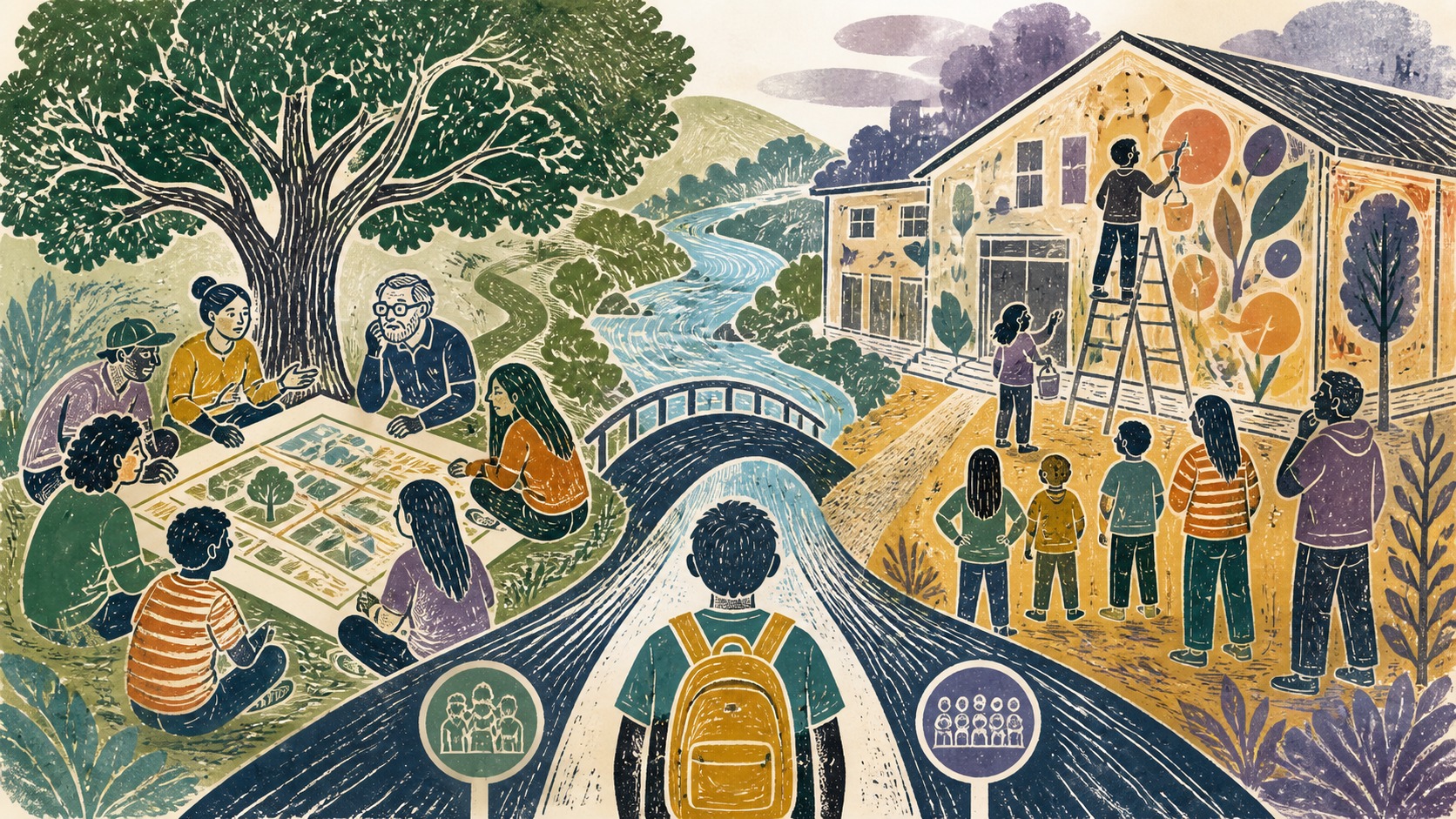
Loneliness can appear in a crowded room. A person may have colleagues and classmates yet no one with whom they can speak honestly, or may cherish distant friends while missing everyday company nearby. This guide offers a modest starting plan for friendship and belonging. Young people and adults can adapt it to their age, safety and circumstances. The three cases are fictional. No exercise guarantees a new friend, and nobody should stay in a harmful relationship merely to avoid being alone. The first task is to identify the kind of connection you miss and choose a safe opportunity that fits an ordinary week.
Identify the connection you actually need#
Count neither invitations nor online followers as a complete measure of belonging. You might need someone who listens when a day goes badly, a group in which your interests are welcome, or a familiar person in the neighborhood. You might already have close relationships but find that work schedules make them hard to sustain. Loneliness is the felt gap between desired and actual connection; social isolation refers to limited contact or support. These can overlap, but a person can experience one without the other. Naming the gap helps prevent an exhausting search for more activities when what is missing is trust.
Count neither invitations nor online followers as a complete measure of belonging.
The 2023 US Surgeon General advisory describes social connection through the structure of relationships, the support they provide and their quality. Ask three practical questions: Who could spend time with me? Who could help with a concrete problem? Where can I be accepted without hiding important parts of myself? One friend does not have to serve every purpose. Noticing a reliable connection already present is a useful starting point, even if the person lives far away or your contact has recently become irregular.
Make a private map of your week#
List the places and channels you already use: home, school or work, the neighborhood, an interest group and digital spaces. Beside each, note one possible contact, one opportunity and one obstacle. A nearby library might run free sessions but close before your shift ends. A cousin might be easy to call but live too far away for regular outings. A group chat might be convenient but leave you feeling exposed. Mark spaces that feel safe enough to explore and those that need caution. Keep this map private, especially if others might mock or misuse it.
Include barriers beyond confidence. Money, transport, language, disability access, caring duties, discrimination and fatigue can shape which invitations are possible. Saying “go out more” changes none of those conditions. Saying “I could reach the community garden on Saturday, but not a late meeting across town” supports a decision. The CDC discuss access to parks and community organizations as part of social connection. If an activity is inaccessible, look for another route or ask the organizer about adjustments; do not turn an environmental barrier into a personal failure.
Choose a goal that you can carry out#
For the next fortnight, pick one action under your control. It could be sending a specific invitation, asking about a free group, remaining ten minutes after a shared activity or calling a trusted person at an agreed time. “Have a best friend by Friday” relies on someone else's feelings and timing. “Attend two sessions and learn how the group works” is achievable even if friendship takes longer. Decide when you will try and what you will do if that moment becomes impossible. Leave enough room for rest, particularly if social effort is tiring for you.
The CDC offer examples of small acts of connection, including checking on someone and sharing an activity already in your routine. A brief conversation about a book or a task can be a genuine first step. It need not become an intimate disclosure. If someone responds briefly, you do not yet know why. They may be rushed or uninterested in this particular invitation. Respect their response and consider a different person, place or time. One interaction cannot measure your worth or predict every future relationship.
Reopen a respectful old connection#
An old friend may be easier to approach than a stranger when your earlier relationship was kind. Send a message with a specific memory and a low pressure invitation: “I passed the cafe where we used to meet. Would you like a short coffee sometime next week?” Make it easy to decline. If you were the one who disappeared, acknowledge it plainly without a long defense: “I stopped replying and I am sorry. If you would like to reconnect, I would enjoy hearing how you are.” Then let the other person decide whether to respond.
Do not revive a relationship marked by humiliation, coercion or fear just because it is familiar. Boundaries create room for safer friendships. The NHS loneliness guidance suggests speaking to someone and getting to know people locally, but your own history matters when choosing whom to contact. A declined invitation can disappoint without becoming evidence that you are unlikeable. Accept the answer, avoid repeated pressure and use your remaining energy where there is a chance of mutual care.
Try a recurring shared space#
Repeated activities make recognition easier. Consider a reading circle, public course, accessible walking group, community association or supported volunteer role. Check cost, transport, safeguarding rules and whether newcomers can visit once before committing. A young person should review the setting and travel with a trusted adult. If you need an accommodation, ask the organizer what is possible. An appealing name on a website is not enough; the actual welcome and practical access matter more than the description.
At the first meeting, set the modest aim of learning how the group works. Ask who welcomes new members or what small task you could do. A shared task supplies a natural topic of conversation. Return a few times if the environment feels respectful; familiarity often grows gradually. If you encounter exclusion or degrading remarks, tell the responsible person and consider another venue. Persistence does not require enduring mistreatment. You may also decide that a perfectly decent group is a poor fit for your interests or energy.
Let trust develop in stages#
Reciprocity does not require identical speaking time. It means that both people can ask questions, decline invitations, change topics and have their limits respected. Start with something connected to the shared activity, then offer a small personal detail if you wish. Notice whether the other person shows interest and sometimes initiates contact. Sharing sensitive information may be appropriate later, once their handling of smaller confidences gives you reason to trust them. You do not owe a painful story as the price of friendship.
A specific invitation is easier to answer than “we should meet sometime.” Suggest a place, duration and easy way to say no: “I will be at the market for half an hour on Saturday; would you like to meet there?” If the answer is no, respond kindly. If you are always doing the pursuing, reduce the effort and look elsewhere for mutual interest. A plan can create chances for connection and help you notice respect; it cannot manufacture chemistry or oblige another person to become close.
Use digital contact deliberately#
Messages and calls can sustain valued relationships across distance, disability or incompatible schedules. An online interest group can also lead to a local activity. Before joining, check moderation, privacy and age rules. Do not reveal your address or routines to strangers to gain approval. If someone presses for money or intimate images, moves quickly to private channels, or tries to cut you off from trusted people, stop engaging and seek help. Children and teens should know which adult will listen without automatically blaming them for what happened.
Notice how a channel affects you after you close it. Some conversations lead to a useful plan or the comfort of a familiar voice; others leave you comparing yourself with everyone else. You can mute one draining group while keeping a supportive call or shared hobby. A short video conversation during a difficult week is a real connection. What matters is the quality, continuity and safety of the exchange, rather than whether every interaction happens in person. Digital and local ties can support one another when used thoughtfully.
Case 1: a new city and an unfamiliar routine#
Sam moves for work and finds his new colleagues friendly but unavailable during his days off. He has a close friend in another city and spots a free weekend bicycle repair workshop nearby. He keeps a fortnightly call with his friend and attends the workshop three times. On the first visit he learns the rules; on the second he recognizes two people; on the third he helps someone adjust a brake and asks about a local route. He chooses a daytime activity because the journey home from evening events is difficult.
Another participant invites him to a ride, but Sam cannot go that weekend. He thanks her and proposes a shorter ride the following month. He still feels lonely on some evenings. That feeling does not erase the progress: he now has a familiar place and an invitation that can be discussed. He also learns that casual activity does not replace the deeper conversation he has with his distant friend. His next step is to protect both kinds of contact rather than demand that one new acquaintance meet every need.
Case 2: being left out at school#
Thirteen-year-old Maya learns that classmates organized an outing without her. Her parents resist the urge to demand access to every message. They ask how often this happens and whether there have been threats or insults. Maya mentions one classmate who shares her interest in drawing and a youth center with an illustration club. She and a trusted adult check the club's arrangements, then she visits once. The facilitator explains how the activity works and introduces Maya without sharing her private account of school.
Maya returns and discusses materials with another participant. At the same time, her parents ask the school to observe and respond to continuing exclusion or bullying. UNICEF's peer support material places young people's care for friends alongside adult supervision and safeguarding. Maya's effort to try a new space does not make her responsible for fixing the school's climate alone. If the club proves unsuitable, they can try another safe activity without treating the first experiment as a verdict on her social future.
Case 3: caring duties change a friendship#
Elena cares for her father and has declined several long outings. Her friends stop inviting her, assuming she wants quiet. She does want contact, but only has short periods free. She sends two friends a clear proposal: a twenty minute phone call on Wednesday or a brief walk close to home once a month. One chooses the call and the other prefers voice messages. Elena tests both and keeps the option that leaves her with enough rest. She explains a cancellation briefly and offers another date when possible.
She also seeks local support for carers because friendship cannot replace respite or practical services. Her friends learn that a short invitation is more useful than an all day plan. The number of people in Elena's life has barely changed, yet her available connection improves. The case shows why a realistic plan sometimes means adapting existing relationships to changed circumstances, rather than endlessly seeking new names. Her boundaries make contact more reliable for everyone involved.
Review after four weeks and ask for help when needed#
Record a few observable facts: which places you revisited, which conversations felt respectful, which barriers appeared and which action you would repeat. Do not score your personality. A rejected invitation, illness or unsuitable group provides information; it does not prove that connection is impossible. You might conclude that one reliable call matters more than several crowded events. Choose the next action with the conditions of your life in view. A useful review leaves you with a manageable experiment, not a command to become someone else.
The National Institute on Aging explains how loss, health changes and other circumstances can disrupt connection, especially in later life. If loneliness is persistent, interferes with sleep or daily life, or is accompanied by hopelessness, speak with a health professional or local support service. Use emergency services if there is immediate danger. Professional help can make the path toward relationships safer; it does not mean that friendship no longer matters. One small, repeatable next step is enough to begin.