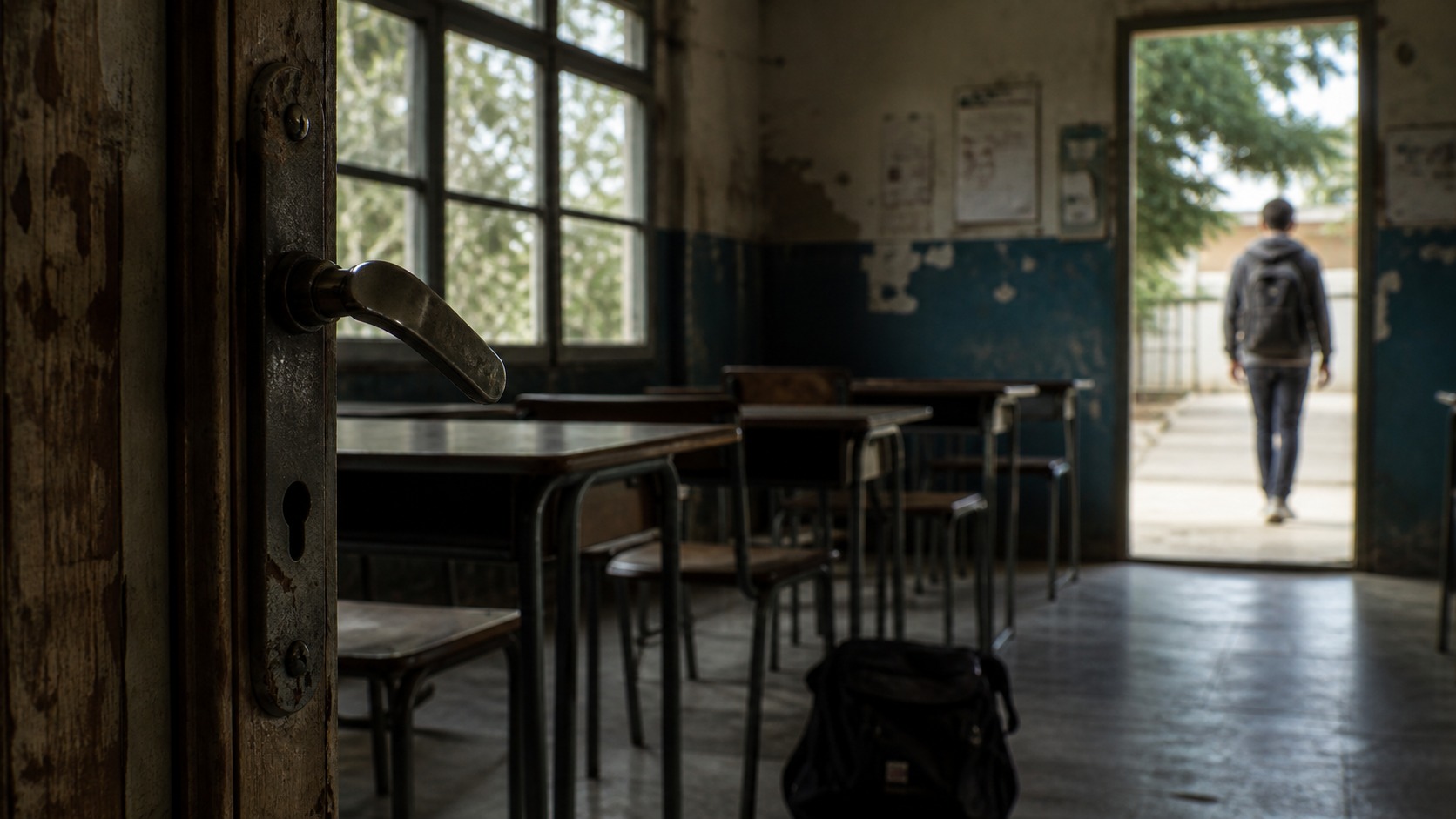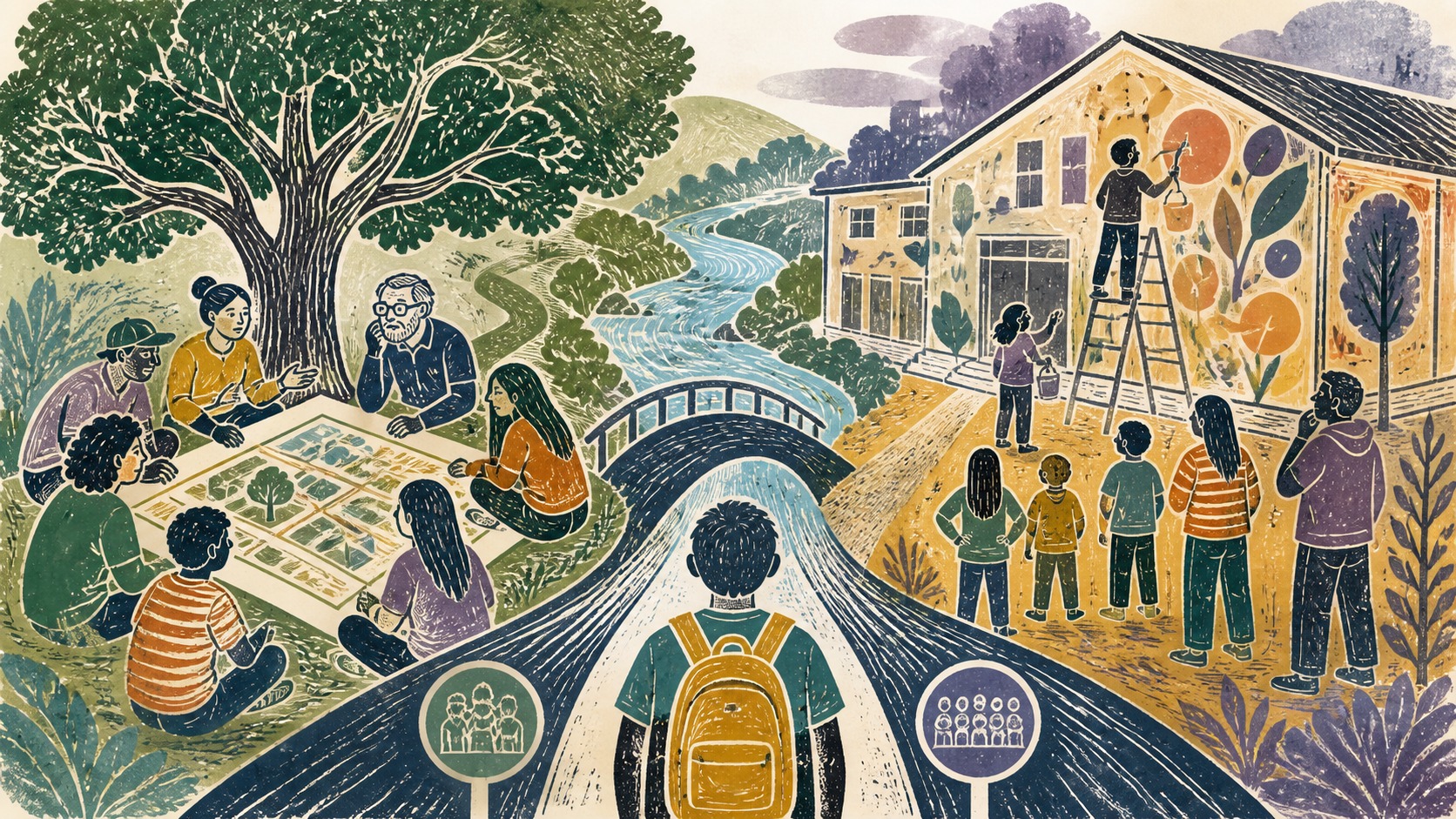
Belonging rarely develops on a tidy schedule. A good conversation may be followed by an awkward lunch; an invitation can be enjoyable without becoming a friendship. Reviewing what happened without blame means giving the young person room to describe the experience, identifying conditions that others can change, and choosing a next step that can genuinely be declined. This guide offers questions for that review, ways to repair a specific harm, and three fictional cases. The aim is a clearer decision, not a verdict on someone's social worth. Repeated bullying, threats, or immediate danger call for protective action before any ordinary reflection exercise.
Start with an event rather than a label#
"Nobody likes me" can express real pain, yet it covers too much ground to guide a response. Ask which part of the day made that feeling sharper. Was it a group assignment, the bus ride, a club meeting, or an unanswered message? Invite the young person to describe what happened before, during, and afterward. Who was present, and what does each person know directly? A narrow scene may reveal an unspoken rule, an inaccessible activity, an ordinary misunderstanding, or a harmful act. Describing the scene does not put the feeling on trial. Someone can feel lonely in a room full of people, even if another person remembers a friendly greeting.
"Nobody likes me" can express real pain, yet it covers too much ground to guide a response.
It helps to place observations, interpretations, and wishes in separate sentences. "My message received no reply" is observable; "she is trying to humiliate me" is a possible interpretation; "I would like to know whether we can still work together" is a wish. Adults should not force a hopeful reading or declare an interpretation false without evidence. They can ask what else would help explain the event and what information is still missing. Let the young person choose whether to speak, write, draw a timeline, or return later. Explain who will hear the account. Privacy is part of making the conversation safe, although protection duties can require adults to act when someone is at risk.
Notice progress without keeping a friendship score#
Counting invitations or contacts is an unreliable measure of belonging. A person with a busy phone may feel unseen, while another values one steady relationship and quiet time. Ask whether there was a place to participate without pretending, someone who listened, or a chance to leave an uncomfortable activity respectfully. Notice changes in the setting too: clear instructions for newcomers, a stopped insult, a usable transport option, or a teacher who followed up. Those are actions that someone can take responsibility for. The World Health Organization distinguishes social isolation from the felt experience of loneliness; a roster of peers cannot replace asking how connection actually feels.
Agree on two small signs of improvement before trying a plan. They might be "I know whom to ask when I arrive" and "I can decide afterward whether to return." Set a review date. If the plan fails, ask what made it difficult rather than announcing that the young person did not try hard enough. Perhaps everyone formed pairs before the newcomer arrived; perhaps the fee was hidden; perhaps the activity simply was not interesting. Learning that an option does not fit can be useful progress when it leads to a better choice. A young person should be able to reject a proposed club without losing adult care or becoming the subject of a lecture about effort.
Ask questions that leave room for an answer#
Begin with "Which moment would you like to look at?" Then ask, "What did you expect, and what actually happened?" A third question, "Was any part comfortable, neutral, or difficult?", prevents one judgment from flattening a whole afternoon. When conflict is involved, "What would you want the other person to understand?" is often more useful than "Who started it?" Toward the end, ask what the young person wants to keep, change, or stop. Two well chosen questions and careful listening may be enough for one conversation. A refusal to answer today can also be meaningful information about timing and trust.
Adults have their own questions to answer. Did I rush to arrange a friendship because I was uncomfortable with uncertainty? Did I share details the young person wanted private? Did I praise compliance rather than ask whether the activity felt safe? These questions help move responsibility away from a supposed flaw in the child. UNICEF's guidance on adolescent participation treats young people as participants in decisions about their lives, including friendships and free time. That principle requires adults to say which choices are open, which actions they must take for safety, and how the young person's view will affect the plan. It is more than asking for feedback after a decision has already been made.
Repair the action without demanding closeness#
Repair needs an identifiable action. A shared screenshot should be removed and its spread addressed; a student left out of agreed project information should receive the information and a fair role; a repeated joke that humiliates someone should stop. An apology can help when it names the conduct and the change that will follow. It cannot require the harmed person to accept immediately, meet face to face, or become friends. Trust grows through consistent behavior and the freedom to keep distance. Respectful coexistence may be a good outcome even if the old closeness never returns.
Repeated intimidation and a power imbalance make a joint conversation risky. Record what happened, use the appropriate school or service protection process, and check how the harmed person will be safe tomorrow. Do not reduce bullying to a disagreement between equally responsible children. Adults may need to repair conditions they created as well: a group rule that always leaves the last arrival without a task, inaccessible sign up procedures, or a response that dismissed a report. A review without blame can still assign responsibility accurately. It avoids moral labeling while making clear who must change a harmful action and how that change will be checked.
Case 1: a welcoming club with no entry point#
Amara went to a neighborhood gardening group after seeing an invitation at the library. The organizer greeted her kindly, but existing members divided the jobs among themselves and started before explaining the tools. Amara stood near the gate for half an hour and left. At home she said she was "bad at meeting people." Her aunt wanted the organizer to find her a friend. Amara preferred that her feelings not become an announcement. Together they reviewed the event: the greeting had been warm, yet she had no useful role. She liked the plants and was willing to try again if she knew what to do on arrival.
With Amara's permission, her aunt asked whether new participants could be offered two simple tasks. The organizer prepared a seed tray and a watering round, each with a short explanation. Amara chose the seed tray on her second visit, asked one member a question, and stayed until the break. She did not leave with a best friend. The review focused on whether she could take part and whether she wanted another visit. She said yes, but also asked for a reminder about when the group met. That was a practical next step, not proof that the first visit had been harmless or that she owed the group regular attendance.
Case 2: a nickname that closes a channel#
Ethan rarely replied to the class chat after dinner. Two classmates began calling him "the ghost" in the chat and then in the corridor. Another student forwarded a screenshot of his replies. Ethan stopped checking the channel and missed instructions for a shared assignment. An adult suggested that he send more jokes to show he was friendly. During the review, Ethan and a trusted teacher separated his choice about evening messages from the classmates' repeated ridicule and the spread of a private exchange. The responsibility to stop those actions did not belong to Ethan. He chose what evidence to show and did not have to explain his distress to the whole class.
The school provided the assignment information through an official channel, addressed the nickname and screenshot, and checked the situation the next day and again after a week. Ethan chose not to rejoin the informal chat. That decision was respected while he continued the assignment through a defined role. An apology alone was not counted as completion: the adults checked whether the behavior stopped and whether he had safe access to schoolwork. If the ridicule had continued, the protection response would have needed to grow. Progress here meant reliable information and a route to help, not a staged public reconciliation.
Case 3: a friendship changes its rhythm#
Maya and Priya used to spend most Fridays together. When Priya joined a theatre rehearsal, she declined several invitations. Maya read each refusal as rejection and sent increasingly urgent messages asking what she had done wrong. Priya felt pressed and answered less often. Maya's brother told her to replace the friendship immediately, but she wanted to understand the change first. During a quiet review, Maya listed the known facts: fewer meetings, more messages from her, and Priya's new commitment. She noticed that "our friendship is over" was a conclusion, not something Priya had actually said. She also acknowledged that repeated demands could make a reply harder.
Maya sent one short message saying she missed their time, regretted pressing for an immediate answer, and would understand if Priya needed space. Priya explained her rehearsal schedule and suggested meeting once a month. They agreed to try that rhythm without promising the old one would return. At the next review, Maya asked herself whether they could both say no honestly and enjoy a meeting when it happened. She also kept attending a drawing group because she liked drawing, not as a replacement for Priya. The change in frequency no longer had to stand as a judgment of either person's worth. Their friendship could become different and still be real.
Inspect the setting, including its hidden rules#
Advice to "put yourself out there" does little if an activity has an unannounced fee, a closed sign up list, no accessible route, or groups that are always formed before newcomers arrive. Ask who understands the rules, who has transport, who can afford the materials, and whether a student can participate without posting an image of themselves. A clear welcome task, shared instructions, and one available adult can remove barriers that confidence alone cannot. The CDC describes school connectedness as feeling cared for, valued, and supported by adults and peers. Those feelings depend partly on how a school organizes everyday participation.
Digital contact also deserves a careful look. Online friendships can be meaningful, while a closed chat can make essential information inaccessible to anyone outside it. Decide which details must use a public or official channel and which conversations are genuinely optional. Address insults, screenshots, and pressure for immediate replies as behaviors rather than treating all technology as the culprit. The 2023 U.S. Surgeon General's advisory on social connection looks beyond individual choices to the design of communities and institutions. An honest review therefore asks what the adults and the group can change, not only what the isolated young person should attempt next.
Choose one next step with a real alternative#
A useful closing commitment names a person, an action, and a date: "On Thursday the facilitator will explain two roles to newcomers; on Monday we will ask whether either role felt workable." Write down an alternative if the first choice fails. A young person can practice an opening sentence if they want, request an individual introduction, choose another time, or take a week off. Do not write an organizer's duty as a child's homework. The step should be small enough to check and open enough to decline. Respecting a no helps establish that the review is a partnership rather than a test of obedience.
At the agreed time, ask what changed, what stayed difficult, and which part of the plan should be kept. Change one obstacle rather than demanding a total personal transformation. If loneliness persists, disrupts daily life, or comes with intense distress, seeking appropriate professional or school support can be a sensible next step; it is not a failure at friendship. Immediate danger requires local emergency or protection resources. No set of questions can diagnose a person from three episodes or guarantee a social outcome. It can, however, make decisions more precise, protect dignity, and reveal opportunities that were previously blocked.
Sources and limits#
The WHO's 2023 announcement of its Commission on Social Connection explains why loneliness and isolation need a collective response. The 2023 U.S. Surgeon General's advisory discusses relationships and the conditions supporting them. UNICEF's adolescent participation guidance explains why young people should influence decisions affecting them. The CDC defines school connectedness in terms of care, value, support, and belonging. These references inform the principles used here; the cases and review questions are editorial examples rather than official procedures.
WHO · U.S. Surgeon General · UNICEF · CDC