A care review should reveal whether an arrangement works, not decide who loves the child most. Families can examine safety, participation, caregiver load and backup capacity while keeping blame out of the room and responsibility firmly inside it. This guide offers practical questions, measures and three cases for learning from everyday grandparent-care arrangements. It supports ordinary planning; it does not replace healthcare, legal advice or safeguarding procedures. Immediate danger, suspected abuse or neglect, and acute health events require the appropriate local emergency or professional response.
Return to the outcome that justified the arrangement#
Begin with the result the network intended to create. It might be reliable school attendance, a calmer handoff, safe implementation of a health plan or protected recovery time for a grandparent. “Help more” is not reviewable. “Confirm every Wednesday pickup by noon and use an authorised backup when confirmation is missing” is. If the original outcome was vague, refining it is the first useful finding.
Begin with the result the network intended to create. It might be reliable school attendance, a calmer handoff, safe implementation of a health plan or protected recovery time for a grandparent.
Ask what changed for the child, what evidence supports that view and what it cost other people. A successful timetable may rest on a grandmother paying fares, a grandfather missing rehabilitation or a teenager carrying messages. Outcomes and displaced burdens belong in the same picture. The purpose is not to discount improvement but to learn whether it can continue without hidden sacrifice.
Create conditions for honest information#
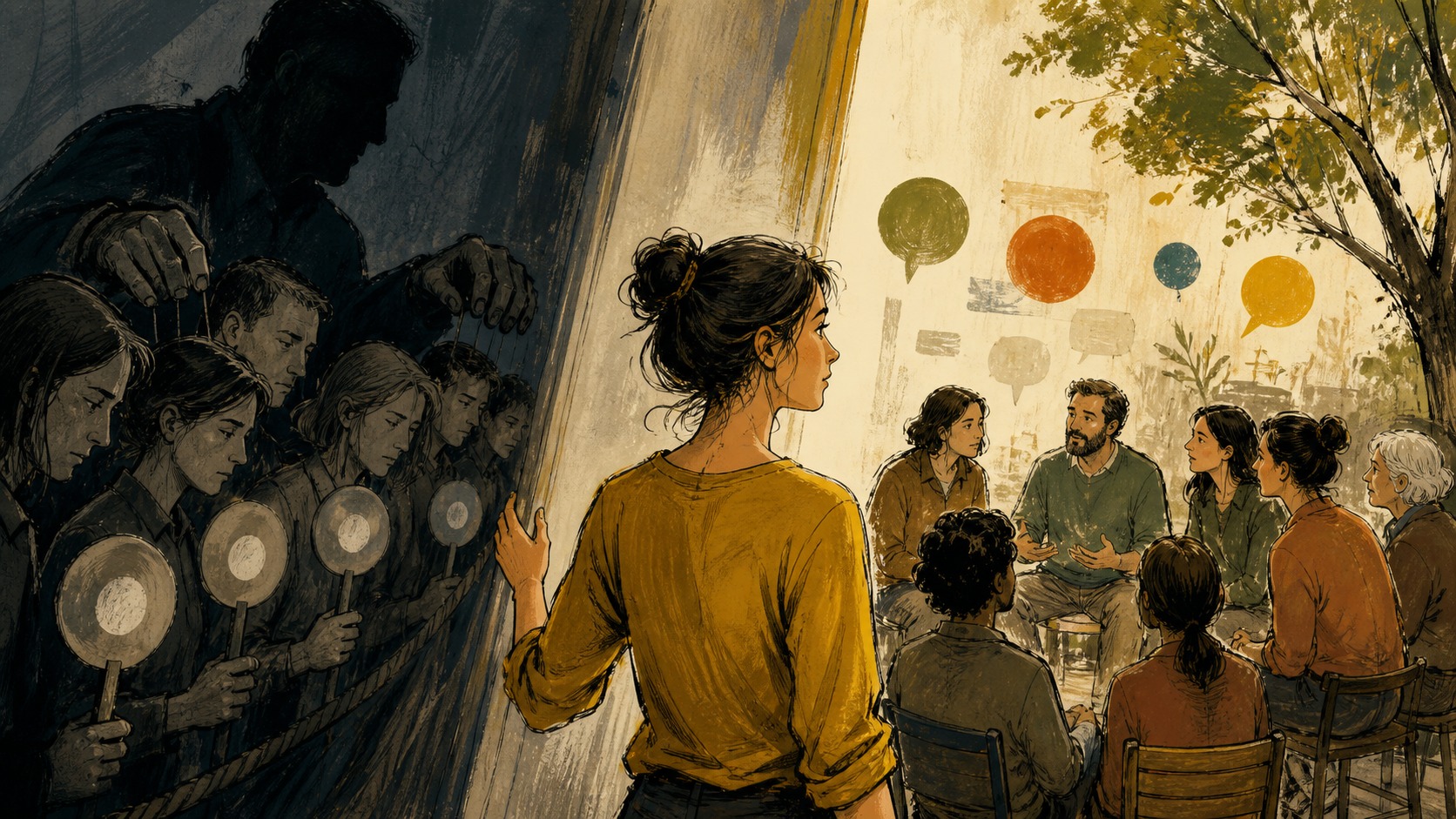
Set a short meeting, circulate the questions and make it safe to request change. Grandparents need explicit permission to discuss pain, money and limits without fearing loss of contact. Parents can describe work and authority constraints. Children can contribute through conversation, writing, drawing a weekly map or speaking to a trusted adult. A facilitator separates the review from older family disputes that cannot be resolved there.
UNICEF guidance on adolescent participation emphasises voluntary, safe and meaningful involvement. A child therefore knows why a question is asked, who will hear the answer and how adults will report back. The child is not asked to choose a deserving caregiver, settle adult conflict or disclose personal material in an unsafe group.
Sort observations from explanations#
Use three headings: observed fact, possible explanation and unmet need. “Two pickups were confirmed after the deadline” is an observation. “Grandad no longer cares” is an explanation that may be wrong. “We need an acknowledgement route during his clinic appointment” is a need. This structure lowers defensiveness because it invites investigation rather than a verdict.
Absolute words often indicate missing detail. Replace “you never answer” with dates, channels and expected response times. Replace “I do everything” with a list of scheduling, transport, supervision, spending and emotional work. If nobody kept a record, acknowledge the uncertainty. Design a small observation period instead of rewarding the person with the most confident memory.
Case 1: perfect attendance and an invisible morning gap#
Eleven-year-old Theo stayed with his grandmother Ruth before school twice a week. His attendance was perfect, so the family assumed the routine worked. During a review, Theo said he set three alarms, prepared Ruth's medication box and skipped breakfast to catch the bus. Ruth had arthritis and believed Theo enjoyed being responsible. His father saw punctual arrivals and did not know the child was managing the household sequence.
The family separated age-appropriate independence from adult responsibility. Theo could choose clothes and pack his school bag. His father would prepare breakfast and check the medication arrangement with Ruth's healthcare team; an adult neighbour would be the morning contact; Ruth would no longer rely on Theo for her medicines. They tracked breakfast, bus arrival and whether Theo performed adult tasks. Attendance remained steady, while his anxiety before those mornings fell.
Review safety, participation, burden and resilience#
Four lenses prevent a single metric from declaring success. Safety covers hazards, conflicting instructions and uncertain ownership. Participation covers education, friendships, activities and the child's voice. Burden includes time, cost, sleep, pain and emotional pressure. Resilience asks whether the plan survives illness, closure, transport disruption or a changed shift. A gain in one lens does not automatically justify serious harm in another.
Assess the journey and decision, not a date of birth. A safe contribution may depend on a level entrance, a short walk, daylight, a lighter bag, a quiet waiting space and recovery time afterwards. One grandparent may decline the bus route yet reliably meet a child at the library. Practical adaptation protects autonomy because it lets the person choose a role that fits rather than defend an unrealistic one.
Choose measures that lead to decisions#
A small number of indicators is usually enough. A handoff may need acknowledgement time, lateness and backup use. Homework may need duration, level of adult prompting and conflict. Caregiver sustainability may need pain, sleep, missed personal appointments and recovery by the next day. Each measure should answer a question and connect to a threshold that triggers action.
Numbers need short explanations. Three cancellations tell the group about frequency; noting that an accessible vehicle failed explains where to intervene. Do not collect intimate information merely because it is available. Agree who records, who sees it and when recording ends. A two-to-six-week sample can expose patterns without turning family life into constant surveillance.
Case 2: the sports programme supported by unpaid driving#
Asha attended wheelchair basketball with her grandfather Dev. The family described the programme as free, but Dev paid for parking, drove through rush hour and lifted equipment from a storage room. He concealed shoulder pain because Asha had finally found a team. The club recorded excellent attendance, and Asha's mother believed transport was the only contribution required.
The review made money, lifting and recovery visible. The club moved equipment to court level; the family prepaid parking; another parent covered one return trip; Dev attended on alternate weeks and stopped if pain lasted into the next morning. They tracked cost, lifting, delay and pain for six weeks. Asha remained on the team, and Dev could enjoy sessions without being the infrastructure that made participation possible.
Address harm without turning a person into the harm#
A no-blame review still names impact. If a child was frightened, private information was shared or a caregiver was injured, the group records what occurred and what repair is needed. It asks which action and condition contributed, not which family member is fundamentally bad. Repair may include an apology, reimbursement, corrected records, restored privacy or a paused task.
Specific accountability sounds like: “We changed the pickup without confirmation, you waited without knowing who was coming, and by Friday we will create an acknowledged backup route.” The affected person does not have to comfort the speaker. If information suggests abuse, neglect or immediate risk, relatives should not conduct a private investigation. Preserve the account and follow relevant safeguarding duties.
Examine the caregiver's life beyond the task#
A useful review traces the hidden trade-offs behind each reliable-looking arrangement. Did someone postpone physiotherapy, abandon a weekly class, spend unplanned money or stay awake waiting for messages? Those observations lead to a different decision than a vague promise to try harder: shorten the shift, move the handover, pay for transport or name another adult. A relationship remains generous when declining an extra task is safe and understood.
Agree early warning signs: two cancelled appointments, persistent pain, unsafe driving confidence, new irritability, debt or no recovery after a care day. A named backup activates when a threshold appears. “We will find someone” is not a backup; the person must be willing, authorised and able to travel. Reducing a task can preserve affection by removing the need to conceal strain.
Case 3: two versions of a food-allergy plan#
Seven-year-old Noah spent Saturdays with grandmother Celia. After a clinical appointment, his mother sent a screenshot describing one change to the allergy plan. Celia kept the older printed sheet because it contained the emergency contacts. At a community event, the documents appeared to conflict. Celia chose the more cautious option and called the mother, but Noah saw her uncertainty and later refused to attend without carrying both pages himself.
The review focused on version control rather than accusing Celia of poor memory. The family obtained one authorised, dated plan, removed obsolete copies, checked that the community venue had the relevant information and rehearsed the escalation route. Noah knew where the plan was but did not carry responsibility for reconciling it. The American Academy of Pediatrics provides resources for grandfamilies, whose care arrangements often require clear access and health coordination.
Ask whether authority matched responsibility#
Grandparents may perform daily tasks without holding every consent or school decision. Review whether they received enough information and authority for the action requested. Someone should not be expected to collect a child without authorisation, obtain treatment without the relevant documents or change an education plan through informal messages. Mismatched responsibility creates predictable failure and then unfairly locates it in the caregiver.
Map four roles: decision owner, task owner, supporter and backup. One person may hold more than one role, but each role must be named. Schools, clinics and programmes receive the minimum relevant information and a current contact. Old versions are removed. Coordination improves when boundaries are visible, because people know what they can do and when to escalate.
Include repair questions in every review#
Ask: Did anyone lose money, time, privacy, confidence or an opportunity because of the arrangement? What would put that right? A grandparent may need fare reimbursement; a child may need adults to acknowledge that a missed handoff was not their fault; a school may need corrected contact details. Small repair prevents resentment from becoming part of the next trial.
Repair also restores choice. If a grandmother agreed under pressure, the group asks again with real alternatives available. If a child participated without understanding, adults explain what was decided and offer another way to comment. Responsibility becomes credible when it changes the conditions that produced the problem rather than demanding a promise to “try harder.”
Choose maintain, adapt, pause or end#
Every review should produce one of four clear outcomes. Maintain when the result is real and burdens are sustainable. Adapt one or more elements and test again. Pause while waiting for assessment, permission, funding or recovery. End an unsuitable task while preserving other forms of contact. Saving the original arrangement is not always the best measure of family success.
Write the decision with owner, date, channel, backup and stop rule. Explain the change to the child in plain language. A pause should include what happens meanwhile and when adults will reconsider. Reversibility makes honesty easier: today's limit does not define the relationship forever, and an activity can expand again when health, resources or circumstances change.
Close with learning rather than a scorecard#
A one-page note can record the observed outcome, two lessons, any repair, the revised action, stop thresholds and the next review date. Share only the portion each school or service needs. The child receives an answer. Do not rank relatives by commitment or praise the person who hid the greatest cost. Recognise concrete contributions and concrete limits.
No-blame review is not low accountability. It asks people to own actions, repair effects and redesign conditions without reducing anyone to a difficult day. Children gain predictability, parents see the real work and grandparents can contribute with voice and boundaries. A resilient care network does not claim it will never fail. It notices earlier, speaks more precisely and changes course before one person pays for keeping the appearance of success.