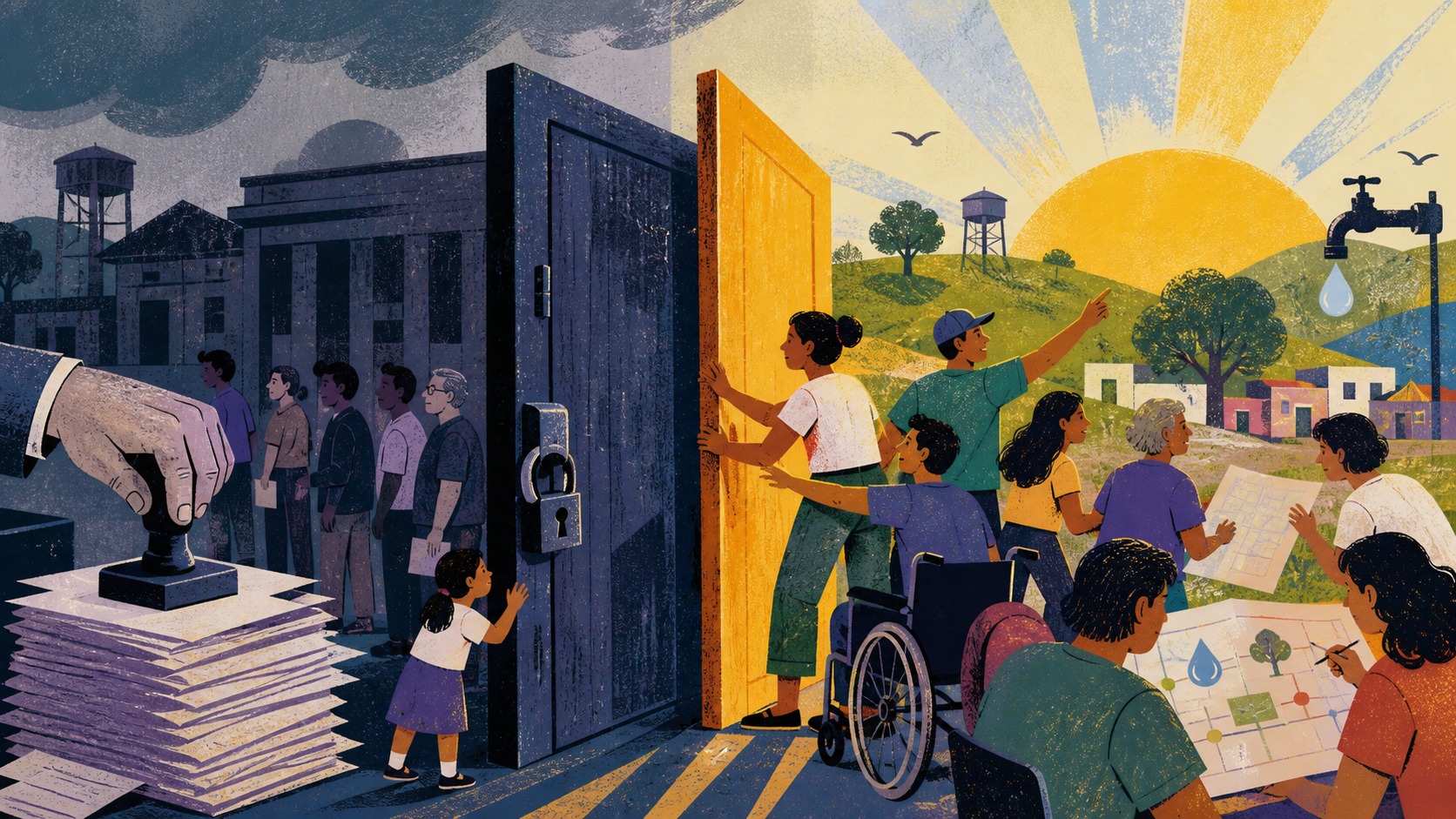
On Thursday night a family has solved dinner, yet several things remain that nobody can see on the table: checking whether medicine is running out, remembering Friday’s shift change, deciding who will ask about the school trip, and planning for rain. Often one person holds that chain while another completes isolated errands. Mental load is not a personality trait or a list of complaints. It is the work of noticing, deciding, remembering, and reviewing. Making it visible can distribute it more fairly and with less supervision.
Look at the week before dividing it#
A visible task has a clear edge: start a wash, carry a school bag, buy fruit. An invisible decision begins earlier and ends later: noticing that sports clothes are missing, calculating when to wash them, choosing a size, checking the calendar, ordering the item, and confirming delivery. If a household asks only who “helps,” the person who anticipates still coordinates the system. For seven days, note preparation, action, and follow-through around meals, health, school, bills, transport, care, and family contact. This is not evidence for winning an argument. It is a way to discover the whole route of an issue.
Next to each issue, record what triggers it, which date matters, what information is needed, and how everyone knows it is closed. A paediatric appointment may involve noticing a symptom, finding a time, saving documents, arranging travel, hearing instructions, and monitoring later care. That description prevents a household from sharing only the journey. The World Health Organization notes that gender inequalities affect health and wellbeing; ordinary distribution of labour belongs to that setting. Recognising this does not require diagnosing a family. It requires noticing who manages repetition.
Separate doing, deciding, and sustaining#
The inventory becomes clearer when it has three layers. Doing is the concrete action: cooking, calling, driving, cleaning. Deciding is setting priorities, budget, timing, or alternatives. Sustaining is remembering, warning, answering surprises, and checking that the result works. Different people may hold different layers, but the layers must be explicit. If one person cooks while another decides the menu, monitors allergies, plans shopping, and absorbs complaints, they are not carrying the same share. Naming the layers gives language to discomfort that otherwise appears only as end-of-day irritation.
Notice too what is frequent, what is urgent, and what looks minor until it fails. Making one snack may take ten minutes; coordinating five weekly snacks includes shopping, preferences, containers, messages, and restocking. The OECD’s work on gender equality explains why unpaid time matters for opportunity and wellbeing. A household does not need a national statistic to recognise imbalance, but it does need ordinary facts that prevent a conversation being ruled by selective memory. Ask: which part is heavy, what happens if the person who remembers is absent, and what could be simplified?
Use one scene instead of a general accusation#
Conversations often stall when they open with “everything falls on me” or “you never take responsibility.” The hurt may be real, but the other person can defend themselves with isolated examples and both people end up debating memory. Choose one scene instead. On Tuesday at ten at night, school material was missing; one person found the list, chose an alternative, sent a message, and left earlier the next morning. Describe sequence and impact without assigning motives. Then ask which part was invisible and what would have allowed it to be shared earlier.
A safe conversation has a time limit and a modest aim. Twenty minutes after dinner, without children hearing an intense dispute and without open screens, can be enough to choose one area. The American Psychological Association’s material on work-life balance is a reminder that overload is not repaired by efficiency alone. Rest, personal time, and the ability to disconnect are needs. Where there is fear, control, violence, or persistent conflict, domestic allocation must not be treated as a substitute for specialist support and safety.
A visible task has a clear edge: start a wash, carry a school bag, buy fruit.
Give complete ownership that can be reviewed#
The most freeing agreement is often complete ownership of one area for a short period. A person taking weekly shopping does not receive daily instructions or need permission for every choice within an agreed budget; they observe supplies, propose adjustments, shop, and correct problems. The other person stops reminding, supervising, and rescuing unless there is real risk. Ownership is not isolation: health, significant money, and children’s decisions need shared information. It means routine follow-through no longer automatically returns to the person who previously held control.
For ownership to work, the area needs resources. Share calendars, contacts, budgets, priorities, and passwords where it is safe. The UN Women publications library gathers evidence on care and inequality; a practical lesson is that collaboration cannot be celebrated when one person keeps all knowledge and another only performs instructions. A short note containing allergies, sizes, phone numbers, and critical dates prevents domestic knowledge from being trapped in one mind. Documentation is not cold; it is a route to continuity.
Run a two-week experiment#
Do not redesign an entire household in one night. Pick a medium-complexity area: Monday-to-Thursday dinners, school clothes, activity coordination, or regular bills. Define the owner, decision room, budget, warning point, and how relief can be requested. For example, Alex manages dinners for two weeks; Alex chooses menus and shops before Sunday, warns on Friday if an exchange is needed, and consults on allergies or exceptional spending. The agreement works because it has a beginning, a practice, and an exit. Without room it is an order; without warning it is abandonment; without review it is a vague promise.
During the experiment, resist correcting every difference in style. A list may look different, clothes may be folded differently, and a snack may not resemble the one you would have made. Before intervening, ask whether the result is safe, sufficient, and compatible with shared values. Immediate criticism returns the load to the person trying to release it. At the same time, autonomy is not an excuse to ignore consequences. If the agreement fails, name the failure, repair what is possible, and adjust the system. Learning a new area includes mistakes without making them evidence of incompetence.
Plan for shifts and surprises#
The load becomes heaviest when a day changes without warning. A school call, fever, a meeting that runs late, or a relative needing help forces rapid decisions. Prepare a simple protocol before it is needed: who receives the first alert, what information they share, which commitments can be cancelled, who can be called, and when people will speak again. A protocol cannot remove uncertainty, but it stops every emergency from landing on the person considered “most organised.”
The protocol must respect work and economic reality. Not everyone can leave a meeting, work remotely, or pay for outside help. Look at leave, support networks, and differences in power without blaming the person with less room. The International Labour Organization’s work-and-family resources place care in a social as well as private context. At home, this becomes: who absorbs the cost today, how will time or rest be compensated, and what earlier warning could reduce harm next time? An answer may not be symmetrical, but it should be recognised and negotiated.
Make follow-through visible without policing#
Sharing information is not demanding constant reports. A family board, calendar, or weekly note is useful when it reduces repeated questions, not when it becomes surveillance. Choose a few facts: appointment confirmed, shopping done, material pending, relief needed. Do not record every domestic gesture to win a future argument. The aim is for anyone to orient themselves and for nobody to act as a switchboard. If the method generates more anxiety than clarity, simplify it.
A ten-minute end-of-week review can ask four questions: what became easier, which decision stayed hidden, what unexpected cost appeared, and what will we keep or change? Include rest, not only output. Perhaps one person owned an area but lost their only free evening; perhaps the other stopped reminding but did not know how to trust. Fairness does not require an identical snapshot every day. It requires differences to be discussed and no one to vanish behind “you do it better.” Illness, seasonal work, exams, grief, and moving house all require real adjustment.
Money, standards, and care#
Many arguments about mental load conceal different standards. One person wants meal planning; another accepts improvisation. One wants to buy new to reduce risk; another prefers repair or borrowing. Before deciding who is right, separate safety, need, preference, and appearance. Child safety, health, or an overdue bill are not negotiated like drawer order. Where money is involved, set an independent spending limit and a way to consult on larger costs. That reduces both control and surprise.
Care also includes how people speak about ability. “You cannot organise” and “you are too demanding” turn temporary difficulties into identities. Replace labels with observations: a date was missed this week, this system depends on reminders, this budget does not stretch far enough. The NHS mental health information highlights the value of seeking support when stress affects daily life. A household conversation can accompany someone, but it does not replace professional care when that is needed.
A first agreement that fits real life#
Start today with one recent scene and three columns: task, decision, and follow-through. Mark who did each part, which information was missing, and what result was sought. Choose one area for two weeks, provide adequate access and criteria, agree a reasonable warning, and reserve a short review. Do not pursue perfect distribution or total confession. Pursue an observable improvement: the person who held a chain can stop thinking about it for several days without the chain breaking.
Co-responsibility is visible in the ability to be absent without the system punishing anyone. If the experiment fails, do not conclude that sharing is impossible. Ask what part was missing: information, time, authority, support, or an explicit standard. Review the agreement and try again with a smaller area. For the next step, read five steps to redistribute without policing.