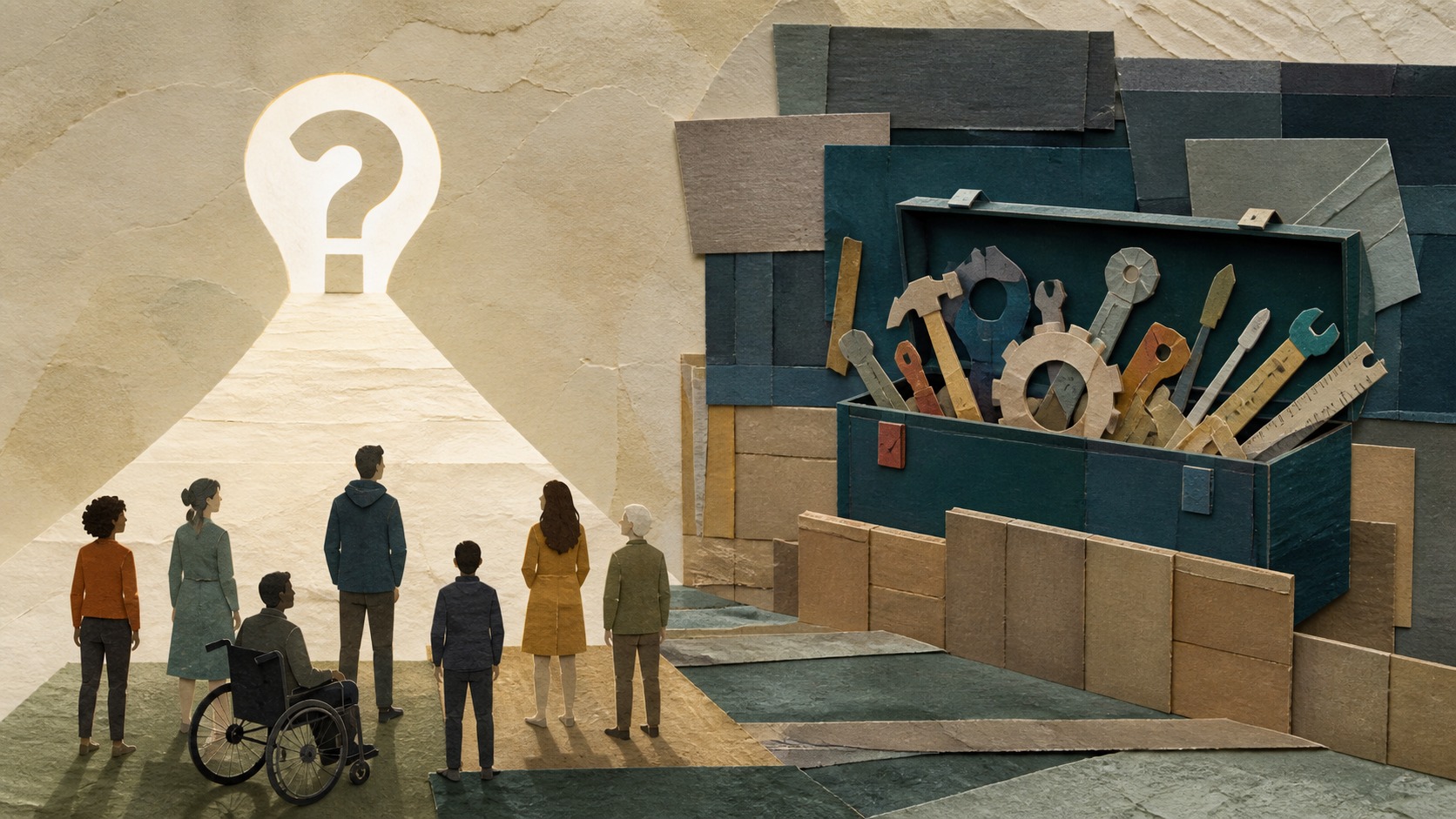
Toilet learning works best when adults treat it as a set of skills, not a contest of willpower. A young child has to notice an internal signal, pause something interesting, reach a bathroom, manage clothing, relax, clean up and ask for help when needed. Those abilities do not mature on the same day. A realistic plan makes the environment easier, protects the child's dignity and uses accidents as information. It can be firm about health and hygiene without using force, ridicule or an artificial deadline.
Readiness is a pattern, not a birthday#
Age alone cannot show whether a child is ready. Useful signs include staying dry for somewhat longer stretches, noticing a wet or soiled diaper, showing interest in the toilet, sitting and standing with reasonable stability, following a simple sequence and communicating a need through words, signs or pictures. A child does not need every sign before exploring, and one enthusiastic afternoon does not require the family to remove diapers immediately.
Adults need readiness too. They need spare clothes, time for calm assistance and enough agreement to avoid changing the rules from hour to hour. Starting during a move, a new sibling's arrival or a major childcare transition may overload everyone. Families can still prepare the room and vocabulary, then begin active practice when daily life is more predictable. Waiting deliberately is different from ignoring the child's interest.
Break the task into teachable steps#
“Use the toilet” hides a long sequence: detect pressure, decide to move, tell an adult, get there, lower clothes, sit securely, release urine or stool, wipe, dress, flush and wash hands. Observation may show exactly where support is needed. A child who tells an adult after urinating has already connected the event with language; the next goal might be noticing during the event, not achieving an entire dry week.
Urine, bowel movements and nighttime dryness should be considered separately. Sleep dryness depends partly on maturation and may follow daytime learning much later. Keeping nighttime protection does not cancel daytime progress. Likewise, a child may urinate comfortably in a toilet yet request a diaper for stool because the posture, sensation or previous pain feels threatening. A good plan addresses the specific barrier.
Observe routines without policing the body#
For several days, note broad patterns: after waking, following meals, during concentrated play or before a bowel movement. Look for pausing, squatting, hiding, crossing legs or asking for a change. The record should be brief and private. Its purpose is to place a few helpful opportunities in the day, not to make a child feel watched every minute.
Include comfort in the observation. Hard, painful stool can lead a child to withhold, which can make the next bowel movement even more difficult. The National Institute of Diabetes and Digestive and Kidney Diseases overview of constipation in children describes symptoms and reasons to seek care. When pain is part of the pattern, a behavioral campaign without medical attention is not an adequate response.
Make the bathroom physically accessible#
A stable potty or a toilet insert with a secure footstool reduces fear and supports posture. Dangling feet can make it hard to relax for a bowel movement. The child can help choose between safe options, but adults remain responsible for stability and cleaning. A short book may help someone settle; an endless collection of entertainment can make it difficult to distinguish a useful sit from prolonged waiting.
Choose clothing that the child can move quickly. Elastic waists and fewer layers make independence more likely than stiff fasteners or overalls. Store complete changes of clothes in the places the child spends time, including socks. On outings, bring a discreet wet bag and learn where bathrooms are. Preparation communicates competence when it is presented matter-of-factly rather than as a prediction of failure.
Build a small, repeatable routine#
Use the observed pattern to choose two or three invitations, such as after waking and before leaving home. A clear statement—“We try the toilet before we go”—often works better than asking about urine every five minutes. Repeated questions teach some children to say no automatically and pull adult attention away from their own sensations.
Keep sitting brief and calm. If resistance is mild, offer bounded choices: potty or toilet, first the bathroom or first putting two toys away. If the child panics, reports pain or fights physically, stop and investigate. Holding a child down may produce a bowel movement, but it does not teach safe body awareness. Respectful practice still has structure; it simply rejects coercion as the teaching tool.
Use language that keeps bodily functions ordinary#
Families can choose familiar words while also teaching accurate names for body parts. Urine and stool require hygiene, but they do not make the child dirty or bad. A neutral statement such as “Your pants are wet; we will get dry clothes” provides information and a next step. Dramatic disgust can encourage hiding and make it harder for a child to report symptoms.
Praise should describe effort or skill: “You noticed,” “You pulled your trousers down,” or “You asked me to help.” Identity-based pressure—“big children never need diapers”—is fragile because every accident then threatens status. A child who needs protection at night or support after illness remains capable. Warmth should not depend on what came out of the body or where it landed.
Case 1: Maya waits until play is urgent#
Maya can use the potty, but she has accidents while building elaborate train tracks. Her caregiver starts asking constantly whether she needs to go. Maya says no without checking and becomes angry at every interruption. For four days, the adult observes instead and notices that accidents cluster shortly after the afternoon snack.
They create one predictable pause after snack. Maya parks a favorite train at a “station” to hold her place, tries the bathroom, and returns quickly. The adult stops the stream of questions. Their two-week goal is not perfection; it is for Maya to tolerate the pause and sometimes initiate it. Fewer arguments and earlier noticing are meaningful outcomes even if spare trousers are still used.
Case 2: Theo withholds stool#
Theo urinates in the toilet but hides when he needs a bowel movement. His family removes access to diapers, hoping necessity will speed progress. He withholds for several days, passes a painful stool and becomes more fearful. The adults change course and contact his healthcare professional because persistent withholding and pain call for assessment, not stronger consequences.
While following clinical advice, they allow Theo to use a diaper in the bathroom. Once bowel movements are soft and regular, they offer gradual steps: standing in the bathroom, sitting on the potty while wearing the diaper, then changing the arrangement only when he is comfortable. Their first success measure is painless stool. Restoring safety makes later learning possible.
Case 3: Sara succeeds at home but not in childcare#
Sara uses a home potty yet rarely asks at childcare. The classroom toilet is larger, hand dryers are loud, and she does not know how to interrupt the teacher. Rather than accusing her of choosing accidents, the adults map the differences. They provide a stable footstool, teach a simple bathroom card and offer a discreet visit before outdoor play.
Home and school use the same short phrase and keep accessible spare clothes. For three weeks they track requests, arrival and needed assistance, not public stars or comparisons. Sara begins handing over the card before she can manage all clothing independently. The plan has improved functional communication, which is a more useful milestone than demanding identical behavior in two very different settings.
Handle accidents with a dependable sequence#
Pause, finish in the bathroom if necessary, change, clean, wash hands and return to the previous activity. The tone can be kind and unremarkable. Long explanations during cleanup rarely improve learning. “Why didn't you tell me?” may sound reasonable, but a learner often cannot reconstruct the missed internal signal and may answer only to escape adult disappointment.
Participation is appropriate when it is proportionate: choosing dry clothes, putting wet items in a bag or wiping a small spill with help. Cleanup becomes punishment when it is deliberately prolonged, paired with a lecture or used to shame the child in front of others. Afterward, adults can alter one condition—an earlier invitation, simpler trousers or a bathroom closer to play—and observe whether it helps.
Coordinate caregivers around a short plan#
A useful shared plan lists the child's words or signals, routine opportunities, assistance with clothing, hygiene steps, the agreed accident response and any health concerns. Every setting need not be identical. Childcare may operate around group transitions while home follows individual cues. The essential consistency is dignity, access and a common response to pain or strong fear.
Reports should be factual and private: “One accident after nap; accepted help changing” is more actionable than “bad toilet day.” Avoid discussing details within earshot of peers. The toilet-training resources from ERIC, the Children's Bowel & Bladder Charity include practical materials for families and education settings. A weekly review is often more useful than reacting to every isolated day.
Use rewards carefully#
Stickers can mark a controllable action such as sitting, communicating or washing hands. A large reward for staying completely dry places pressure on an outcome the child cannot always control and may encourage withholding or concealment. Never remove a reward already earned because of a later accident. The system should clarify a step, not turn normal elimination into a high-stakes transaction.
Participation and descriptive attention are often enough: choosing underwear, flushing with help, or hearing “You stopped playing and came with me.” If rewards dominate conversation, cause bargaining or produce distress, simplify the plan. Motivation should support awareness and independence while preserving the child's ability to say that something hurts or feels frightening.
Know when to seek professional advice#
Contact a healthcare professional about painful urination or bowel movements, blood, very hard stool, fever, repeated urinary infections, unusual thirst or urination, a swollen abdomen, persistent withholding, frequent stool leakage or a sudden sustained loss of skills. Medical evaluation is also important when toilet difficulties affect eating, sleep or participation. These signs should not be treated as disobedience.
For general guidance, the American Academy of Pediatrics toilet-training information emphasizes child readiness, while the UK National Health Service guide offers practical preparation. Children with motor, sensory, developmental or communication disabilities may need individualized seating, visual sequences and additional time from professionals who know their needs.
A two-week starting plan#
Use the first three days to observe, gather supplies and agree on language. During the next four days, offer two predictable opportunities and practice clothing skills without requiring elimination. In week two, keep the helpful routine and add one manageable challenge, perhaps a short outing or asking another caregiver. Decide about naps and nighttime separately rather than removing every form of protection at once.
At the review, ask whether tension has decreased, whether the child recognizes any signal, which steps require help and whether bowel movements remain comfortable. Continue when small gains are visible. Step back if fear, withholding or conflict grows. A pause can be a competent adjustment, not a verdict that the child failed. Record only enough information to guide the next decision.
Define progress broadly enough to see it#
Progress includes entering the bathroom calmly, communicating after an accident, lowering clothing, sitting securely, asking for privacy, washing hands and returning to play without shame. A dry-pants count misses much of this learning. It can also reward holding urine or stool, which is not the goal. Brief observation over a defined period is more humane and useful than permanent monitoring.
The child's body remains the child's, while adults remain responsible for health, access and hygiene. Those principles can coexist. Adults provide routine, safe equipment and clear limits; children receive time, respectful help and medical attention when needed. With that balance, toilet learning becomes ordinary skill-building rather than a test that either the child or caregiver must win.
Toilet learning works best when adults treat it as a set of skills, not a contest of willpower.