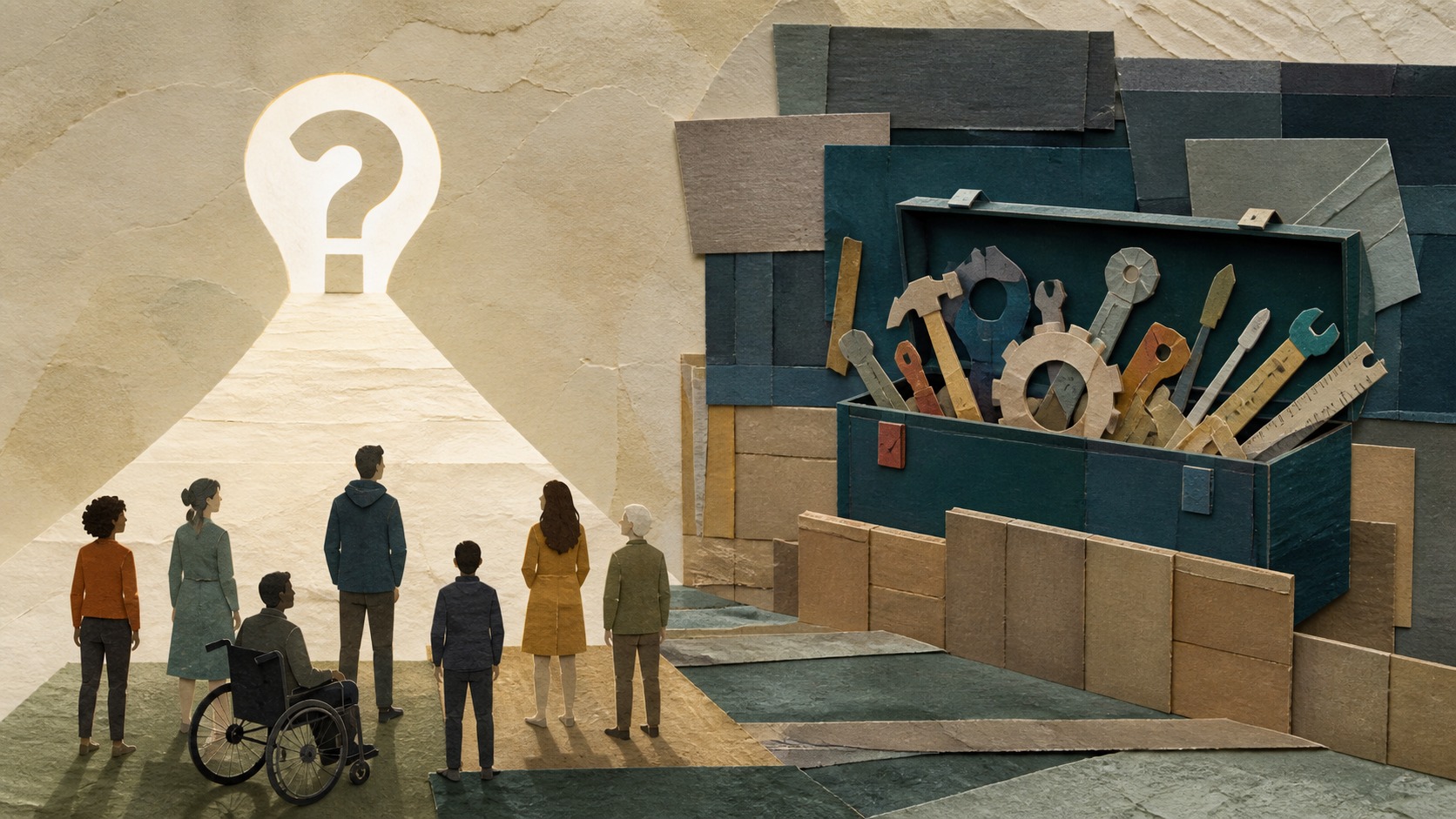
Reviewing toilet learning is not a trial of a child or a score for caregivers. It means reconstructing one event, separating health, environment and learning, repairing any shame and choosing one small change that can be observed. Progress is rarely linear: constipation, a move, a noisy restroom or difficult clothing can disrupt a skill that appeared settled. These questions and cases turn accidents into useful information, protect relationships and give the child meaningful participation without overlooking signs that need professional attention.
Progress is rarely linear: constipation, a move, a noisy restroom or difficult clothing can disrupt a skill that appeared settled.
Begin with description rather than a verdict#
A useful review records what happened beforehand, what the child communicated, what access existed, what assistance was offered and how the event ended. “Failed again” combines observation with judgment. “Asked after the waistband was wet and accepted help changing” identifies two existing skills and one point that may need support.
Adult actions belong in the review too. The invitation may have come late, the bathroom may have been locked, or a joke may have increased tension. Acknowledging this does not weaken authority. “I spoke angrily, and that was not fair” is a repair. Children learn that responsible adults also correct their behavior.
Separate the skills hidden inside one routine#
Noticing a body signal, pausing play, communicating, reaching the toilet, handling clothes and completing hygiene are different tasks. Urine, bowel movements and nighttime dryness can follow separate timelines. A single accident count hides those differences and may cause adults to restart the whole process when only one link needs help.
If awareness comes late, predictable opportunities may help. If requesting is hard, a word, gesture or card can be practiced. If the child arrives but cannot open a fastener, change the garment or practice outside urgency. Precision respects what the child already knows and prevents one incident from becoming a story of total regression.
Collect a small amount of time-limited information#
For seven to fourteen days, note approximate time, context, request, access, discomfort, assistance and outcome. Do not photograph clothing or circulate intimate details. The log begins with a specific question and an end date. Once it has supported a decision, keep only the necessary conclusion under the setting's privacy rules.
The NIDDK description of childhood constipation assessment includes routines, toilet learning and stool appearance in the history clinicians may consider. A brief record can improve a consultation, but it does not diagnose a condition or authorize caregivers to change medication.
Hear the child without conducting an interrogation#
At a calm time, ask short questions: “What part felt uncomfortable?”, “What would help next time?” or “Would you like me to wait outside?” Drawings, gestures and avoidance also communicate. Repeatedly asking why an accident happened assumes intent and demands an explanation that the child may not have.
Participation does not transfer adult responsibility. A child can choose a signal, test a footstool or decide where spare clothes are stored. Adults ensure access, privacy, cleaning and healthcare contact. A promise to have no accidents is not informed consent or a plan; determination alone cannot control pain, sleep, sensation and maturation.
Ask questions that create testable possibilities#
What changed? Where does the skill work? What happens immediately before the difficulty? Which support already helps? Then check distance, noise, light, clothing, posture, hurry, pain, fluids and transitions. Different results at home and school show that conditions differ; they do not prove manipulation or dishonesty.
The American Academy of Pediatrics discussion of toilet-learning regression considers routine changes, stress and physical causes. That range prevents two shortcuts: treating every setback as emotional or treating every accident as defiance. Health, development and context can be explored together.
Repair the experience after an accident#
First provide privacy, clean clothing and the amount of help required. “Your clothes are wet; the spare set is here” gives information without a lecture. The child then returns to the activity. Putting clothes in a bag may be reasonable independence; it becomes punishment when paired with anger, exposure or disproportionate loss of play.
If an adult shouted, compared children or discussed the accident publicly, repair must name the action and the future change. “I should not have said that in front of the class; next time we will go somewhere private” is clearer than a conditional apology. Trust returns through the new behavior being repeated.
Check health before increasing pressure#
Hard or unusually large stool, pain, straining, withholding postures, repeated smearing or fear of bowel movements can point to constipation. The NIDDK lists symptoms and withholding behaviors. Overflow soiling should not be labeled laziness, and punishment can intensify fear and retention.
The NHS explains that regular soiling is often related to constipation and may not be intentional. Blood, vomiting, marked swelling, constant abdominal pain, weight loss, fever, painful urination or continuous dribbling need healthcare advice. Caregivers should not begin laxatives or enemas without professional direction.
Choose one small and observable adjustment#
A review ends with a hypothesis rather than ten new commands. For ten days, adults might offer one opportunity after lunch while preserving unrestricted access. Other trials include elastic clothing, a footstool, a private card or disabling an automatic dryer. Observe comfort, communication, access and needed assistance, not only dryness.
The plan names the person responsible, a substitute and a review date. If it helps, keep the central support while fading one secondary prompt. If nothing changes, revise the hypothesis without blame. If pain or distress increases, stop the experiment and seek advice rather than demanding longer compliance.
Case 1: an accident during a family celebration#
Leo, age three, had requested the bathroom for weeks and wet himself at a birthday party. His father announced that he was becoming a baby again. Later they noticed that Leo had drunk more, the bathroom was upstairs and he did not know whom to ask. One unfamiliar setting had not erased every skill.
His father apologized privately and stopped relatives' jokes. At the next visit they showed Leo the bathroom, agreed on a word with the host and stored spare clothes discreetly. Leo requested twice. The meaningful progress was restored safety and working access, not proving that another accident could never happen.
Case 2: stains mistaken for careless hygiene#
Marina, age five, came home from school with small stool stains. Adults kept telling her to wipe better. Review questions revealed large painful stools, withholding postures and fear of the school toilet. Her family took a short record to the pediatrician, while staff stopped discussing clothing in front of classmates.
With clinician-directed care, supported feet and an unhurried opportunity after lunch, pain gradually eased. The first goal was comfortable bowel movements and asking for assistance, not an immediate promise of clean underwear. Weekly review prevented adults from improvising treatment or confusing a symptom with unwillingness.
Case 3: a skill that seemed to vanish at school#
Samir, age four, used the toilet at home but had accidents in class. The teacher doubted the family's report, and the family accused school staff of inattention. Reconstructing one morning showed that Samir whispered “break,” had to ask publicly and could not manage the stiff stall latch.
They introduced a card, a private response and an accessible stall. For twelve days they recorded whether the request was noticed and how much help was needed. Accidents decreased, but the central improvement was that communication worked. Adults stopped using the child's body as evidence in their disagreement.
Recognize partial progress with four questions#
On the review date, ask whether the child is more comfortable, communicates more effectively, reaches the bathroom more easily and needs less help. Check pain, withholding, participation and conflict too. Reporting immediately afterward, accepting a change or sitting without fear may come before anticipation. Each step supplies useful evidence.
Milestones support conversations rather than issue individual verdicts. The CDC advises discussing developmental concerns with professionals. A broader loss of skills beyond toileting deserves attention. Comparison with siblings or classmates cannot replace consideration of this child's health, development and environment.
Prepare an adult conversation that protects the child#
Before meeting, each caregiver writes one observation, one uncertainty and one support that already works. The group chooses a single event and seeks an actionable decision rather than replaying every disagreement. The child does not carry messages between home and school or verify which adult is right. Bodily information travels through a secure, direct channel limited to people who need it.
Caregiver emotions deserve attention outside the bathroom. Fatigue, hurry, embarrassment and fear that the difficulty will continue can lead to constant prompting or excessive control. Naming that pressure allows adults to distribute laundry, spare supplies, healthcare communication and school support. Shared labor makes a calm response more realistic and prevents one person from becoming the permanent monitor.
Translate accusations into questions. “Never tells us” becomes “Which request can staff notice in a noisy room?” “Always succeeds at home” is described through timing, equipment, posture and assistance. Words such as lazy, stubborn, always and never do not identify an intervention. Accurate language makes a bounded experiment possible without assigning the child a negative identity.
The written agreement includes a neutral accident phrase, a working request, private access, health warnings and a date. Home and school may keep different equipment or schedules while sharing this core. Consistency does not require identical objects. It means the child encounters recognizable safety, assistance and respect wherever the learning takes place.
Close the review instead of maintaining surveillance#
A three-line conclusion records what was learned, which support remains and when another check is needed. Unnecessary logs are removed according to privacy requirements. Fade a support that no longer contributes, but keep one that protects posture or access without presenting it as evidence of failure.
The final question is not who performed badly. It is what this event shows and what adults can protect more effectively. That question can repair a relationship, reveal an environmental barrier, identify a health concern and define the next step. Autonomy grows when the body stops being a courtroom and becomes an experience supported with curiosity and care.