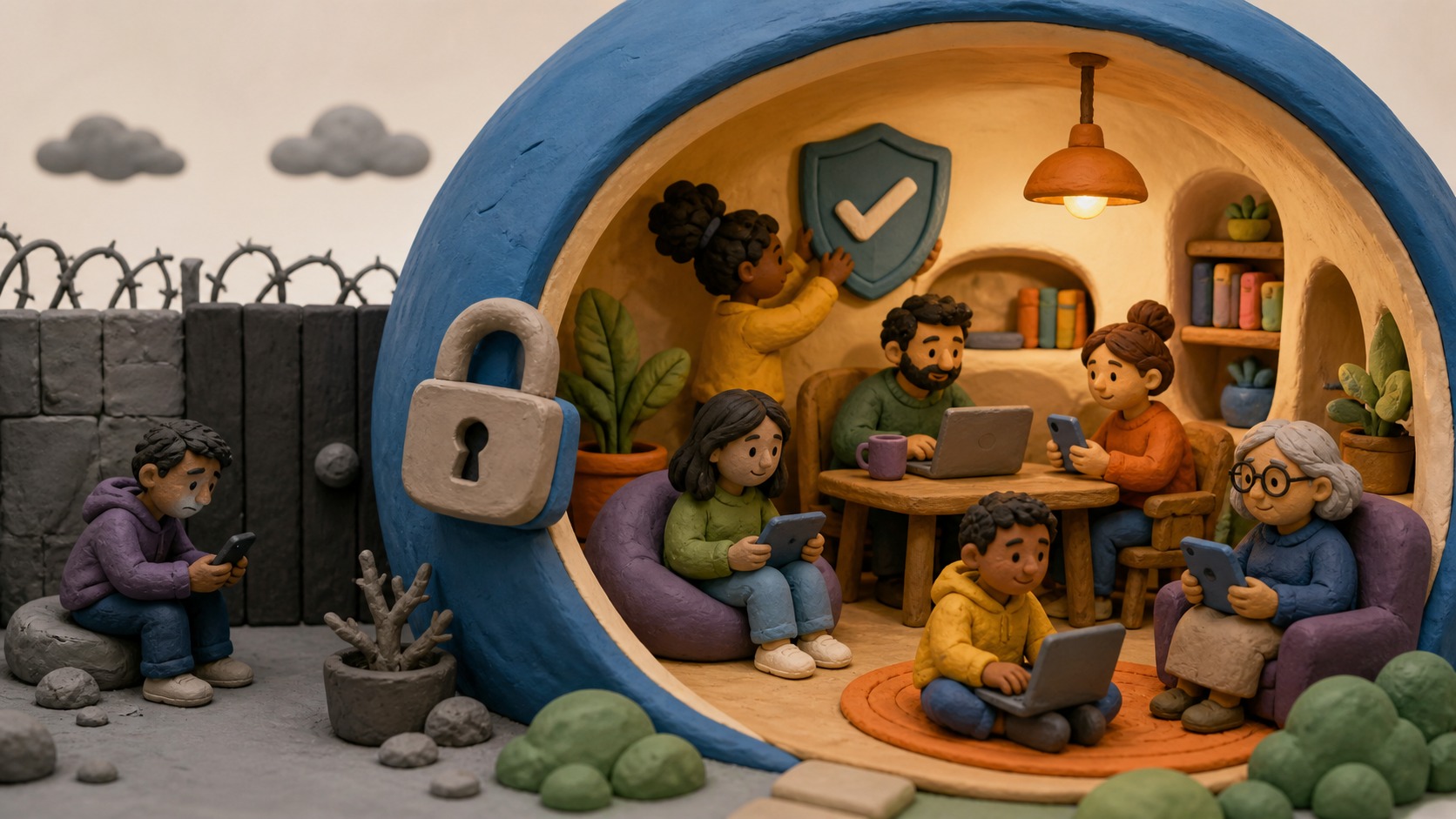
A useful limit is not measured by the silence it produces during a tantrum, but by what it makes possible afterwards: safety, an understandable signal, a possible repair, and an adult who does not add fear. In preschool, explosions can gather hunger, waiting, loss of control, pain, fatigue, or a demand that arrived too fast. This guide offers a way to review limits without turning every episode into a verdict. It helps decide what to keep, what to change, and when a concern deserves professional conversation. It does not diagnose at a distance or promise to remove anger.
Choose a goal that protects the relationship#
Before changing consequences, describe the problem in one concrete scene. “He behaves terribly” is not the same as “when swing time ends, he pushes other children and needs twenty minutes before he can walk to the exit.” The second statement supports a goal: safe hands, an accompanied exit, asking for one final turn, or recovering with less help. Working on one goal for two weeks is wiser than pursuing obedience, cheerfulness, speed and calm at once. Safety limits can be firm; an emotion does not need punishment in order to be acknowledged.
The goal must also include an adult task. That may be giving notice, showing a sequence, using fewer words, carrying water, or reserving a quiet spot. When the record only tracks what a child does, the outcome seems to depend entirely on willpower. Recording whether support was actually available exposes plan failures that do not belong to the child. Positive discipline does not mean giving in every time. It means explaining the boundary, preventing harm, and rehearsing an alternative that can work in a real situation.
Record a short sequence, not a label#
A four-column sheet is enough: what happened first, which signals appeared, what the adult did, and how it ended. Include sleep, constipation, fever, noise, a substitute caregiver, a goodbye, or a new demand. Write observable actions: “threw the cup,” “said no,” “hid beneath the table,” “accepted help with the coat.” “Manipulative” and “attention-seeking” may be hypotheses, but they are not facts another person can use.
The record should not demand impossible precision. Short, medium, and long bands are enough when timing makes the scene worse. After one week, look for patterns: does it begin before lunch, last longer when two adults give different directions, or become safer when the child can choose between two exits? Information should support one small decision. Changing five things at once can feel active, but it prevents families from seeing what reduced the load and what added confusion.
Prepare a transition before the peak#
Many limits fail because they are announced after the activity already feels lost. Try a visible, repeatable sequence: warning, final turn, closing action, next destination. Inés left breakfast to play and the table ended in shouting. Rather than repeating “sit down,” her father used a two-step card, offered yogurt or toast, and named what would happen after breakfast. The limit remained eating before play; the way it was anticipated changed.
During the first days Inés protested just as loudly, yet she began pointing to the card and asking for “one more” before getting up. That request was useful information, not an automatic reason to bargain. Her father could say, “we finish this bite and then play,” while keeping the plan without a long explanation. Check whether prevention fits the child’s age. A five-minute speech, three directions, or a false choice often adds frustration. Predictability works when it keeps a genuine choice inside a clear boundary.
Hold the moment without winning a battle#
When a nervous system is overwhelmed, extensive reasoning usually adds noise. Prioritize removing hazards, lowering your voice, allowing space if the child accepts it, and using one short statement: “I will not let you hit; I am here.” If a strike must be blocked or objects moved, use the least force needed and seek relief when safety exceeds your resources. Do not make isolation into a threat or require talking, hugging, or eye contact before the child can return to connection.
Four-year-old Damián cried when clothing felt scratchy and hit the wardrobe when adults rushed him. His school stopped saying “it is nothing” and offered two fabrics, a thirty-second pause, and a gesture for help. The limit was getting dressed to go outside, not enduring an unsupported sensation. Hitting declined because the adult prepared clothing and waited, not because shame taught a lesson. When the episode ends, return simply to the routine rather than demanding an apology under pressure.
Repair and teach after calm returns#
After regulation, rebuild the scene in a few sentences: “You wanted to stay. You pushed. I helped you stop. Next time you can show the final-turn card.” Repair can mean picking up, checking that another person is okay, asking for another chance, or practicing the alternative gesture. It need not become an interrogation about motives. Young children learn more from a repeatable sequence than from a long moral explanation while they are still tired or ashamed.
Adults repair too. If you shouted, threatened, or changed a rule confusingly, say so without placing the burden on the child: “I spoke too loudly; I will breathe and explain it better.” That does not remove the limit; it models accountability. The American Academy of Pediatrics advises families to avoid hitting, insulting, and threatening in discipline and to use strategies that teach. Its family guidance can help review practices that increase fear without building skill.
Look for functional gains, not a perfect curve#
A weekly chart can include danger, approximate intensity, time before participation resumes, alternative used, and adult effort. Bruna cried every afternoon when leaving class. In the first week she still cried nearly every day, but she stopped throwing her backpack, accepted looking at the calendar, and reached the car without being carried. Those changes show that support is creating an exit route, even though goodbye remains hard.
Compare similar days and keep context visible. A sleepless night, medical visit, or celebration can produce an isolated spike. A setback needs adjustment when danger, duration, or restriction of daily life grows across several weeks, or when the plan requires impossible vigilance. The NHS notes that tantrums are common in early childhood; that normality does not require families to ignore an unsafe or persistently limiting pattern.
Coordinate home and preschool in shared language#
Differences between home and classroom do not prove that someone is too soft or too harsh. Classrooms gather noise, waiting, groups, and transitions; home may gather fatigue and separation. Agree on two shared descriptions: what usually ignites the situation and which alternative adults want to see. For example, “ask for a break with a hand signal” and “safe hands when putting materials away.” Each setting may use different supports, but the central message should not travel through the child as a threat.
Share only necessary information and ask the child, through drawing, choice, or words, what feels hardest. UNICEF proposes discipline with clarity, connection, and consequences that teach rather than physical punishment. Its positive-discipline guide offers a way to test whether a response protects dignity. If pictures, records, or video are used, agree on consent, recipients, and deletion; documentation does not authorize exposing a child.
When to widen the question with professionals#
Talk with pediatrics, primary care, early childhood mental health, or the education team when there are injuries, lost skills, major sleep or eating changes, possible pain, very long or frequent episodes, exclusion from basic activities, or concern that does not improve after supports are adjusted. Bring one page with onset, contexts, recovery, strengths, and what has already been tried. The CDC developmental monitoring and screening resources can organize a conversation, but they do not replace individual assessment.
Urgency changes with breathing difficulty, poisoning, serious injury, loss of consciousness, immediate risk of serious harm, or an adult who fears losing control. Use local urgent services and prioritize safety. The World Health Organization recommends parenting support that reduces harsh practices; its parenting-intervention guidance places family support within prevention. Seeking help does not label a child. It opens more ways to understand what that child needs.
Make adult capacity part of the plan#
A record should also show whether an adult can use the plan after poor sleep, a workday, or an incomplete handover. A strategy that works only when someone has unlimited time and calm is not a moral failure. It is useful information: the plan needs fewer steps, a clearer relief phrase, or a safer pause that another caregiver can carry out. Planning for capacity protects the child and makes it less likely that exhaustion will decide the limit.
At the weekly review, note one moment that went better than expected. Perhaps the child accepted help after a minute, a sibling could wait with an activity, or an adult stopped before raising their voice. These observations identify existing strengths. They also give a clinician a fuller starting point than a list made only from the hardest episodes.
A closing that leaves a next step#
At the end of two or four weeks, choose whether to maintain, simplify, adjust, or consult. Keep what reduces risk and enables participation; simplify what no one can apply; change one variable if improvement stalls; consult when warnings or excessive burden appear. Do not remove a useful support just to test whether the child “can do it alone now.” First practice the alternative in safe situations, then widen it gradually.
A good limit leaves one verifiable sentence for next time: what the adult will do, which option the child will have, and which signal means an earlier review is needed.
When a plan holds that idea, tantrums stop being an obedience test and become information for caring with firmness and respect. Progress is not an anger-free childhood: it is more safety, more access to an alternative, and less loneliness inside a limit.Progress is not an anger-free childhood: it is more safety, more access to an alternative, and less loneliness inside a limit.