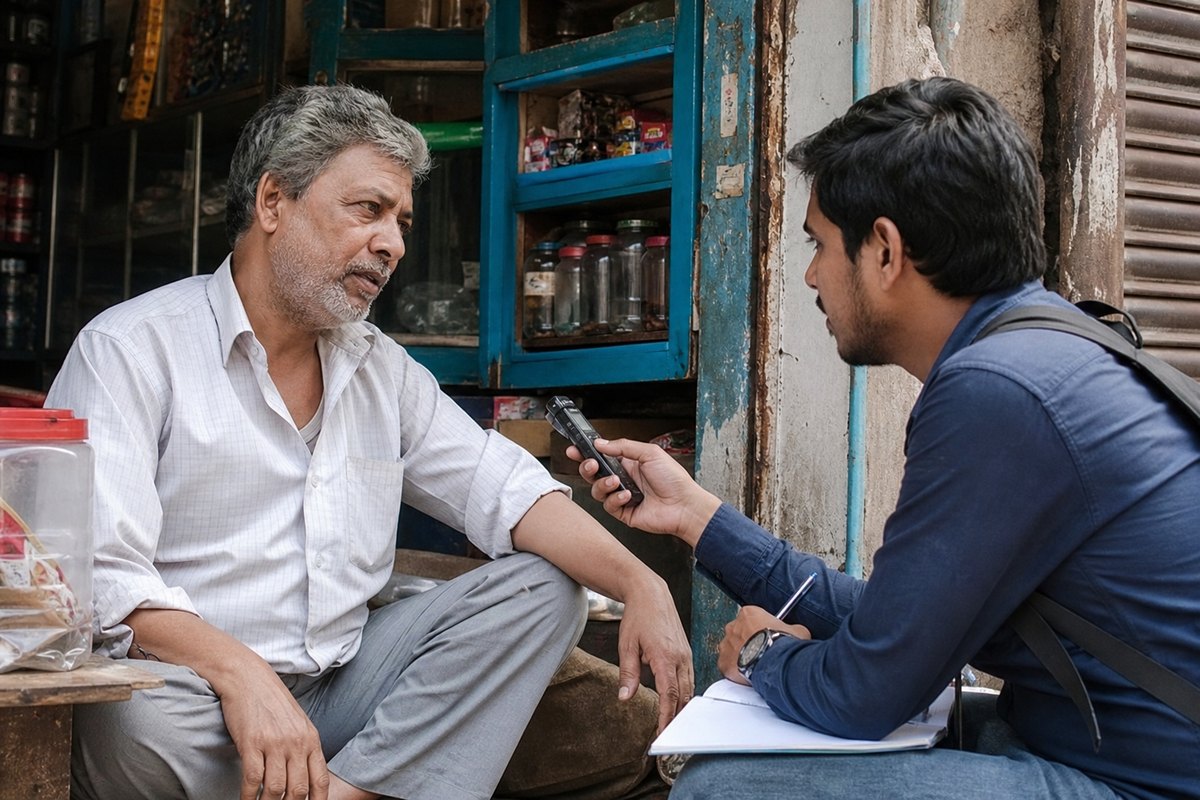
Participating beforehand changes decisions; participating afterwards only decorates them. In sport, that difference appears when an institution decides which bodily data it will collect, what it will use them for, and who will bear the cost of errors. Inviting athletes, families, or support staff after the form, contract, and dashboard are locked may improve wording, but it rarely changes the distribution of power. Involving them at the beginning can remove an unnecessary metric, alter a schedule, restrict access, or create a real route to challenge a decision. Participation is not a photograph of people being listened to; it is demonstrable capacity to influence.
A body produces signals that no dashboard can fully summarise. Sleep recorded by a device does not explain travel, caring work, or anxiety about selection. A perceived-exertion scale cannot by itself reveal whether somebody understood the question, protected their privacy, or feared losing playing time. Data can guide conversations and reveal patterns, but their meaning depends on context, instrument quality, and the conditions in which people respond. This article concerns governance and participatory design; it does not diagnose, prescribe training, or replace care from qualified professionals.
The decisive question is not how many people attended a consultation, but what could still change when they arrived. It also matters who was absent, which barriers explain that absence, and how disagreement was documented. An organisation can hold an open meeting while excluding anyone who works, needs interpretation, fears retaliation, or cannot disclose information in front of a coach. Designing participation requires paid time where appropriate, accessible formats, confidential channels, and an honest account of limits. Promising unlimited influence creates frustration; reserving all power makes the invitation ornamental.
Participating early means shaping the question#
The first opportunity comes before purchasing technology or defining indicators. At that stage people can ask which problem deserves attention, what evidence exists, whether less intrusive alternatives are available, and which groups might bear unforeseen costs. A question framed only by management usually reflects what the institution can count. A question built with those who train, compete, care, and provide support includes experiences that cannot fit the database. Sometimes the best conclusion is not to collect a data point; sometimes it is to add qualitative context, shorten retention, or separate purposes that had been conveniently joined.
The first opportunity comes before purchasing technology or defining indicators. At that stage people can ask which problem deserves attention, what evidence exists, whether less intrusive alternatives are available, and which groups might bear unforeseen costs.
Early participation does not mean voting on every technical detail. Roles should be intelligible: some decisions concern legal or safeguarding duties; others permit co-design; some require specialist knowledge; all require reasons. A simple matrix can record the decision, whose experience informs it, who is accountable, which options remained open, and when it will be reviewed. That traceability prevents simulated consensus and shows whether a contribution changed the project, was deferred, or was rejected for a testable reason. Documented disagreement is also an outcome, not a fault to conceal.
People in different positions should be included from the outset. Starters and substitutes, disabled athletes, young people with appropriate safeguards, temporary staff, families, and independent professionals may perceive different risks. Representation never makes one person the automatic voice of an entire group. Diverse samples, small conversations, individual testing, and feedback mechanisms should therefore be combined. The institution must ensure that confident speakers do not define by default the needs of people with less status, time, or safety.
From bodily data to a legitimate purpose#
Before requesting sleep, location, menstrual-cycle, mood, or perceived-exertion data, an organisation should state its purpose in ordinary language. “Improving performance” is too broad to limit use. It is more useful to specify which decision the data will support, how long they will remain relevant, and what happens if the person does not provide them. Participation tests whether the promised benefit matches daily experience. It also exposes secondary uses—selection, discipline, research, or commercial communication—that need separate assessment and should not hide beneath a general authorisation.
Data minimisation is a practical decision. If a short conversation meets a need, a continuous signal need not be retained. If an aggregate report serves the team, individual records may not need to be visible to all coaching staff. Design should separate access, purpose, and retention period. People also need a route to view, correct, or contextualise inaccurate information. A number without a right of reply can acquire authority the instrument never possessed. A responsible dashboard displays provenance, uncertainty, absences, and changes instead of presenting every cell as a final fact.
Consent deserves particular care where dependency exists. A scholarship, call-up, or relationship with a coach can make acceptance feel compulsory even if the form says otherwise. The response is not merely another tick box; it is to reduce adverse consequences for refusal, offer alternatives, and distinguish necessary from optional data. Where consent is not the legal basis, that fact should be explained rather than disguised. Prior consultation helps test whether the message is understood and whether saying no works in practice, not only on paper.
Case one: the GPS system changed before launch#
A youth club plans to use location devices during training and calls two representatives after choosing a supplier. They ask whether movement will be tracked beyond the pitch and who will see location. The first technical answer is that the contract has settled everything. On reviewing the process, the club recognises that it can still run a pilot. It forms a temporary group including players, families, conditioning staff, safeguarding, and data protection. The group does not determine sporting load, but it does examine purpose, activation, access, retention, and alternatives for anyone who does not wear the device.
The trial reveals that equipment activates several minutes before a session and that the supplier retains a longer history than necessary. The club changes configuration, limits the capture window, reduces access profiles, and agrees to erase trial data. It also creates a clear information card for young people and families and schedules a six-week review. Two participants use the agreed alternative without penalty. The final meeting does not approve a completed purchase: the pilot keeps options open and creates observable changes. Privacy is designed alongside training, not attached as a later apology.
The club publishes a decision summary without disclosing individual records. It states which proposals it accepted, which it rejected, and why. It rejects live location displays for families because that would expand risk; it accepts a limited technical alert for authorised staff. When a player finds a session assigned incorrectly, it can be corrected before analysis. The case shows that listening does not require accepting every preference. It requires a demonstrable relationship between contribution, decision, accountable person, and review.
Case two: wellbeing without turning intimacy into selection#
A high-performance centre intends to introduce a daily wellbeing questionnaire. The draft asks about sleep, pain, mood, and stress, then sends a traffic-light result to coaching staff. Athletes from different disciplines participate before deployment. Some say they do not know who will read their comments; others fear that a red response will automatically affect selection. Medical staff note that a general tool must not be interpreted as a diagnosis. Management recognises a conflict between support and selection that the single colour had concealed.
Co-design produces several decisions. Operational fields and sensitive comments are separated, access is restricted, an option to request a conversation is added, and a question with no possible institutional response is removed. The dashboard stops ranking people through a total score and instead shows trends with context and limitations. No colour triggers a decision by itself. A visible route is established for correcting errors, and safeguarding exceptions to confidentiality are explained. The tool remains useful, but it no longer promises clinical certainty or a neutrality it cannot provide.
After two months, evaluation combines usage, interviews, and a decision log. Response rates rise, but that is not the only criterion. Some people still prefer to speak; the centre preserves that route and adjusts its hours. It also finds that the same value carries different meanings across calendars and disciplines. Participatory review prevents the first design from becoming a permanent rule. The relevant question is not whether the questionnaire “works,” but for whom, under what conditions, with which possible harms, and with what ability to challenge.
Case three: an accessible application because testing could fail#
A federation commissions an application for attendance and perceived-load reporting. In the final demonstration it invites disabled athletes and discovers that a screen reader does not announce controls, contrast is insufficient, and a slider requires unnecessary motor precision. Late correction is costly and delays launch. For the next version, the federation integrates accessibility tests from the sketches and pays participants for their expertise. It also provides a non-digital route and avoids making a person repeatedly explain a disability to obtain it.
Test sessions do not ask users to learn to tolerate the product. They observe specific tasks, record abandonment points, and allow criticism of purpose. One athlete notes that attendance already exists in another system; duplicating it adds labour and error risk. The field is removed. Another asks to save a draft because she needs more time; the feature benefits many people. The technical team documents compatibility, language, data consumption, and performance on slow connections. Accessibility stops being a checklist and becomes information about general quality.
The federation maintains a public improvement log and a reporting route that does not depend on the faulty application. It defines response times without guaranteeing instant solutions. Essential tasks are retested after every update. This case shows that inviting diverse people after building can reveal exclusion, but it cannot recover committed budget or time. Early presence changes architecture and priorities; late presence risks being limited to validating an aesthetic.
Case four: the selection algorithm that needed a right of reply#
An academy combines results, availability, and training metrics to prioritise programme invitations. The model appears consistent until several athletes identify absences caused by caring responsibilities and synchronisation errors. Had consultation followed publication of the list, it would only have explained the outcome. The academy pauses decision use, gathers affected profiles, technical staff, and an independent reviewer, and rebuilds the data map. It finds that availability acted as a proxy for social circumstances and missing signals were interpreted as low commitment.
The solution is not to add an intimate variable to the algorithm. The unsuitable indicator is removed, the model is limited to analytical support, and human decision-making remains under published criteria. Each candidate receives intelligible information about the factors used and may correct data or supply context within a reasonable period. Changes and outcomes are logged to audit disparities. Independent review cannot guarantee fairness, but it reduces the chance that one team designs, approves, and defends its system without challenge.
At the end of the cycle, the academy explains what changed and acknowledges that earlier decisions may have been unfair. It offers a proportionate reconsideration route and reviews capture processes. It does not present the algorithm as an autonomous culprit: responsibility remains with the institution that selected objectives, variables, and consequences. The case shows why a right to participate must arrive before a score becomes a gate. Afterwards, consultation may repair some harm, but it cannot retrospectively transform a decision decorated with technical authority.
How to tell whether participation had consequences#
Counting workshops or attendees measures activity, not influence. A more candid evaluation follows actual decisions. It may record how many proposals changed purpose, reduced data, altered access, improved accessibility, or created an appeal. Rejected proposals and reasons should also remain visible, because perfect acceptance may indicate trivial questions or a directed consultation. The most valuable indicator is traceability: participants can recognise what happened to their contribution even when the outcome does not match their preference.
Quality also requires attention to distribution. Who had time and safety to speak? Who withdrew? Were interpretation, payment, support, and alternative formats offered? Did those most exposed to misclassification participate? Answers should be reviewed across groups without publishing small samples that could identify individuals. The institution needs to combine metrics with accounts and independent review. A favourable average can conceal that people with the least power bear almost all costs.
Feedback matters too. At the end of a phase, the accountable person communicates decisions in clear language, acknowledges limits, and sets the next review. If a proposal requires more evidence, the organisation explains how it will obtain it and who will decide. If a duty prevents acceptance, it identifies the actual duty. Feedback closes the loop and permits misunderstandings to be corrected. Without it, individuals surrender experience while the organisation accumulates legitimacy, yet nobody knows whether anything happened. That asymmetry erodes willingness to participate next time.
Institutional sources for sustaining the process#
The UNESCO International Charter of Physical Education, Physical Activity and Sport places sporting practice within a framework of rights, inclusion, participation, and safety. It is a reminder that organisational excellence cannot be separated from participants’ dignity.
The World Health Organization guidance on social participation provides a framework for participation to influence decisions rather than becoming episodic consultation. Although drawn from health governance, its principles of inclusion, capability, and accountability can inform sport without becoming clinical advice.
The OECD Guidelines for Citizen Participation Processes describe how to define a purpose, select methods, communicate, and evaluate. They help distinguish an informative consultation from collaboration with a real prospect of influence.
The European Commission data-protection portal summarises principles such as purpose limitation, minimisation, transparency, and individual rights. Concrete application depends on jurisdiction, context, and competent advice.
The Information Commissioner’s Office guidance on impact assessments explains a process for identifying and reducing risk before high-risk processing begins. Its relevance here lies precisely in timing: assessment occurs while the design can still change.
The International Olympic Committee’s Safe Sport resources offer references on respectful sporting environments and protection mechanisms. No source replaces local rules or resolves an individual case; together they provide questions with which policies, suppliers, and dashboards can be reviewed.
The final test is capacity to change#
An institution can begin with an inventory of upcoming decisions and open those that still permit alternatives. For each one, it identifies affected people, barriers, resources, accountable roles, and the form of feedback. It then tests the process on a small scale and publishes learning without exposing personal data. This sequence is less spectacular than a large ceremony, but it produces evidence of genuine influence. Participation needs defined budget, time, and authority; asking unpaid emotional labour of those who bear risk reproduces the inequality the consultation claims to address.
Legitimate tensions will remain. An individual preference may conflict with collective safety, competitive equity, available evidence, or legal duties. The answer is not to hide conflict beneath consensus, but to show criteria, hear impacts, and allow review. The final decision must have an identifiable owner. Dashboards and algorithms cannot assume moral responsibility. Nor does collective representation remove an individual’s right to challenge an erroneous data point or an unexpected use.
Participating beforehand changes the question, contract, interface, metric, and complaint route. Participating afterwards can still repair, learn, or demand accountability, but it should not be presented as co-design of an already completed decision. The body holds fatigue, fear, pleasure, pain, obligations, and expectations that an indicator can only approximate. When an institution recognises that distance, it uses data modestly and distributes power to dispute them. Success is not a dashboard reflecting perfect consensus; it is a better decision because those who will live with its consequences could alter it in time.