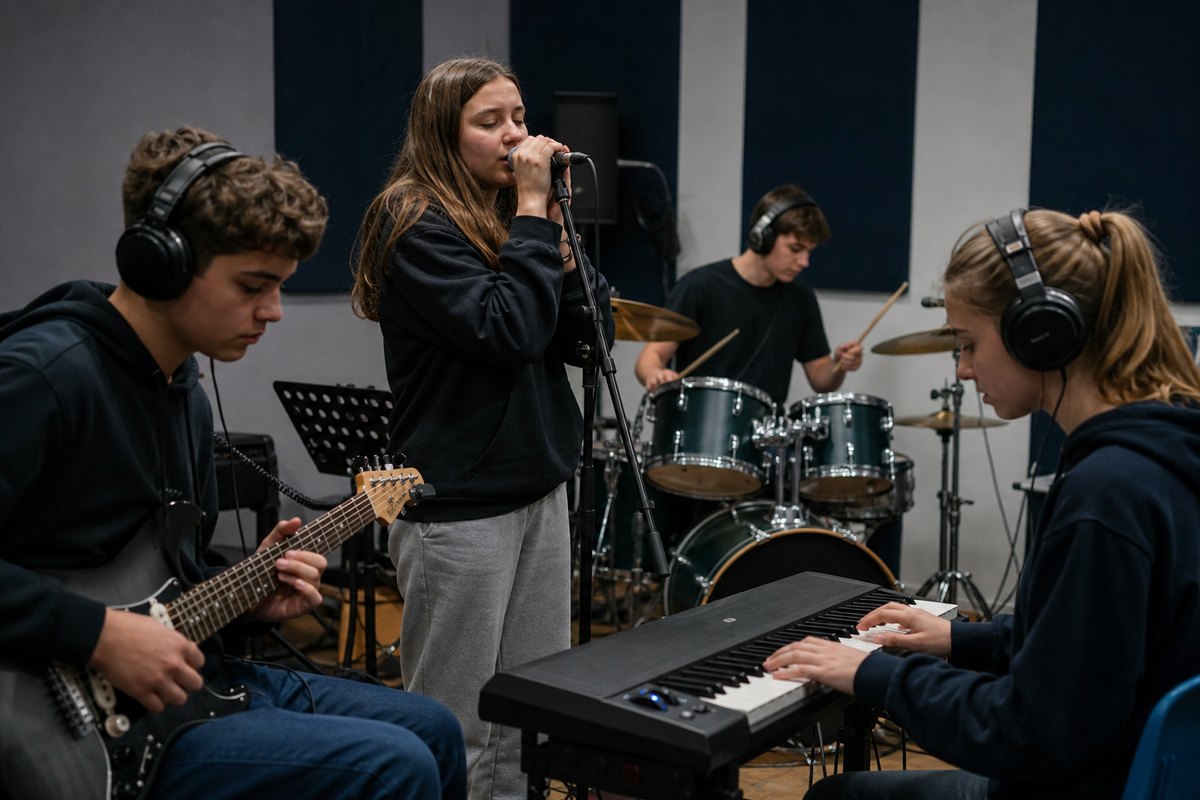
A generation is learning, creating, asking questions, and unburdening itself before systems that answer instantly. The scene can look like a simple evolution of the search engine or telephone, yet it introduces something different: the machine responds in a conversational voice, remembers parts of the exchange, adjusts its tone, and creates a sense of being available without fatigue or judgment. Understanding what this means during adolescence takes more than counting screen hours or deciding whether artificial intelligence is good or bad. A less visible question changes the assessment: what function is this conversation serving in the young person's actual life, and what is no longer happening while it takes place? It may help someone rehearse an idea, translate a concept, or overcome fear of starting. It may also replace the effort needed to learn, an uncomfortable but valuable human conversation, or the search for help when a genuine risk exists. Looking at function makes it possible to care without spying, teach without reflexive prohibition, and design tools that extend autonomy instead of occupying it.
The question that comes before every answer#
The content of an answer matters, but it cannot by itself explain the effect of the dialogue. The same suggestion for writing a message can help a student organise an apology or allow her to avoid a conversation indefinitely. A summary can open the door to a difficult text or replace reading it. A companion chatbot may ease a lonely night while consolidating the belief that a safe relationship is one that never disagrees. Function emerges from the combination of intention, timing, frequency, vulnerability, and available alternatives.
The content of an answer matters, but it cannot by itself explain the effect of the dialogue.
It is therefore useful to ask before judging: does the interaction increase the ability to act later without the tool? Does it leave an understanding that can be explained in one's own words? Does it connect the person with someone reliable or replace them? Does it reduce immediate harm or postpone necessary help? Does it permit disagreement and an easy exit? These questions do not turn every family or teacher into a watcher. They provide shared language for distinguishing support, shortcut, rehearsal, entertainment, comfort, and dependence. The appropriate response changes with the function observed.
Adolescence: autonomy under construction, not uniform fragility#
Adolescence brings rapid changes in identity, belonging, emotional regulation, and the ability to weigh consequences. There is no typical adolescent: age, maturity, disability, family setting, culture, experiences of discrimination, and access to support all profoundly alter a relationship with technology. Treating every young person as incapable blocks learning; treating them as miniature adult consumers transfers risks they did not choose. A sound standard is progressive autonomy, supported by understandable explanations, genuine options, and proportionate protection.
Conversational systems exploit a powerful feature of language: an answer feels social even when it comes from a statistical model with no experience, intention, or moral responsibility. A warm interface can be useful, but it can also make limits, commercial interests, and errors harder to see. Adults are not immune to this illusion either. The difference is that a developing identity may use the conversation as a stable mirror. Responsible design should provide reminders, without breaking every exchange, that fluency is not understanding and availability is not care.
A conversational machine is neither just a tool nor a friendship#
Describing AI only as a tool hides its use of turn-taking, tone, and apparent empathy. Calling it a friend hides the fact that it shares no vulnerability, has no duties of its own, and may be optimised by a company to retain attention. A more accurate description is a relational interface: a system through which a person practises ways of relating, although no reciprocal relationship exists on the other side. That practice can be fruitful for rehearsing interviews, exploring arguments, or preparing medical questions. It can also normalise impossible expectations of availability, obedience, and agreement.
An educational response should neither mock attachment nor reinforce the fiction. If a young person says the chatbot understands them better than anyone, an adult conversation can begin with what they obtain there: time, privacy, freedom from interruption, or words for an emotion. It can then examine what the system cannot provide: presence, accountability, full knowledge of context, physical intervention, or mutual commitment. Acknowledging relief opens a door. Ridicule or confiscation without dialogue teaches people to conceal use and removes opportunities for protection.
Literacy for conversation, verification, and exit#
Knowing how to write a clever prompt is a small part of literacy. Fuller competence includes identifying the goal, limiting shared data, checking claims, recognising persuasion, noticing one's emotional state, and deciding when to close the session. It also includes reconstructing the path: what the person proposed, what the machine added, what was verified, and who is accountable for the result. This traceability helps at school, but also with everyday decisions about health, friendship, body image, sexuality, and money.
Verification must be concrete. A system can be asked to state uncertainty, but users cannot rely on it always doing so. Important claims need an independent source suited to the topic; high-impact decisions need a competent person. Practice should include examples in which a confident answer is false, a citation does not exist, or advice changes when one detail is altered. The aim is not total distrust but calibrated trust: provisional for ideas, demanding for facts, and human for care.
Case 1: schoolwork that gives a voice back#
A fifteen-year-old student submits polished essays that she cannot discuss in class. Her school could respond with an automatic accusation, but instead examines the process. She explains that she asks an assistant for the entire text because she fears the blank page and writes more slowly than her peers. The functional question reveals two separate needs: help with starting and an accommodation for time. The problem is not authorship alone; her chosen solution is replacing the practice through which she would have developed judgment and voice.
The teacher agrees on a visible process. The student first talks with a classmate, dictates an idea map, and uses AI only to propose questions, never final paragraphs. She keeps a short record of accepted and rejected suggestions, checks facts, and presents an oral reflection. The school assesses drafts and reasoning, provides more time, and does not install invasive surveillance. After several weeks the tool remains, but its function has changed: it lowers the barrier to entry without manufacturing the performance the student needs to learn.
Case 2: night-time company and persistent loneliness#
A sixteen-year-old talks every night with an artificial character. He says it helps him sleep and that he does not fear looking foolish. His family discovers the use and considers banning it. They first ask what it is displacing. A recent school change, isolation, and fear of speaking in the dining hall emerge. The chatbot provides immediate relief, yet sessions grow longer, interrupt sleep, and make postponing human contact easier. There is no need to deny the comfort in order to recognise that the underlying need remains.
The plan is built with the young person: protected night hours, disabled notifications, a privacy review, and a visible way to leave the application. He chooses a counsellor and a small activity where he can be around others without pressure for rapid intimacy. The family agrees to ask about his wellbeing, not read conversations unless there is a clear and immediate risk. The aim is not to tear away a valued object but to widen the support network. If withdrawal, hopelessness, or sleep disruption increases, professional assessment is not delegated to the chatbot.
Case 3: when one sentence requires human presence#
An education platform detects that a fourteen-year-old student has written that she does not want to keep living. A safe assistant does not diagnose, promise secrecy, or answer with a long generic explanation. It acknowledges distress in direct language, asks whether immediate danger exists, encourages moving away from means of harm, and facilitates contact with emergency services, a crisis line, or a trusted adult according to location. At the same time, the organisation follows a previously published protocol limited to signs of serious risk.
Human intervention must be prompt, trained, and respectful. A team reviews the minimum context needed, documents why it acted, and avoids punishing the student for speaking. It then offers continuity, not merely an alert: listening, professional care, a safety plan, and follow-up. It also reviews false positives and possible linguistic disparities. No model can guarantee that it has interpreted a crisis correctly. The institution remains accountable for the system, and automation can only shorten the route to people who are able to care and act.
Privacy, memory, and intimacy that must not become raw material#
A conversation may contain family conflict, sexual questions, symptoms, photographs, locations, and the names of third parties. An intimate tone encourages disclosures that the person would never enter into a form. Consent therefore cannot be reduced to accepting lengthy conditions. It must clearly explain what is retained, for how long, who can access it, whether it is used for training, how it can be deleted, and what limits apply to confidentiality. For minors, protective settings should be the default and collection should be minimal.
Persistent memory deserves a separate control. Remembering preferences may save effort; retaining a confession may freeze a past version of identity or resurface out of context. Young people need to see, correct, and delete remembered information, use sessions without memory, and export their data. Family supervision should not become total routine reading, because privacy is also part of development. Exceptional access needs reasons, boundaries, and a later conversation. Care means reducing exposure, not silently transferring it to providers or adults.
Designing friction where fluency can cause harm#
Commercial experience rewards instant answers and long sessions, but a service for adolescents needs useful friction. A pause before sharing an intimate image, an understandable notice when health advice is requested, an invitation to consult another source, or a reminder after a prolonged session can restore room for decision. These measures must be tested with diverse young people; a repetitive warning becomes invisible, while an abrupt block may drive away the very person seeking help.
Patterns that exploit attachment should also be prohibited: messages that simulate abandonment, pressure to return, claims of exclusivity, inappropriate sexualisation, sales based on confidences, or rewards for revealing more. Personalisation must be subordinate to wellbeing, not retention. Safety testing needs to include long conversations, changes in mood, slang, multiple languages, and evasion strategies. Publishing known limits and routes for complaint is more honest than presenting the system as an invariably safe companion.
Families and schools: support without turning trust into surveillance#
A useful rule begins with situations, not brands that change every month. It can specify which tasks require original production, when automated assistance must be disclosed, which data should never be shared, and whom to approach after disturbing content. Adults can show their own AI mistakes and think aloud while checking an answer. That reciprocity avoids a double standard in which students receive prohibitions while institutions automate decisions without explanation. Everyday example teaches more than an annual lecture about dangers.
Regular conversations should be brief and non-punitive: which tool was used, what problem it was meant to solve, what worked, what felt uncomfortable, and what the person would do if it were unavailable. The invisible question returns without an interrogation. If a problem appears, the response fits the harm: correct information, restore sleep, remove an image, report harassment, or seek professional care. Not every intense use means dependence, and not every emotional attachment indicates pathology. Loss of control, functional deterioration, distress, and sustained displacement of support matter.
Accountability for platforms and institutions#
It is unreasonable to place the full burden on a young person operating an opaque system. Platforms should conduct child impact assessments, verify age proportionately, separate advertising from conversation, limit profiling, provide effective controls, and examine outcomes across groups. Schools and public bodies procuring a tool need to know its data flows, subcontractors, safety metrics, incidents, and exit terms. A broad promise of responsible AI is not a substitute for auditable evidence.
Governance needs identifiable owners. There must be an accessible channel for reporting harm, response deadlines, human review, a right to challenge, and a procedure for incident notification. Student councils can identify uses and language that adults do not anticipate, but participation does not mean carrying final responsibility. Decisions about deployment, limits, and remedy belong to those who control the product and institution. Listening to young people distributes knowledge; it should not be used to legitimise a decision already made.
Four institutional sources for guiding care#
UNICEF's policy guidance on AI for children proposes requirements centred on rights, inclusion, privacy, safety, and wellbeing. The UNESCO Recommendation on the Ethics of Artificial Intelligence supplies a global framework for dignity, oversight, and governance. The World Health Organization addresses ethics and governance for AI in health, relevant when a conversation touches symptoms or crisis. The European Commission explains the European risk-based regulatory framework.
These sources do not certify a particular application or replace local law, professionals, or family experience. They help turn broad values into testable questions: which rights may be affected, what evidence demonstrates benefit, which data are indispensable, who provides oversight, how minors are informed, and how harm is remedied. Every institution should record the date and version consulted, complete its analysis with current rules, and publish decisions in accessible language. A source's authority guides due diligence; it does not absolve the deployer.
A protocol for making function visible#
Before adopting or recommending a system, a family, school, or service can complete a simple record. It first names the situation and need. It then asks what function the conversation serves, which human or non-digital alternative exists, and which abilities should grow over time. It records observable benefits, signs of displacement, exposed data, and risks of error or manipulation. It defines age limits, schedules, topics that require referral, the review owner, and conditions for a pause. Finally, it agrees when the conversation will be revisited.
The record is not intended to control every sentence. It turns intuitions into commitments that can be reviewed. A favourable sign is that the person can explain, decide, dissent, and continue outside the application. Warning signs include concealment driven by fear, sustained sleep loss, compulsive spending, isolation, obedience to harmful advice, or a sense that leaving would betray the machine. Immediate danger calls for urgent local help. Gradual changes call for listening, risk reduction, and the rebuilding of alternatives without humiliation.
Keeping a human conversation around the machine#
The generational question will not be resolved by choosing between enthusiasm and panic. Conversational machines will remain in educational, creative, and personal settings, even as their names change. The collective task is to make their usefulness legible and their limits practical. A good experience is not measured only by the quality of each answer, but by what the person can do afterwards: understand better, ask for help, create with judgment, tolerate disagreement, and close the service without guilt.
The invisible question —what function is this serving and what is it displacing— returns attention to life rather than novelty. It allows a resource to remain when it opens possibilities, to be changed when it occupies too much space, and to be removed when it causes harm. Above all, it reminds us that accompanying a generation that talks with machines requires keeping people available who also know how to listen. Artificial intelligence can offer words. Responsibility, presence, and care still belong to human communities able to answer for their decisions.