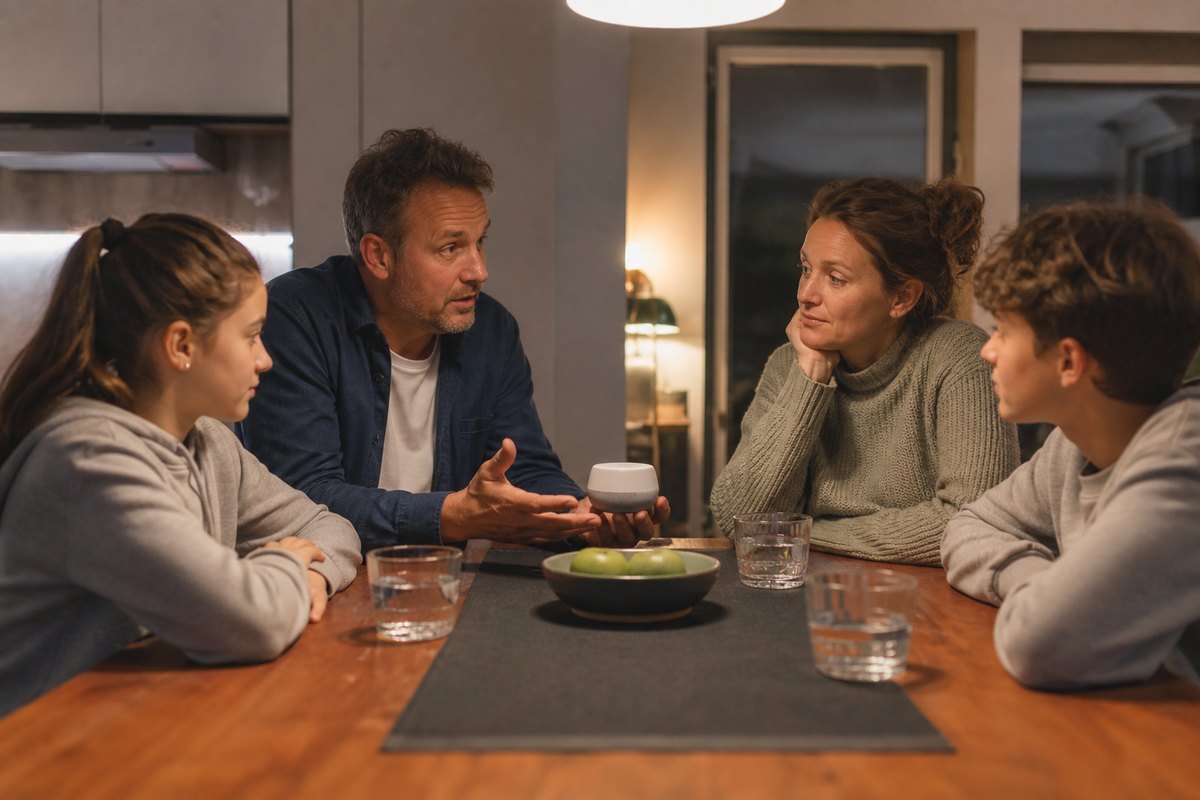
Accepting terms does not prove that a choice existed. Someone may press “accept” because they need to submit work, keep a job, enter a call for proposals, or reach a community where their audience already is. In creative tools, that pressure is often hidden behind a short screen: filters, models, music, voices, or images are offered; in return, rules about materials, data, and future uses must be accepted. The speed of the gesture does not make consent informed. Before adopting a tool, it is necessary to know what is handed over, who receives permissions, how the result is credited, what happens to another person’s work, and which alternative remains available.
The issue is not to reject every innovation or turn every use into an impossible legal examination. It is to recognise that creation organises relationships. A platform may make a mock-up, correction, or animation easier, but it may also impose broad licences, train systems with contributions, retain metadata, and present a commercial decision as inevitable. When refusal leaves someone outside a class, commission, or opportunity, the organisation that chose the tool shares responsibility. Autonomy needs time, understandable information, room to ask questions, and an exit that does not punish.
Consent under pressure#
Consent is meaningful when it can be given, refused, or withdrawn without a disproportionate consequence. A tick box at the end of a long text is not enough, nor is a policy written in language requiring specialist knowledge. The tool’s purpose, the kinds of content it will receive, the destination of data, retention period, people or entities with access, and review procedure must be explained. Limits must also be named: a promise of “creative control” is misleading if the platform may reuse a work or alter its rules without useful notice.
Consent is meaningful when it can be given, refused, or withdrawn without a disproportionate consequence.
In a school, studio, or cultural association, unequal power changes the meaning of acceptance. Whoever assesses, hires, funds, or administers cannot treat acceptance as sufficient proof of willingness. There may be haste, fear of seeming uncooperative, no personal equipment, a disability making the notice difficult to read, or a language different from the platform’s. These conditions are not personal details each individual must solve; they are design information. A responsible decision identifies that dependency before imposing a service and prepares an equivalent route that requires neither favours nor intimate explanations.
A click records an action; it does not by itself record understanding, freedom, or fair agreement. A useful explanation therefore separates facts from promises. It can state: “this function uploads an image to the provider,” “the contract permits this use,” “the institution will not upload confidential material,” and “someone who does not participate can complete the same task through this alternative.” Clarity permits discussion before a person’s work, memory, or identity is absorbed into a system that is difficult to leave.
Authorship, licences, and shared material#
Authorship does not vanish because a tool intervenes. A result may contain decisions by the person who frames a commission, selects references, composes, reviews, or adapts, and by people whose works or traits supplied material. Presenting an automated output as isolated creation erases labour and context. It also oversimplifies a legal matter depending on contracts, jurisdictions, and particular facts. Prudence requires avoiding claims of ownership that have not been checked and keeping a record of contributed material, permissions obtained, and relevant transformations.
Licences should be read as rules for distributing power, not as a later formality. A licence may allow publication, modification, sublicensing, or training; it may require credit, limit commercial purposes, or prevent reuse. Each permission has different consequences for illustrators, performers, communities, and clients. When third-party files are used, it is necessary to check whether the licence covers that particular use, whether credit is possible, and whether material contains image rights, professional secrets, or cultural expressions requiring a more careful relationship than mere availability online.
Cultural origin matters especially. A visible reference is not thereby available for any extraction. Designs, songs, languages, ceremonies, and memories may have custodians, meanings, and collective limits. An institution commissioning a campaign should not offload this responsibility onto someone producing against a deadline. It should plan consultation where appropriate, proper recognition, payment where labour or knowledge is used, and the option not to use a motif when there is no basis for doing so. Creativity gains depth when it retains context rather than turning it into interchangeable decoration.
Three situations that reveal the problem#
Case 1: school workshop. A school asks every pupil to use an image generator for an assessed submission. The account requires date of birth, email, and acceptance of broad uses of content. Some families do not want to open it and others do not have devices at home. The appropriate response is not to lower a grade or make pupils disclose their reasons. The school can offer an equivalent activity with local tools or supplied materials, explain which data would be used, and let each participant choose without being singled out. Assessment should value process and idea, not obedience to a provider.
Case 2: commission to a designer. An organisation gives client photographs to an editing platform to “save time.” The provider’s contract includes retention and analysis of files. Even if the designer presses accept, they do not have a right to commit the data of the people pictured or turn an opaque clause into permission. The commission, applicable legal bases, data handling, and work options must be reviewed. If there is no sufficient safeguard, a different process should be chosen, the organisation informed, and the decision documented.
Case 3: community archive. A group digitises older people’s stories and recordings for an exhibition. An application proposes training a synthetic voice from those interviews. The promise of preserving memory can hide an appropriation that is hard to withdraw. The decision requires a plain-language explanation of what will be created, where it will be hosted, who can use it, and for how long; specific permission where that is valid; and acceptance of a refusal without turning it into exclusion from the archive. Memory does not become more valuable by losing control over it.
All three cases show the same rule: an alternative is real only if it leads to a comparable result. Submitting work on paper, waiting weeks, paying extra, or requesting special permission can turn refusal into punishment. The alternative should be tested with people who would need it, measuring time, errors, and requests for help, and corrected before the system becomes compulsory. The exception reveals where internal efficiency has been confused with fair access.
Real options and institutional responsibility#
An organisation can reduce pressure by deciding before it buys. It should prepare a short record: purpose, provider, active functions, data and works that will not be uploaded, intended licence, responsible person, duration, incident channel, and equivalent alternative. This record does not replace legal analysis or dialogue with affected people, but it stops a decision from being hidden in an interface. An exit should also be tested: export material, delete an account, recover credits, and continue the project if the service stops working.
Review needs observable criteria. Abandonment, time, costs, help requests, group differences, attribution errors, and complaints about unforeseen uses can be recorded. Numbers need accounts: a favourable average does not compensate for one group losing participation or a sensitive work circulating without repair. Someone with authority and resources must be able to pause use, answer a question, and correct a practice. Placing a person at the end of an automated chain without access to the contract or power to change it is not oversight.
Public communication matters too. If terms change or an incident appears, it is necessary to inform people early, describe the known scope, limit harm, and explain available repair. Defending the original intention does not return control to someone who lost it. A responsible creative culture recognises that conditions can change and that consent is not unlimited permission granted once. Keeping records of versions, renewals, and decisions makes it possible to revisit an agreement when the project, tool, or power relationship changes.
Creating with digital tools requires keeping an exit door, honest credit, and the possibility of saying no without paying for it. This practice does not restrain imagination; it prevents speed from making people and works default available material. The most valuable result is not an image made earlier, but a creative relationship in which recognition, permission, and correction remain possible.
The relationship with anyone contributing a prompt, voice, or image also needs care. A prior explanation can include a small trial, a summary of relevant terms, and a date for asking again. If a tool changes owner, adds a training feature, or expands circulation of material, it is not reasonable to assume that an earlier agreement automatically covers the new situation. The affected person needs notice in a format they can understand and an effective response. Keeping the possibility of review is not useless bureaucracy: it allows creative practice to remain compatible with changing circumstances, learning, and the respect owed to those who make the work possible. It also gives a project team a clear moment to stop, check its assumptions, and choose a less intrusive route when its original plan no longer protects contributors.
Institutional sources for checking#
Four institutional references help turn these criteria into verifiable questions. UNESCO’s Recommendation on the Ethics of Artificial Intelligence addresses human rights, transparency, and accountability. The European Union General Data Protection Regulation establishes principles for personal-data processing. The World Intellectual Property Organization provides institutional information on copyright and related rights. The United Nations Convention on the Rights of Persons with Disabilities recalls that accessibility and participation are conditions for equality. These sources do not replace professional advice or situated consent, but they prevent a platform’s convenience from being treated as an unavoidable obligation.