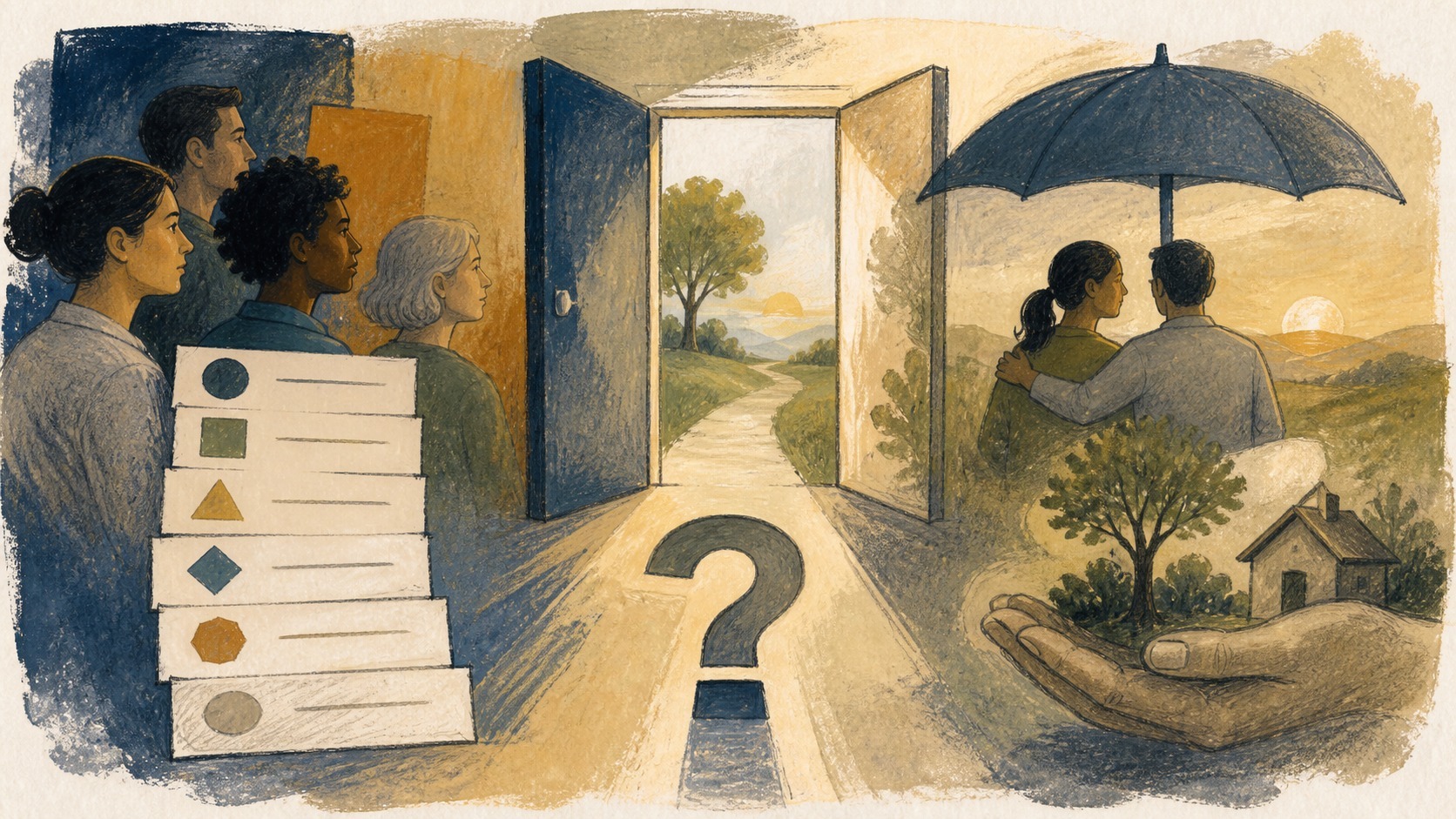
The costume warehouse introduced a system that prepared garments by code. On screen, every reservation became a clean sequence: size, color, location, and dispatch time. Speed improved immediately. Yet one afternoon a coat left with a small tear beneath its collar, and two outfits made from similar fabrics ended up in the same box. No alert appeared. Before the new system, Isabel would have run her hand along the seam, noticed the different drape of the fabrics, and left a note so the rental team would not send the garment. She did not do this as a separate task. She did it while preparing the order.
When only visible actions are counted, this craft disappears from the inventory. The system records that a code was scanned and a package left. It does not record a small repair, the touch that detects a tired fiber, a quick conversation with the workshop, or the informal warning that prevents an expensive return. Absence of data can be mistakenly treated as absence of work. Then comes the surprise: automation seems to have removed an activity nobody named, when it has really removed a barrier against error.
Recognizing this knowledge does not mean denying the usefulness of organizing garments through a system. It means deciding first what supports the quality of a complete order. Craft knowledge is not a romantic remainder that should survive out of tradition. It is a situated capacity to detect, interpret, and repair situations that a list of codes cannot yet see. To automate a sequence without losing that capacity, an organization must inventory it, transmit it with paid time, and set clear limits around what must not leave training.
Invisible does not mean dispensable#
Work tends to become visible when someone can mark it with a click. In the warehouse, counting prepared garments is easy; counting how a person prevents an unusable garment from leaving is harder. It can happen in a second: adjusting a button, separating an item that smells damp, recognizing that a zipper needs review, or remembering that a customer requested a less irritating material. These are small decisions, but they accumulate in the trust that makes a costume service worth using again.
Work tends to become visible when someone can mark it with a click. In the warehouse, counting prepared garments is easy; counting how a person prevents an unusable garment from leaving is harder.
A task list is not neutral. It defines what time is paid, what new people are taught, and what is treated as an interruption. If it recognizes only the route from shelf to box, any inspection looks like delay. Someone who spends two minutes checking a lining may be pressured about their pace even if they save hours of complaints. Automation amplifies this bias when it treats the incomplete list as a total description of the process.
That is why it helps to begin with a concrete question: What is done to keep a garment from reaching its destination in poor condition? The answer rarely fits a single procedure. It includes looking, touching, cautiously smelling, comparing with a reservation, consulting another person, and deciding whether a defect can be repaired. Naming each gesture is not meant to turn it into minute surveillance. It is meant to keep it from disappearing when people design what a machine will do and what the team still needs to learn.
A participatory inventory hears the real journey#
The inventory should not be made only by someone who knows the software or an outsider watching a quiet morning. It needs people who receive garments, clean them, repair them, handle reservations, and resolve returns. Each group sees a different part of the journey and a different consequence when something fails. A front-desk worker knows which detail causes a return; a sewer knows the difference between a quick repair and a seam that will not hold; a person preparing dispatch knows where two similar codes are confused.
One practical method is to choose several real reservations, including a simple one and a troublesome one, and reconstruct their whole path. The group can note visible actions and, beside them, signals interpreted, questions asked, and risks avoided. It should also identify which knowledge depends on one particular person and which conditions make it possible: good lighting, uninterrupted time, access to repair history, or a colleague available to test a doubt.
The result must not become a list used to extract all knowledge from the people who hold it and then dispense with them. It should be a basis for deciding what is recognized, protected, and shared without increasing workload. If a skill is critical, the organization must ask why only one person has time to exercise it and how to prevent that knowledge from becoming an exhausting bottleneck.
Passing knowledge on is work and deserves pay#
Experienced workers are often asked to teach “as they go.” The request sounds small, but it requires stopping, explaining, observing attempts, and correcting while still carrying one's own tasks. If that time is not planned, transmission competes with production and ends up rushed, unpaid, or absent. The result is an unfair dependency: the organization praises experience while using it without resources to reproduce it.
Learning pairs offer a concrete alternative. An experienced person and a learner can share specific shifts with limited goals and paid time. The learner should not merely copy gestures from memory. They need to see varied cases, explain what they observe, and make mistakes in a setting where correction does not cost a customer. Knowledge becomes stronger when it can be narrated, discussed, and practiced, not only when one person performs it silently.
Pay matters because it states that teaching is part of the service. It can recognize mentoring hours, adjust order loads, and give professional value to the person sustaining transmission. It also protects the learner, who need not prove speed before gaining judgment. A warehouse that accelerates preparation while cutting learning time is spending a reserve of knowledge that will later be difficult to recover.
There are limits automation should not cross#
Not every kind of knowledge should become a programmable rule. Some decisions need situated observation, responsibility, and a chance to consult. Final assessment of a delicate garment, for example, should not rest with a code where it can affect safety, comfort, or the recipient's trust. A system can flag that an item has returned many times or suggest closer inspection. The decision to send it, repair it, or withdraw it needs human judgment with authority to act.
Setting these limits does not stop the tool from helping. It can automate location, inventory, reminders, and repair traceability. It can free time for better review. But the organization must state explicitly which parts remain required in training: recognizing wear, verifying a repair, speaking with the workshop, and documenting an exception. If they are not taught, they will start to look unproductive and disappear before anyone notices their function.
Limits should be reviewed through practice. If a new technology reliably detects one kind of deterioration, the team may change where it places attention. But that decision must grow from trials with real garments, not a commercial promise. A proper trial compares recovered errors, prevented returns, workload, and the team's ability to explain why it does or does not trust an alert. A tool earns a place when it improves the craft, not when it makes the craft invisible.
Keep knowledge so the service remains repairable#
An automated system can bring order, but it should not close the possibility that someone sees what is missing. The best measure of its value is not only how many orders leave, but how many incidents are caught in time, how many people can resolve them, and what learning remains afterward. When a correction depends on one expert with no backup, the process looks efficient until the day she is absent.
The next step can be to choose one garment that returned with a complaint and reconstruct with the team what signals could have stopped it earlier. Note what needed to be known, who knew it, and how much time applying it required. Then reserve a paid shift for two people to practice that review and decide which part of the process no code can close without their check. Craft is not preserved by storing it in a box. It is preserved when time, authority, and training let people exercise it before an error leaves the door.