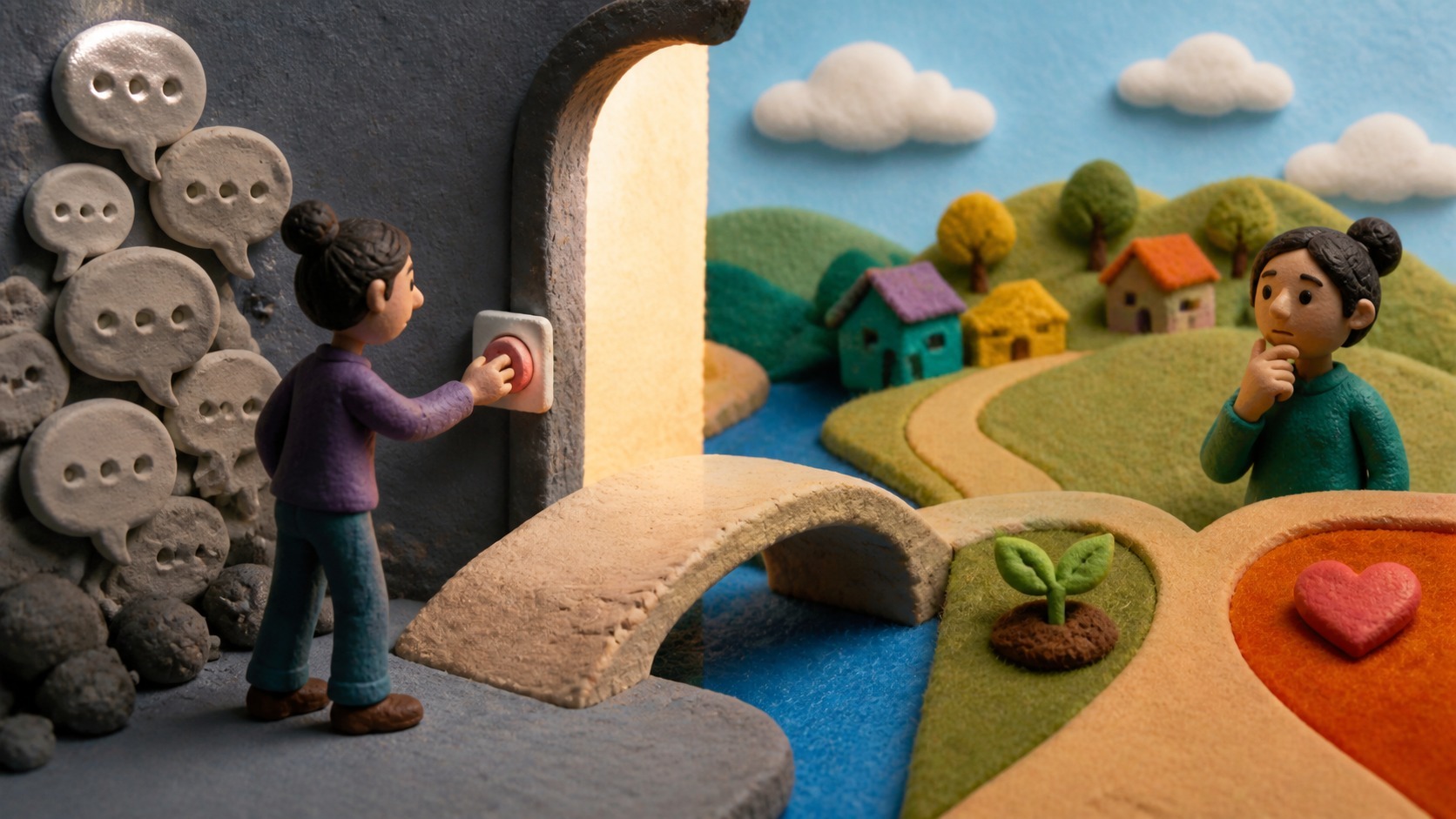
Reviewing a close-nature experience is not about assigning blame: it helps identify what supported wellbeing, which barriers appeared, and what adjustment can come next.
Review to learn, not to grade#
A park visit, a shaded courtyard, or a short route can support rest, movement, and connection with place. It can also show that the timetable was too rigid, a bench was missing, or someone received information too late. A useful review turns those facts into observable decisions. Before speaking, the group agrees on three questions: what happened, who was helped or hindered, and which small change will be tested next time. WHO notes that health includes physical, mental, and social wellbeing, so the review must hear enjoyment as well as fatigue, fear, or exclusion.
A park visit, a shaded courtyard, or a short route can support rest, movement, and connection with place.
Gather different voices: a child who needed a break, an older person who suggested the route, someone who prepared materials, and someone unable to attend. The aim is not a perfect account but patterns clear enough to guide action. A shared notebook can record date, place, access, weather, supports used, and an authorised direct observation. The European Environment Agency and European Commission provide criteria on green space, environmental quality, and climate adaptation that help interpret what was seen without inventing diagnoses.
Observe before interpreting#
A good agreement names an action, a contact person, a reasonable deadline, and a way to check it. Here, the group can decide what it will do so nearby nature feels welcoming rather than demanding: open a courtyard one afternoon, reserve a short route, bring water, give advance notice, or secure an indoor alternative. Participation must remain voluntary, and people can change their minds without explaining why. Ask which barriers arise —heat, allergies, fear, noise, cost, distance, or lack of time— and adjust the plan before judging outcomes. The WHO provides guidance on healthy urban environments at https://www.who.int/europe; the European Environment Agency brings together environment-and-health data at https://www.eea.europa.eu/; the European Commission explains nature policy at https://environment.ec.europa.eu/topics/nature-and-biodiversity_en; and UNESCO offers education for sustainable development resources at https://www.unesco.org/en/education/sustainable-development. These sources provide context, but they do not replace health advice or the knowledge of people who use the place. The agreement on start with a small, checkable agreement will be reviewed through a concrete question: what will stay, what will change, and who needs to be heard before the next meeting.
Share responsibilities without loading one person#
A good agreement names an action, a contact person, a reasonable deadline, and a way to check it. Here, the group can decide what it will do so nearby nature feels welcoming rather than demanding: open a courtyard one afternoon, reserve a short route, bring water, give advance notice, or secure an indoor alternative. Participation must remain voluntary, and people can change their minds without explaining why. Ask which barriers arise —heat, allergies, fear, noise, cost, distance, or lack of time— and adjust the plan before judging outcomes. The WHO provides guidance on healthy urban environments at https://www.who.int/europe; the European Environment Agency brings together environment-and-health data at https://www.eea.europa.eu/; the European Commission explains nature policy at https://environment.ec.europa.eu/topics/nature-and-biodiversity_en; and UNESCO offers education for sustainable development resources at https://www.unesco.org/en/education/sustainable-development. These sources provide context, but they do not replace health advice or the knowledge of people who use the place. The agreement on share responsibilities without loading one person will be reviewed through a concrete question: what will stay, what will change, and who needs to be heard before the next meeting.
Listen to health, mobility, and rest needs#
A good agreement names an action, a contact person, a reasonable deadline, and a way to check it. Here, the group can decide what it will do so nearby nature feels welcoming rather than demanding: open a courtyard one afternoon, reserve a short route, bring water, give advance notice, or secure an indoor alternative. Participation must remain voluntary, and people can change their minds without explaining why. Ask which barriers arise —heat, allergies, fear, noise, cost, distance, or lack of time— and adjust the plan before judging outcomes. The WHO provides guidance on healthy urban environments at https://www.who.int/europe; the European Environment Agency brings together environment-and-health data at https://www.eea.europa.eu/; the European Commission explains nature policy at https://environment.ec.europa.eu/topics/nature-and-biodiversity_en; and UNESCO offers education for sustainable development resources at https://www.unesco.org/en/education/sustainable-development. These sources provide context, but they do not replace health advice or the knowledge of people who use the place. The agreement on listen to health, mobility, and rest needs will be reviewed through a concrete question: what will stay, what will change, and who needs to be heard before the next meeting.
Choose places with real safety and access#
A good agreement names an action, a contact person, a reasonable deadline, and a way to check it. Here, the group can decide what it will do so nearby nature feels welcoming rather than demanding: open a courtyard one afternoon, reserve a short route, bring water, give advance notice, or secure an indoor alternative. Participation must remain voluntary, and people can change their minds without explaining why. Ask which barriers arise —heat, allergies, fear, noise, cost, distance, or lack of time— and adjust the plan before judging outcomes. The WHO provides guidance on healthy urban environments at https://www.who.int/europe; the European Environment Agency brings together environment-and-health data at https://www.eea.europa.eu/; the European Commission explains nature policy at https://environment.ec.europa.eu/topics/nature-and-biodiversity_en; and UNESCO offers education for sustainable development resources at https://www.unesco.org/en/education/sustainable-development. These sources provide context, but they do not replace health advice or the knowledge of people who use the place. The agreement on choose places with real safety and access will be reviewed through a concrete question: what will stay, what will change, and who needs to be heard before the next meeting.
Case 1: a courtyard becomes shared again#
A good agreement names an action, a contact person, a reasonable deadline, and a way to check it. Here, the group can decide what it will do so nearby nature feels welcoming rather than demanding: open a courtyard one afternoon, reserve a short route, bring water, give advance notice, or secure an indoor alternative. Participation must remain voluntary, and people can change their minds without explaining why. Ask which barriers arise —heat, allergies, fear, noise, cost, distance, or lack of time— and adjust the plan before judging outcomes. The WHO provides guidance on healthy urban environments at https://www.who.int/europe; the European Environment Agency brings together environment-and-health data at https://www.eea.europa.eu/; the European Commission explains nature policy at https://environment.ec.europa.eu/topics/nature-and-biodiversity_en; and UNESCO offers education for sustainable development resources at https://www.unesco.org/en/education/sustainable-development. These sources provide context, but they do not replace health advice or the knowledge of people who use the place. The agreement on case 1: a courtyard becomes shared again will be reviewed through a concrete question: what will stay, what will change, and who needs to be heard before the next meeting.
Case 2: a school outing with alternatives#
A good agreement names an action, a contact person, a reasonable deadline, and a way to check it. Here, the group can decide what it will do so nearby nature feels welcoming rather than demanding: open a courtyard one afternoon, reserve a short route, bring water, give advance notice, or secure an indoor alternative. Participation must remain voluntary, and people can change their minds without explaining why. Ask which barriers arise —heat, allergies, fear, noise, cost, distance, or lack of time— and adjust the plan before judging outcomes. The WHO provides guidance on healthy urban environments at https://www.who.int/europe; the European Environment Agency brings together environment-and-health data at https://www.eea.europa.eu/; the European Commission explains nature policy at https://environment.ec.europa.eu/topics/nature-and-biodiversity_en; and UNESCO offers education for sustainable development resources at https://www.unesco.org/en/education/sustainable-development. These sources provide context, but they do not replace health advice or the knowledge of people who use the place. The agreement on case 2: a school outing with alternatives will be reviewed through a concrete question: what will stay, what will change, and who needs to be heard before the next meeting.
Case 3: a supported neighbourhood walk#
A good agreement names an action, a contact person, a reasonable deadline, and a way to check it. Here, the group can decide what it will do so nearby nature feels welcoming rather than demanding: open a courtyard one afternoon, reserve a short route, bring water, give advance notice, or secure an indoor alternative. Participation must remain voluntary, and people can change their minds without explaining why. Ask which barriers arise —heat, allergies, fear, noise, cost, distance, or lack of time— and adjust the plan before judging outcomes. The WHO provides guidance on healthy urban environments at https://www.who.int/europe; the European Environment Agency brings together environment-and-health data at https://www.eea.europa.eu/; the European Commission explains nature policy at https://environment.ec.europa.eu/topics/nature-and-biodiversity_en; and UNESCO offers education for sustainable development resources at https://www.unesco.org/en/education/sustainable-development. These sources provide context, but they do not replace health advice or the knowledge of people who use the place. The agreement on case 3: a supported neighbourhood walk will be reviewed through a concrete question: what will stay, what will change, and who needs to be heard before the next meeting.
Prepare materials, permissions, and communication#
A good agreement names an action, a contact person, a reasonable deadline, and a way to check it. Here, the group can decide what it will do so nearby nature feels welcoming rather than demanding: open a courtyard one afternoon, reserve a short route, bring water, give advance notice, or secure an indoor alternative. Participation must remain voluntary, and people can change their minds without explaining why. Ask which barriers arise —heat, allergies, fear, noise, cost, distance, or lack of time— and adjust the plan before judging outcomes. The WHO provides guidance on healthy urban environments at https://www.who.int/europe; the European Environment Agency brings together environment-and-health data at https://www.eea.europa.eu/; the European Commission explains nature policy at https://environment.ec.europa.eu/topics/nature-and-biodiversity_en; and UNESCO offers education for sustainable development resources at https://www.unesco.org/en/education/sustainable-development. These sources provide context, but they do not replace health advice or the knowledge of people who use the place. The agreement on prepare materials, permissions, and communication will be reviewed through a concrete question: what will stay, what will change, and who needs to be heard before the next meeting.
Record what works without monitoring people#
A good agreement names an action, a contact person, a reasonable deadline, and a way to check it. Here, the group can decide what it will do so nearby nature feels welcoming rather than demanding: open a courtyard one afternoon, reserve a short route, bring water, give advance notice, or secure an indoor alternative. Participation must remain voluntary, and people can change their minds without explaining why. Ask which barriers arise —heat, allergies, fear, noise, cost, distance, or lack of time— and adjust the plan before judging outcomes. The WHO provides guidance on healthy urban environments at https://www.who.int/europe; the European Environment Agency brings together environment-and-health data at https://www.eea.europa.eu/; the European Commission explains nature policy at https://environment.ec.europa.eu/topics/nature-and-biodiversity_en; and UNESCO offers education for sustainable development resources at https://www.unesco.org/en/education/sustainable-development. These sources provide context, but they do not replace health advice or the knowledge of people who use the place. The agreement on record what works without monitoring people will be reviewed through a concrete question: what will stay, what will change, and who needs to be heard before the next meeting.
Separate facts, interpretations, and decisions#
A good agreement names an action, a contact person, a reasonable deadline, and a way to check it. Here, the group can decide what it will do so nearby nature feels welcoming rather than demanding: open a courtyard one afternoon, reserve a short route, bring water, give advance notice, or secure an indoor alternative. Participation must remain voluntary, and people can change their minds without explaining why. Ask which barriers arise —heat, allergies, fear, noise, cost, distance, or lack of time— and adjust the plan before judging outcomes. The WHO provides guidance on healthy urban environments at https://www.who.int/europe; the European Environment Agency brings together environment-and-health data at https://www.eea.europa.eu/; the European Commission explains nature policy at https://environment.ec.europa.eu/topics/nature-and-biodiversity_en; and UNESCO offers education for sustainable development resources at https://www.unesco.org/en/education/sustainable-development. These sources provide context, but they do not replace health advice or the knowledge of people who use the place. The agreement on resolve disagreements through a short review will be reviewed through a concrete question: what will stay, what will change, and who needs to be heard before the next meeting.
Connect the project with learning and community#
A good agreement names an action, a contact person, a reasonable deadline, and a way to check it. Here, the group can decide what it will do so nearby nature feels welcoming rather than demanding: open a courtyard one afternoon, reserve a short route, bring water, give advance notice, or secure an indoor alternative. Participation must remain voluntary, and people can change their minds without explaining why. Ask which barriers arise —heat, allergies, fear, noise, cost, distance, or lack of time— and adjust the plan before judging outcomes. The WHO provides guidance on healthy urban environments at https://www.who.int/europe; the European Environment Agency brings together environment-and-health data at https://www.eea.europa.eu/; the European Commission explains nature policy at https://environment.ec.europa.eu/topics/nature-and-biodiversity_en; and UNESCO offers education for sustainable development resources at https://www.unesco.org/en/education/sustainable-development. These sources provide context, but they do not replace health advice or the knowledge of people who use the place. The agreement on connect the project with learning and community will be reviewed through a concrete question: what will stay, what will change, and who needs to be heard before the next meeting.
When to stop and seek specialist support#
A good agreement names an action, a contact person, a reasonable deadline, and a way to check it. Here, the group can decide what it will do so nearby nature feels welcoming rather than demanding: open a courtyard one afternoon, reserve a short route, bring water, give advance notice, or secure an indoor alternative. Participation must remain voluntary, and people can change their minds without explaining why. Ask which barriers arise —heat, allergies, fear, noise, cost, distance, or lack of time— and adjust the plan before judging outcomes. The WHO provides guidance on healthy urban environments at https://www.who.int/europe; the European Environment Agency brings together environment-and-health data at https://www.eea.europa.eu/; the European Commission explains nature policy at https://environment.ec.europa.eu/topics/nature-and-biodiversity_en; and UNESCO offers education for sustainable development resources at https://www.unesco.org/en/education/sustainable-development. These sources provide context, but they do not replace health advice or the knowledge of people who use the place. The agreement on when to stop and seek specialist support will be reviewed through a concrete question: what will stay, what will change, and who needs to be heard before the next meeting.
Sources for learning and deciding well#
A good agreement names an action, a contact person, a reasonable deadline, and a way to check it. Here, the group can decide what it will do so nearby nature feels welcoming rather than demanding: open a courtyard one afternoon, reserve a short route, bring water, give advance notice, or secure an indoor alternative. Participation must remain voluntary, and people can change their minds without explaining why. Ask which barriers arise —heat, allergies, fear, noise, cost, distance, or lack of time— and adjust the plan before judging outcomes. The WHO provides guidance on healthy urban environments at https://www.who.int/europe; the European Environment Agency brings together environment-and-health data at https://www.eea.europa.eu/; the European Commission explains nature policy at https://environment.ec.europa.eu/topics/nature-and-biodiversity_en; and UNESCO offers education for sustainable development resources at https://www.unesco.org/en/education/sustainable-development. These sources provide context, but they do not replace health advice or the knowledge of people who use the place. The agreement on sources for learning and deciding well will be reviewed through a concrete question: what will stay, what will change, and who needs to be heard before the next meeting.
Questions that turn experience into a next step#
At the close of a review, every case needs a decision with an owner, a date, and a sign of progress. Asking “what would we keep?”, “what would we do differently?”, and “who must we consult before repeating this?” is more useful than asking who made a mistake. If heat was a problem, test another time; if a family did not arrive, offer the message in another format; if a place felt unsafe, pause the activity and seek municipal guidance. UNESCO frames education for sustainable development as participatory practice, and participation begins when observations alter the real design.
The review should end with a short return to participants: what was heard, what will change, and when it will be checked. That protects trust and keeps forms from vanishing without effect. Where there are signs of persistent distress, serious conflict, environmental risk, or access needs the group cannot resolve, stop and consult health, education, social-care, or place-management professionals. Autonomy is not doing everything alone; it is knowing what the community can decide and when specialist support is needed.