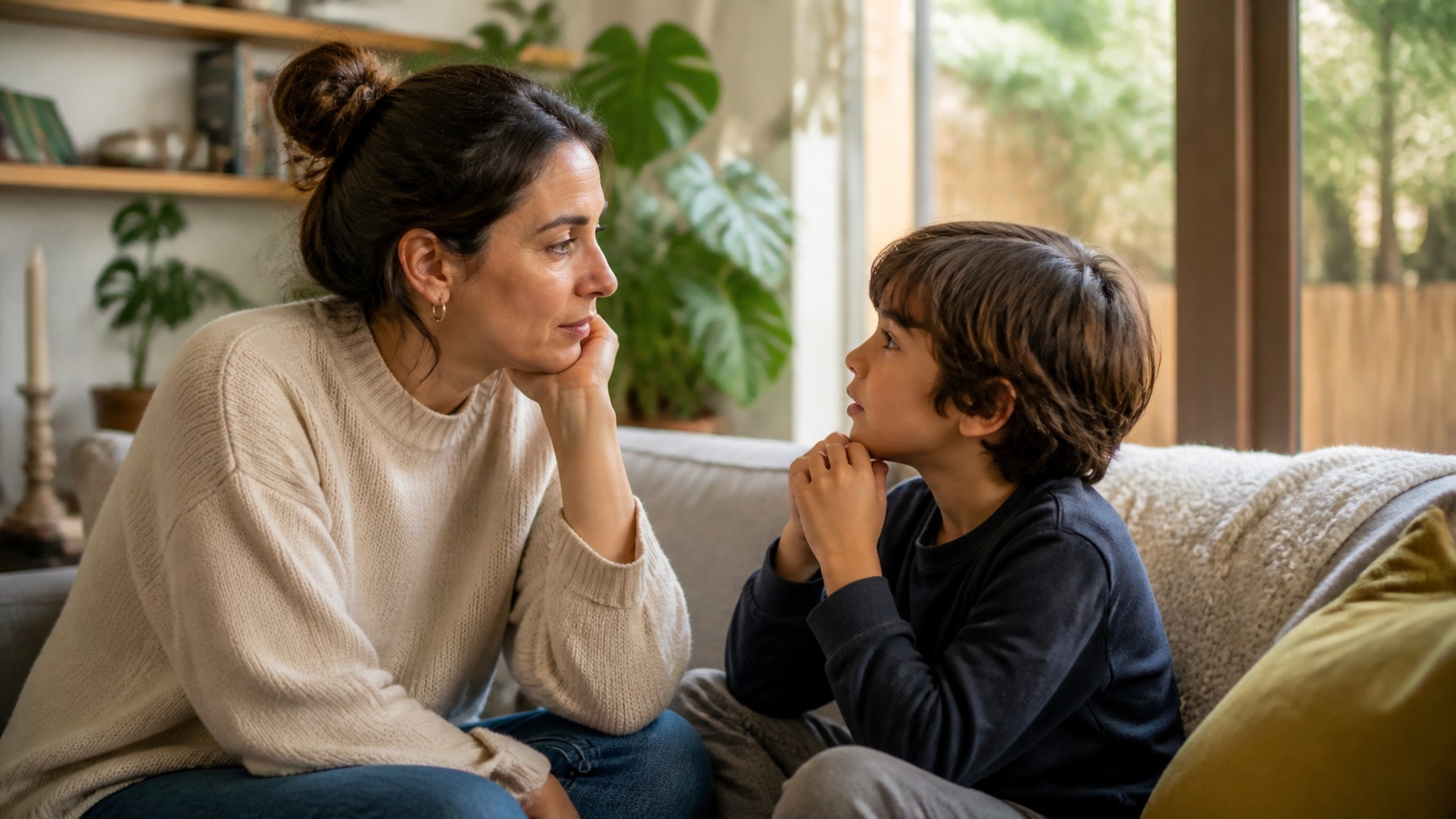
Tools for sharing responsibilities, documenting agreements and coordinating consistent responses among everyone involved.
Start with an agreement that can be kept#
Cultural accessibility improves when families, schools and libraries share the same information without asking anyone to repeat their story. A useful agreement is not a general promise: it names a need, an action, a responsible person, a date and a way to check the result. The United Nations Convention on the Rights of Persons with Disabilities treats cultural participation as a right. The starting question is therefore not who will grant a favour, but what the service must change so that participation is possible and predictable.
Cultural accessibility improves when families, schools and libraries share the same information without asking anyone to repeat their story.
Share roles without shifting the burden#
Families may know important preferences and signals, but they should not become permanent interpreters or the people who solve every barrier. A school can anticipate learning goals and communication supports; a library knows its building, collection and programme; a community group can offer mediation or training. IFLA recommends planning inclusive library services with users. A short shared table prevents conflicting messages: who confirms the booking, who prepares material, who welcomes the group and who reviews what happened.
Record only what is needed#
A concise record protects continuity when staff change. It should include the activity, identified barriers, agreed support, contact person, review date and consent for sharing information. It does not need irrelevant medical labels. UNESCO explains inclusion through access to content, participation and respect for diversity. Sending the summary through a channel chosen by the family makes it possible to correct misunderstandings before the visit and shows that planned measures are the service responsibility.
Case: a library card and a first visit#
Marta wants to take her son Leo, who uses a communication device, to their neighbourhood library. His school already uses a visual sequence for outings, but the library does not know its quietest time. During a ten minute call they agree to send photographs of the entrance and desk, reserve a side table and issue the card without a queue. The teacher adds the pictures to the sequence and the librarian confirms the plan by email. After the visit Leo asks to return. The outcome comes from simple, checkable coordination, not from asking his mother to explain everything again.
Case: a reading club with different voices#
A secondary school proposes an intergenerational reading club, and a student with low vision notes that the book will not be available in an accessible format in time. The coordinator does not hand the problem back to the student. She checks the catalogue, contacts the lending network and sets a timetable that selects the title six weeks earlier. The WIPO-administered Marrakesh Treaty provides an international framework for access to published works in accessible formats. The club also adds audio extracts and moderated turns; the changes help the entire group.
Case: a community activity changes its plan#
A neighbourhood association prepares an oral-history event. Two days beforehand, a family says that one participant needs a quiet space and advance information about background sound. The team shares a simple plan, opens an adjacent room and agrees on a signal for leaving without explanation. The school confirms it will not attend as a chaperone, and the family chooses what information to share. Afterwards the association records that future invitations will include an accessibility contact. The adjustment was not improvisation: it was a specific decision with owners and learning for the next event.
Review with concrete questions#
One week later, ask whether the measure happened, whether it enabled participation, what barrier remains, who owns the next action and when it will be completed. Answers should use facts rather than judgments about a person. When support fails, correct the booking process, signage, format or training. IFLA guidance, UNESCO resources, the UN Convention and the Marrakesh Treaty can help find options, but a local agreement gives those references value only when it becomes an observable practice.
A routine that sustains trust#
Each collaboration can close with a one-page record: aim, people involved, actions, date, channel and review. Updating it is safer than accumulating email or relying on memory. Teams should explain what they can do today and what needs funding or refurbishment; a temporary alternative must never be presented as a final solution. When families, schools and communities know the limit and the next step, trust grows. Coordination is not deciding for a person. It creates conditions in which they can decide, participate and return.
Before every activity, confirm the agreed support in plain language and invite a correction without asking for personal explanations.
Keep one named contact available so that a question does not travel through several unrelated offices.
Describe the next decision and its date, because an unanswered request is not a reliable accessibility measure.
Check whether the arrangement works for the participant, rather than assuming that delivery alone proves success.
Share learning with the whole team so that access does not depend on one especially informed staff member.
Use accessible formats in the invitation itself, since participation begins before a person reaches the building.
Before every activity, confirm the agreed support in plain language and invite a correction without asking for personal explanations.
Keep one named contact available so that a question does not travel through several unrelated offices.
Describe the next decision and its date, because an unanswered request is not a reliable accessibility measure.
Check whether the arrangement works for the participant, rather than assuming that delivery alone proves success.