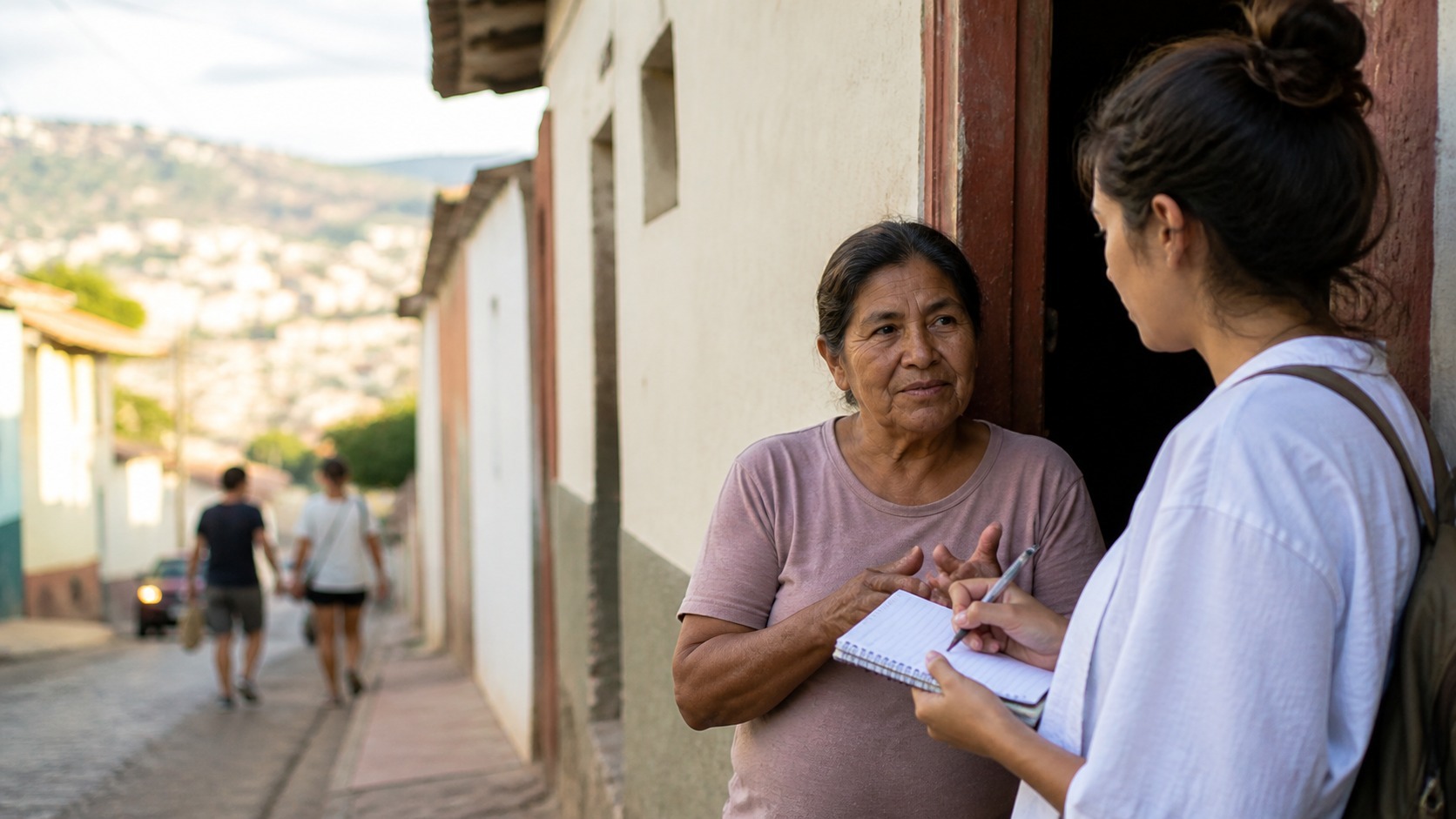
Reviewing a relationship without blame helps people recognise signals, regain support, and choose a safer next step.
Reviewing is not judging#
Reviewing progress in a relationship is not about finding a guilty person or proving that someone reacted perfectly. It means looking at facts: what was said, which boundary was expressed, what response followed, and how wellbeing felt afterward. This separates the responsibility of a person who pressures, controls, or humiliates from the practical choices that can increase safety. A useful review ends with one possible option for today, not a list of accusations.
Reviewing progress in a relationship is not about finding a guilty person or proving that someone reacted perfectly.
Dating violence can appear as phone monitoring, isolation, blackmail, schedule surveillance, insults, sexual pressure, or threats. No sign needs to be excused as proof of love. Consent and autonomy must be free, informed, and reversible. Fear of saying no, losing friends, or provoking anger deserves attention. Safety and autonomy are more reliable measures than an outward appearance of normality.
A framework of safety and autonomy#
Dating violence can appear as phone monitoring, isolation, blackmail, schedule surveillance, insults, sexual pressure, or threats. No sign needs to be excused as proof of love. Consent and autonomy must be free, informed, and reversible. Fear of saying no, losing friends, or provoking anger deserves attention. Safety and autonomy are more reliable measures than an outward appearance of normality.
Clara noticed that her partner demanded screenshots and became angry when she replied late to friends. Rather than arguing about whether this was jealousy or affection, she noticed its effect: she stopped attending activities and hid conversations through fear. She spoke with a cousin, changed passwords from a safer device, and agreed on a code word for help. The progress was rebuilding a support network, not persuading the other person that control was unfair.
Case 1: messages that isolate#
Clara noticed that her partner demanded screenshots and became angry when she replied late to friends. Rather than arguing about whether this was jealousy or affection, she noticed its effect: she stopped attending activities and hid conversations through fear. She spoke with a cousin, changed passwords from a safer device, and agreed on a code word for help. The progress was rebuilding a support network, not persuading the other person that control was unfair.
Short questions make it easier to observe without blame: can I say no without fear, are my friends and time respected, does someone use secrets, money, images, or alcohol to pressure me, and do I know whom to call if I need to leave? Ask also what has improved and what still feels worrying. Answers do not require an immediate breakup; they make support, distance, or specialist advice possible. If answering feels unsafe, reaching a safe place is enough.
Questions that clarify facts#
Short questions make it easier to observe without blame: can I say no without fear, are my friends and time respected, does someone use secrets, money, images, or alcohol to pressure me, and do I know whom to call if I need to leave? Ask also what has improved and what still feels worrying. Answers do not require an immediate breakup; they make support, distance, or specialist advice possible. If answering feels unsafe, reaching a safe place is enough.
David said he did not want to continue a sexual activity. His partner insisted, said he was overreacting, and then asked him to tell nobody. David did not need to debate whether his boundary was reasonable. He saved a support-service contact, attended a consultation with a friend, and chose not to meet alone for several days. The pressure and secrecy were not a misunderstanding; they were signals to seek support and maintain his decision.
Case 2: a boundary that is not respected#
David said he did not want to continue a sexual activity. His partner insisted, said he was overreacting, and then asked him to tell nobody. David did not need to debate whether his boundary was reasonable. He saved a support-service contact, attended a consultation with a friend, and chose not to meet alone for several days. The pressure and secrecy were not a misunderstanding; they were signals to seek support and maintain his decision.
A conversation is only a good idea when it can happen calmly and safely. It may be in a public place, with independent transport and a person who knows where someone will be. A simple sentence is valid: I need you not to check my phone; I will not accept insults; I will not discuss this today. If threats, blocked exits, damaged objects, or pressure appear, no further explanation is required. Planning an exit and contacting resources is care, not provocation.
Preparing a safer conversation#
A conversation is only a good idea when it can happen calmly and safely. It may be in a public place, with independent transport and a person who knows where someone will be. A simple sentence is valid: I need you not to check my phone; I will not accept insults; I will not discuss this today. If threats, blocked exits, damaged objects, or pressure appear, no further explanation is required. Planning an exit and contacting resources is care, not provocation.
After a breakup, Aina received calls and messages that alternated apologies with threats to share photographs. With a friend, she reviewed privacy settings, saved screenshots only when safe, and contacted a specialist resource. She also told her school so she would not be alone after class. Ending a relationship does not immediately end control; a gradual plan can restore room for decisions.
Case 3: reviewing after a breakup#
After a breakup, Aina received calls and messages that alternated apologies with threats to share photographs. With a friend, she reviewed privacy settings, saved screenshots only when safe, and contacted a specialist resource. She also told her school so she would not be alone after class. Ending a relationship does not immediately end control; a gradual plan can restore room for decisions.
A friend can help without interrogating or deciding for another person. Statements such as I believe you, this is not your fault, and we can look for options together reduce isolation. Ask which help would be useful: accompanying an appointment, saving a contact, waiting nearby, or simply listening. Friends and family should avoid impulsively confronting the partner when that could increase risk. The purpose is to widen options and respect the personʼs pace.
Support from friends and family#
A friend can help without interrogating or deciding for another person. Statements such as I believe you, this is not your fault, and we can look for options together reduce isolation. Ask which help would be useful: accompanying an appointment, saving a contact, waiting nearby, or simply listening. Friends and family should avoid impulsively confronting the partner when that could increase risk. The purpose is to widen options and respect the personʼs pace.
Schools and community services can offer information, guidance, and confidential referrals within local legal limits. A useful protocol explains whom to contact, how privacy is protected, and what happens with immediate danger. The World Health Organization, UN Women, the CDC, and public equality and health services publish material on intimate-partner violence. Institutional sources help prevent a viral video from replacing professional support.
The role of schools and services#
Schools and community services can offer information, guidance, and confidential referrals within local legal limits. A useful protocol explains whom to contact, how privacy is protected, and what happens with immediate danger. The World Health Organization, UN Women, the CDC, and public equality and health services publish material on intimate-partner violence. Institutional sources help prevent a viral video from replacing professional support.
Recording dates, statements, damage, or contacts can help identify patterns and prepare for a consultation, but it should never create extra danger. If a device is monitored, use a safer method, clear history only when that will not raise suspicion, and ask for digital-safety advice. Evidence is not required to deserve health, emotional, or social support. The first priority is reducing immediate risk and keeping a safe way to communicate.
Documenting without increasing risk#
Recording dates, statements, damage, or contacts can help identify patterns and prepare for a consultation, but it should never create extra danger. If a device is monitored, use a safer method, clear history only when that will not raise suspicion, and ask for digital-safety advice. Evidence is not required to deserve health, emotional, or social support. The first priority is reducing immediate risk and keeping a safe way to communicate.
Urgent help is needed for immediate danger, injury, credible threats, persistent stalking, strangulation, sexual coercion, weapons, or fear of going home. Emergency and local support services can assess safety, medical care, and specialist options. After sexual assault, health care can explain care, testing, and choices without making a report compulsory. In Spain, 016 offers information about violence against women; everywhere, local emergency numbers are the immediate route during danger.
When urgent help is needed#
Urgent help is needed for immediate danger, injury, credible threats, persistent stalking, strangulation, sexual coercion, weapons, or fear of going home. Emergency and local support services can assess safety, medical care, and specialist options. After sexual assault, health care can explain care, testing, and choices without making a report compulsory. In Spain, 016 offers information about violence against women; everywhere, local emergency numbers are the immediate route during danger.
A seven-day plan can stay small: speak with one trusted person, save two help contacts, review privacy and passwords, identify an exit or safer place, book care for health concerns, write two personal boundaries, then notice which action brought more calm. If a task is not safe, postpone it. The plan does not measure courage; it creates practical options and reduces isolation.
A seven-day review plan#
A seven-day plan can stay small: speak with one trusted person, save two help contacts, review privacy and passwords, identify an exit or safer place, book care for health concerns, write two personal boundaries, then notice which action brought more calm. If a task is not safe, postpone it. The plan does not measure courage; it creates practical options and reduces isolation.
Reliable sources cannot replace personal assessment, but they can prepare questions. WHO explains health responses to violence; UN Women addresses prevention and rights; CDC provides resources on teen dating violence; public-health and equality services identify nearby routes. Check the date, institution, and territory. A responsible source recognises its limits and encourages care when risk is present instead of promising a universal solution.
Reliable sources for continued learning#
Reliable sources cannot replace personal assessment, but they can prepare questions. WHO explains health responses to violence; UN Women addresses prevention and rights; CDC provides resources on teen dating violence; public-health and equality services identify nearby routes. Check the date, institution, and territory. A responsible source recognises its limits and encourages care when risk is present instead of promising a universal solution.
A review ends best with a proportionate decision: keep a support network, block one channel, ask for guidance, postpone a meeting, or seek urgent care. No perfect label is needed before acting. Recognising discomfort is already valid information. Autonomy means being able to set boundaries, change oneʼs mind, and receive support without blame. With safer resources and trusted people, every small step can make a confusing situation more protected.
Turning review into autonomy#
A review ends best with a proportionate decision: keep a support network, block one channel, ask for guidance, postpone a meeting, or seek urgent care. No perfect label is needed before acting. Recognising discomfort is already valid information. Autonomy means being able to set boundaries, change oneʼs mind, and receive support without blame. With safer resources and trusted people, every small step can make a confusing situation more protected.
Reviewing progress in a relationship is not about finding a guilty person or proving that someone reacted perfectly. It means looking at facts: what was said, which boundary was expressed, what response followed, and how wellbeing felt afterward. This separates the responsibility of a person who pressures, controls, or humiliates from the practical choices that can increase safety. A useful review ends with one possible option for today, not a list of accusations.