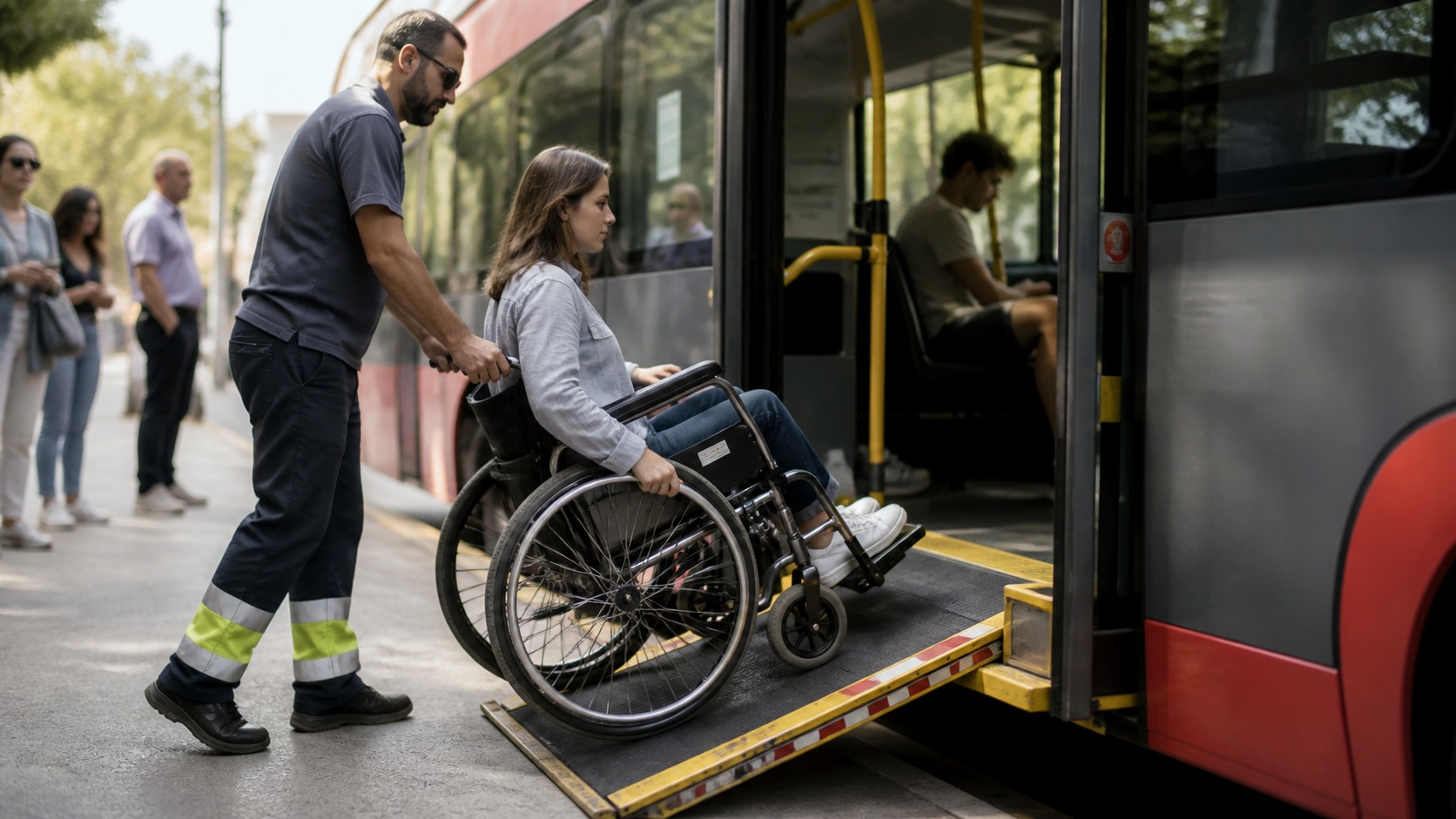
After the premiere, important work begins. In “After the premiere, important work begins — when the tour does not serve everyone: Accessibility and inclusion”, technology is the starting point, not the center of history. The center is people with different abilities, ages, languages and resources: what they can understand, what margin they retain and who they turn to when a decision designed to help produces a problem.
This maintenance issue appears in formalities, classrooms, sports activities and jobs. Uniforms and schedules change, but the same tension is repeated: we seek to offer understandable routes and equivalent alternatives and we can end up weakening participation in dignified conditions.
In “After the premiere begins the important work”, an improvement only counts if it retains voice, context and ability to correct. Applied to the accessibility of digital services from a maintenance perspective, this criterion requires that you write the purpose before choosing the function and recognize from the beginning what damages would not be acceptable.
After the premiere the important work begins
Imagine a maintenance scene in accessibility and inclusion: the initiative was presented enthusiastically and months later accumulated old permits, outdated information and unaccountable doubts. No need to seek absurd behavior.
In accessibility and inclusion, the diagnosis of maintenance is that the launch was funded, but not maintenance that turns a promise into service. The latest visible action rarely explains everything. To understand the result you have to sort out facts, decisions and discarded options.
It is also important to separate intention, design and consequence when studying maintenance in the accessibility of digital services. The intention can be to offer understandable paths and equivalent alternatives; design can reward speed or comfort; and the consequence may result in abandonment, dependence and exclusion that does not appear in the statistics.
The experiences of people with different capacities, ages, languages and resources provide different perspectives when analyzing maintenance. In accessibility and inclusion, use, maintenance, care and direction must provide their different evidence.
Before measuring the results of “After the premiere begins the important work — when the tour does not serve everyone: Accessibility and inclusion” we must define what counts as improvement. For “After the premiere begins the important work”, I would observe time, errors, abandonments, differences and the exact point where someone was left out.
In accessibility and inclusion, the exception reports on the actual design limit; it is not a statistical nuisance. If the path of accessibility of digital services related to maintenance only works with good connection, calm, prior knowledge or help to family, that condition must be stated. Before “After the premiere the important work begins”, a responsible organization distinguishes resistance from barrier.
Practical test: Accessibility and inclusion
In accessibility and inclusion, when reviewing maintenance, the priority intervention would be to allocate budget, quarterly review, expiration date and withdrawal procedure. You can start in a small part of procedures, classrooms, sports activities and jobs, without making the entire community an involuntary participant in a test.
To address accessibility and inclusion maintenance, the first week would describe the current state. The third, to observe a regular and difficult case. The final decision distinguishes the useful, the correctable and what must cease.
The maintenance test must include a failure related to the accessibility of digital services. To test it calmly allows checking phones, permissions, language and times before abandonment, dependence and exclusion that does not appear in the statistics becomes an emergency.
In addressing maintenance, a decent alternative is also needed. In accessibility and inclusion, having an alternative protects those with fewer resources and offers an honest comparison of the real value of the main solution.
The communication of “After the premiere begins the important work — when the tour does not serve everyone: Accessibility and inclusion” can fit into one page: what it is used for, what it will not do, what information intervenes, how long it will last, who responds and how to ask for revision.
Responsibility: Accessibility and inclusion
In accessibility and inclusion, monitoring requires authority to pause, explain and repair. In the case of accessibility of digital services and their maintenance dimension, it is not enough to place a person at the end of an automatic chain. He needs access to evidence, time to listen and real ability to change the rule when it damages participation in dignified conditions.
For young people living in the accessibility of digital services, the message in addressing maintenance should not be “be more careful” as the only defense.
When addressing maintenance, families, teachers, trainers and business leaders must remember that accompanying does not amount to controlling each movement. It means agreeing boundaries, explaining reasons, observing changes and accepting that autonomy must grow in relation to the accessibility of digital services.
After the premiere, important work on accessibility and inclusion begins: a mature community does not promise absence of failures; it prepares an understandable way to detect them, limit damage and change what made them likely.
The final review of “After the premiere begins the important work — when the tour does not serve everyone: Accessibility and inclusion” can answer six questions: what we wanted to improve?, what changed?, who benefited?, who took up work or risk?, what happened with the exception? and who can stop it now? If “After the premiere begins the important work” ends in “we will see”, an operational decision is still missing.
The analysis of “After the premiere begins the important work — when the tour does not serve everyone: Accessibility and inclusion” leaves a practical conclusion: start with a shared need, try on a human scale and preserve exit. Thus, technology can help offer understandable routes and equivalent alternatives without assuming as a silent price to advance this damage: abandonment, dependence and exclusion that does not appear in statistics.