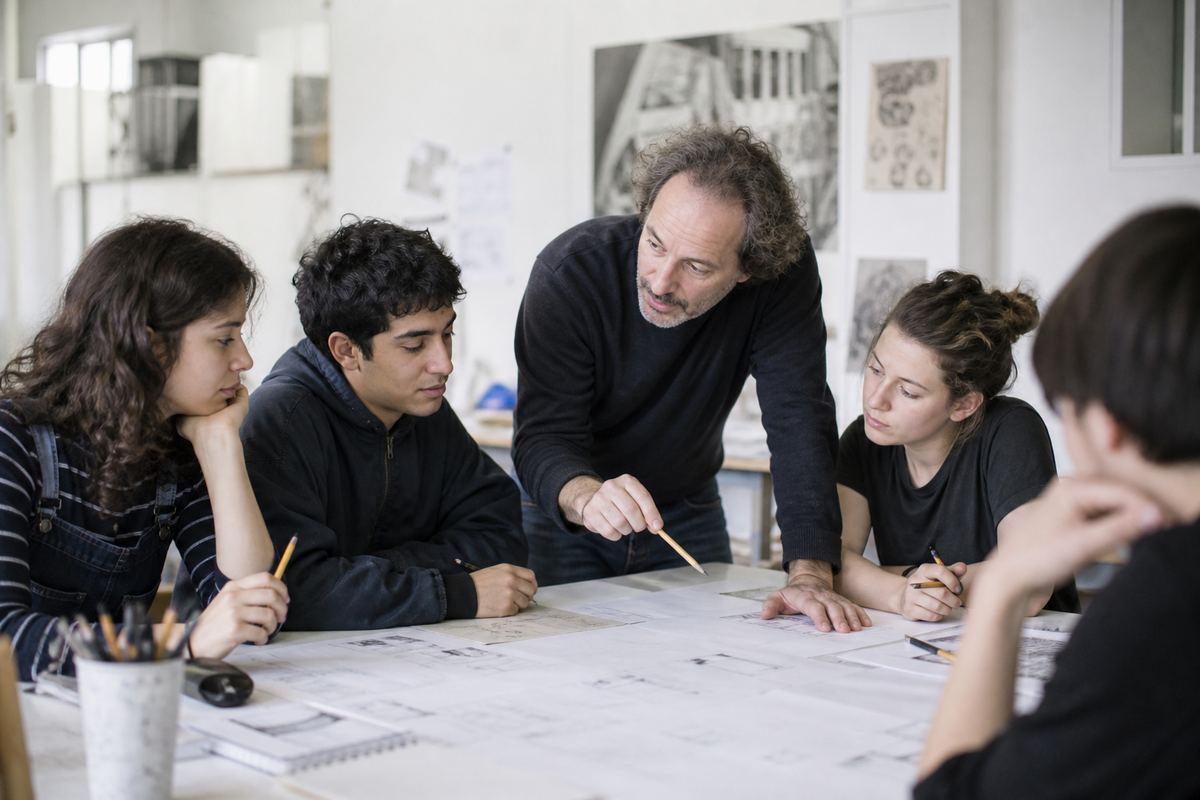
A panel cannot decide which student deserves attention. Behind “What a screen cannot decide: Education and technology” there is a question less flashy than novelty: how a digital decision modifies work, learning or daily life when it stops being a test and becomes a habit.
A panel cannot decide which student deserves attention; it does not force us to choose between enthusiasm and rejection. To talk seriously about education and technology, it is advisable to observe a real situation, identify what the tool promises and follow its effects for long enough. That journey uncovers costs, benefits, and people that don't appear in the first demo.
A panel being unable to decide which student deserves attention is not an abstract problem: it can be recognized in behaviors, decisions, and consequences. It also helps to distribute responsibilities, because it shows what depends on the product, what corresponds to the organization and what margin the person who uses it retains.
The scene that doesn't appear in the demo
Let's imagine this case: an alert prioritized absences and left out emotional deterioration that did not yet appear in the records. The scene matters because it does not describe an absurd use. It describes people trying to accomplish a task with the time, information, and alternatives they have. If a system fails predictably under these conditions, the problem cannot be reduced to a lack of discipline.
When reconstructing what happened, the main conclusion is that what is measurable guides the view, but does not exhaust what a teacher knows through relationship and observation. It is advisable to write it clearly and contrast it with those who lived the process. Often an organization believes it has solved a need because the screen shows activity, even though the difficult work has been moved to another team or personal time.
The difference between use and outcome is decisive because a panel cannot decide which student deserves attention. Opening an application, completing exercises, or producing more documents are actions; learning, resting, understanding or providing reliable service are results. Measuring only the first favors visible changes that may not improve what justified the investment.
A panel not being able to decide which student deserves attention also forces us to look at the distribution. Who gets the convenience and who gets the exceptions? Who can turn off the feature and who endures a decision they don't understand? These questions reveal whether efficiency is real or whether time, risk and frustration has been transferred to people with less ability to negotiate.
A good evaluation includes what happens when the case doesn't fit. Before a panel you cannot decide which student deserves attention, the exception is not statistical noise: it shows the limits of the design. Documenting it allows us to improve rules, offer an alternative and prevent a person from having to repeat their story to departments that only know part of it.
A small intervention that can be verified
The first applicable change would be to use alerts as invitations to ask questions and maintain spaces where unstructured information appears. It can be tested in a limited-risk course, equipment, or process, with a start date, a responsible person, and a condition indicating when to stop or modify the test.
Before taking a simple reference. For a panel to decide which student deserves attention, they would note the total time, errors requiring repair, people who drop out, and a sample of experiences explained in their own words.
When testing a panel cannot decide which student deserves attention a worthy alternative should be retained. Not a hidden route that takes weeks, but a procedure to continue when the technology does not work, is not accessible or is not suitable. That output reduces dependency and provides a useful comparison on quality, effort, and cost.
The documentation can fit on one page: objective, scope, data used, decisions affected, responsible, review channel and expiration date. Applied to a panel it cannot decide which student deserves attention, that page acts as a memory of the agreement. It prevents a temporary function from surviving due to inertia when no one remembers what it was supposed to solve.
Then you have to listen specifically. Instead of asking if you like the tool, you are interested in knowing what task makes it easier, what step confuses, what consequence is worrying, and what the person would do if they had the choice. Responses linked to a panel that cannot decide which student deserves attention provide actionable improvements and reduce bias in overall opinions.
Human judgment, limits and responsibility
The decision does not end when you press “activate”. In a panel you cannot decide which student deserves attention, then a duty of monitoring begins: reviewing results, addressing complaints and recognizing when an initial hypothesis was incorrect. A responsible organization does not defend the tool because it was purchased; defends the purpose and changes medium if it stops serving it.
Judgment before “A panel cannot decide which student deserves attention” or authority. Someone must be able to pause the system, correct a case, and request changes from the provider without going through an endless chain. Naming that person is just as important as setting up permissions. Without the material capacity to intervene, human supervision becomes a decorative phrase.
Explaining the measurement also improves its quality. A person affected by a panel cannot decide which student deserves attention and should know what happens, what information is involved, how long it lasts and how to request a review. This forces us to detect contradictions that remain hidden when the process is only described with technical or contractual jargon.
“A panel cannot decide which student deserves attention”: a technology deserves trust when we can understand what it changes, see who benefits, and fix it before the exception turns into harm.
The final review must return to the initial scene. After applying the measure—using alerts as invitations to ask questions and maintaining spaces where unstructured information appears—would the situation have been different? If the answer depends on all people performing perfectly under pressure, the design is still fragile. If you offer information, time, and a clear way out, there is an improvement that can be sustained.
This approach does not promise decisions without uncertainty. It offers something more useful: a method of working with it. Before a panel you cannot decide which student deserves attention, you define the desired result, observe the context, test on a reasonable scale and retain the ability to rectify. Thus, innovation stops being an act of faith and becomes responsible learning.