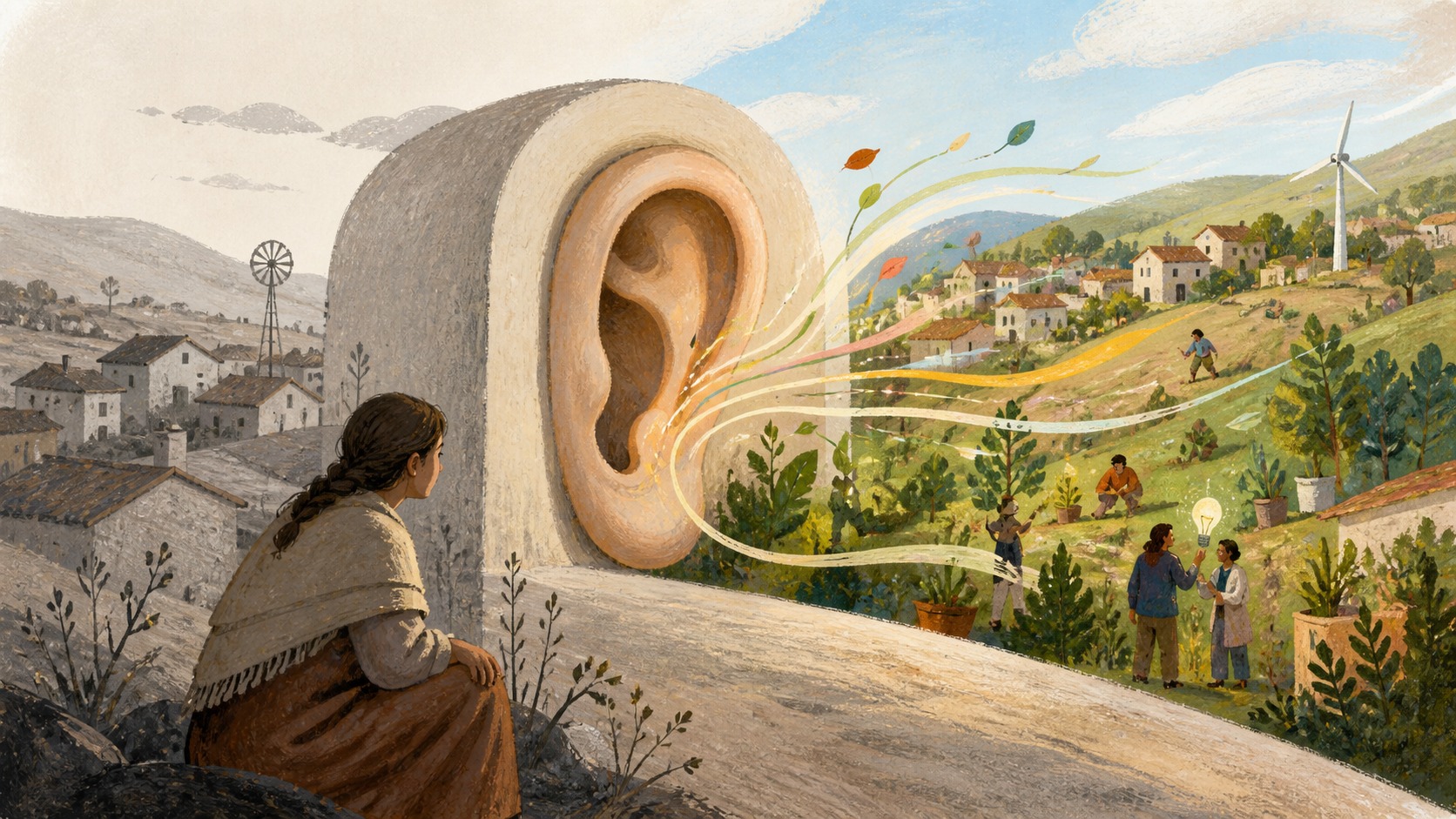
Critical literacy about pornography and sexuality starts by recognizing that many people encounter sexual content before they have had a chance to discuss it. Punishing a question often closes the conversation. A better opening is to name what was seen, what is unclear and what support is needed. UNESCO supports age-appropriate comprehensive sexuality education that includes relationships, respect, health and critical thinking. This makes room to explain that commercial production does not automatically represent consent, care, diversity or realistic expectations. The first goal is not to monitor every screen. It is to make sure that a young person knows they can ask for help without shame and that adults can answer calmly and concretely.
Start without panic or silence#
Critical literacy about pornography and sexuality starts by recognizing that many people encounter sexual content before they have had a chance to discuss it. Punishing a question often closes the conversation. A better opening is to name what was seen, what is unclear and what support is needed. UNESCO supports age-appropriate comprehensive sexuality education that includes relationships, respect, health and critical thinking. This makes room to explain that commercial production does not automatically represent consent, care, diversity or realistic expectations. The first goal is not to monitor every screen. It is to make sure that a young person knows they can ask for help without shame and that adults can answer calmly and concretely. Critical literacy about pornography and sexuality starts by recognizing that many people encounter sexual content before they have had a chance to discuss it. Punishing a question often closes the conversation. A better opening is to name what was seen, what is unclear and what support is needed. UNESCO supports age-appropriate comprehensive sexuality education that includes relationships, respect, health and critical thinking. This makes room to explain that commercial production does not automatically represent consent, care, diversity or realistic expectations. The first goal is not to monitor every screen. It is to make sure that a young person knows they can ask for help without shame and that adults can answer calmly and concretely.
Critical literacy about pornography and sexuality starts by recognizing that many people encounter sexual content before they have had a chance to discuss it.
Separate fiction, desire and consent#
A useful plan separates ideas that are often mixed together. Fiction is made to capture attention and can use scripts, editing, pressure or stereotypes; desire needs freedom; consent must be clear, specific and reversible. The World Health Organization and UNICEF emphasize that reliable information supports health and decision-making. Naming these concepts in plain language helps people recognize messages that normalize persistence, inequality or exposure. Explicit descriptions are not required to build judgment. It is enough to practise questions: who decides, who can stop, what information is missing and where can safe guidance be found? A useful plan separates ideas that are often mixed together. Fiction is made to capture attention and can use scripts, editing, pressure or stereotypes; desire needs freedom; consent must be clear, specific and reversible. The World Health Organization and UNICEF emphasize that reliable information supports health and decision-making. Naming these concepts in plain language helps people recognize messages that normalize persistence, inequality or exposure. Explicit descriptions are not required to build judgment. It is enough to practise questions: who decides, who can stop, what information is missing and where can safe guidance be found?
Case: a link in the group#
Case one. A link appeared in Marta s class group alongside jokes. She did not want to open it, but feared being left out. Her teacher did not demand screenshots or identify the sender in public. She recalled the group agreement: do not forward, leave the chat if necessary, keep only essential evidence and ask a trusted adult for support. The group later discussed why social pressure turns a private choice into a shared risk. INCIBE advises blocking, reporting and seeking support when content or contact causes distress. Marta was able to say she did not want to take part, and two classmates backed her without making the incident into a spectacle. Case one. A link appeared in Marta s class group alongside jokes. She did not want to open it, but feared being left out. Her teacher did not demand screenshots or identify the sender in public. She recalled the group agreement: do not forward, leave the chat if necessary, keep only essential evidence and ask a trusted adult for support. The group later discussed why social pressure turns a private choice into a shared risk. INCIBE advises blocking, reporting and seeking support when content or contact causes distress. Marta was able to say she did not want to take part, and two classmates backed her without making the incident into a spectacle.
Case: a search that worries someone#
Case two. Dani searched for a word he had heard and found results that unsettled him. At home, his father did not say that such things must never be viewed; he asked what Dani wanted to understand. They agreed to use a health source and discuss boundaries, manipulated images and respect. The important change was from a solitary search to a conversation with an open door to return. The American Academy of Pediatrics advises families to support media use through communication and context. When uncertainty continues, health or education professionals can help. The right response depends on age, distress and safety, rather than an adult need to close the topic quickly. Case two. Dani searched for a word he had heard and found results that unsettled him. At home, his father did not say that such things must never be viewed; he asked what Dani wanted to understand. They agreed to use a health source and discuss boundaries, manipulated images and respect. The important change was from a solitary search to a conversation with an open door to return. The American Academy of Pediatrics advises families to support media use through communication and context. When uncertainty continues, health or education professionals can help. The right response depends on age, distress and safety, rather than an adult need to close the topic quickly.
Case: comparing one s body#
Case three. Amina began comparing her body and relationships with idealized images. Her counsellor suggested noting what message the image was selling, which diversity it left out and which real need sat behind the comparison. Amina discovered that she was seeking belonging and answers, not a rule for her body. The Spanish Data Protection Agency notes that intimate images and personal data need particular care; sharing them under pressure does not demonstrate trust. The case addresses self-esteem without blaming someone for content they have seen. A protective setting offers language, time and alternatives so comparison does not dictate choices or hide discomfort. Case three. Amina began comparing her body and relationships with idealized images. Her counsellor suggested noting what message the image was selling, which diversity it left out and which real need sat behind the comparison. Amina discovered that she was seeking belonging and answers, not a rule for her body. The Spanish Data Protection Agency notes that intimate images and personal data need particular care; sharing them under pressure does not demonstrate trust. The case addresses self-esteem without blaming someone for content they have seen. A protective setting offers language, time and alternatives so comparison does not dictate choices or hide discomfort.
A family and school plan#
The plan can fit on one page: three trusted contacts, one way to ask for help, privacy settings, a no-forwarding rule and a list of sources. In a family, one adult might review settings while another keeps conversation open; at school, pastoral and guidance staff should know how to refer concerns without spreading information. UNICEF supports children and adolescents taking part in decisions that affect them. The plan should therefore be explained, negotiated and reviewed. A ban with no alternative may increase secrecy. A clear rule with reasons and support lets safety coexist with the gradual development of autonomy. The plan can fit on one page: three trusted contacts, one way to ask for help, privacy settings, a no-forwarding rule and a list of sources. In a family, one adult might review settings while another keeps conversation open; at school, pastoral and guidance staff should know how to refer concerns without spreading information. UNICEF supports children and adolescents taking part in decisions that affect them. The plan should therefore be explained, negotiated and reviewed. A ban with no alternative may increase secrecy. A clear rule with reasons and support lets safety coexist with the gradual development of autonomy.
Privacy and a safe response#
Privacy is not a technical footnote. Review who can make contact, which accounts are public, what permissions apps have and how content can be reported. The AEPD recommends minimizing data and thinking before sharing. If coercion, threats, image sharing or unwanted sexual contact occur, the priority is to stop harm, keep necessary evidence and use suitable protection, health, education or emergency routes. Do not promise absolute secrecy when someone may be at risk, but explain honestly what will be shared and why. A proportionate response protects better than humiliation and makes a future request for help more likely. Privacy is not a technical footnote. Review who can make contact, which accounts are public, what permissions apps have and how content can be reported. The AEPD recommends minimizing data and thinking before sharing. If coercion, threats, image sharing or unwanted sexual contact occur, the priority is to stop harm, keep necessary evidence and use suitable protection, health, education or emergency routes. Do not promise absolute secrecy when someone may be at risk, but explain honestly what will be shared and why. A proportionate response protects better than humiliation and makes a future request for help more likely.
Questions for a weekly review#
A ten-minute weekly review prevents the plan from becoming a one-off talk. Ask what question arose, what message seemed unreliable, which boundary worked and which adult felt accessible. Adults should review their own contribution too: if there was haste, moralizing or an impossible rule, repair it. UNESCO, WHO, UNICEF, AAP, INCIBE and the AEPD provide complementary guidance on education, health, participation, media, security and data. They do not replace local listening. The desired result is modest and important: someone able to pause, think, say no, protect privacy and find help before uncertainty becomes isolation. A ten-minute weekly review prevents the plan from becoming a one-off talk. Ask what question arose, what message seemed unreliable, which boundary worked and which adult felt accessible. Adults should review their own contribution too: if there was haste, moralizing or an impossible rule, repair it. UNESCO, WHO, UNICEF, AAP, INCIBE and the AEPD provide complementary guidance on education, health, participation, media, security and data. They do not replace local listening. The desired result is modest and important: someone able to pause, think, say no, protect privacy and find help before uncertainty becomes isolation.