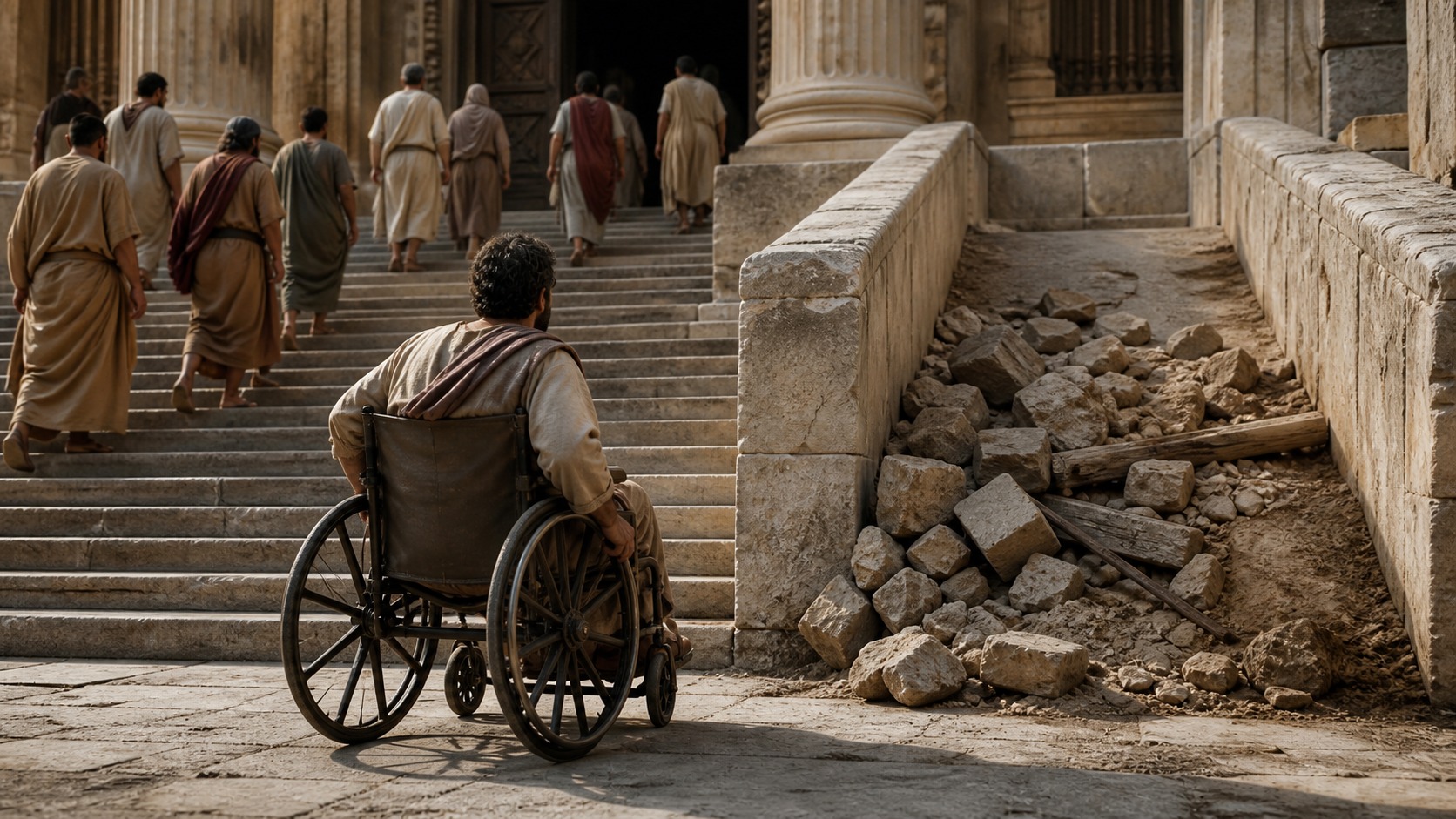
Adaptation is not a race toward a silent goodbye. It is a relationship process: a child learns what to expect from a new place, while adults learn how to make that place more predictable.
Change the question that starts the conversation#
The question “has the child adapted yet?” sounds efficient, yet it often ends observation too early. Replace it with three sharper questions: which parts of the day feel manageable, which supports does the child seek, and what changes when an adult alters one concrete condition? Language matters because it does more than describe a scene; it distributes responsibility. When the only measure is not crying, the child learns that their signal is inconvenient and adults stop looking for its cause. A short record of arrival, play, meals, rest, and reunion makes it possible to discuss events rather than labels. Family members can note what they see before and after school; staff can note intensity, duration, and context. This separates an expected emotion, a repeated difficulty, and a hypothesis worth testing. The question “has the child adapted yet?” sounds efficient, yet it often ends observation too early. Replace it with three sharper questions: which parts of the day feel manageable, which supports does the child seek, and what changes when an adult alters one concrete condition? Language matters because it does more than describe a scene; it distributes responsibility. When the only measure is not crying, the child learns that their signal is inconvenient and adults stop looking for its cause. A short record of arrival, play, meals, rest, and reunion makes it possible to discuss events rather than labels. Family members can note what they see before and after school; staff can note intensity, duration, and context. This separates an expected emotion, a repeated difficulty, and a hypothesis worth testing.
Useful progress is not the absence of protest; it is finding a safer way to cross the transition.
Case one: crying at separation, then playing#
In the first case, a child cries when her father leaves, accepts her educator’s arms, and ten minutes later concentrates at a water table. The important fact is not erasing the crying or extending the goodbye to test endurance. It is recognizing a whole sequence: she anticipates departure, protests, receives a familiar response, and recovers curiosity. A proportionate action might be keeping the same farewell sentence, offering a transition object for a few days, and reviewing whether recovery time changes by week’s end. If crying increases, connection remains impossible, or persistent physical signals appear, the same observations make it easier to seek support without alarm. The useful comparison is with this child and this context, never with the child who runs into the room. In the first case, a child cries when her father leaves, accepts her educator’s arms, and ten minutes later concentrates at a water table. The important fact is not erasing the crying or extending the goodbye to test endurance. It is recognizing a whole sequence: she anticipates departure, protests, receives a familiar response, and recovers curiosity. A proportionate action might be keeping the same farewell sentence, offering a transition object for a few days, and reviewing whether recovery time changes by week’s end. If crying increases, connection remains impossible, or persistent physical signals appear, the same observations make it easier to seek support without alarm. The useful comparison is with this child and this context, never with the child who runs into the room.
Case two: calm arrival, overwhelmed pickup#
The second case is unsettling because it can look like success: a child enters without protest, follows the routine, and then melts down, pushes, or refuses to get dressed at pickup. Calm at the door does not cancel what happens later. He may be spending considerable energy holding together a day he does not yet understand, or he may need a less hurried reunion. Family and school can observe the final stretch together: noise, activity changes, hunger, fatigue, who arrives, and what warning is given before departure. Rather than asking for better behavior, adults can reserve one minute of contact without questions, offer water or a simple snack, and use the same leaving order. The measure is not perfection; it is whether the reunion gains room for repair. The second case is unsettling because it can look like success: a child enters without protest, follows the routine, and then melts down, pushes, or refuses to get dressed at pickup. Calm at the door does not cancel what happens later. He may be spending considerable energy holding together a day he does not yet understand, or he may need a less hurried reunion. Family and school can observe the final stretch together: noise, activity changes, hunger, fatigue, who arrives, and what warning is given before departure. Rather than asking for better behavior, adults can reserve one minute of contact without questions, offer water or a simple snack, and use the same leaving order. The measure is not perfection; it is whether the reunion gains room for repair.
Case three: the body speaks at home#
The third case shows that adaptation does not end at the gate. Some children look available at nursery and then sleep poorly at home, demand constant closeness, return to earlier behaviors, or reject familiar food. Those responses do not by themselves prove that school is harmful, but they are information that should not be hidden for fear of seeming like a difficult family. The useful discipline is description rather than interpretation: “she wakes three times since starting,” “he asks us to accompany him to the bathroom,” “she cries when she hears the backpack.” With that precision, the team can review timetables, rest, transitions, and expectations. It also avoids turning every change into a diagnosis: set a review date and assess whether a small adjustment creates observable relief. The third case shows that adaptation does not end at the gate. Some children look available at nursery and then sleep poorly at home, demand constant closeness, return to earlier behaviors, or reject familiar food. Those responses do not by themselves prove that school is harmful, but they are information that should not be hidden for fear of seeming like a difficult family. The useful discipline is description rather than interpretation: “she wakes three times since starting,” “he asks us to accompany him to the bathroom,” “she cries when she hears the backpack.” With that precision, the team can review timetables, rest, transitions, and expectations. It also avoids turning every change into a diagnosis: set a review date and assess whether a small adjustment creates observable relief.
A short meeting that creates decisions#
A twenty-minute meeting can be enough when it is not used to exchange vague impressions. Before sitting down, each side brings two observations and one question. During the conversation, agree on one experiment: who will do what, at which moment, for how many days, and which sign will show whether to keep or change it. For example, staff may use a picture to anticipate moving outdoors; family may not extend the farewell after the agreed phrase; both sides may record whether recovery needs less adult help. Public resources on early education, paediatrics, and child protection remind us that routines, play, and attachment are educational conditions, not rewards for compliance. If concern persists, the appropriate step is to consult health or support professionals with a concrete account. A twenty-minute meeting can be enough when it is not used to exchange vague impressions. Before sitting down, each side brings two observations and one question. During the conversation, agree on one experiment: who will do what, at which moment, for how many days, and which sign will show whether to keep or change it. For example, staff may use a picture to anticipate moving outdoors; family may not extend the farewell after the agreed phrase; both sides may record whether recovery needs less adult help. Public resources on early education, paediatrics, and child protection remind us that routines, play, and attachment are educational conditions, not rewards for compliance. If concern persists, the appropriate step is to consult health or support professionals with a concrete account.
Review without rewarding obedience#
Reviewing progress without blame requires giving up two shortcuts: celebrating obedience as though it were wellbeing, and treating every protest as failure. Useful progress is not the absence of protest; it is finding a safer way to cross the transition. It may mean that a child signals a need before becoming overwhelmed, accepts an alternative source of comfort, or returns to play after conflict. The reader’s final action is plain: select one scene from this week, describe it without adjectives, ask which condition could change, and agree on a small trial with a date. For further reflection, visit another view of the first days and a shared notebook of signals. Adaptation gains dignity when adults review their own design before demanding that childhood fit into it. Reviewing progress without blame requires giving up two shortcuts: celebrating obedience as though it were wellbeing, and treating every protest as failure. Useful progress is not the absence of protest; it is finding a safer way to cross the transition. It may mean that a child signals a need before becoming overwhelmed, accepts an alternative source of comfort, or returns to play after conflict. The reader’s final action is plain: select one scene from this week, describe it without adjectives, ask which condition could change, and agree on a small trial with a date. For further reflection, visit another view of the first days and a shared notebook of signals. Adaptation gains dignity when adults review their own design before demanding that childhood fit into it.
Sources for planning a consultation: UNICEF Parenting, World Health Organization, Ministry of Education, and Spanish Association of Paediatrics.