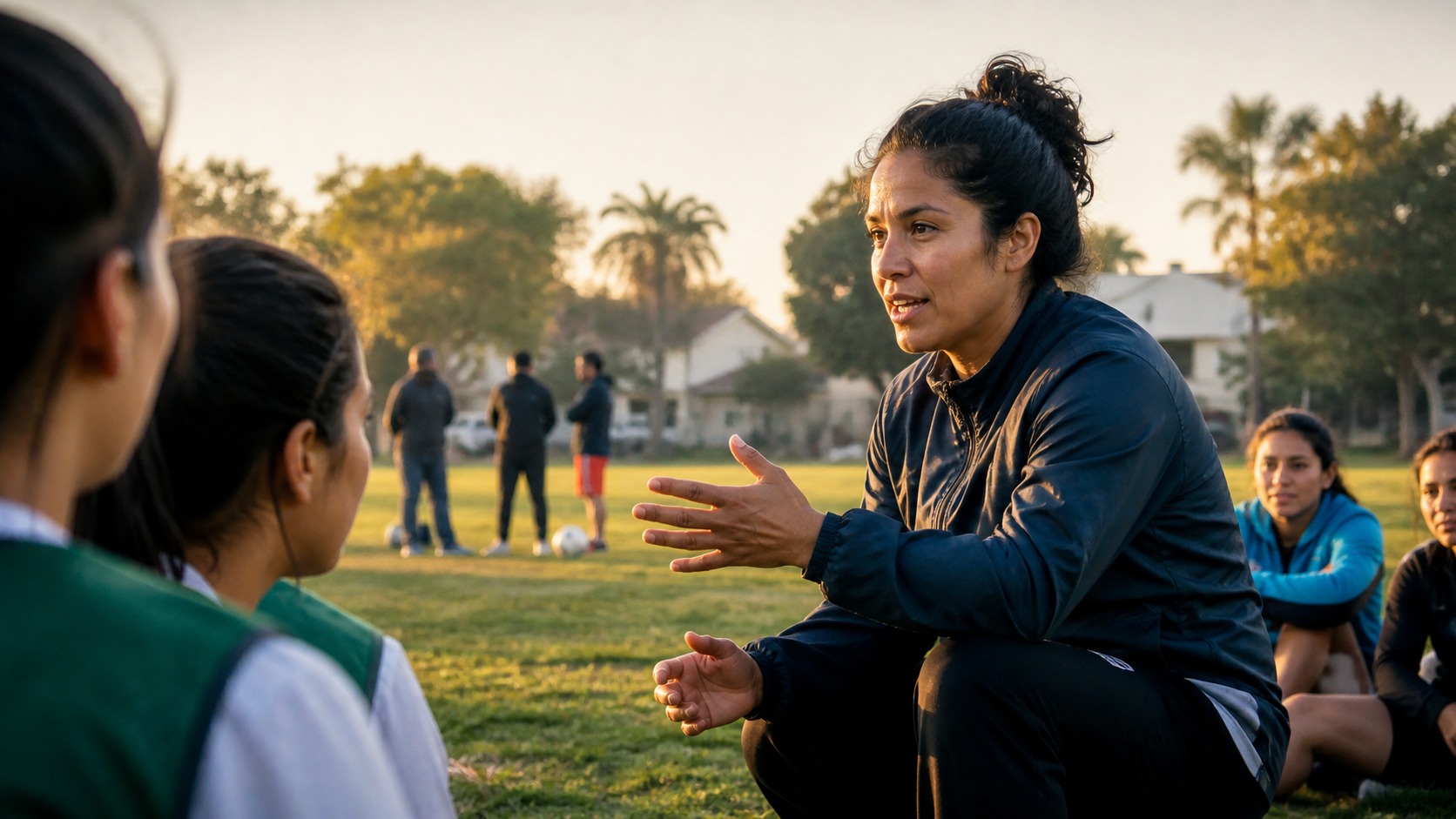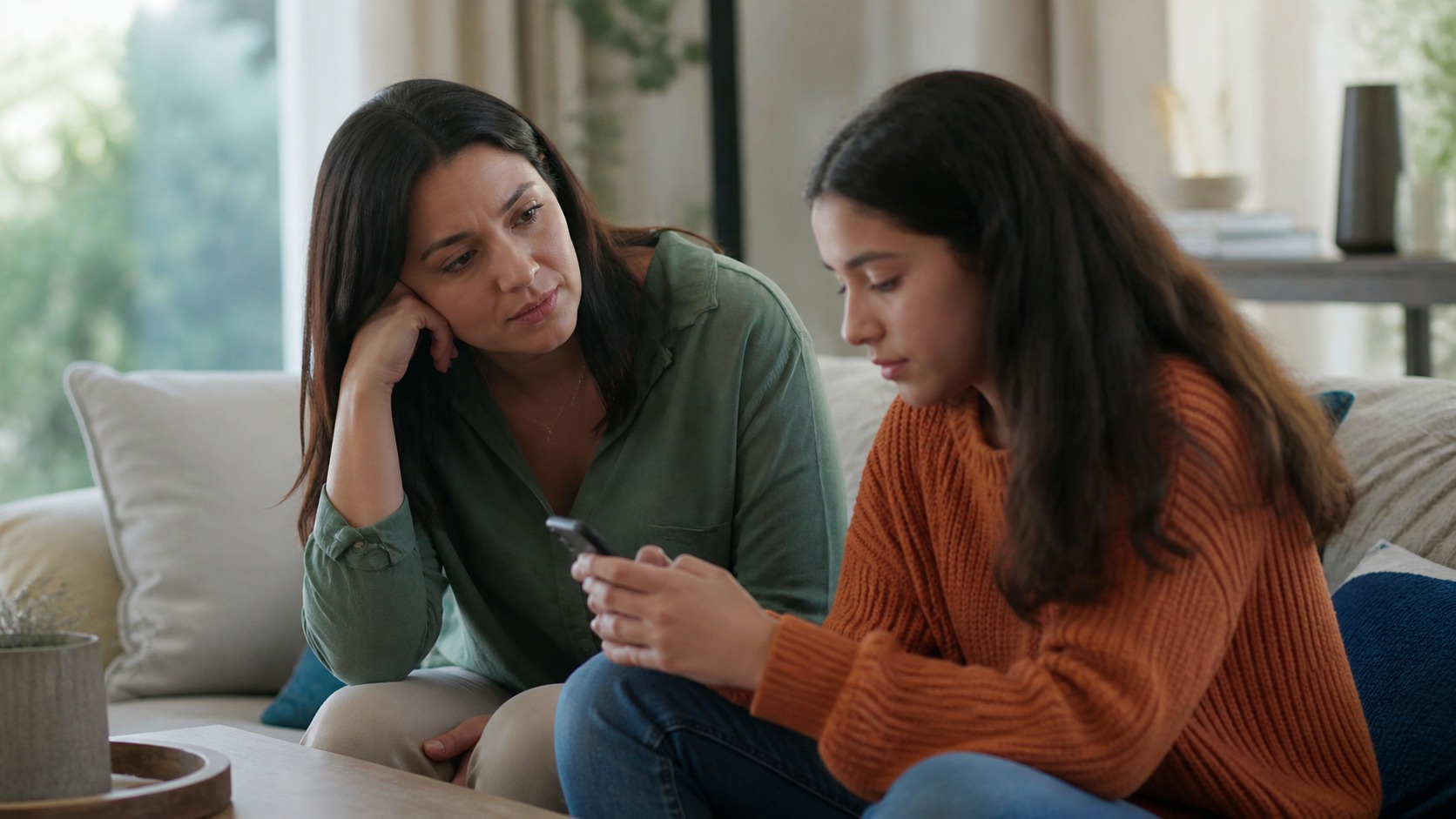
Coordination that protects attachment does not consist of each adult knowing everything about a girl or adolescent. It consists of ensuring that, when a transition becomes complicated, the people involved can offer a recognizable, brief and dignified response. The most useful tool is usually a continuity table: a weekly twenty-minute conversation between family, school, and, when appropriate, a community resource. It does not seek to monitor emotions or produce reports. Decide on four observable things: what situation deserves support, what each person will do first, what minimum information will be circulated, and when it will be checked whether the agreement helped.
The problem appears between spaces, not within a person#
Monday can start well at home and go wrong when you get to the classroom. A child who says goodbye without difficulty for weeks may become blocked after a move, an illness, or a change of monitor. If each place interprets the scene separately, the family receives “today was strange,” the school receives “it's fine at home,” and no one can distinguish a specific signal from a pattern. The continuity table shifts the question: instead of asking what happens to the creature, it asks what happens in the passage between contexts and what small adjustment can make that passage more predictable.
Ese cambio importa porque evita dos atajos dañinos. El primero es la etiqueta: llamar manipuladora, dependiente o problemática a una persona por una conducta situada. El segundo es la ilusión de que un consejo general resolverá una dificultad concreta. La OMS describe el cuidado receptivo como la capacidad de advertir señales y responder de modo oportuno. Advertir no significa diagnosticar a distancia; responder no significa dejar de poner límites. Significa mirar una escena completa antes de decidir.
A short table needs a precise question#
The first rule is to bring only one question per week. “How do we make everything go better?” It's too big. “What does Leo need during the eight minutes between putting down his coat and getting into math?” allows you to try something. The family can explain that the plan changes worry them; The tutor can observe that it improves when she knows the sequence; the afternoon educator can confirm whether that support also works outside the classroom. Thus, a limited action is agreed: show the agenda upon arrival, allow a choice between two waiting places and notify the person in charge before tension increases.
The agreement must include a departure date. For example, it is tested for five days, only the entry time and the chosen support are noted, and on Friday it is decided whether to maintain, modify or withdraw it. Without that date, interim strategies become habit and can end up isolating. With it, the plan recognizes that autonomy is not imposed by removing help suddenly: it is built by offering a sufficiently stable base so that the person can use it less when they are ready.
Case one: the farewell that drags on#
Six-year-old Marta started crying every morning after her father changed shifts. At home it was thought that he needed more firmness; in the center, that it was advisable not to prolong the farewell. The table did not choose between harshness and comfort. She reconstructed the sequence: the alarm went off earlier, the father could not accompany her to the door and a substitute received the group. A card with three steps was agreed upon—hang up the backpack, greet Nuria, place a sticker on the calendar—and a thirty-second call at the end of the first week. No one promised that Marta would not cry; The goal was for him to know what would happen after crying.
El resultado no se midió con una etiqueta de éxito. Se observó si lograba entrar, cuánto tiempo necesitaba para unirse a una actividad y si la despedida empeoraba o mejoraba. Al cuarto día siguió llorando, pero ya escogía la tarjeta y aceptaba que Nuria la acompañara. El padre dejó de salir a escondidas, práctica que parecía rápida pero aumentaba la incertidumbre. La Universidad de Harvard explica la importancia de intercambios consistentes de ida y vuelta. Aquí el ida y vuelta fue una promesa pequeña que los adultos sí podían cumplir.
Sharing a signal does not authorize sharing a biography#
Coordination fails if it becomes a network of messages where intimate details circulate just in case. For each piece of information, it is advisable to ask two questions: what specific decision will it allow you to make? Who needs to know it to execute that decision? Teachers may need to know that unexpected departures increase anxiety and that a reference person helps. You don't need a full narrative of family separation. A sports instructor may require contact and a brief withdrawal guideline; You do not need to access the school record.
Una hoja de continuidad de una página basta en muchos casos. Tiene cuatro columnas: señal observable, primera respuesta, persona responsable y modo de revisión. No incluye hipótesis clínicas ni calificativos. “Se queda junto a la puerta y no responde durante dos minutos” describe más y juzga menos que “se niega a participar”. La guía de crianza de UNICEF recuerda que la participación infantil debe ajustarse a la edad y a la capacidad de comunicación. La hoja se explica también a la criatura: qué se anota, para qué y qué partes puede corregir.
Case two: the conflict that changes name#
At a community activity, Amir pushed another child after finishing a game. The monitor reported “aggressiveness”; The family responded that it was quiet at home; the school mentioned recent arguments at recess. The table avoided turning three words into three diagnoses. He compared facts: the episodes appeared at the end of competitive activities and, in all three places, Amir had asked to stay an extra minute before someone hurriedly responded. It was agreed to anticipate the closing with a visual signal, offer a collection task and rehearse a phrase to ask for time.
The boundary was clear: pushing was not acceptable and repairing the damage included asking the other child what he needed. But reparation was not an abstract talk about behaving well. The monitor accompanied the conversation, the family practiced the phrase during a game and the tutor checked if the visual signal helped in physical education. A week later there was new anger, without push. That didn't prove that the plan had cured anything; showed that a concrete alternative was available before the overflow.
Coordination that protects attachment does not consist of each adult knowing everything about a girl or adolescent.
Boundaries must also travel from one place to another#
Consistency does not require using identical consequences at home, at school, and in the neighborhood. Each space has different responsibilities and resources. What must travel is the sense of the limit. If it is not safe to leave the premises alone, the adult can hold that boundary and offer two dignified options: wait by the door with someone they know or go to the quiet space while the family is called. If a material has been broken, repairing means participating in the solution, not showing shame in front of the group.
Una frase compartida reduce mensajes contradictorios: “Veo que esto es difícil; no voy a permitir que hagas daño; te ayudaré a volver al grupo”. La frase no es un guion mágico. Funciona cuando va acompañada de tiempo, un lugar y una persona disponible. Los análisis de la OCDE sobre educación insisten en que el bienestar escolar tiene una dimensión organizativa. Pedir calma a un adulto que atiende a treinta personas sin relevo no es un plan de cuidado.
Case three: when the reference person is missing#
Sofía trusted the counselor to return to the classroom after a break. The day the counselor fell ill, the system improvised: three adults gave different instructions and Sofía ended up hiding in the bathroom. The subsequent table did not look for culprits. He detected that the agreement depended on a person and not a function. He named a substitute, defined where she would find a return card, and made it clear who would notify the family if the break exceeded an agreed upon time.
The next absence wasn't perfect, but it was understandable. The substitute introduced herself in advance, used the same return language and recorded that Sofía had preferred to walk two minutes before entering. That detail allowed the plan to be reviewed without romanticizing the difficulty. Preparing a surrogate is a form of respect: it recognizes that bonds matter and prevents a child from having to start from scratch every time the adult calendar changes.
Review is used to withdraw support, not to accumulate#
The risk of any coordination is adding meetings, forms and people until the support outweighs the situation. That's why the last weekly question should be what can you stop asking yourself. If Marta already enters with the visual agenda, perhaps she does not need the daily call. If Amir uses the phrase to ask for time, perhaps the collection task is no longer necessary. Carefully removing a support communicates confidence and frees energy for other needs.
The review also identifies when the ordinary agreement is not enough. Persistent difficulties with sleep, eating, assistance, safety, violence or risk require the corresponding professional and protection channels. The table does not replace a health evaluation, specialized guidance or legal obligations. Its function is to reach a shared observation sooner, explain to the family what has been seen and accompany a referral without presenting the child as a problem that must be handed over to another service.
An exit practice: try, name, decide#
To start this week, family and center can choose a specific transition and convene a twenty-minute conversation. You name the signal without labels, test a response for five days, and decide in advance what evidence will be needed to change it. It is a good idea to invite the girl or adolescent to say which adult, place or phrase is most useful to them. If you don't want to talk, you can choose between drawings, cards or short questions. Listening is not equivalent to transferring the burden of the plan to him.
The best agreement is not the most detailed or the one that gathers the most data. It is what allows a vulnerable person to find the same open door in several places without losing their privacy or their voice. When family, school, and community keep small, reviewable promises, secure attachment stops being a domestic idea. It becomes an everyday experience: someone notices the signal, offers an understandable limit and remains available while it is possible to continue again.